How to Carry Laundry to Laundromat: Effortless Tips
Use a lidded hamper or two heavy-duty laundry bags, keep wet items separate, and pack only a load you can carry in one trip. Poor packing leads to leaks, odors, dropped clothes, and a slower laundromat run. This guide covers staging, bag choice, and carrying methods that keep laundry contained.
What you’ll need
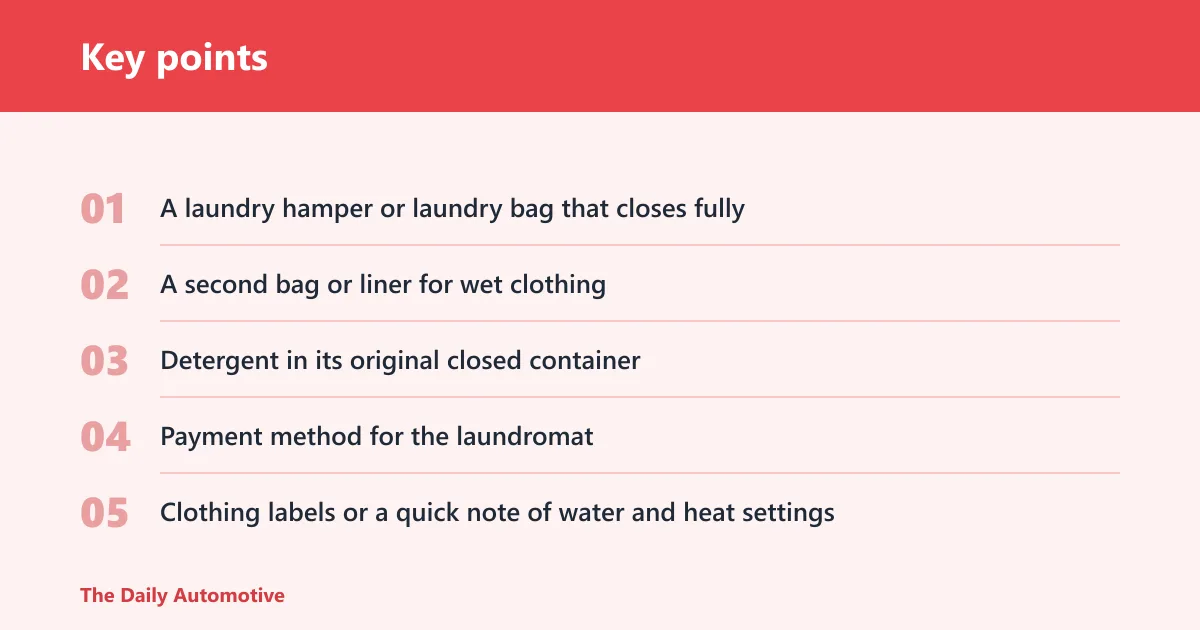


- A laundry hamper or laundry bag that closes fully
- A second bag or liner for wet clothing
- Detergent in its original closed container
- Payment method for the laundromat
- Clothing labels or a quick note of water and heat settings
- A phone timer
- A small towel or paper towels for spills
- A spare bag for clean clothes on the trip home
Why the container matters before you leave
The container is what keeps the trip tidy. A laundry hamper works well if it is rigid or soft-sided, keeps clean clothes away from dirty ones, and fits through parking lots, transit doors, and laundromat carts or car trunks. A laundry bag with a zipper or drawstring is better for stairs, buses, and short walks because it stays closed and is easier to shoulder.
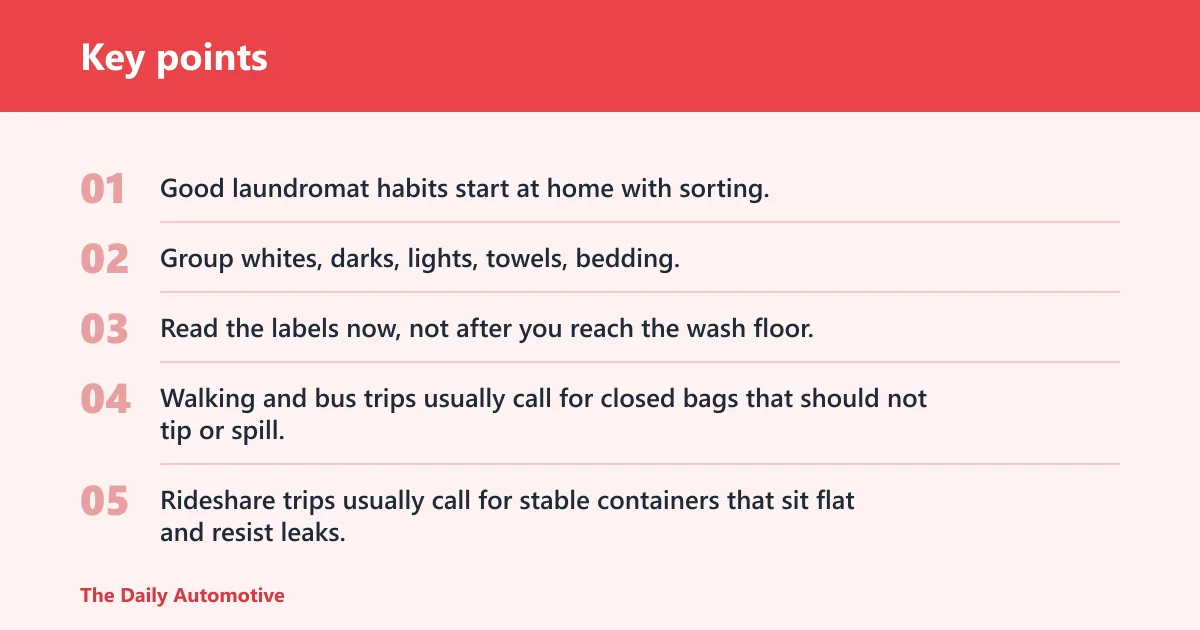
Good laundromat habits start at home with sorting. Group whites, darks, lights, towels, bedding, and delicates before you leave so you spend less time standing in front of machines. Read the labels now, not after you reach the wash floor.
Choose the right carry method
Match the container to the commute. Walking and bus trips usually call for closed bags that should not tip or spill. Rideshare trips usually call for stable containers that sit flat and resist leaks. Car trips are often easiest when the load fits in the trunk and can move on a laundromat cart after parking.
What should you bring to the laundromat?
Bring one closed container for dry clothes, a second sealed bag for wet items, detergent, payment, and a phone timer. If the trip includes towels, bedding, or bulky items, keep them separate from regular clothes so you can choose the right washer size quickly. Use only the detergent amount listed on the bottle or machine instructions.
Pack wet items and delicates separately
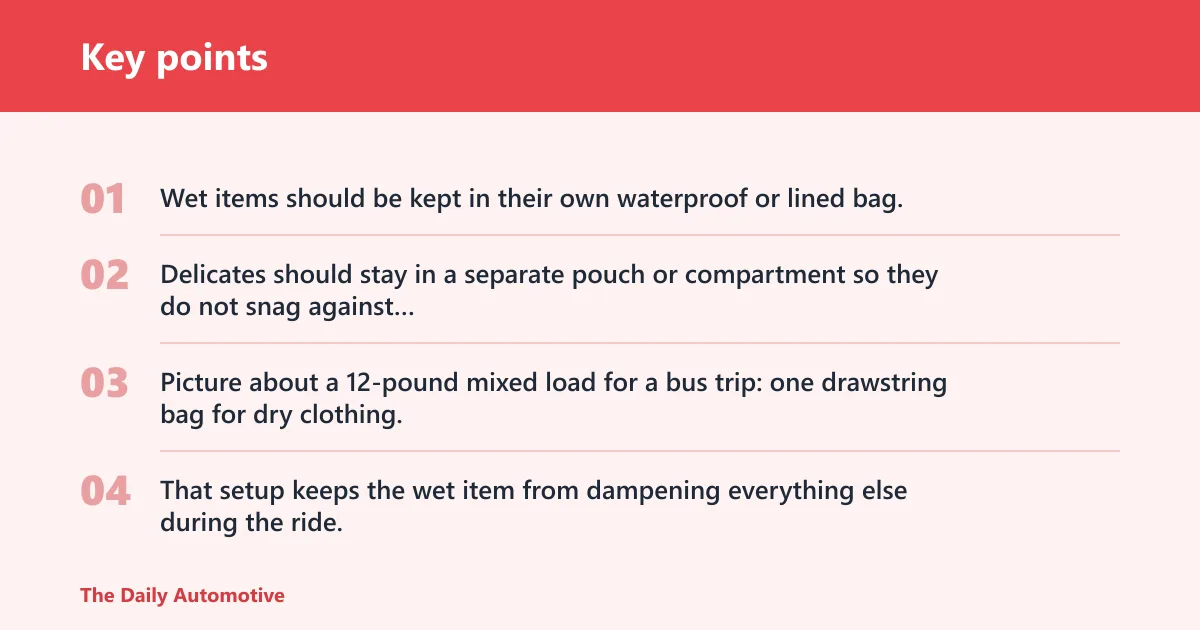
Wet items should be kept in their own waterproof or lined bag, since they can leak onto dry laundry and seats. Delicates should stay in a separate pouch or compartment so they do not snag against zippers, heavy towels, or rough edges inside a crowded bag. Keep detergent upright and closed.
Picture about a 12-pound mixed load for a bus trip: one drawstring bag for dry clothing, one sealed plastic bag for a damp towel, and detergent tucked in a small pouch inside the main bag. That setup keeps the wet item from dampening everything else during the ride.
Step 1: Sort and stage at home
- Group whites, darks, lights, towels, bedding, and delicates into separate loads.
- Check each garment label for water temperature and dryer heat.
- Group each load into the container it will travel in.
- Set wet items aside in a lined or waterproof bag.
Staging at home makes the laundromat stop shorter and cleaner. It also cuts mix-ups, because each load already matches a washer size and a drying setting. The goal is to arrive with ready-to-wash groups, not one mixed pile that still needs sorting on the folding table.
Keep odors and mix-ups down
Do not pack clean items with sweaty gym clothes or damp towels. Odor transfer is more likely when fabrics sit packed together for a long trip. If a load smells strong or feels damp, seal it separately instead of dropping it into the main bag.
Step 2: Pack for your travel type
- For walking or bus trips, use a zippered or drawstring laundry bag.
- For rideshare trips, place the load in a rigid hamper or closed bag that will not tip.
- For car trips, put the main load in the trunk and keep detergent upright.
- Use a laundry cart at the laundromat when moving more than one container.
A laundry bag works well for stairs, buses, and short walks because it closes and bends with your body. A hamper is better when you need structure in a trunk or want cleaner loading and unloading. If you are carrying more than one load, split them now instead of forcing everything into one oversized container.
Use the cart when it helps
Laundromat carts are useful shared equipment in public laundry spaces. They help you move multiple baskets from a car to the machines without stacking loose items in your hands. Return the cart as soon as you finish so the next person can use it.
How do you keep laundry from spilling on the way there?
Close every container before you leave, keep wet items in their own sealed bag, and do not overfill an open basket. A top-heavy load shifts on stairs, in buses, and in rideshares, which makes spills more likely. If a container cannot close cleanly, divide the load again before you walk out.
Prevent leaks and tipping
Use a zippered or drawstring closure for regular clothes. For detergent, keep the cap tight and place the bottle upright inside a second bag if the bottle has ever dripped. If rain is likely, put the outer laundry bag inside a larger garbage bag so the contents are more likely to stay dry on the way home.
Suppose a rideshare trip includes a basket of towels and a small detergent bottle. A rigid hamper with a lid is a safer choice than an open-top basket, because sudden braking can shift the load and tip open bottles.
Step 3: Move from bag to washer fast
- Pick the washer size that matches the amount of laundry you brought.
- Use a small washer for regular clothes and a large washer for towels, bedding, and bulky items.
- Keep categories separate as you load the drum.
- Start the machine promptly after loading.
Choose the washer that matches the amount you brought. Small washers fit regular clothes; large washers suit towels, bedding, and bulky items. Avoid taking a large washer for a small load during busy hours, because it ties up a machine that someone else may need.
Use the right amount of detergent
Add only the amount recommended on the detergent label or the machine instructions. Too much detergent can leave suds and residue, and overloading can stop clothes from moving properly. If the first pour looks short for the load, add another measured portion only after checking the label again.
Common mistakes to avoid
The most common mistakes happen before washing starts. They slow the trip, create spills, and waste time at the machine.
- Overpacking one container instead of splitting loads
- Bringing loose detergent bottles with weak caps
- Leaving wet clothing in the same bag as dry clothing
- Ignoring laundry labels until after the wash starts
- Using a large washer for a small load
- Forgetting the phone timer and blocking a machine after the cycle ends
- Skipping the lint trap before drying
A common first-timer mistake is carrying one oversized basket from a fourth-floor walk-up. The basket is hard to hold, the lid does not close, and damp items can fall out before the lobby door. Two smaller closed bags are usually easier to manage.
Laundry carry checklist
| Transport mode | Container type | Closure method | Spill-prevention steps | Pack separately |
|---|---|---|---|---|
| Walk or bus | Drawstring laundry bag or zippered laundry bag | Close fully before leaving | Keep the bag upright, split heavy loads, use a lined bag for damp items | Wet clothing, delicates, detergent |
| Rideshare | Lidded hamper or closed soft-sided hamper | Latch, lid, or tight zipper | Set the hamper flat, keep detergent upright, avoid overfilling | Wet clothing, delicates, detergent |
| Car | Rigid or soft-sided hamper that fits the trunk | Lid or zippered top | Secure the container in the trunk, use a laundromat cart after parking | Wet clothing, delicates, detergent |
Frequently asked questions
How to wash clothes at a laundromat
Check the laundry labels first, then match each load to the right washer and cycle. Use only the detergent amount listed on the label or machine instructions, and keep delicates, towels, and bedding separate if they need different settings. Stay nearby so finished clothes do not sit in the washer too long.
How do you do laundry properly?
Sort before arrival, transport clothes in a closed bag or hamper, and match the washer size to the load. Keep wet items separate, use the right detergent amount, and clean the lint trap before drying. Good results start with clean transport and a fast handoff from bag to machine.
What are the rules for laundromat etiquette?
Sort before arrival, keep spills cleaned up, and do not leave clothes unattended for long. Respect shared tables, carts, and machines, and return borrowed items quickly. Leave the lint trap clean and the area clear so the next person can use the space without delay.
Products related to this article
Sponsored / affiliate links. As an Amazon Associate I earn from qualifying purchases. I may earn additional commission from eligible campaigns.