How to Start a Car Restoration Business: Proven First Steps
Start a car restoration business by defining your niche, creating a solid business plan, securing funding, finding a suitable workspace, and building your team. Focus on a specific type of vehicle or service to stand out and ensure you comply with all legal and insurance requirements from the outset.
Dreaming of turning your passion for classic cars into a career? You’re not alone! Many car enthusiasts find immense joy in bringing vintage vehicles back to their former glory. But the leap from hobbyist to business owner can feel overwhelming. If you’ve ever wondered how to turn that passion into a profitable venture, you’ve come to the right place. This guide will walk you through the essential first steps to launching your very own car restoration business, making the process clear and manageable.
We’ll break down everything you need to know, from figuring out what kind of restoration you’ll focus on to getting your workshop set up. You’ll learn about planning your finances, understanding the legal side, and building a reputation that will have customers lining up. Get ready to kickstart your automotive dream!
Your Step-by-Step Guide to Starting a Car Restoration Business
Starting any business requires careful planning, and a car restoration business is no different. It’s a field that demands skill, patience, and a keen eye for detail. But with the right approach, you can build a successful and rewarding enterprise. Here are the crucial first steps to get you on the road.
1. Define Your Niche: What Kind of Restorations Will You Do?
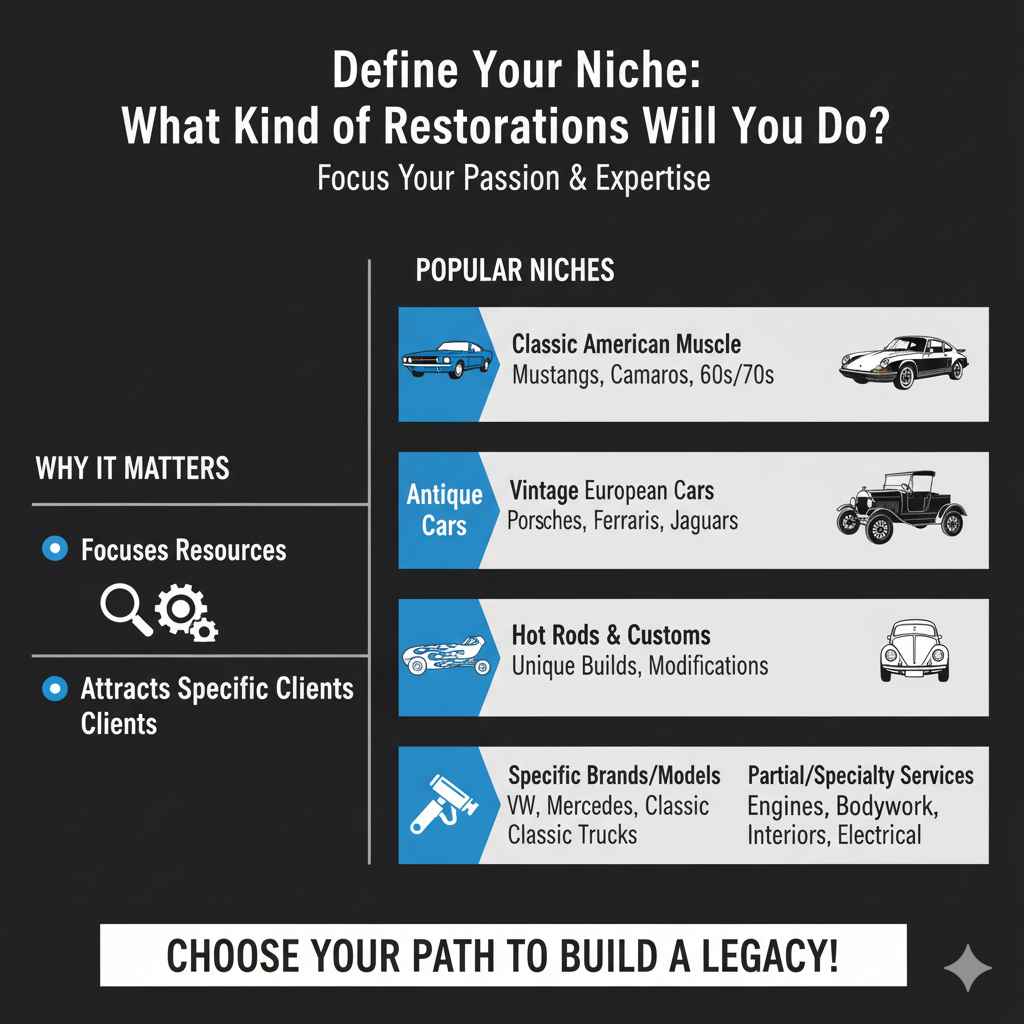
The world of car restoration is vast. Trying to do everything for every type of car can spread your resources too thin and make it hard to build specialized expertise. Choosing a niche helps you focus your efforts and attract a specific clientele. Think about what you’re most passionate about and where your skills lie.
Consider these popular niches:
- Classic American Muscle Cars: Mustangs, Camaros, Challengers – cars from the 60s and 70s are always in demand.
- Vintage European Sports Cars: Porsches, Ferraris, Jaguars from bygone eras attract a dedicated following.
- Antique Cars: Vehicles from the early 1900s up to the 1930s offer unique challenges and rewards.
- Hot Rods and Customs: Modifying and building unique vehicles based on classic platforms.
- Specific Brands or Models: Becoming the go-to expert for vintage Volkswagens, specific Mercedes-Benz models, or classic trucks.
- Partial Restorations or Specialty Services: Focusing only on engine rebuilds, bodywork, interior restoration, or electrical systems for classic cars.
Your niche will influence everything from the tools you buy to the marketing you do. For instance, if you specialize in vintage European cars, you’ll need access to specialized parts and knowledge about their intricate systems.
2. Develop a Comprehensive Business Plan
A business plan is your roadmap to success. It forces you to think through every aspect of your business and provides a clear strategy. It’s also essential if you plan to seek funding from investors or lenders.
Key components of your business plan should include:
- Executive Summary: A brief overview of your entire plan. Once you’ve fleshed out the rest, come back and write this.
- Company Description: What your business is, what it does, and what makes it unique.
- Market Analysis: Research your target market, identify your competitors, and understand industry trends. Who are your ideal customers? What are their needs?
- Organization and Management: Your business structure (sole proprietorship, LLC, etc.) and who will manage the business.
- Service Line: Detail the restoration services you’ll offer based on your chosen niche.
- Marketing and Sales Strategy: How you will attract customers, price your services, and build your brand.
- Funding Request (if applicable): How much money you need and how you will use it.
- Financial Projections: Forecasted income statements, balance sheets, and cash flow statements for the first 3-5 years.
Don’t underestimate the value of thorough market research. Understanding demand for your chosen niche locally and online can significantly impact your success. Resources like the U.S. Small Business Administration (SBA.gov) offer excellent templates and guidance for creating a business plan.
3. Secure Funding: How Much Do You Need?
Restoring cars can be an expensive undertaking. You’ll need capital for tools, equipment, parts, insurance, rent, utilities, and potentially salaries before you start seeing significant revenue. Accurately estimating your startup costs is crucial.
Typical startup costs for a car restoration business might include:
| Expense Category | Estimated Cost Range | Notes |
|---|---|---|
| Tools & Equipment | $10,000 – $50,000+ | Specialized tools, lifts, welding equipment, spray booths, etc. |
| Workspace Rental/Purchase | $1,000 – $10,000+ per month | Depends on location, size, and facilities. |
| Initial Parts Inventory | $5,000 – $25,000+ | Commonly needed parts for your niche. |
| Insurance (Liability, Property) | $1,000 – $5,000+ per year | Crucial for protecting your business. |
| Licenses & Permits | $100 – $1,000 | Varies by local and state regulations. |
| Marketing & Website | $500 – $5,000 | Initial investment in branding and online presence. |
| Working Capital | 3-6 months of operating expenses | To cover ongoing costs until revenue stabilizes. |
Once you have your estimated costs, explore funding options:
- Personal Savings: Using your own money is the simplest but carries personal financial risk.
- Loans: Small business loans from banks or credit unions, or SBA-backed loans. SBA loans are a popular option for entrepreneurs.
- Investors: Angel investors or venture capitalists, though this means giving up equity.
- Crowdfunding: Platforms like Kickstarter or Indiegogo can work for niche, visually appealing projects.
- Friends and Family: Borrowing from or partnering with people you know. Be sure to formalize agreements.
Be realistic about your financial needs. It’s better to overestimate slightly than to run out of cash halfway through a project.
4. Find the Right Workspace
Your workshop is the heart of your operation. Location, size, and amenities are critical factors.
What to look for in a workspace:
- Size and Layout: Enough space to work on multiple vehicles simultaneously, store parts and tools, and house specialized equipment like a lift or spray booth.
- Accessibility: Easy access for customers to drop off and pick up vehicles, and for you to get parts and supplies.
- Utilities: Adequate power supply, ventilation, and heating/cooling are essential for various restoration processes.
- Zoning and Permits: Ensure local zoning laws permit automotive business operations.
- Safety Features: Fire suppression systems, proper ventilation for painting and welding, and secure storage for hazardous materials.
Consider buying or leasing an industrial unit, a large garage, or even a commercial space designed for workshops. If you’re starting very small, a well-equipped home garage might suffice, but be mindful of local regulations and potential limitations on scale.
If you plan on doing paintwork, a reputable spray booth is a significant investment but crucial for professional results and safety. You can find guidance on spray booth requirements and installation from companies specializing in automotive finishing equipment.
5. Acquire Essential Tools and Equipment
A restoration business thrives on the quality of its tools. Invest in good quality tools, as they will last longer and perform better, directly impacting your efficiency and the quality of your work.
Key tools and equipment to consider:
- Workshop Essentials: Engine hoist, transmission jack, floor jacks, jack stands, toolboxes, workbenches.
- Welding and Fabrication: MIG welder, TIG welder, plasma cutter, metal grinder, abrasive tools.
- Bodywork: Sheet metal tools (English wheel, planishing hammer), sanders (orbital, DA), body hammers, dollies, paintless dent repair (PDR) tools.
- Engine and Drivetrain: Engine stands, torque wrenches, diagnostic tools, specialized engine-building equipment.
- Painting and Finishing: Spray guns, compressors, air filters, sanding blocks, polishers, detailing equipment. A professional spray booth is highly recommended.
- Safety Gear: Safety glasses, gloves, respirators, hearing protection, fire extinguishers. Your safety is paramount.
Don’t forget the specialized diagnostic equipment if you’re working on vehicles with complex electronics. While you might not need every single tool on day one, prioritizing those essential for your niche is vital.
For a detailed look at quality tools, resources from reputable tool manufacturers or automotive trade publications can offer insights into specific brands and types of equipment.
6. Build Your Team (or Be Ready to Wear Many Hats)
Unless you’re a one-person operation for a very specific niche, you’ll likely need help. Initially, you might be the mechanic, the body expert, the painter, and the business manager all rolled into one. As you grow, consider hiring skilled individuals.
Potential team roles:
- Experienced Mechanic: For engine, transmission, and mechanical system work.
- Bodywork Specialist: For metal fabrication, dent repair, and panel alignment.
- Painter: With expertise in matching vintage colors and applying finishes.
- Upholstery/Interior Specialist: For seats, headliners, carpets, and trim.
- Apprentice/Helper: To assist with various tasks and learn the trade.
When hiring, look for individuals with a proven track record, a passion for classic cars, and excellent problem-solving skills. References and a portfolio of their previous work are invaluable.
7. Understand Legal and Insurance Requirements
Operating a business legally and responsibly is non-negotiable. You need to comply with federal, state, and local regulations.
Key legal and insurance considerations:
- Business Registration: Register your business name and choose a legal structure (sole proprietorship, LLC, S-corp, C-corp). An LLC is often a good choice for small businesses to protect personal assets. Research your state’s requirements for business registration.
- Licenses and Permits: Obtain any necessary business licenses or permits required by your city, county, and state for automotive repair or sales.
- Tax ID Number: Get an Employer Identification Number (EIN) from the IRS if you plan to hire employees or operate as a corporation or partnership.
-
Insurance is Crucial:
- General Liability Insurance: Covers third-party bodily injury or property damage that occurs on your premises or due to your operations.
- Commercial Auto Insurance: Covers any vehicles you own and operate for business purposes, as well as customer vehicles in your care, custody, and control (often called Garagekeeper’s Liability). This is vital to protect against damage to client cars.
- Workers’ Compensation Insurance: Required in most states if you have employees, covering medical costs and lost wages for work-related injuries.
- Property Insurance: Covers your tools, equipment, and workshop building against damage or theft.
- Contracts: Develop clear service agreements and contracts for your clients that outline the scope of work, estimated costs, payment schedules, and warranties.
Consulting with a legal professional and an insurance broker specializing in automotive businesses is highly recommended to ensure you have complete and accurate coverage.
8. Develop Your Pricing Strategy and Service Agreements
Accurately pricing your restoration services is key to profitability and customer satisfaction. Restoration work is often complex and time-consuming, making it different from standard mechanical repairs.
Consider these pricing models:
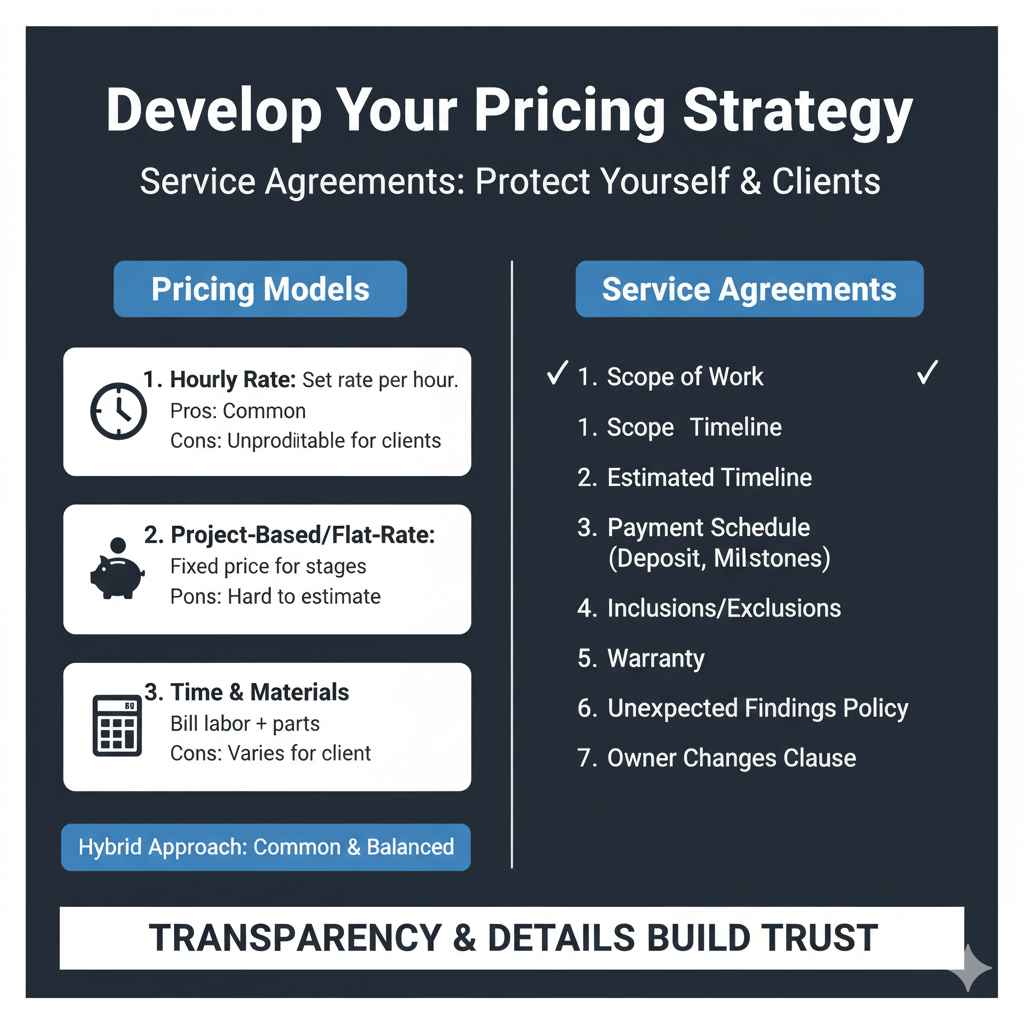
- Hourly Rate: Charge a set rate for each hour worked. This is common but requires careful tracking and can be unpredictable for clients.
- Project-Based/Flat-Rate: Provide a fixed price for the entire restoration or specific stages. This requires extensive experience to estimate accurately and includes a buffer for unexpected issues.
- Time and Materials: Bill for actual labor hours plus the cost of parts and supplies. This is transparent but can still vary for the client.
Many businesses use a hybrid approach. For example, estimate labor and parts for the initial phases, and then provide a revised estimate for subsequent stages as the restoration progresses. Transparency is key to building trust.
Your service agreements should detail:
- The exact scope of work to be performed.
- An estimated timeline and completion date (emphasize that this is an estimate).
- Payment schedule (e.g., deposits, milestone payments, final payment).
- What is included and excluded from the price.
- Warranty information on parts and labor.
- Policies on unexpected findings and additional work.
- Clause for unforeseen circumstances or owner-requested changes.
A well-written service agreement protects both you and your client.
9. Build Your Brand and Marketing Presence
In a competitive market, a strong brand and effective marketing are essential to attract clients. Your passion and expertise should shine through.
Marketing your car restoration business:
- Build a Professional Website: Showcase your services, expertise, and importantly, a gallery of your past work. High-quality photos and videos of your restorations are your best advertisement.
- High-Quality Photography: Invest in professional photos of your work. Before, during, and after shots are incredibly effective.
- Social Media Marketing: Platforms like Instagram, Facebook, and YouTube are ideal for visually showcasing your restorations. Share progress, behind-the-scenes glimpses, and completed projects. Engage with classic car communities online.
- Local SEO: Optimize your website and online listings (like Google My Business) for local searches. People often look for “classic car restoration near me.
- Networking: Attend car shows, swap meets, and local automotive events. Connect with other enthusiasts, clubs, and potential clients.
- Word-of-Mouth Referrals: Encourage satisfied customers to leave reviews and refer new business. Positive testimonials are powerful.
- Vehicle Wraps/Signage: If you transport client vehicles or your own project cars, consider branded wraps or prominent signage.
Consider creating content that showcases your knowledge, such as blog posts or videos about common restoration challenges, tips for classic car owners, or the history behind certain models you work on.
Frequently Asked Questions (FAQ)
Q1: How much money do I need to start a car restoration business?
A1: Startup costs can vary greatly, from $20,000 to well over $100,000. Essential costs include tools, equipment, a workspace, insurance, and initial parts. It’s crucial to create a detailed budget based on your specific niche and operational scale.
Q2: What are the most important legal requirements for this type of business?
A2: Key requirements include registering your business, obtaining relevant licenses and permits, and securing comprehensive insurance, especially Garagekeeper’s Liability to cover client vehicles. It’s wise to consult with legal and insurance professionals experienced in automotive businesses.
Q3: Do I need a lot of experience to start a car restoration business?
A3: Yes, significant experience is highly recommended. Car restoration requires specialized knowledge in mechanics, bodywork, electrical systems, and finishing. While you can hire experts, having a strong personal understanding of the craft is foundational.
Q4: Can I start a car restoration business from home?
A4: For very small-scale projects or specialized services, a well-equipped home garage might be feasible. However, zoning laws, space limitations, safety concerns (like ventilation for paint fumes), and professional image may require a dedicated commercial space as you grow.