Custom Wheels for Classic Cars: Styles, Sizing and Buying Guide
The right custom wheels can do more for a classic car’s look than almost any other single upgrade, but the wrong size or offset can ruin the stance, rub the fenders, or throw off your speedometer. A misjudged wheel purchase on a classic car often means a $150-$300-per-wheel mistake, since most sellers will not take back a wheel that has already been mounted and driven on. This guide covers the wheel styles classic car owners actually run, how bolt pattern, offset, and backspacing determine whether a wheel will fit, realistic price ranges by wheel type, and what changes about installation on a car that was never designed with modern wheels in mind.
Popular Custom Wheel Styles for Classic Cars
Most classic car owners choose from a handful of wheel styles that have stayed popular for decades because they suit the proportions of older bodywork. Picking a style is usually the first decision, before you even get into sizing.
- Reverse wire wheels – spoked wheels with a knock-off or bolt-on center, historically used on lowriders and British sports cars. They are heavier than cast aluminum and usually need periodic spoke tension checks.
- Rally / steel five-slot wheels – the factory-style steel wheel with a five-slot pattern, often paired with a trim ring and center cap. Inexpensive, strong, and period-correct for 1960s-1970s American cars.
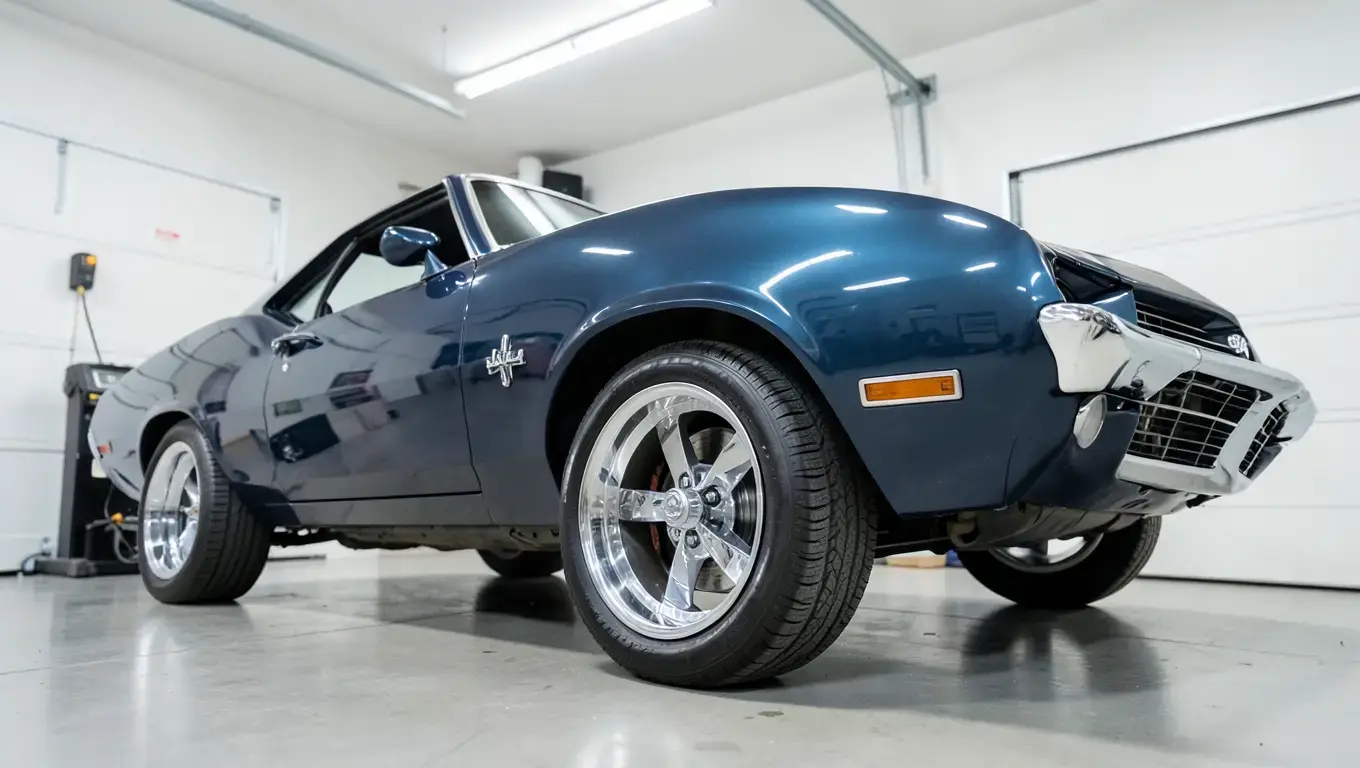
- Torq Thrust-style cast aluminum wheels – the reverse five-spoke mag wheel look popularized by American Racing in the 1960s. Still the most common “custom wheel” choice for muscle cars today.
- Billet or forged aluminum wheels – modern, machined multi-spoke designs. Lighter and stiffer than cast wheels, but priced well above steel or entry-level cast aluminum.
- Deep-dish wheels – wider wheels with more backspacing offset toward the hub, used to fill out wheel wells on cars that originally ran narrow bias-ply tires.
The Torq Thrust-style five-spoke design (shown below) remains the single most requested look for American muscle cars and classic GM models, largely because it was the original equipment “mag wheel” option on several factory performance packages in the 1960s.
ICONIC CLASSIC WHEEL STYLE
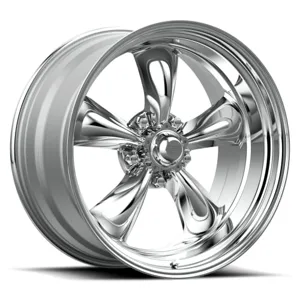 |
American Racing Torq Thrust II 15×7 Wheel – $220.00 This is the reverse five-spoke wheel described in the styles section above – the design most classic muscle car and classic GM owners search for by name.
|
Wheel Material Comparison
Material affects weight, ride quality, cost, and how period-correct the wheel looks. There is no single “best” material – it depends on whether you are restoring for originality or building a driver.
| Material | Typical Weight | Durability | Typical Cost per Wheel | Best For |
|---|---|---|---|---|
| Steel | Heaviest | Very durable, dents rather than cracks | $80-$150 | Period-correct restorations, budget builds |
| Cast aluminum (Torq Thrust-style) | Moderate | Durable but can crack on hard curb impacts | $180-$300 | Muscle cars, classic GM/Ford/Mopar builds |
| Forged aluminum | Lightest | Excellent, resists cracking better than cast | $350-$800+ | Performance-focused restomods |
| Wire spoke | Heavy | Needs periodic spoke tension checks | $150-$400 | British sports cars, lowriders, luxury classics |
Getting the Fit Right: Bolt Pattern, Offset, and Backspacing
More custom wheel returns happen because of a fitment mistake than because someone disliked the style. Three measurements decide whether a wheel will actually bolt on and clear everything around it.
- Bolt pattern (bolt circle) – the number of lug holes and the diameter of the circle they sit on, written as something like 5×4.75″ or 5×120.65mm. Classic domestic cars commonly used patterns such as 5×4.75″ (many GM models) or 5×4.5″ (many Ford models), but the exact pattern varies by year and platform, so verify yours against your factory service manual or an original wheel before ordering.
- Offset – the distance from the wheel’s centerline to its mounting surface, measured in millimeters. A lower or negative offset pushes the wheel face further out from the car; a higher offset tucks it in. Getting this wrong is the most common cause of a wheel rubbing a fender lip or brake caliper.
- Backspacing – the distance from the wheel’s mounting surface to its inner edge, measured in inches. It tells you how close the wheel sits to your suspension and brake components on the inside, which matters even more than offset on cars that have been upgraded with larger disc brakes.
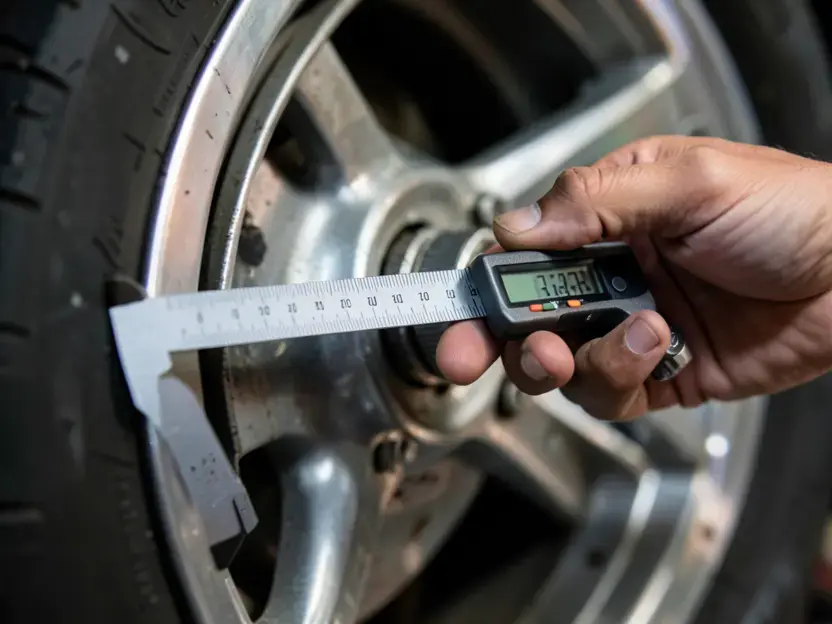
If your classic car has already had a disc brake conversion, aftermarket suspension, or a different rear end swapped in, treat the original bolt pattern as a starting point rather than a guarantee – measure the car as it sits now, not as it left the factory.
Choosing Diameter and Width Without Ruining the Stance
Most classic cars were designed around 14 or 15 inch wheels with tall sidewall tires. Going up in diameter changes the look and the ride quality, so it pays to think through the tradeoffs before buying.
- Staying close to the original diameter (within an inch or two) keeps the factory-correct proportions and avoids recalibrating your speedometer, since a taller or shorter overall tire diameter changes how fast the wheel actually turns per mile.
- Going up in diameter (a common “plus-sizing” move to 17 or 18 inches) usually means a lower-profile tire to keep the same overall rolling diameter, which firms up the ride and can look more modern than period-correct.
- Width should stay within what your fender lip and inner wheel well can clear at full steering lock and full suspension travel – a wheel that clears standing still can still rub going over a bump or turning into a driveway.
If you are not sure how far you can go, most wheel and tire retailers offer a fitment guide by year, make, and model, and a local shop that specializes in classic cars can mock up the exact combination before you order.
What Custom Wheels for Classic Cars Typically Cost
Prices vary by material, brand, and finish, but current retail pricing for genuine name-brand classic wheels gives a realistic sense of what to budget for a full set of four.
| Wheel Type / Example | Price per Wheel | Set of 4 (approx.) |
|---|---|---|
| Steel Rally wheel (15 inch, dual bolt pattern) | ~$96 | ~$384 |
| American Racing Torq Thrust D (15×6, cast aluminum) | ~$192 | ~$768 |
| American Racing Torq Thrust II (15×7, cast aluminum) | ~$220 | ~$880 |
| American Racing Torq Thrust II (16×7, cast aluminum) | ~$245 | ~$980 |
| Forged aluminum, custom finish | $350-$800+ | $1,400-$3,200+ |
Budget separately for tires, mounting and balancing, and a wheel adapter kit if your bolt pattern doesn’t match a wheel you want – those add-ons commonly run another $500-$900 for a full set.
Installation Notes: Brakes, Adapters, and TPMS
A few things about installing wheels on a classic car are different from putting new wheels on a modern daily driver.
- Brake clearance – if the car has had a disc brake upgrade, check that the wheel’s inner barrel clears the caliper. This is a common problem when reusing a factory-style steel wheel after a brake swap.
- Bolt pattern adapters – if you fall in love with a wheel that doesn’t match your car’s bolt pattern, wheel adapters exist, but they add stack height (which changes offset) and are generally considered a compromise rather than a first choice.
- TPMS (tire pressure monitoring) – most classic cars, being built well before TPMS became mandatory on new US vehicles (2007-2008 model years), have no legal requirement for it, so you generally do not need to buy TPMS-compatible wheels or sensors for a pre-2008 classic.
- Lug nut seat type – classic wheels commonly use a different lug seat (flat, conical, or shank) than modern wheels. Use the lug nuts specified for that exact wheel, not whatever came with the car, or you risk an improperly seated wheel.
Where to Buy Custom Wheels for Classic Cars
Specialty classic car wheel retailers, general online auto parts marketplaces, and classic car swap meets or shows are the three most common sources. Specialty retailers tend to carry period-correct reproductions and can usually confirm exact bolt pattern and offset for your specific year and model before you buy. Online marketplaces are convenient for well-known aftermarket lines like American Racing, and swap meets or car shows are worth checking if you want an original take-off wheel rather than a reproduction. Whichever route you choose, buy from a seller that clearly states bolt pattern, offset, and backspacing rather than just “fits most classic cars” – that phrase is a red flag, not a guarantee.
Frequently Asked Questions
What Is the Standard Bolt Pattern for Classic Car Wheels?
There is no single standard – it varies by manufacturer and era. Many classic GM cars use a 5×4.75″ (5×120.65mm) pattern, and many classic Ford cars use 5×4.5″ (5×114.3mm), but the exact pattern can differ by model and year, and it changes entirely if the car has had a rear end or brake swap. Always measure your car’s current bolt pattern rather than assuming it matches a general chart.
Can I Put Bigger Wheels on My Classic Car Without Changing the Look?
Going up an inch or two in diameter with a matching lower-profile tire usually keeps a period-appropriate look, especially with a Torq Thrust-style or Rally wheel design. Jumping several sizes up, to 18 inches or more, tends to read as a modern restomod look rather than a factory-era style, even with a classic wheel design.
Do Custom Wheels Need TPMS Sensors on a Classic Car?
No, not for the vast majority of classic cars. TPMS became a federal requirement on new US passenger vehicles starting with the 2007-2008 model years, so any classic car built before that has no legal TPMS requirement and standard non-TPMS wheels work fine.
What Is Backspacing and Why Does It Matter?
Backspacing is the distance from the wheel’s mounting surface to its inner edge. It determines how close the wheel sits to your brake calipers, control arms, and other suspension parts. Getting backspacing wrong is one of the most common reasons a wheel that “should fit” ends up rubbing on the inside of the wheel well.
Are Steel Wheels or Aluminum Wheels Better for a Classic Car?
Neither is universally better – it depends on your goal. Steel wheels are cheaper, more period-correct for many 1960s-1970s American cars, and shrug off curb impacts by denting instead of cracking. Cast or forged aluminum wheels are lighter, which can improve handling and ride quality, but cost more and can crack rather than bend on a hard impact.
How Much Do Custom Wheels for a Classic Car Cost?
A set of four steel Rally-style wheels typically runs around $380-$400. A set of four cast aluminum Torq Thrust-style wheels typically runs $770-$980 depending on size and finish. Forged aluminum wheels with a custom finish can run $1,400-$3,200 or more for a set of four. Budget extra for tires, mounting and balancing, and possibly a wheel adapter kit.
Conclusion
Custom wheels are one of the highest-impact, most visible upgrades you can make to a classic car, but the style you like is only half the decision. Confirming bolt pattern, offset, and backspacing against your car as it currently sits – not just a general chart – is what actually determines whether the wheels you order will bolt on and clear everything around them. Steel and cast aluminum Torq Thrust-style wheels cover most budgets and most classic American cars, while wire wheels and forged aluminum serve more specific builds. Measure twice, confirm fitment with the seller before you buy, and the right set of wheels will transform the car’s stance for a lot less trouble than most other restoration work.
Products related to this article
Sponsored / affiliate links. As an Amazon Associate I earn from qualifying purchases. I may earn additional commission from eligible campaigns.