How to Start a Car With a Clogged Catalytic Converter Proven
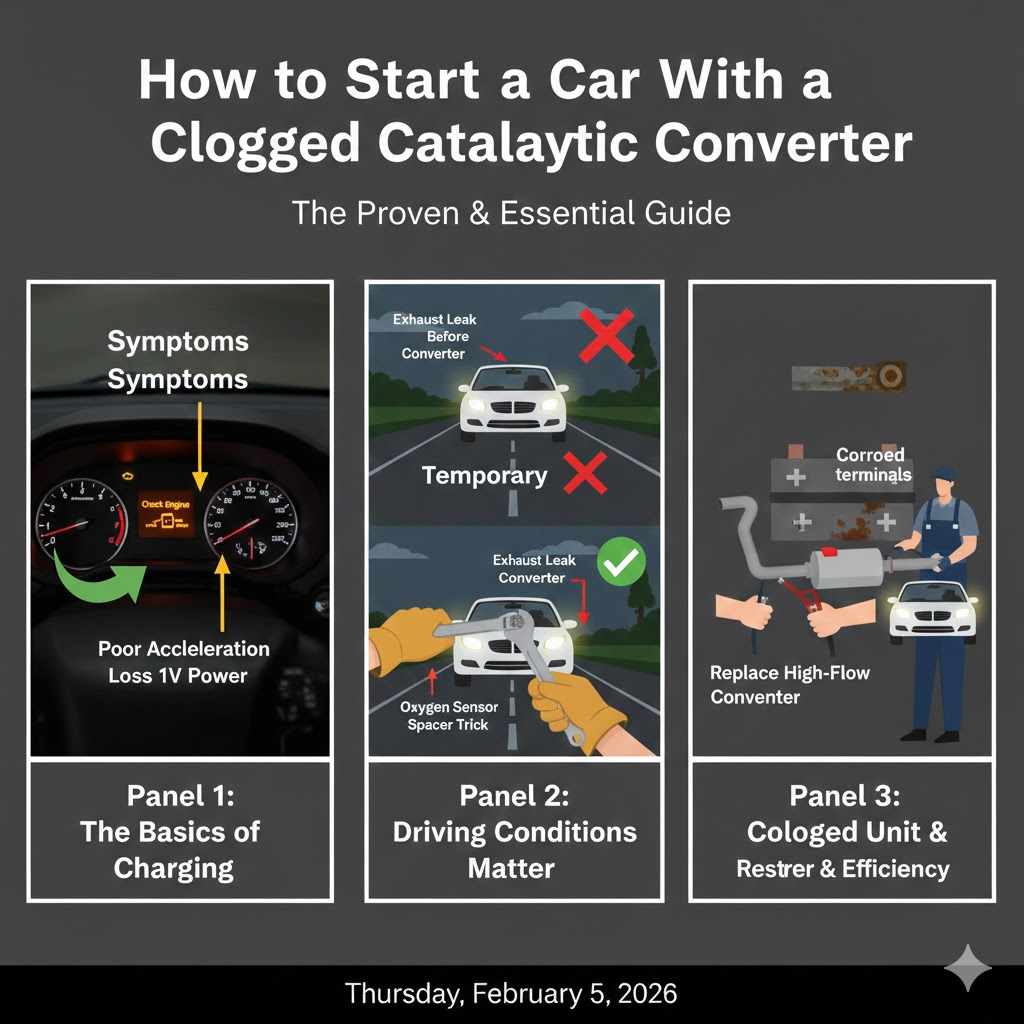
To start a car with a clogged catalytic converter for a short emergency trip, you must relieve exhaust backpressure. The safest temporary method is to remove the upstream oxygen (O2) sensor before the converter. This creates an escape route for exhaust gases, allowing the engine to start and run. This is a temporary fix only to get to a mechanic.
Is your car refusing to start? Does it feel weak, like it can’t breathe? A clogged catalytic converter might be the problem. This can be a very frustrating issue, leaving you stranded and worried about expensive repairs. Don’t worry, you’re in the right place. I’m Md Meraj, and I’m here to guide you through a proven, temporary solution to get your car started and moved to a safe location.
This guide is simple, step-by-step, and made for anyone, even if you’ve never worked on a car before. Let’s get you back on the road, one easy step at a time.
What Is a Catalytic Converter and Why Does It Clog?
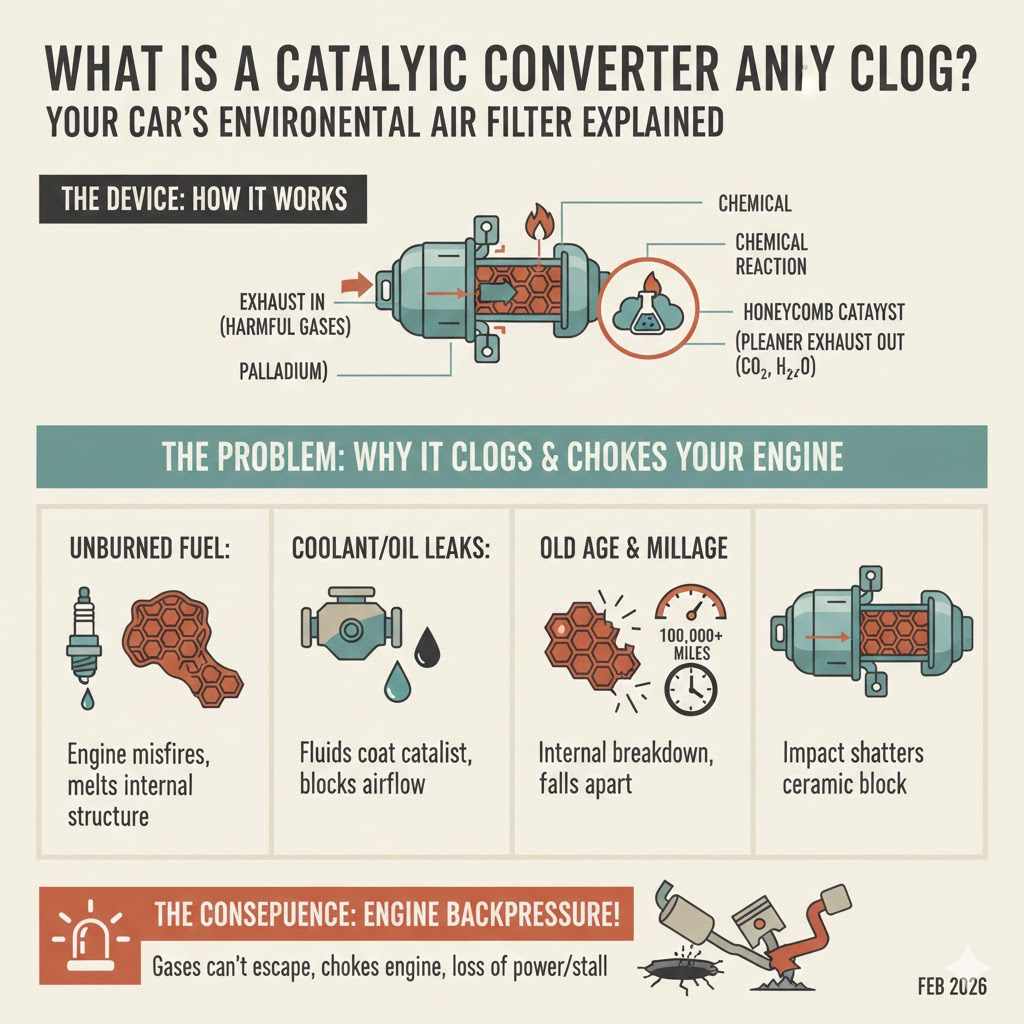
Think of the catalytic converter as your car’s personal air filter for the environment. It’s a metal box in your exhaust system filled with a honeycomb structure coated in special metals like platinum and palladium. When hot, nasty exhaust fumes from your engine pass through it, these metals cause a chemical reaction that changes harmful gases (like carbon monoxide) into much safer ones (like carbon dioxide and water vapor). It’s a brilliant piece of technology that keeps our air cleaner.
So, why does it get clogged? Over time, this honeycomb can get blocked up. Here are the most common reasons:
- Unburned Fuel: If your engine isn’t running perfectly—maybe due to a bad spark plug or a faulty sensor—unburned fuel can get into the exhaust. When this fuel hits the super-hot converter, it can melt the internal structure, causing a blockage.
- Coolant or Oil Leaks: A leaking head gasket or bad piston rings can allow engine coolant or oil to seep into the exhaust system. These fluids contain additives that can coat the converter’s catalyst, rendering it useless and creating a clog.
- Old Age and Mileage: Like any car part, a catalytic converter doesn’t last forever. After tens of thousands of miles, the internal structure can simply break down, fall apart, and create a blockage.
- Physical Damage: Hitting a large pothole or road debris can physically damage the converter’s housing, causing the fragile honeycomb inside to shatter and create a clog.
When the converter is clogged, exhaust gases can’t escape freely. This creates immense “backpressure,” essentially choking your engine. It can’t breathe out, so it can’t breathe in fresh air and fuel. This is why the car struggles to run or won’t start at all.
Telltale Signs: How to Know Your Catalytic Converter is Clogged
Your car is great at giving you clues when something is wrong. A clogged catalytic converter has some very specific symptoms. If you’re experiencing a few of these at the same time, the converter is a likely suspect.
- Severe Loss of Power: This is the biggest sign. Your car will feel incredibly sluggish and weak, especially when you try to accelerate or go up a hill. It feels like you’re towing something extremely heavy.
- Engine Won’t Start or Stalls: In severe cases, the backpressure is so great that the engine can’t even push the exhaust out to complete a full cycle. It may crank but won’t start, or it might start for a second and then immediately stall.
- Rotten Egg Smell: The gasoline we use contains a small amount of sulfur. The catalytic converter normally changes this into odorless sulfur dioxide. When it’s failing, it can’t process it correctly, resulting in a distinct rotten egg (hydrogen sulfide) smell from the tailpipe.
- Check Engine Light is On: Your car’s computer monitors the efficiency of the catalytic converter using oxygen sensors. If it detects a problem, it will trigger the Check Engine Light. Common error codes include P0420 and P0430.
- Reduced Fuel Economy: Your engine has to work much harder to push exhaust gases through the clog. This extra work burns more fuel, and you’ll notice you’re visiting the gas station more often.
- Failed Emissions Test: This is a sure-fire way to know there’s a problem. A clogged or failing converter cannot clean the exhaust properly, leading to an immediate failure at the testing station.
- Rattling Noise: If the honeycomb structure inside the converter has broken apart, you might hear a rattling noise from under the car, especially when you first start it or when it’s idling.
A Temporary Fix to Get You Moving: The Proven Method
Let’s be very clear: the following steps are for an emergency situation only. This is not a repair. This is a temporary bypass to allow you to start your car and drive it a very short distance, like to a repair shop or off a busy road. Driving for an extended period with this method can cause serious damage to your vehicle and is unsafe.
Safety First! Read This Before You Touch Anything
Working on an exhaust system can be dangerous if you’re not careful. Please take these warnings seriously.
- LET THE ENGINE COOL DOWN! The exhaust system gets incredibly hot—hot enough to cause third-degree burns in an instant. You must wait for the engine and exhaust to be completely cool to the touch. This can take several hours. Do not rush this step.
- Work in a Well-Ventilated Area: You will be releasing unfiltered exhaust fumes. Do this outdoors, never in a closed garage.
- Wear Safety Gear: Always wear safety glasses to protect your eyes from falling rust or debris. A good pair of work gloves will protect your hands from scrapes and hot surfaces if you misjudge the temperature.
- Secure the Vehicle: If you need to lift the car to access the sensor, use a proper car jack on a flat, solid surface and always secure it with jack stands. Never work under a car supported only by a jack.
Tools You’ll Need for the Job
The good news is you don’t need a professional tool chest for this. The list is short and simple.
- Oxygen (O2) Sensor Socket or a Wrench: An O2 sensor socket is best as it’s designed to fit perfectly. However, a standard open-ended wrench (usually 22mm or 7/8 inch) will often work.
- Penetrating Oil: Something like PB Blaster or WD-40 Specialist Penetrant is a lifesaver. O2 sensors are notorious for getting stuck, and this will help loosen them.
- Safety Glasses and Work Gloves: Non-negotiable for your safety.
Step-by-Step Guide: Starting Your Car with a Clogged Converter
Ready? Let’s walk through this process together. Take your time and follow each step carefully.
- Park on a Flat Surface and Let It Cool. We’ve said it before, but it’s the most important step. Park somewhere safe and level. Turn off the engine and wait. Go have a coffee, watch a movie—give it at least 2-3 hours to cool down completely. Touch the exhaust pipe near the engine; if it’s even slightly warm, wait longer.
- Locate the Upstream Oxygen (O2) Sensor. Open your hood. Look at the engine and find the exhaust manifold—this is the heavy cast-iron or steel set of pipes that collects exhaust from the engine. Screwed into this manifold, you will see a small part with a wire coming out of it. This is your upstream O2 sensor. It’s called “upstream” because it’s before the catalytic converter. This is the one you need to remove.
- Apply Penetrating Oil. Spray a generous amount of penetrating oil around the base of the O2 sensor where it screws into the exhaust manifold. Let it sit for at least 10-15 minutes. This will work its way into the threads and make removal much easier, preventing you from damaging the sensor or the manifold.
- Carefully Remove the O2 Sensor. Place your O2 sensor socket or wrench over the sensor. Apply slow, steady pressure to turn it counter-clockwise (lefty-loosey). Do not jerk it. If it’s very tight, you might need to apply a bit more oil and wait longer. Once it breaks loose, it should unscrew easily. Carefully pull it out and tuck it safely to the side, away from any moving parts.
- Attempt to Start the Engine. Now, get in the car and turn the key. Be prepared for a shock: it is going to be extremely loud. The sound will be coming from the engine bay, not the tailpipe. This is normal because you’ve created an exit for the exhaust right at the engine. The engine should now start and stay running because the backpressure has been released.
- What to Do Next (The Most Important Step). Do not celebrate and go for a drive. The job is not done. Your only goal now is to drive the car directly to a repair shop. Do not rev the engine. Drive slowly and steadily. Remember, you are venting extremely hot and toxic exhaust gases directly under your hood, near sensitive plastic parts, wires, and fuel lines. This creates a significant fire risk.
Why Does This Work? A Simple Explanation
Imagine a fully clogged drain in your sink. You can run the faucet all you want, but the water has nowhere to go and just backs up. Your engine is doing the same thing. The clogged catalytic converter is the drain clog, and the exhaust gas is the water.
By removing the upstream O2 sensor, you’ve essentially drilled a hole in the pipe before the clog. Now, the exhaust gas has an easy escape route. It bypasses the blockage entirely. This relieves the immense backpressure, allowing the engine’s pistons to move freely again. The engine can finally “exhale,” which allows it to take in a fresh “breath” of air and fuel, and that’s why it starts and runs.
Important Warning: This is NOT a Permanent Solution
I cannot stress this enough. The method described above is a clever trick for an emergency, but continuing to drive this way is a terrible idea. You are exposing yourself and your vehicle to serious risks.
The Dangers of Driving with a Bypassed Exhaust
Here is a clear breakdown of why you must get your car to a mechanic immediately.
| Risk | Detailed Explanation |
|---|---|
| Fire Hazard | Exhaust gases can reach temperatures over 1,000°F (538°C). Venting them directly into the engine bay puts them dangerously close to plastic components, rubber hoses, wiring insulation, and potentially leaking fluids like oil or power steering fluid. This is a very real fire risk. |
| Engine Damage | This temporary fix can lead to burnt exhaust valves. The engine is designed to have a certain amount of backpressure. Removing all of it can alter the engine’s operation and cause cool air to rush back into the hot manifold when you decelerate, which can crack the manifold or damage the valves. |
| Toxic Fumes | You are releasing unfiltered exhaust, including deadly, odorless carbon monoxide, right at the front of your car. These fumes can easily be sucked into the cabin through the ventilation system, creating a serious health hazard for you and your passengers. |
| Illegal Operation | Tampering with or removing any part of your vehicle’s emissions control system is illegal under federal law. The Environmental Protection Agency (EPA) has strict regulations, and you will instantly fail any emissions test. |
| Damage to Other Parts | The intense heat from the escaping exhaust can melt nearby plastic parts, damage the wiring harness leading to the O2 sensor, and degrade other components under the hood, leading to more expensive repairs. |
The Real Fix: Long-Term Solutions for a Clogged Converter
Once you’ve safely reached a repair shop, you have a few options to permanently solve the problem. The right choice depends on how badly clogged the converter is.
Option 1: Using a Catalytic Converter Cleaner
For very mild, early-stage clogging, a specialized fuel additive cleaner might help. You pour a bottle into your gas tank, and it works to dissolve some of the carbon and soot deposits as you drive. This is a bit of a long shot and will not work for a converter that is melted or physically broken. Think of it as preventative maintenance or a solution for a car that’s just starting to feel a little sluggish.
Option 2: Professional Cleaning
Some specialized shops offer off-car cleaning services where they remove the catalytic converter and use powerful chemicals and high-pressure washing to clear out the blockage. This can be effective but is often labor-intensive and may cost nearly as much as a replacement, depending on the vehicle.
Option 3: Replacing the Catalytic Converter
This is the most common and guaranteed solution for a severely clogged or damaged converter. A mechanic will remove the old unit and install a new one. While this is the most expensive option, it is the only way to restore your car’s performance, fuel economy, and emissions compliance to factory standards. It is a necessary investment in the health and longevity of your vehicle.
How to Keep Your Catalytic Converter Healthy and Prevent Clogs
The best repair is the one you never have to make. With some simple preventative care, you can help your catalytic converter last for many years.
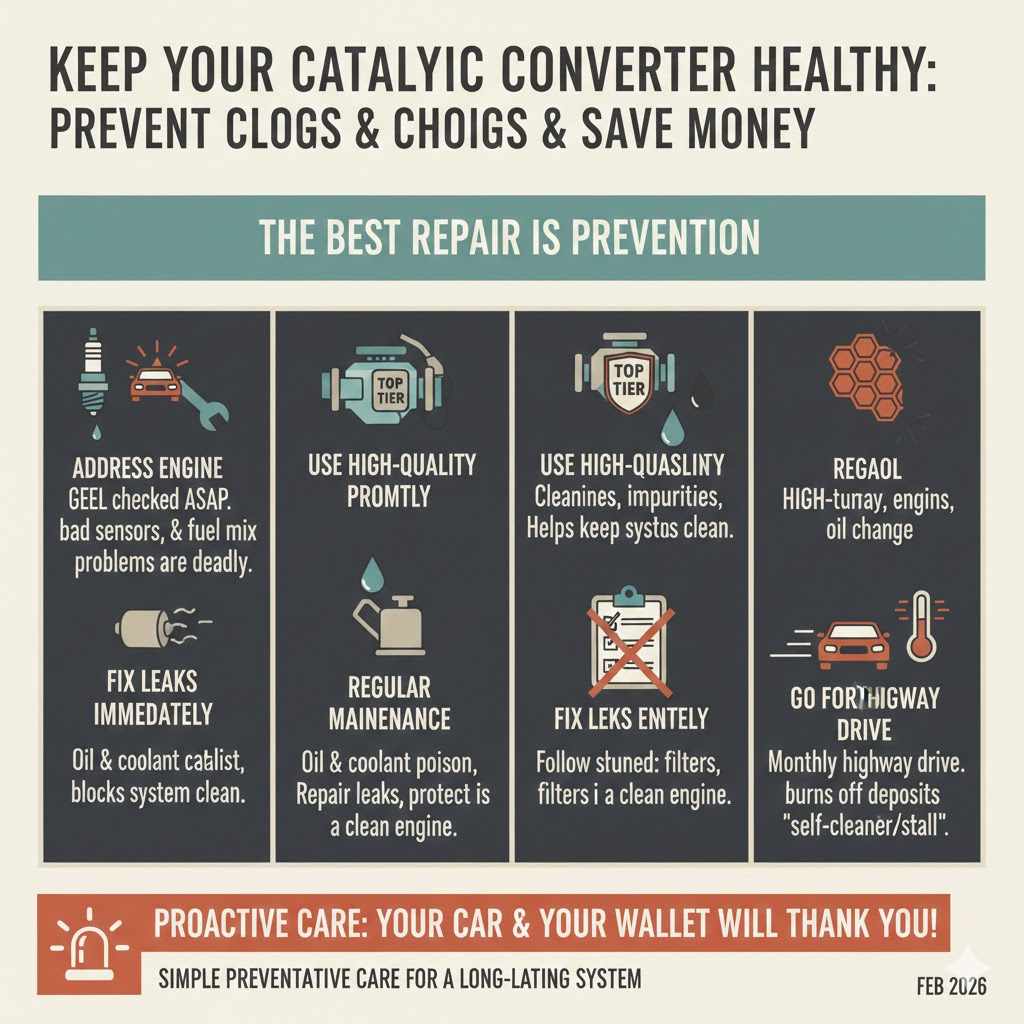
- Address Engine Issues Promptly: The moment your Check Engine Light comes on, get it checked. Issues like engine misfires, faulty O2 sensors, or incorrect air-fuel mixtures are the number one killer of catalytic converters.
- Use High-Quality Fuel: Cheaper gasoline can sometimes contain more impurities that lead to deposits. Sticking to Top Tier certified gasoline can help keep your entire fuel and exhaust system cleaner.
- Regular Maintenance: Follow your vehicle’s recommended maintenance schedule, especially for spark plugs, filters, and oil changes. A well-tuned engine is a clean engine.
- Fix Leaks Immediately: If you notice you’re losing oil or coolant, have it diagnosed and repaired. These fluids are poison to your catalytic converter.
- Go for a Highway Drive: Short, stop-and-go city driving doesn’t allow the exhaust to get hot enough to burn off deposits. A good, long drive on the highway at a steady speed at least once a month helps the converter reach its optimal temperature and perform a “self-cleaning” cycle.
Frequently Asked Questions (FAQ)
1. Can a clogged catalytic converter really stop a car from starting?
Absolutely. If the clog is severe enough, the engine cannot push out the exhaust from the previous cycle. With no way to “exhale,” it cannot take in the air and fuel needed for the next cycle, so it will crank but refuse to start.
2. How long can I drive after removing the O2 sensor?
As little as possible. This is not measured in miles or minutes; it’s measured by the distance to the nearest qualified mechanic. The risks of fire and toxic fumes are real. Do not drive to work, run errands, or go home. Drive straight to the shop.
3. Will a fuel additive really clean my catalytic converter?
It depends. For minor carbon buildup on a converter that is otherwise healthy, a quality cleaner can sometimes improve efficiency and clear minor blockages. However, it cannot repair a converter that has melted internally or has broken pieces rattling around inside.
4. Is it expensive to replace a catalytic converter?
It can be one of the more expensive repairs on a vehicle. The cost varies widely based on the car’s make and model, as the converters themselves contain precious metals. The price can range from a few hundred to several thousand dollars. Always get a quote from a trusted mechanic.
5. Can I just remove the catalytic converter and drive without it?
No. It is illegal to drive without a catalytic converter in all 50 states due to federal environmental laws. It will also cause your Check Engine Light to stay on permanently, make your car run poorly, produce loud and unpleasant exhaust noise, and release harmful pollutants into the air.
6. What does a clogged catalytic converter smell like?
The most common and distinct smell is that of rotten eggs or sulfur. This happens when the converter is not hot enough or is too clogged to properly convert sulfur in the fuel, releasing it as smelly hydrogen sulfide gas.
7. Can I clean a catalytic converter myself?
While some DIY methods exist online, they are generally not recommended. They involve using harsh chemicals like lacquer thinner, which can be dangerous to handle and may damage other parts of your fuel system or sensors. It’s best to leave this job to professionals or opt for a replacement.
Your Next Step to a Healthy Car
You’ve just learned how to handle a tricky and stressful situation. Knowing this temporary fix can give you the confidence to get your car out of a bind and to a mechanic without needing a tow truck. It’s a powerful piece of knowledge to have.
Remember, this method is your emergency lever, not your daily driver. The real solution lies in proper diagnosis and repair. A healthy catalytic converter means a healthier car and cleaner air for everyone. By taking care of your vehicle and addressing problems as they arise, you’re not just saving money on future repairs—you’re becoming a more capable and confident car owner. You can do this!