How to Start Car With Remote Key: Effortless Guide
First, identify your system: OEM remote start uses the fob, push-button start needs the brake and key present, and emergency starts are a separate fallback. Mixing them up can leave the engine off, trigger a no-start message, or strand you with a dead fob or drained battery. This guide shows how to spot each setup and start it correctly.
What your remote key can actually do
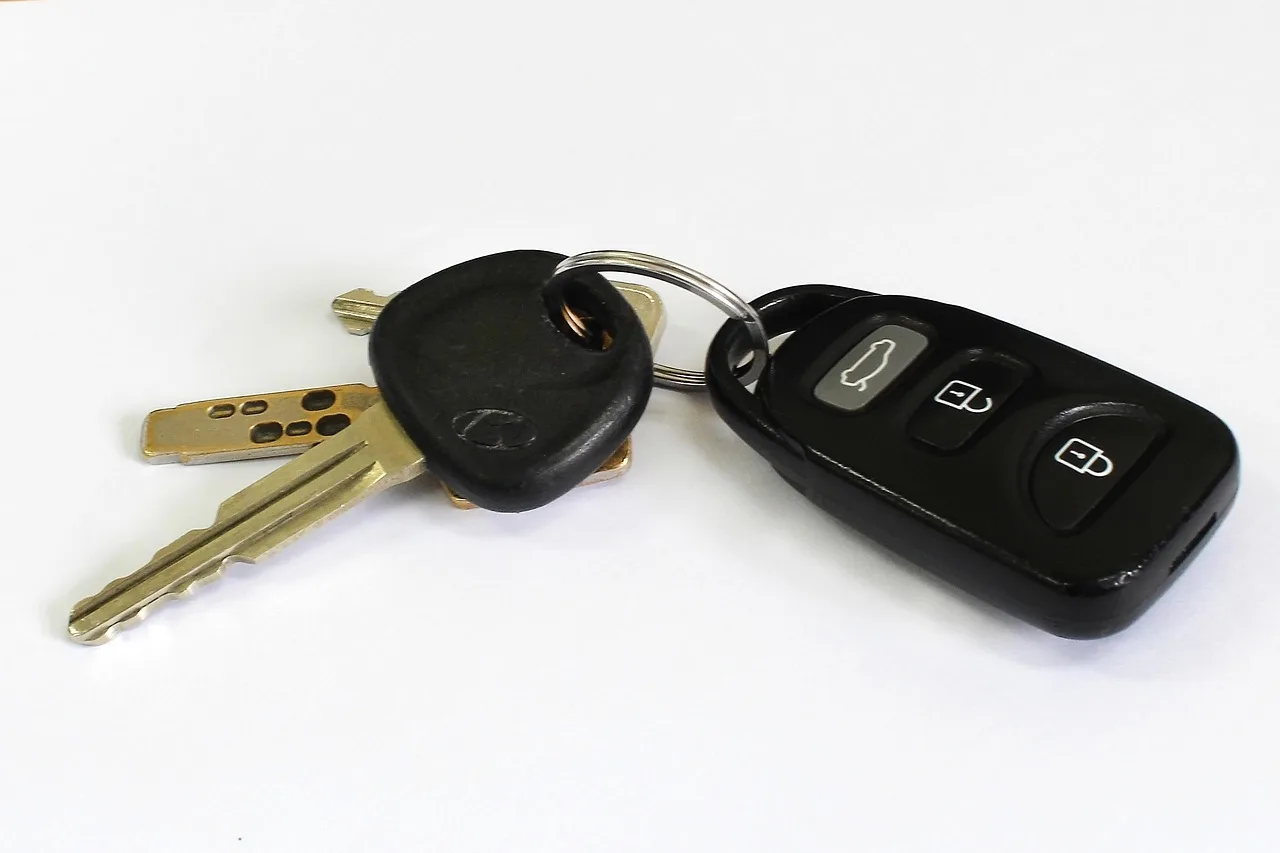


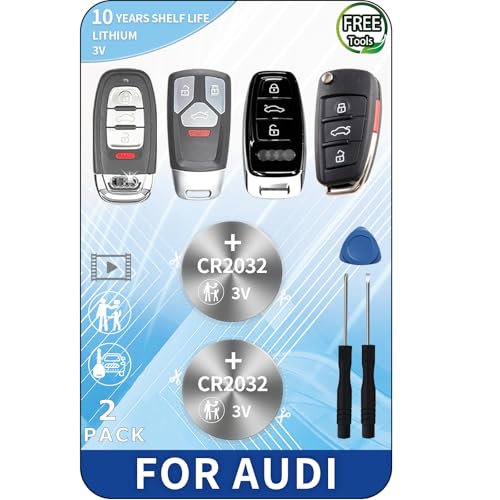
A key fob usually does more than unlock doors. It sends encrypted radio signals to the vehicle, and the transmitter inside the fob can lock, unlock, and, on equipped vehicles, start the engine from outside the car. Many fobs use a CR2032 battery, so weak battery power can reduce range or stop certain functions.
Keyless entry and remote start are separate features. Keyless entry lets you lock and unlock without a traditional metal key. Remote start starts the engine from outside the vehicle. Push-button start is different again: it uses the fob inside the cabin and the vehicle’s authorized code check before it will run.
Key fob basics
The fob is a small transmitter on your keychain, and the keychain simply connects that item to a keyring. On many vehicles, the fob still opens the doors even when the battery is weak, because door commands can need less range than starting commands. A car may also keep the immobilizer active until it detects the correct coded signal.
Keyless entry versus remote start versus push-button start
Keyless entry only handles access. Push-button start handles engine starting from inside the vehicle. Remote start handles engine starting from outside the vehicle, and many factory systems still require a lock-first step before they accept the start command. The three features can appear together, but they do not work the same way.
Safety and security checks before any start
Before starting, check that the hood is closed, the doors are shut, and the vehicle is in the correct gear state for the system. Many remote start systems will block engine start if a door or hood is open. The immobilizer also checks for an authorized key code, which is why a valid fob matters even when the doors already unlocked.
How do you know which starting system you have?
Look for the control type first. If your fob has a dedicated remote-start button or a lock-based start sequence in the owner’s manual, you likely have OEM remote start. If the vehicle starts only when the fob is inside and the brake is pressed, you have push-button ignition. If neither is present, you may have only keyless entry.
Signs of OEM remote start
Factory systems often use a lock-first sequence. Some OEM remote start systems use three lock presses. Other OEM systems use a lock, unlock, lock sequence. The exact sequence varies by manufacturer, so the owner’s manual for your model lists the correct pattern and any run-time limits or extension steps.
Signs of aftermarket remote start
Aftermarket remote starters often use a separate remote or a dedicated button on an added fob. Many require pressing and holding the button rather than tapping it once. They may also be installed by a professional after purchase, and the start pattern can differ from the original vehicle fob.
When the car has keyless entry only
If the fob locks and unlocks the doors but there is no remote-start function, the vehicle may have keyless entry only. That setup can still use an immobilizer and a push-button system, but it will not start from outside the car. In that case, the engine will not respond to any remote-start sequence.
Remote start decision table
Use this table to match your setup to the right action before you press anything. The most common mistake is trying a push-button start sequence on a vehicle that only has remote start, or trying a remote-start sequence on a car that only has keyless entry.
| Setup | Required button sequence | Common confirmation signals | Typical run time | Most likely failure reason |
|---|---|---|---|---|
| Keyless entry only | Lock or unlock only; no remote-start command is available | Door locks cycle, lamps flash, horn may chirp | None | Vehicle does not have remote start |
| Push-button start | Fob inside cabin, then brake pedal plus start button | Cluster wakes, engine starts, “key detected” message may appear | Runs while the ignition is on | Fob not detected inside the cabin, brake not pressed |
| OEM remote start | Often lock-first; some systems use three lock presses or lock, unlock, lock | Lights flash, horn chirps, engine starts | Commonly 10 to 15 minutes | Hood open, doors open, wrong sequence, weak range |
| Aftermarket remote starter | Often press and hold a dedicated button | Parking lights flash, engine starts, remote may beep | Often preset by installer, commonly 10 to 15 minutes | Different activation method, installation issue, battery weakness |
| Dead-fob emergency start | Place fob in the backup detection area, then use the start button | “Key detected” message or a brief chime | Normal ignition once recognized | Battery too weak for fallback detection or fob not in the correct spot |
How do you start a car with remote start?
For OEM remote start, the vehicle usually wants a lock-first command, then a start sequence from the fob. Many systems confirm the start with a flash, chirp, or a message on the dash. Most factory remote start systems run for 10 to 15 minutes before shutting off, and some allow a timer extension.
Typical lock-first sequence
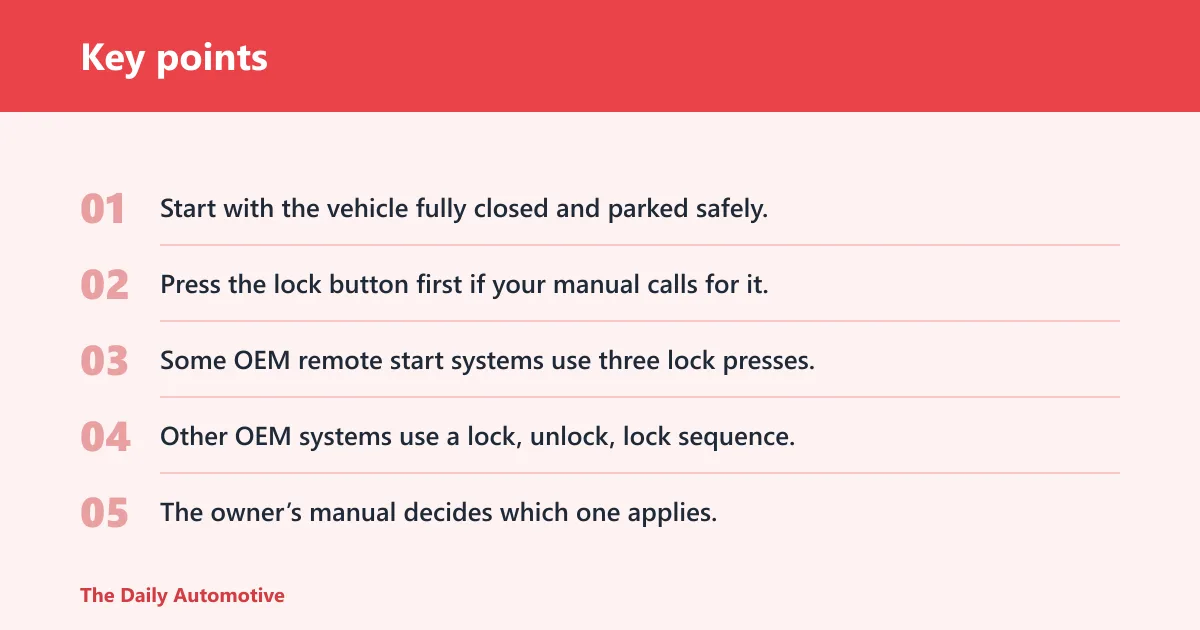
Start with the vehicle fully closed and parked safely. Press the lock button first if your manual calls for it, then use the remote-start button or the required lock pattern. Some OEM remote start systems use three lock presses. Other OEM systems use a lock, unlock, lock sequence. The owner’s manual decides which one applies.
Picture a sedan parked in a driveway at 20 feet from the house. If the doors are closed and the hood is latched, the lights may flash twice and the engine may start after the proper lock pattern. If the hood is open, the same sequence may do nothing at all.
Common confirmation signals
Successful remote start often brings a light flash, a horn chirp, or a dashboard confirmation. Some vehicles also show a climate-control or engine-running message. Range can drop with walls, distance, or interference, so standing near the vehicle can help confirm whether the command reached it. Most standard remote keys have a range of up to 200 feet.
Run time and extension limits
Remote start systems often run for 10 to 15 minutes before shutting off. Many manufacturers list a preset time such as about 10-15 minutes, and some let you send another command to extend the run. The exact limit is model-specific, so the owner’s manual should always be checked before assuming a second start cycle is allowed.
How do you start a push-button car if the fob is detected?
If the fob is inside the cabin and the car recognizes it, push-button starting usually needs the brake pedal pressed before the start button will work. The immobilizer is checking for an authorized key code, so the cabin detection step matters as much as the button press. Without that recognized signal, the engine may stay off.
Fob inside the cabin
Keep the fob inside the vehicle, not in a bag thrown into the trunk or left outside the cabin. Some cars read the fob only in certain cabin zones. If the dashboard says the key is not detected, move the fob closer to the start area or the backup sensor location described in the owner’s manual.
Brake pedal or clutch requirement
Most push-button automatic transmissions need the brake pedal pressed. Manual-transmission vehicles, where equipped, may need the clutch pedal and other safety conditions met before they will start. The system is checking that the car cannot lurch forward during engine start. If the wrong pedal is missing, the engine may refuse to crank.
Why won’t remote start work?
Remote start can fail even when the fob still unlocks the doors. A weak battery may still send a short-range door signal, but not a reliable start signal. Open hoods, open doors, bad range, signal interference, brake or clutch lockouts, and immobilizer checks can all stop the engine from starting.
Open hood or open doors
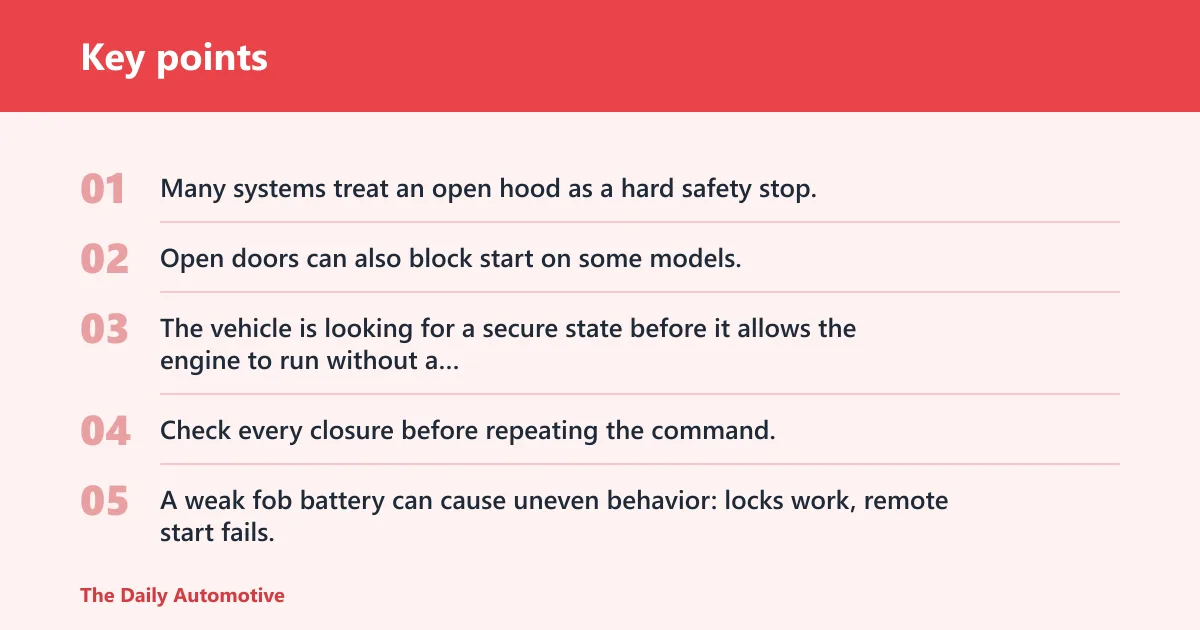
Many systems treat an open hood as a hard safety stop. Open doors can also block start on some models. The vehicle is looking for a secure state before it allows the engine to run without a person inside. Check every closure before repeating the command.
Weak fob battery or short range
A weak fob battery can cause uneven behavior: locks work, remote start fails, or both act inconsistently. Because standard remote keys can reach up to 200 feet in ideal conditions, walls, distance, and interference can reduce the usable range well below that. Move closer and try again only after checking the battery.
A common first-timer mistake is standing in a parking garage and trying the remote start from behind a concrete wall. The fob may still unlock the doors at close range, but the engine command can fail because the signal path is weaker and the vehicle never receives the full code sequence.
Transmission, brake, or security lockouts
Manual-transmission vehicles often need extra safety checks before remote start will work. Some cars will also refuse to start if the brake switch, clutch switch, or hood sensor reports an unsafe condition. The immobilizer may block the engine even when the remote itself seems to work, because the car is waiting for the right authorized start state.
How does dead-fob emergency start work?
Emergency starting is a backup for a low or dead fob battery. The vehicle can often read the fob when it is placed in a special detection spot, even if the battery cannot send a strong normal signal. If the car still does not detect it, the backup battery location, the fob battery, or the vehicle’s sensor check may be the problem.
When the fob battery is low
With a weak battery, the fob may unlock the car but fail to start it normally. Some vehicles will still detect the chip if the fob is held against the start button or placed near the backup reader. The exact spot differs by model, so the owner’s manual matters here too.
What to do if the car still does not detect it
If the car still says the key is not detected, try the backup detection location again, then replace the fob battery if the model uses a CR2032. If that does not solve it, check whether the vehicle is actually a push-button system or a remote-start-only system. Those are separate checks, and mixing them up wastes time.
Frequently asked questions
How do I start my car with a remote key fob?
Check the owner’s manual first, then use the exact sequence for your vehicle. Many OEM systems need the doors closed and a lock-first pattern. Some use three lock presses, while others use lock, unlock, lock. If the engine does not start, verify hood, door, and range conditions before repeating the command.
Do I need to press the lock button before remote starting?
On many factory systems, yes. The lock-first step is common because the vehicle wants a secured state before it accepts the start command. Some brands use three lock presses, while others use lock, unlock, lock. The manual is the only reliable source for the exact sequence on that model.
What if my key fob battery is weak or dead?
A weak battery may still unlock the doors but fail at remote start. If the vehicle has push-button ignition, use the dead-fob emergency start method in the owner’s manual. Many fobs use a CR2032 battery, so replacing that cell is often the first practical fix when the fob starts acting inconsistently.
How do I start a keyless car if the fob isn’t detected?
Move the fob into the cabin and place it where the manual says the backup reader is located. Then press the brake pedal and the start button if the vehicle is a push-button system. If the car still does not detect the fob, the battery may be too weak or the backup sensor area may be wrong.
How do I know whether my car has remote start or just keyless entry?
Look for a remote-start button, a labeled start function in the manual, or a factory sequence like lock-first or lock, unlock, lock. If the fob only locks and unlocks the doors and the engine starts only from inside the cabin, the car may have keyless entry without remote start.
How long does a remote-started car usually run before shutting off?
Remote start systems often run for 10 to 15 minutes before shutting off. Many manufacturers list a preset time such as 10-15 minutes, and some systems can be extended once while others cannot. The owner’s manual should list the run-time limit and any timer extension rule for that specific vehicle.
How is OEM remote start different from aftermarket remote start?
OEM remote start is factory-installed and often uses the vehicle’s original fob with a lock-based sequence. Aftermarket remote starters are added later and may use a separate remote with press-and-hold activation. Installation and trigger behavior can differ, so the button pattern and confirmation signals are often not the same.
Products related to this article
Sponsored / affiliate links. As an Amazon Associate I earn from qualifying purchases. I may earn additional commission from eligible campaigns.