Keyless Entry vs Remote Start: What’s the Difference?
Choose keyless entry if you want quicker door access. Choose remote start if you want the cabin warmed or cooled before you get in. Pick the wrong one and you pay for hardware you barely use, or you find out it stops helping the moment the fob battery dies. This guide compares the functions, explains what still works when the fob, car battery, or signal fails, and shows what fits each use case.
Keyless entry vs remote start: the core trade-off


| Decision factor | Keyless Entry | Remote Start | Winner |
|---|---|---|---|
| Main job | Opens and locks the doors; often opens the trunk or hatch. | Starts the engine from a distance, often with climate control active. | Depends on the job |
| Everyday convenience | Strong for quick in-and-out access. | Useful only when you want the cabin pre-conditioned before entry. | Keyless Entry |
| Winter use | Gets you in faster, but does not warm the cabin by itself. | Best fit for defrosting and warming before you sit down. | Remote Start |
| Failure tolerance | Often still has a backup mechanical keyhole. | Usually stops helping when the vehicle battery is weak or the signal is blocked. | Keyless Entry |
| Security sensitivity | Uses rolling code security on fobs, but passive systems add more convenience exposure. | More exposed to range and signal issues; security depends on the vehicle setup. | Keyless Entry |
| Aftermarket complexity | Usually factory fitted; aftermarket entry-only solutions are simpler than engine-start add-ons. | Aftermarket remote start is possible but usually more involved to install cleanly. | Keyless Entry |
Main job
These features handle different jobs. Keyless entry opens and locks the car. Remote start fires up the engine from afar. That split sounds plain, but it is where buyers get led astray when they treat both systems like the same thing.
Everyday convenience
If you park, leave, and return to the car all day, door access gets used constantly. Remote start matters on the days when cabin temperature is the problem. For short city trips, the unlock function usually earns its keep more often.
Winter use
Remote start wins in cold weather because it gives the heater time to blow warm air and can knock some frost loose before you drive. Keyless entry still helps in winter, but it only shortens the walk to the door. It does not warm the cabin.
Failure tolerance
Keyless entry usually has the better fallback. Many vehicles still keep a conventional key backup or a hidden keyhole, which matters when the fob battery is weak or the electrical system is down. Remote start is far less useful when the vehicle battery is already low.
Security sensitivity
Rolling code security changes every time you press a button, which helps block simple signal cloning on remote keyless entry systems. Passive keyless entry is easier to live with, but it also makes proximity behavior more important to the owner. Remote start adds another radio-based function to manage.
Aftermarket complexity
Factory entry and start systems are usually better integrated than add-on hardware. Remote start can be installed later, but the job tends to touch ignition logic, safety interlocks, and climate controls. Entry-only changes are often simpler than a full start-from-distance retrofit.
What is keyless entry?
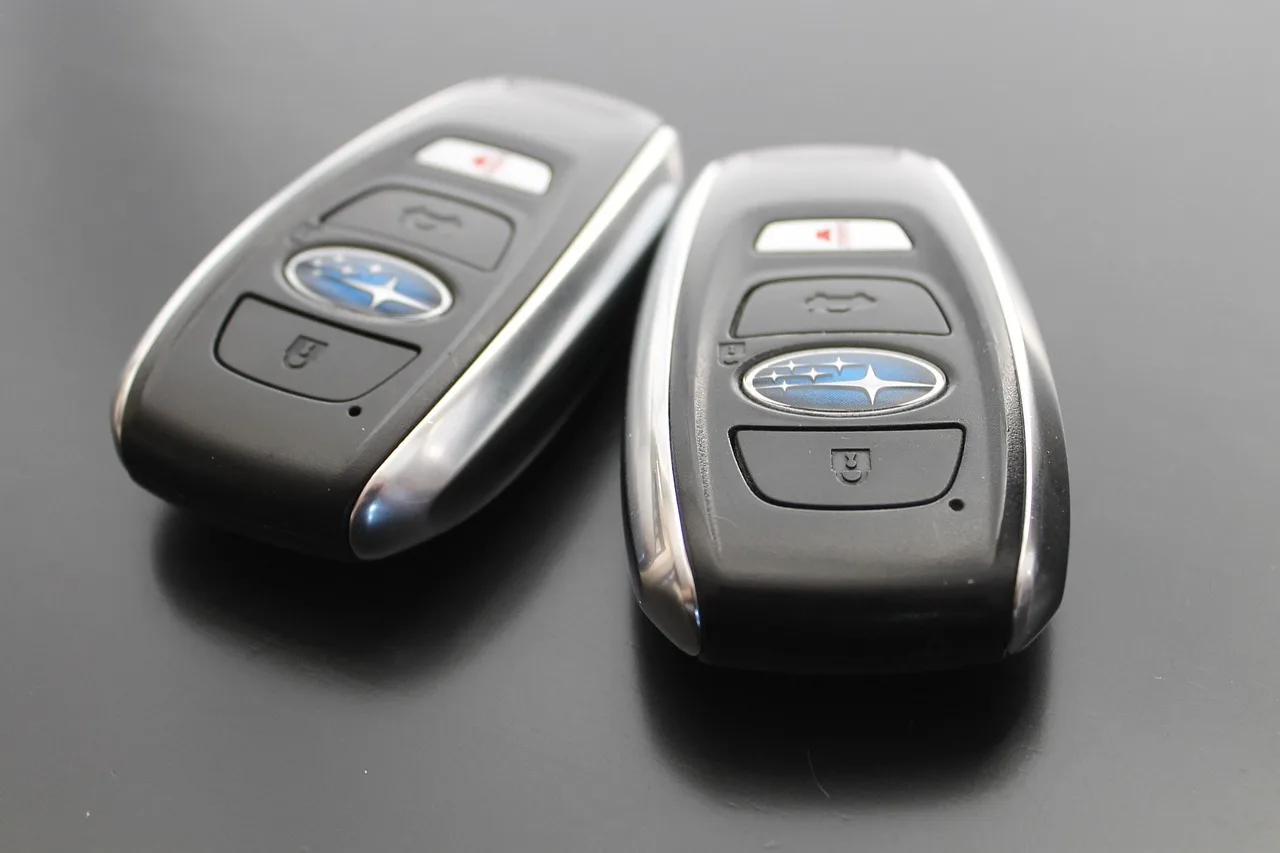
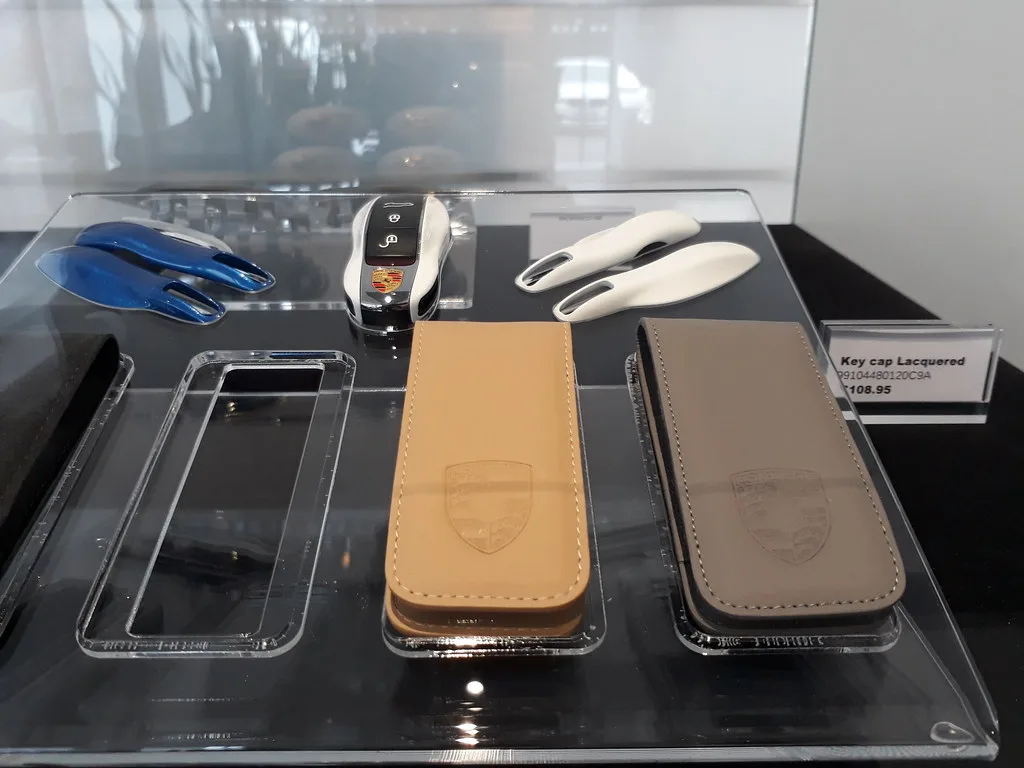
Keyless entry is door access without putting a metal key into the lock. It usually means a button press on a remote keyless entry fob, though some vehicles use passive keyless entry and unlock when the key is near the car. It does not normally start the engine.
Remote keyless entry: button press, lock, unlock, trunk, panic
Remote keyless entry, or RKE, uses short-range radio frequency signals to lock and unlock doors from the fob. Many fobs also control the trunk and panic alarm. Keylessbest says most keyless remote entry systems work within about 20–60 feet.
Rolling code security is part of the design on many systems. Keylessbest says the code changes every time you press a button, which makes simple replay or cloning attacks harder. It also means the vehicle and fob must stay synchronized.
Passive keyless entry: proximity-based access with no button press
Passive keyless entry drops the button press from the unlock step. VAIS describes it as no-button operation. The system can sense the key nearby and may unlock or lock automatically as the driver approaches or leaves, though it depends on proximity and the fob battery.
Backup mechanical keyhole and emergency access
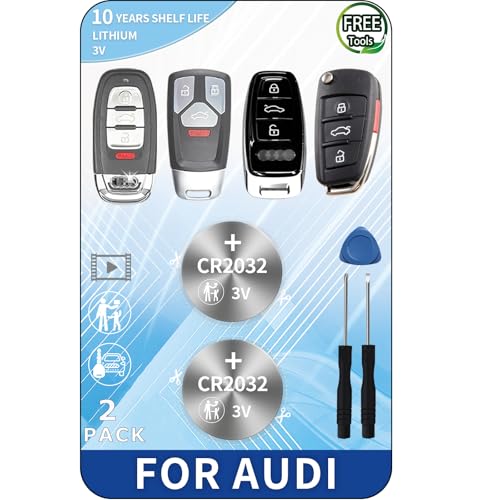
Many keyless systems still include a conventional key backup. VAIS says keyless systems often have a conventional key backup, and that matters when electronics misbehave. A backup mechanical key is the route back into the car when the battery in the fob is dead, the car battery is dead, or the vehicle has an electrical fault.
What is remote start?
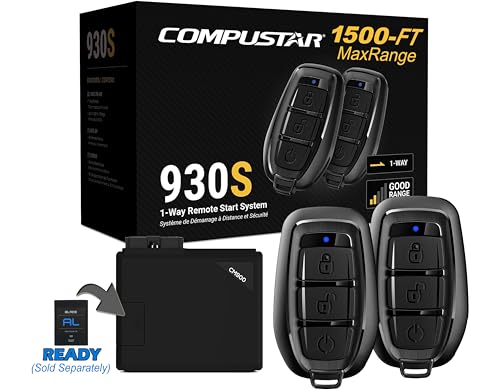
Remote start is an engine-start function triggered from a distance, often by a key fob or a phone app. It is intended for pre-conditioning the cabin rather than unlocking the doors. Range limits and a valid signal matter because the vehicle must receive the command and confirm the safety checks.
How remote start works from the key fob or app
Some vehicles bundle remote start with the factory fob. Others use a separate module or app-based command. VAIS notes that remote keyless entry can allow remote starting, but that is an integration detail, not a rule. Many cars have entry without remote start, and many remote-start setups still rely on a standard unlock method afterward.
Climate control and warm-up use in winter
Remote start is the feature that matters when frost, ice, or a freezing seat is the issue. It can bring the cabin toward a usable temperature before the driver gets in. That is especially useful for early commutes, school runs, and vehicles that sit outside overnight.
Range limits, signal needs, and common lockout rules
Remote start depends on radio range or network connectivity. A garage wall, a crowded parking structure, or RF interference can reduce how well it works. Remote start may also be blocked if the hood is open, the gear selector is not in park, or a fault is present.
Does keyless entry let you start the car from a distance?
Usually not. Keyless entry is about access, not engine start, so it unlocks or locks the vehicle without giving you a remote ignition command. A car may have both features, but the door function and the start function are separate jobs in the system.
Where push-button start fits into the picture
Push-button start is an engine-starting method, and it is often paired with passive keyless entry. The key only needs to be present in the cabin, then the driver presses a button to start the car. That is different from remote start, which starts the engine before anyone gets in.
When a vehicle can have entry without remote start
Many cars have keyless entry and no remote start at all. That setup gives the owner quick access and rolling code protection on the fob, but it does not pre-warm the cabin. For drivers who do not want pre-conditioning, that can be the cleaner and cheaper configuration.
What is the difference between remote keyless entry and passive keyless entry?
Remote keyless entry uses button presses on a fob to lock and unlock the car. Passive keyless entry uses proximity, so the car can unlock or lock without any button press. Both improve convenience, but passive systems trade a little more complexity for less effort at the door.
Button press versus proximity
RKE requires the driver to press lock or unlock. Passive systems watch for the key near the vehicle and handle the access step automatically. That is handy when hands are full, but it can also be more sensitive to how the vehicle detects the key.
Why the battery matters more on passive systems
A weak key fob battery can reduce performance on any system, but passive entry often shows the problem sooner. The car may become intermittent about unlocking or may stop detecting the key at normal range. At that point, the backup mechanical key becomes important for access.
What happens if the key fob battery dies?
Range drops first, then operation becomes intermittent, and some functions stop working. The car may still accept a backup mechanical key for the door, but remote lock, unlock, trunk, panic, and remote start can all become unreliable or unavailable until the fob battery is replaced.
What still works and what does not
If the battery is weak, the owner may have to stand closer to the vehicle or press the fob harder and more often. Some vehicles still let the driver start the car by placing the fob in a marked backup spot or using a fail-safe method. That is vehicle-specific.
Dead fob battery versus dead car battery
These failures look similar from outside, but they are not the same. A dead fob battery blocks the signal from the key. A dead car battery can disable the lock actuators, receiver, and remote start, which is why mechanical access matters.
Can a car have keyless entry but not remote start?
Yes. That is often the case. Keyless entry controls access, while remote start controls the engine from a distance, and many vehicles are sold with the first feature without the second. Buyers should not assume door access automatically includes cabin pre-conditioning.
Why this split is common
Entry hardware is often simpler to package than remote start logic. Remote start may need more software checks, extra modules, or climate-control integration. That makes it easier for a manufacturer to include one feature and leave out the other.
One-page decision matrix for eight real-world scenarios
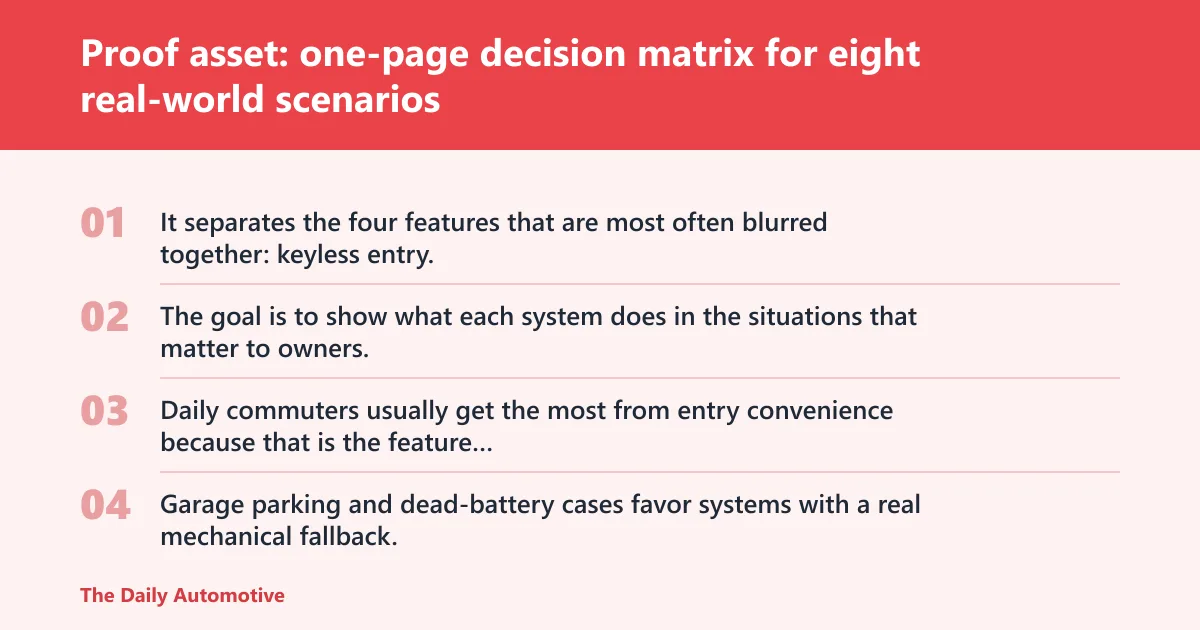
Use this matrix as a quick decision tool. It separates the four features that are most often blurred together: keyless entry, remote keyless entry, passive keyless entry, and push-button start. The goal is to show what each system does in the situations that matter to owners.
| Scenario | Keyless Entry | Remote Start | Passive Keyless Entry | Push-button Start | Best fit |
|---|---|---|---|---|---|
| Daily commute | Fast door access | Low value on mild days | Very convenient | Useful after entry | Keyless Entry / Passive Keyless Entry |
| Winter warm-up | Access only | Best comfort tool | Access only | Starts after entry | Remote Start |
| Valet use | Easy handoff | Usually not needed | Can be awkward if privacy matters | Standard start method | Keyless Entry |
| Garage parking | Works for entry | May be blocked or pointless indoors | Works for entry | Starts after entry | Keyless Entry |
| Dead fob battery | Backup keyhole helps | Usually unavailable | May fail first | May need backup fob location | Keyless Entry |
| Dead car battery | Mechanical key backup helps | Unavailable | Unavailable | Unavailable | Keyless Entry |
| Aftermarket upgrade | Simpler if only access is needed | More wiring and integration | Rare as a retrofit | Usually tied to factory systems | Keyless Entry |
| Security sensitivity | Better when access is tightly controlled | Extra radio function to manage | Convenient but more proximity exposure | Neutral by itself | Keyless Entry |
How to read the matrix
Daily commuters usually get the most from entry convenience because that is the feature used every time the car is reached. Winter warm-up belongs to remote start. Garage parking and dead-battery cases favor systems with a real mechanical fallback, which is one reason many owners value a backup keyhole.
Choose Keyless Entry if… / Choose Remote Start if…
Choose keyless entry if your driving is mostly short trips, city parking, quick errands, or valet handoffs. Choose remote start if you live in a cold climate, park outside overnight, or often want the cabin ready before you open the door. If the vehicle can offer both, the combination is strongest.
Choose keyless entry if…
You want faster door access and less fumbling. You value a backup mechanical keyhole for electrical failure. You are sensitive to security and prefer a simpler feature set. You do not need pre-heated or pre-cooled cabin air before driving.
Choose remote start if…
You want the engine running before you reach the car. You care about winter comfort, defrosting, or summer cooldown before entry. You are willing to accept signal limits and extra system complexity. You already have a separate way to unlock the car.
Frequently asked questions
Is keyless start the same as remote start?
No. Keyless start usually means push-button start, where the key is inside or near the car and the driver presses a button to start it. Remote start begins the engine from a distance before anyone gets in. They solve different problems and are not interchangeable.
What is the difference between keyless entry and remote start?
Keyless entry unlocks and locks the car without a metal key in the door. Remote start starts the engine from a distance, often to pre-condition the cabin. One is about access. The other is about running the vehicle before entry.
Does keyless entry let you start the car from a distance?
Usually no. Keyless entry is a door-access feature, not an engine-start feature. Some vehicles combine keyless entry with other start systems, but the ability to open the car does not mean the car can be started from outside.
Can remote start work without keyless entry?
Yes, sometimes. A vehicle can have remote start and a separate traditional lock-and-unlock method. The functions are independent, although many factory packages include both because they are convenient together. The owner should not assume one requires the other.
Which system is more useful in winter: keyless entry or remote start?
Remote start is more useful in winter because it warms the cabin and can help with defrosting before the driver gets in. Keyless entry still helps because it shortens access time in gloves and bad weather, but it does not change cabin temperature.
What happens if the key fob battery dies?
Range usually drops first, then the fob may work only intermittently. Lock, unlock, trunk, panic, and remote start can stop behaving normally. Many vehicles still allow emergency door access with a backup mechanical key, and some allow a backup starting method once inside.
Can a car have keyless entry but not remote start?
Yes. That is a common setup. Keyless entry handles door access, while remote start is a separate engine-start convenience feature. Buyers often find this split on vehicles that prioritize entry convenience but do not include cabin pre-conditioning from the factory.
What is the difference between remote keyless entry and passive keyless entry?
Remote keyless entry needs a button press on the fob to lock or unlock the car. Passive keyless entry uses proximity and may unlock automatically when the key approaches. Passive systems are easier to use, but they depend more on the key being detected correctly.
keyless entry vs push button start
Keyless entry is for door access, while push-button start is for engine start once the key is inside or near the cabin. A car can have one without the other. They are related, but they are not the same feature and do not perform the same job.
Products related to this article
Sponsored / affiliate links. As an Amazon Associate I earn from qualifying purchases. I may earn additional commission from eligible campaigns.