How to Use Climate Control in Car: Is Auto Mode Worth It?
Auto mode is the right choice for most drives: set the temperature, let the system manage fan speed and recirculation, and switch to manual only for fog, dust, or severe weather. Used poorly, climate control can make the cabin loud, slow windshield clearing, and waste energy. This guide explains how auto climate control works, when to trust it, and when manual override is the better call.
What auto mode actually does
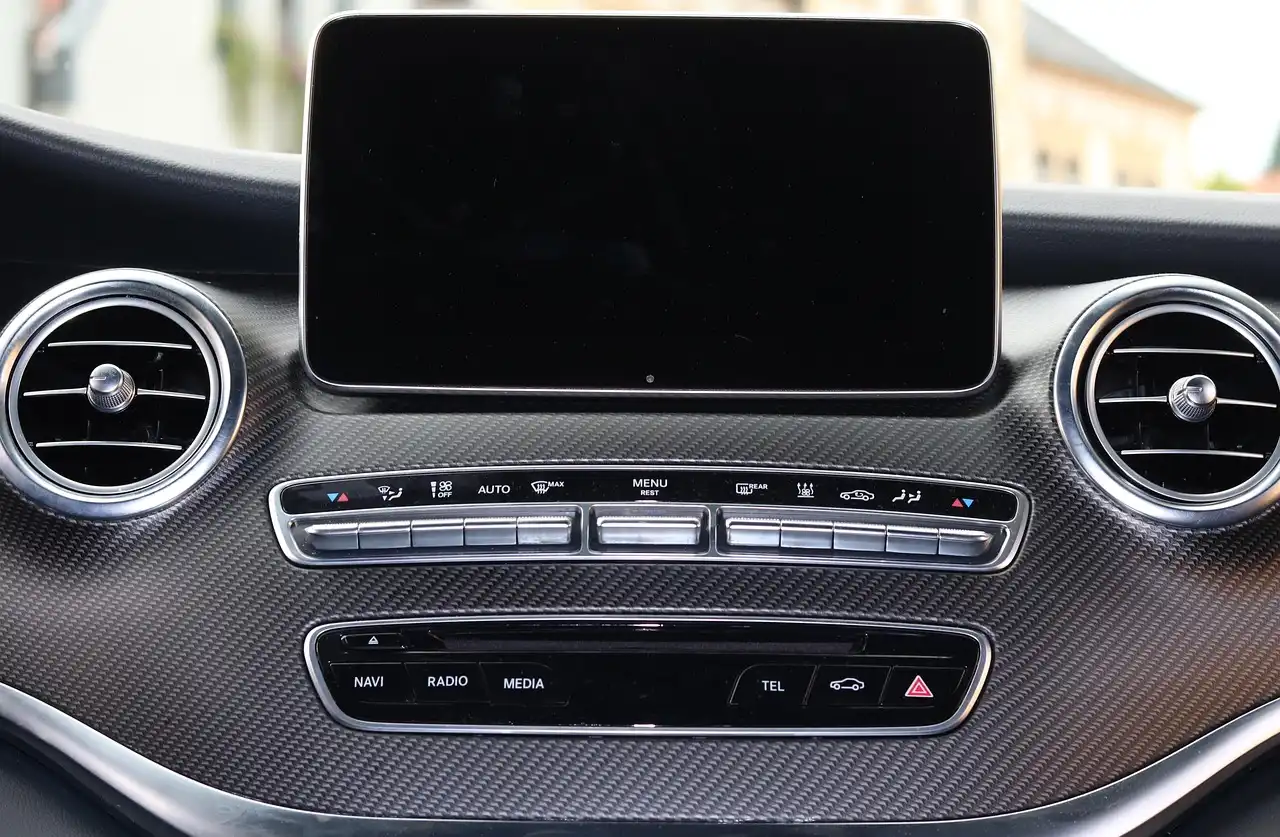
Automatic climate control uses a setpoint temperature as the target, then adjusts blower speed, blend door position, compressor use, and recirculation to reach that target and hold it. On many cars, Auto mode can also move the vents it thinks will heat, cool, or dry the cabin fastest.
Setpoint temperature and target cabin control
Think of the temperature setting as the goal, not the output you are forcing. If you choose 72°F, the system compares cabin conditions with that target and decides how much warm or cool air to send. Dual-zone systems let the driver and passenger choose separate setpoints, while single-zone systems run one target for the whole cabin.
How fan speed, vent direction, and compressor logic work
Auto mode usually starts with a higher fan speed when the cabin is far from the setpoint. That is normal. The blower motor can ramp down once the cabin closes in on target, and some vehicles change vent direction too. The compressor may run for cooling and dehumidification, even when the air does not feel especially cold.
The blend door actuator is the part that mixes hot and cold air. If the system needs warmer discharge air, the door opens toward heater output. If it needs cooler air, it shifts the mix the other way. Recirculation control also matters: pulling more cabin air through the system can speed cooling, but it can also raise humidity.
Why auto mode can feel loud at startup
Auto mode can sound aggressive at first because the system is trying to fix a big temperature gap quickly. A hot car on a hot day may get maximum blower, cool vents, and recirculation for a short time. A cold windshield on a damp morning may trigger strong airflow toward the glass instead.
That startup behavior depends on the software. Some vehicles use a gentler fan curve, while others aim for faster temperature recovery. EVs and hybrids may also behave differently because they manage heat, battery use, and cabin demand together.
Climate control decision matrix
This table gives a practical rule for when to trust Auto mode and when to switch to manual. The point is to match the setting to the job. A hot soak is different from a fogged windshield.
| Situation | Recommended mode | Recirculation setting | Vent direction | Reason |
|---|---|---|---|---|
| Hot start | Auto | On for the first few minutes, then off if windows fog | Face vents or mixed | Recirc helps cool the already hot cabin faster. |
| Humid rain | Manual or Auto with defog override | Off | Defrost or upper vents | Fresh air and dehumidification reduce fogging. |
| Winter defog | Defrost or Auto | Usually off | Windshield-first | Strong windshield airflow clears moisture fastest. |
| Highway cruise | Auto | Off or intermittent | As selected by the system | Stable airflow and steady load suit automatic control. |
| Short trips | Manual or Auto with a mild setpoint | Off unless the cabin is very hot | Face or mixed | Short runs often end before full temperature stabilization. |
| Passengers sensitive to noise | Manual low fan or gentler Auto settings | Off unless needed for cooling | Mixed or face | High startup fan speeds can feel loud and abrupt. |
Should you leave climate control on auto?
Yes, for most everyday driving. Auto mode is the smarter default because it can manage the parts of the system you would otherwise keep adjusting: fan speed, vent position, compressor engagement, and recirculation. It is especially useful when outside temperature changes during a drive, or when the cabin starts far from your target.
When auto mode is the smarter default
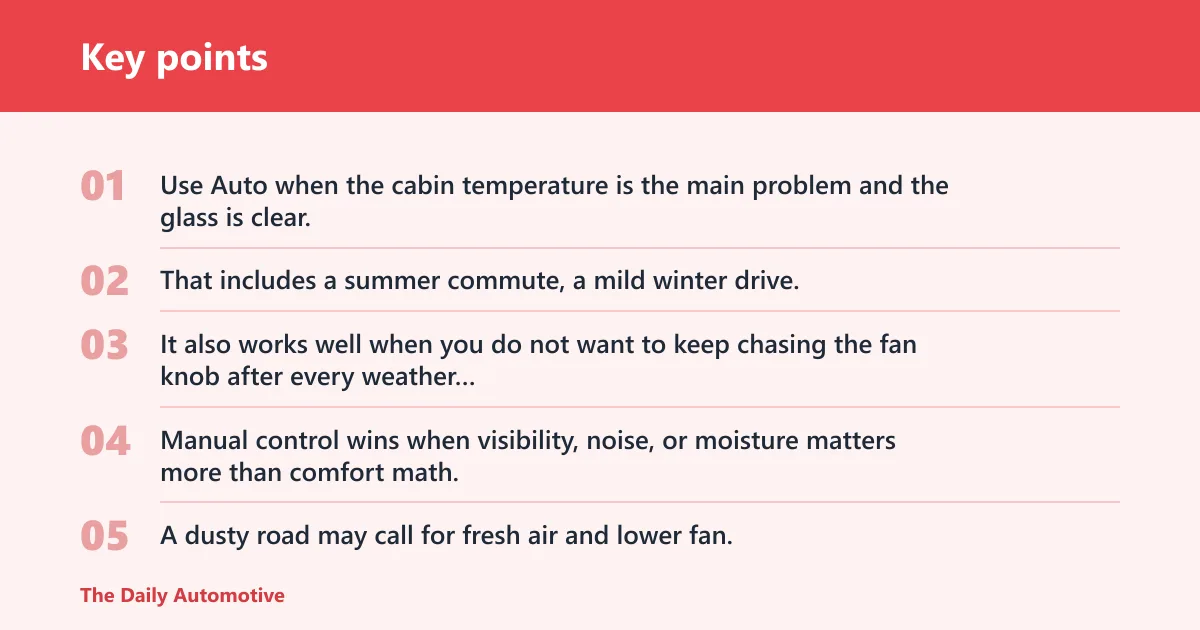
Use Auto when the cabin temperature is the main problem and the glass is clear. That includes a summer commute, a mild winter drive, or a highway trip where you want one setting to hold steady. It also works well when you do not want to keep chasing the fan knob after every weather change.
When manual override works better
Manual control wins when visibility, noise, or moisture matters more than comfort math. Fogged windows need defrost, not a guess. A dusty road may call for fresh air and lower fan. Some drivers also prefer to cap fan speed on short trips so the cabin stays quieter.
A common first-timer mistake is leaving recirculation on after a humid start. Suppose the car begins at 92°F after sitting in the sun. Recirc and Auto are helpful for the first few minutes, but if the windshield starts to haze, turning recirc off is the better move even if the cabin cools a little more slowly.
How much vehicle software changes the answer
Vehicle software changes how assertive Auto mode feels. Some systems use a strong initial blast and then settle down. Others favor lower noise. Luxury models may use humidity sensors to predict fog, while heat-pump EVs and hybrids may change compressor and fan logic to manage range and cabin heat more carefully.
How to set the right temperature
A practical comfort range for many drivers is around 68°F to 74°F, though the right setting can depend on sun load, humidity, clothing, and the vehicle itself. If the cabin feels too cold or too warm, change the setpoint first. Do not keep chasing the fan unless airflow is the real problem.
Single-zone versus dual-zone systems
Single-zone systems use one temperature target for everyone. Dual-zone systems let each front occupant choose a different setpoint, which helps when one side of the cabin gets more sun. If the passenger and driver disagree, dual-zone settings often solve the problem without forcing the whole cabin colder than needed.
Driver and passenger setpoint conflicts
If one person wants cool air and another wants warmth, split the difference before touching the fan. A small setpoint change can do more than a large fan change. On dual-zone systems, keep both sides within a few degrees of each other if the cabin keeps swinging between hot and cold.
Picture a sedan with dual-zone climate control set to 70°F on the driver side and 76°F on the passenger side. If the passenger side vent is blowing noticeably warmer while the driver side is cool, that can be normal. If the temperature difference keeps growing or the vent never changes, a blend door issue becomes more likely.
When should you use recirculation?
Use recirculation when you want the cabin to cool faster, especially right after startup. It reduces outside air intake, so the system has less hot or humid air to condition. Turn it off when fog starts to form, when the air feels stale, or when the cabin needs outside ventilation.
Cooling faster after startup
Recirc is useful after a hot soak because the system keeps reworking already cooled cabin air instead of constantly pulling in more hot outside air. That can shorten the time it takes to feel comfortable. On many vehicles, Auto mode will choose recirc on its own during the first phase of cooling.
When recirc increases humidity and fogging
Recirculation can trap moisture from breath, wet clothing, or rain-soaked carpets. The result is higher cabin humidity and a greater risk of fogged glass. That is why recirc is a short-term tool, not a default for every drive. If the windshield starts to cloud, fresh air is usually the right correction.
When to switch back to fresh air
Switch back to fresh air once the cabin is near target, or sooner if visibility drops. It is also wise to turn recirc off on long drives with several passengers, in wet weather, or whenever the cabin smells stale. Manual HVAC controls make this swap immediate, while Auto may wait until it decides the cabin needs ventilation.
How do you defog windows with climate control?
Defogging works best when you aim dry air at the glass and reduce cabin humidity. Use defrost or defog mode, not ordinary face vents, when the windshield is hazing over. Most systems will turn off recirculation in this mode and may run the A/C compressor even in cool weather to pull moisture out of the air.
Defrost versus defog
Defrost usually prioritizes the windshield and often the front side glass. Defog is the same general idea: move air to the glass and dry it. In both cases, do not fight the system by keeping recirc on if the vehicle is trying to clear moisture.
Why recirculation usually turns off
Recirculation can keep moisture inside the cabin, which slows clearing. Defrost modes often disable recirculation because outside air, even when cold, can hold less moisture than a cabin full of breath and wet fabric. That dry airflow is part of why the glass clears faster.
Why the A/C may run in cool weather
The compressor is not only for cooling. It also dehumidifies the air. That is why a car may run A/C during a chilly rainstorm or on a cold morning with fogged glass. The system is drying the air before it reaches the windshield, and that often works better than heat alone.
Why does auto mode sometimes seem wrong?
Sometimes Auto mode is behaving normally, and sometimes it is not. A sudden fan surge or a change in vent direction may be the system reacting to temperature, sun load, or humidity. But weak airflow, temperature swings, or clicking sounds can point to a fault instead of a normal control decision.
Blend door actuator problems
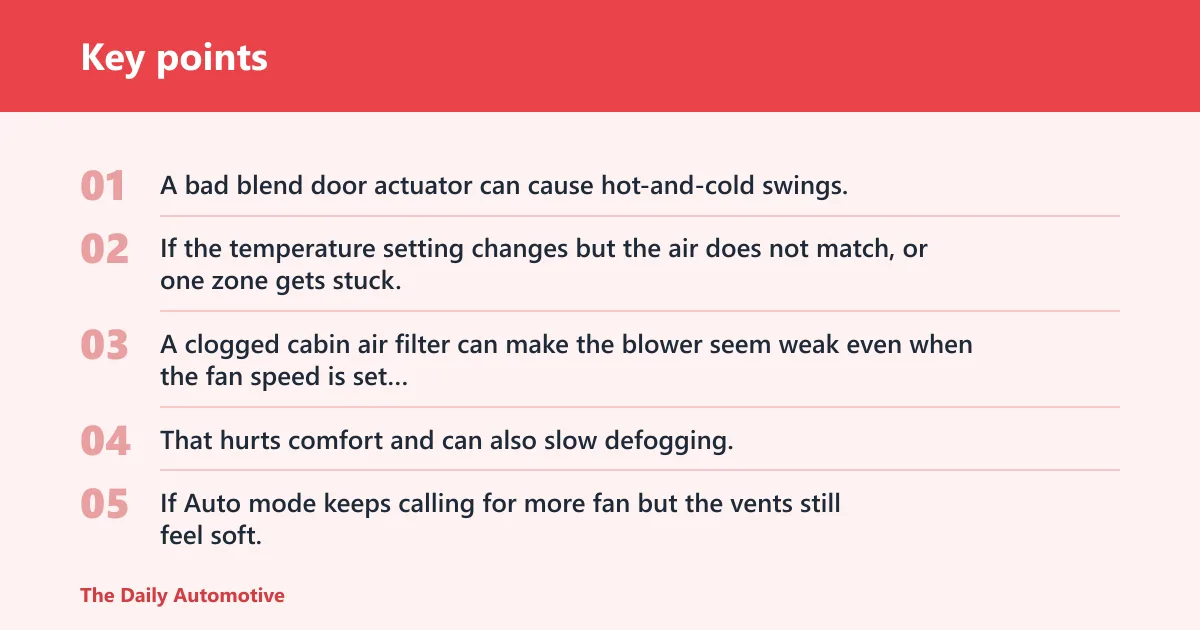
A bad blend door actuator can cause hot-and-cold swings, a temperature mismatch between sides, or clicking from behind the dash. If the temperature setting changes but the air does not match, or one zone gets stuck, the system may not be moving the blend door correctly.
Weak airflow from a dirty cabin air filter
A clogged cabin air filter can make the blower seem weak even when the fan speed is set high. That hurts comfort and can also slow defogging. If Auto mode keeps calling for more fan but the vents still feel soft, the filter is a sensible place to check.
Temperature swings that point to a fault
If the air blows cold, then warm, then cold again with no clear reason, the system may be struggling with sensor input, a sticking actuator, or compressor control. Normal Auto mode does change output. It should not feel random. Repeated swings without a matching change in setpoint deserve attention.
Say your SUV starts blowing warm air on the driver side and cool air on the passenger side, then the driver side suddenly turns cold after a few minutes. That pattern is more suspicious than a brief startup burst. Auto mode can move quickly, but it should not produce unstable temperatures without a reason.
Frequently asked questions
How do you use climate control in a car?
Set a target temperature, choose Auto if you want the system to manage fan speed and vents, and adjust only when conditions call for it. Use manual controls for fan, mode, fresh air, recirculation, or defrost when you need a specific airflow pattern. The best setting depends on weather and cabin conditions.
What does Auto mode do in car climate control?
Auto mode tries to hold the cabin at the temperature you choose. It adjusts blower speed automatically, may change vent direction, and can engage the compressor or recirculation as needed. The exact behavior varies by vehicle software, so two cars can both say Auto and still act differently.
Is Auto mode worth it on car climate control?
Yes, for most drivers and most trips. Auto mode is usually the easiest way to hold a steady cabin temperature without constant adjustments. It is less ideal when windows fog, when passengers want very different airflow, or when you need to limit noise on a short trip.
Should I keep my car climate control on auto or manual?
Keep it on Auto when comfort is the main goal and visibility is clear. Switch to manual when you need to force defrost, reduce fan noise, or stop recirculation from trapping humidity. In other words, Auto is the default, and manual is the override for special conditions.
Does auto climate control use more gas?
Sometimes it can use a little more fuel or energy because the compressor and blower may work harder to reach the setpoint quickly. The impact is usually small and situation-dependent, not automatic. In an EV or hybrid, the same idea applies to energy use and range rather than gasoline alone.
Why does Auto mode blow hard at first?
Auto mode often starts with higher fan speed to close the gap between the cabin and the setpoint faster. That is especially common after a hot soak, a cold start, or a damp morning. The blower usually settles down once the cabin nears the target temperature.
Products related to this article
Sponsored / affiliate links. As an Amazon Associate I earn from qualifying purchases. I may earn additional commission from eligible campaigns.