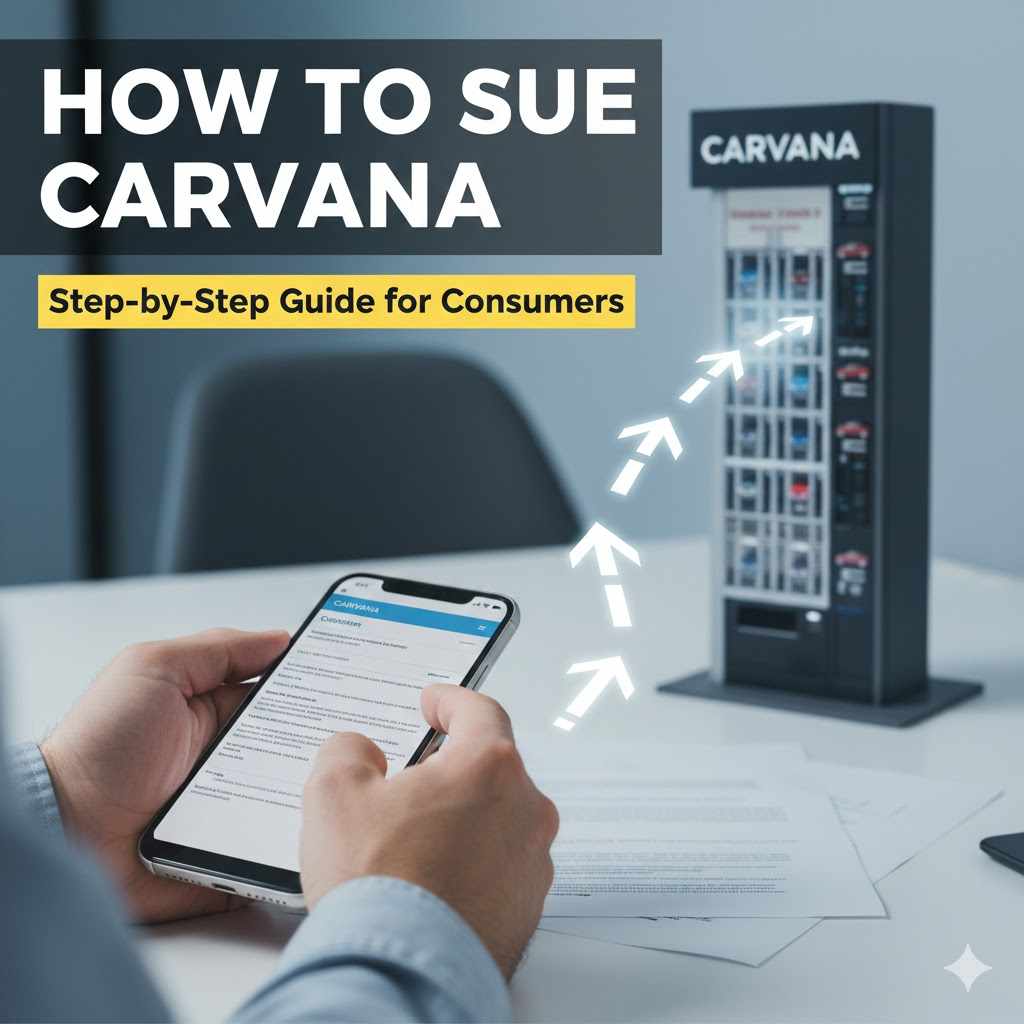
How to Sue Carvana: Step-by-Step Guide
Figuring out How to Sue Carvana: Step-by-Step Guide can seem tough. Many folks find the legal process a bit confusing, especially when dealing with big companies. Don’t worry, though! This guide breaks down the process in a simple way. We’ll explore each step so you know exactly what to do. Get ready to learn the ropes of potentially taking legal action against Carvana, piece by piece.
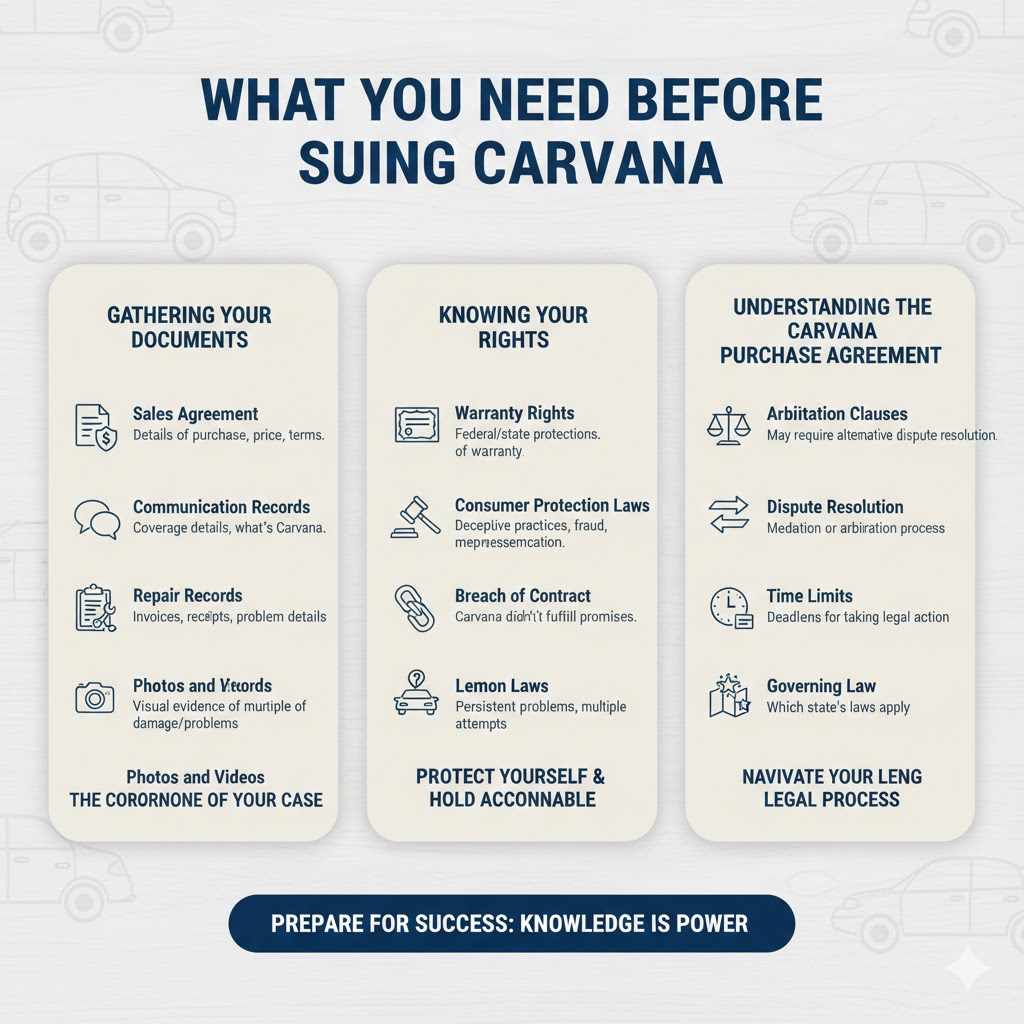
What You Need Before Suing Carvana
Before you even think about filing a lawsuit, there are a few important things you should do. It’s like preparing for a big test; the better prepared you are, the better your chances of success. Gathering all your documents, knowing your rights, and understanding the terms you agreed to when buying the car from Carvana are all essential. These preliminary steps will set the stage for your case. It is important to know if you can sue in small claims court or need to seek an attorney’s assistance for a civil lawsuit.
Gathering Your Documents
The first step is gathering all the proof. This could be anything that supports your claim against Carvana. It’s like being a detective gathering clues. Keep everything organized, so you can easily access it when needed. This is the cornerstone of your case, helping you prove your claims. A lawyer can use these documents to build the strongest possible case.
- Sales Agreement: This document contains the details of your car purchase. It specifies the price, the terms, and all the agreements made between you and Carvana. Read this carefully to see what was promised.
- Warranty Information: Car warranties protect you from costly repairs. Review the warranty to see what’s covered. Check to see if the problem you are experiencing is covered under the warranty. The car warranty may not be valid if you purchased an older car.
- Communication Records: Keep records of any communication you had with Carvana. Emails, texts, and letters showing your issues and their responses are important. This evidence proves you tried to resolve the problem. Save all of your communication with Carvana to help your case.
- Repair Records: If you had to get repairs done, keep all the invoices and receipts. This proves the problems and the costs you incurred. These documents may be evidence that can be used in court.
- Photos and Videos: Take pictures or videos of any damage or problems with the car. This provides visual evidence to support your claims. Video evidence can show the extent of the problems.
Knowing Your Rights
Before moving forward, learn what rights you have as a car buyer. These consumer protection laws can make a big difference in your case. By understanding your rights, you can better protect yourself and hold Carvana accountable. Knowing your rights makes you informed about what legal action can be taken.
- Warranty Rights: Federal and state laws offer different warranty protections. Your rights depend on the type of warranty you have and the nature of the car’s problem. Determine the type of warranty you have to determine your rights.
- Consumer Protection Laws: Many states have laws that protect consumers. These laws often cover deceptive practices, fraud, and misrepresentation. These laws provide protections and establish the proper legal procedures.
- Breach of Contract: If Carvana didn’t fulfill its end of the deal, like providing a car that matches its promises, it’s a breach of contract. A breach of contract may mean that Carvana did not uphold its end of the deal.
- Lemon Laws: Some states have ‘lemon laws’ that offer special protection for cars with persistent problems. If your car has had multiple repair attempts, it might qualify as a lemon. Some states have “lemon laws” to protect consumers.
Understanding the Carvana Purchase Agreement
Carvana’s purchase agreement is the rulebook. It states the terms and conditions of your purchase. Reading this document is like studying the rules of a game before you play. Knowing these terms can shape the outcome of your case. Being knowledgeable of the agreement helps you navigate the legal process.
- Arbitration Clauses: Some agreements have arbitration clauses. If you do, it means you might not be able to sue in court. Arbitration is a different process for resolving disputes. A professional arbitrator listens to both sides and makes a decision.
- Dispute Resolution: The agreement explains how to resolve disagreements. This process could include mediation or arbitration. Understanding this helps you know how to pursue your case. Knowing the process helps you prepare for the dispute resolution.
- Time Limits: Agreements often have deadlines for taking action. Missing a deadline can prevent you from suing. Pay close attention to these limits. These limits mean your time to sue might be restricted.
- Governing Law: The agreement states which state’s laws will apply. This can impact your rights and how your case will be handled. This tells you which state’s laws apply to your case.
Filing a Complaint Against Carvana
Once you’ve done your homework and prepared your documents, it’s time to file a complaint. This is a formal way to start the process of suing Carvana. There are various steps to follow, from sending a demand letter to filing your case in court. Each step is important and must be handled correctly. This step is about formally asking Carvana for a resolution.
Sending a Demand Letter
A demand letter is your first official message to Carvana. It clearly states the issues and what you want Carvana to do to fix them. A demand letter provides a chance to solve the issue before going to court. Often, this letter motivates Carvana to settle the case. Sometimes, they will take the issue seriously after receiving a formal demand letter.
- Contents of the Letter: The demand letter should be detailed. State the facts, problems, and any losses you’ve suffered. Include your evidence, such as the sales agreement, warranty information, and repair records. Include what you want to happen.
- Delivery Method: Send the letter by certified mail, which gives proof that it was received. Keep a copy of the letter for your records. Certified mail gives you proof of the receipt of the letter.
- Response Time: Give Carvana a reasonable amount of time to respond, typically 15-30 days. This gives them time to consider your demands. The response time also gives them time to review the issues with the car.
- Consequences of No Response: If Carvana doesn’t respond or refuses your demands, it shows you they aren’t willing to resolve the problem. This shows the next step is taking the case to court. No response often means you will proceed to the next step.
Choosing the Right Court
The court you select depends on how much you’re seeking to recover. Small claims court is for smaller amounts, while higher courts handle bigger amounts. Knowing which court is best for your case can affect its outcome. Choosing the right court is important for the process.
- Small Claims Court: This court is for smaller claims. It’s usually faster and less complicated than other courts. The process is also more affordable, since you do not need an attorney. Small claims court is designed for individual consumers.
- Civil Court: Civil court handles larger claims. This is where you go if your case involves a large amount of money. Civil court procedures can be more complex. The amount of the claim can determine which court to choose.
- Jurisdiction: Jurisdiction is the court’s authority to hear your case. The court must have the authority to handle cases against Carvana. The state and county determine the jurisdiction.
- Venue: Venue refers to where the case can be heard. This is where the case is filed. The venue might be where you live or where the car was purchased.
Filing Your Lawsuit
Filing the lawsuit involves completing specific forms and providing them to the court. This starts the official legal process. Doing everything correctly is essential for your case. Errors can delay your case or cause its dismissal. This is a critical step in the lawsuit.
- Complaint Preparation: This document explains your claims against Carvana. The complaint includes facts, the issues, and what you’re seeking. The complaint is the foundation of your case.
- Filing Fees: You’ll need to pay filing fees to the court. These fees vary based on the court and the amount of the claim. Check the local court’s website or visit their office to determine the filing fees.
- Service of Process: Carvana must be officially notified of the lawsuit. This is called ‘service of process’. This means delivering the legal documents to Carvana.
- Responding to the Lawsuit: Once served, Carvana has a set time to respond. They will file an answer to your complaint. This is a critical step because it creates the court record.
The Lawsuit Process Against Carvana
Once you’ve filed your case, the lawsuit process starts. This process involves several steps, from discovery to the trial. It can seem overwhelming, but each step is essential. Knowing what to expect at each stage is important for the outcome of your case. Each step is part of the legal procedure to win your case.
Discovery Phase
The discovery phase is about gathering more information. Both sides exchange documents, ask questions, and take depositions. This helps everyone prepare for trial. During the discovery phase, both sides learn more about the other side’s case. Discovery is essential for building a strong case.
- Interrogatories: Written questions that are sent to Carvana to answer. These questions are a way to find out information. Interrogatories provide additional information for the case.
- Document Requests: You can request that Carvana provides you with specific documents. These documents help prove your claims. Document requests ensure all evidence is available.
- Depositions: These are sworn testimonies of witnesses. You or Carvana’s representatives may be questioned. Depositions give valuable insights into the case.
- Expert Witnesses: Sometimes, you or Carvana might use expert witnesses. These experts help explain complex issues, like car mechanics. These experts help establish facts.
Settlement or Mediation
Before going to trial, there’s often an opportunity to settle the case. Mediation is a process where a neutral third party helps both sides negotiate. Settling the case can save time, money, and stress. It avoids the costs and time of a trial.
- Negotiations: Throughout the process, you can negotiate with Carvana’s lawyers. This involves each side offering and considering terms to reach an agreement. You can often save time and money.
- Mediation: Mediation involves a neutral mediator helping both sides talk. The mediator does not decide, but assists in finding common ground. Mediation can lead to a quick resolution.
- Settlement Agreement: If you agree, you’ll sign a settlement agreement. This document outlines the terms of the settlement. Make sure you understand the agreement fully before signing.
- Benefits of Settlement: Settlement is often faster and less costly than going to trial. It can also reduce stress and give you more control over the outcome. Settlement offers an easier path to resolution.
Going to Trial
If you don’t settle the case, it will go to trial. This is when a judge or jury hears the case. You and Carvana will present your evidence and arguments. The outcome depends on the evidence and arguments presented. The outcome of the trial depends on the evidence.
- Presenting Your Case: At trial, you’ll present evidence to support your claims. This includes documents, witness testimony, and expert opinions. Presenting your case requires preparation.
- Witness Testimony: Witnesses will testify under oath. You might call witnesses, and Carvana can also. Witness testimony is essential for establishing the facts.
- Examination and Cross-Examination: During testimony, the lawyers can question the witnesses. This is used to test the evidence. Cross-examination tests the reliability of the evidence.
- Closing Arguments: Both sides make closing arguments to the judge or jury. This is where lawyers summarize the evidence and argue why they should win. Closing arguments highlight the strengths of the case.
Examples and Scenarios for Carvana Lawsuits
Let’s explore some real-life examples of suing Carvana. These examples provide a better view of common issues. This is for helping you understand different types of cases. Learning from these examples can help you build your case.
Real-Life Examples
Here are a few real-world examples of lawsuits against Carvana that show different situations.
-
Example 1: Mechanical Failures Shortly After Purchase
A customer buys a used car from Carvana. Within a few weeks, the car’s engine fails. The customer contacts Carvana, but they refuse to cover the repairs under the warranty. The customer sues Carvana, presenting repair bills and proof of the initial sale. The judge sides with the customer because the car failed soon after purchase, implying a problem that existed at the time of sale, despite Carvana’s claims. The customer receives compensation for the repairs.
-
Example 2: Title Issues and Delays
A buyer purchases a vehicle from Carvana and experiences significant delays in receiving the car title. This prevents the buyer from registering the car. The buyer is unable to legally drive the vehicle. The buyer consults an attorney. The lawyer sends a demand letter, which Carvana ignores. The buyer sues Carvana for breach of contract and damages, including the costs of transportation. The buyer wins the case and receives compensation.
Sample Scenarios
Here are some examples of scenarios, highlighting what to do. These scenarios illustrate how various problems might lead to a lawsuit.
-
Scenario 1: Car Doesn’t Match Description
You purchase a car from Carvana online. The listing states the car is in excellent condition and has low mileage. However, upon delivery, you discover significant cosmetic damage and the odometer reading is incorrect. You contact Carvana, and they refuse to offer a satisfactory solution. You can sue Carvana for misrepresentation and breach of contract, gathering evidence of the listing and photos of the actual car condition.
-
Scenario 2: Warranty Refusal
You buy a car with a comprehensive warranty. Soon after, a covered component fails, and you bring the car to a certified repair shop. Carvana denies your warranty claim, claiming the damage resulted from driver error. You must file a lawsuit. You should gather all documentation related to the claim, warranty, and the repair report. You should sue Carvana for breach of warranty and potentially for bad faith.
Frequently Asked Questions
Question: How do I know if I have a valid case against Carvana?
Answer: A valid case typically involves Carvana failing to meet their obligations. This may be a breach of contract, misrepresentation of the car’s condition, or violation of consumer protection laws. If you’ve experienced these, you may have a case.
Question: Is it necessary to hire a lawyer to sue Carvana?
Answer: It’s not always required, especially in small claims court. However, a lawyer can guide you through the process, especially if the case is complex. They can also represent you and handle the legal aspects. You need to assess the case and consider the complexity.
Question: How long does it take to sue Carvana?
Answer: The time varies. Small claims court cases are typically quicker, often taking a few months. More complicated lawsuits can take a year or more, depending on discovery, negotiation, and court schedules. Time depends on the complexity of the case.
Question: Can I settle my case with Carvana outside of court?
Answer: Yes, settlement is possible at any stage, even after a lawsuit is filed. Many cases settle through negotiation or mediation. Settlement saves time and money. It can be a good option for a quick resolution.
Question: What damages can I recover if I win a lawsuit against Carvana?
Answer: Damages could include the cost of repairs, compensation for diminished value, and sometimes legal fees. Depending on the situation, you might also recover consequential damages. Types of damages depend on the specific circumstances and applicable law.
Final Thoughts
Now you’ve taken a complete look at How to Sue Carvana: Step-by-Step Guide. You’ve explored the initial steps, including gathering evidence and reviewing your purchase agreement. You’ve learned about the process of filing a complaint, the importance of sending a demand letter, and choosing the right court. The guide explored the different stages of the lawsuit, from discovery to the possibility of settlement or trial. Finally, you saw real-life examples and sample scenarios that will help you better understand what to expect.
Taking action is about standing up for your rights as a consumer. If you have been wronged by Carvana, this guide gives you the information to take the next step. Remember, you have options. Educate yourself, gather your evidence, and consider legal steps. With the right preparation, you can confidently address issues with Carvana and potentially resolve your issues. Take the information learned and get started.