How Much Does a Coolant Flush Cost?
A coolant flush is often reported to cost about $100 to $250 at an independent shop and about $150 to $400 at a dealer; higher quotes are more reasonable when they include coolant, labor, bleeding, and a full system inspection. Skip it or do it badly, and you can end up with overheating, corrosion, heater faults, and a larger repair bill. This guide shows you how to read a quote, separate routine maintenance from extra work, and spot add-ons you do not need.
Follow the vehicle and product manual. Fuel, coolant, and electrical work need ventilation, no sparks, and the battery disconnected.
What affects your coolant flush price
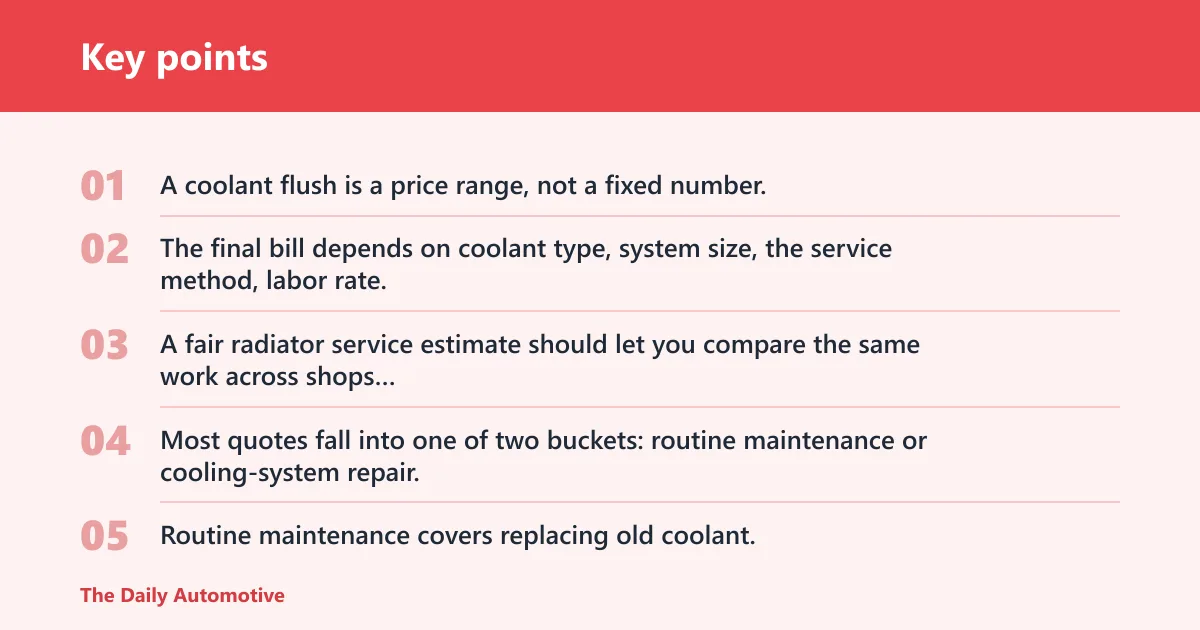


A coolant flush is a price range, not a fixed number. The final bill depends on coolant type, system size, the service method, labor rate, shop type, and any add-ons the shop folds into the estimate. A fair radiator service estimate should let you compare the same work across shops before you approve it.
Most quotes fall into one of two buckets: routine maintenance or cooling-system repair. Routine maintenance covers replacing old coolant. Repair pricing shows up when the quote includes leak diagnosis, thermostat replacement, hose work, water pump work, or pressure-testing time tied to a fault.
What the service usually includes
A basic coolant flush can include a drain and fill, a machine flush, or a flush with air bleed. Some quotes also include disposal, a pressure leak test, and a quick inspection of the thermostat or hoses. The quote should make clear whether those items are part of maintenance or billed as separate work.
Why quotes vary so much
Two quotes can differ by more than the coolant price alone. A shop with a higher labor rate, a larger cooling system, or a European formula coolant can land far above a quick-lube quote for a small sedan with conventional green coolant. Sales tax and disposal fees can also change the out-the-door total.
Drain and fill versus full flush
A drain and fill replaces a portion of the old coolant, while a full flush aims to move more of the old fluid out of the system. They are not the same service, and a quote should say which one you are buying. If the coolant is still clean and the owner manual calls for a simple drain and fill, a flush quote can be more work than you need.
Say your compact car takes a small coolant load and the fluid is still clean. A shop quote for a full machine flush with cleaner may be unnecessary if the maintenance schedule only asks for a drain and fill at that interval.
What drives the price?
The biggest price drivers are coolant type, system capacity, labor rate, and shop type. Those four items usually explain most of the spread between a low quote and a high one. Service method matters too, because a machine flush or air-bleed procedure can take more time than a basic drain and fill.
Coolant type and formula
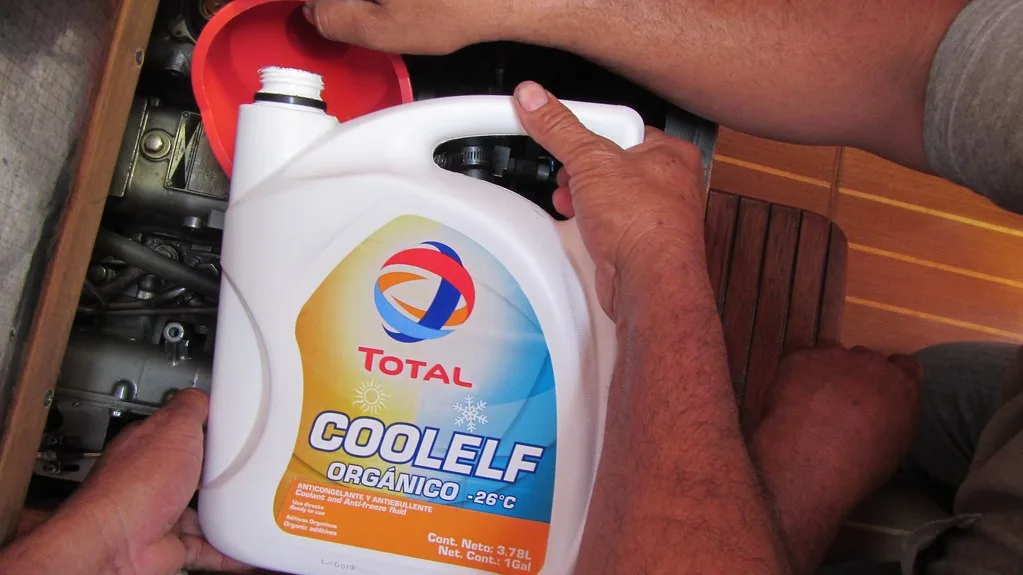
Conventional green coolant is often the cheapest to replace. OAT long-life coolant, HOAT coolant, European formula coolant, and EV thermal coolant can cost more because the fluid itself may be pricier and the system may call for a more specific service procedure. If the shop says a special formula is required, ask which coolant spec the vehicle manual calls for.
System capacity and labor time
System capacity affects the amount of coolant needed and can affect labor time. A larger truck, SUV, or EV thermal loop may need more fluid and more time to bleed air from the system. That is why a quote for a small car and a quote for a larger vehicle can look nothing alike even when both are labeled “coolant flush.”
Labor rate and shop type
Labor rate is a major driver of quote differences. Quick-lube shops are often the low end of the market for routine coolant service, independent shops usually sit between them and dealers, and dealer service centers often charge more for the same maintenance line item. Mobile mechanics may charge travel time or a minimum service fee, so the total can climb even when the labor hour count looks similar.
- Check the vehicle manual for the coolant spec and interval.
- Match the quote to the service type: drain and fill, machine flush, or flush with air bleed.
- Compare labor hours, not just the headline total.
- Look for add-ons such as leak tests, cleaner, or same-day service.
- Confirm tax, disposal, and any diagnosis charges before approval.
Shop quotes by service type
Use the same service description when you compare shops. A quote for a drain and fill should not be stacked against a dealer estimate that includes a pressure test, a thermostat inspection, and diagnostic time. If the quote wording is different, the totals are not directly comparable.
Quick-lube shop
Quick-lube shops often sit at the lower end of the market for a routine coolant service. They may quote a simpler drain-and-fill style job and keep labor time short. If the estimate adds a machine flush, air bleed, or diagnostic time, the number can move closer to an independent shop quote.
Independent shop
An independent shop often offers the best middle ground for routine maintenance. The estimate may include more careful bleeding, a modest inspection, and a labor rate that sits below dealer pricing. This is a common place to get a fair quote for a radiator service estimate without paying dealer rates.
Dealer service center
Dealer service centers often quote the highest totals, especially for vehicles that call for a specific coolant formula or a more involved bleed procedure. A higher quote is not automatically inflated. It can be legitimate if the shop is using the exact coolant spec, more labor time, and a proper inspection tied to the vehicle model.
Mobile mechanic
A mobile mechanic can be competitive for a simple drain and fill, but travel time and setup can add cost. If the quote includes driveway service, ask whether disposal, bleeding, and cleanup are included. For a vehicle with air trapped in the system, mobile service may be less suitable than a shop with full equipment.
Coolant flush quote audit table
Use this table to audit the line items on a radiator service estimate. The point is not to find the lowest total. It is to see whether the shop is charging for routine maintenance, a fuller service, or extras that may not be needed.
| Line item | Common benchmark | Usually bundled? | Red-flag note |
|---|---|---|---|
| Coolant type | Conventional green, OAT long-life, HOAT, European formula, or EV thermal coolant | Bundled | Special formula can be valid, but it should match the vehicle spec |
| System capacity | Small car, midsize car, truck/SUV, or larger EV thermal loop | Bundled | More capacity means more fluid and often more bleed time |
| Labor hours | About 0.5 to 1.5 hours for routine work, more for bleeding or diagnostics | Bundled | A high hour count should come with a clear reason |
| Labor rate | Shop-specific hourly rate | Bundled | Dealer labor rates can push the total up fast |
| Disposal fee | Small flat fee or included in the service price | Often bundled | Reasonable on its own; questionable if charged twice |
| Leak test | Pressure leak test | Optional or bundled | Useful if there is a leak concern; not mandatory for every maintenance visit |
| Thermostat inspection | Visual or functional check | Optional or bundled | Fine as part of inspection, but it should not be slipped in as a surprise charge |
| Cleaner | Chemical cleaner or flush additive | Optional | Ask why it is needed before approving it |
| Tax | Sales tax on taxable parts and labor, depending on local rules | Bundled at checkout | Can change the out-the-door total even when the base price looks fair |
| Out-the-door total | Coolant plus labor plus add-ons plus tax | Final total | Compare this number only after you match the same service scope |
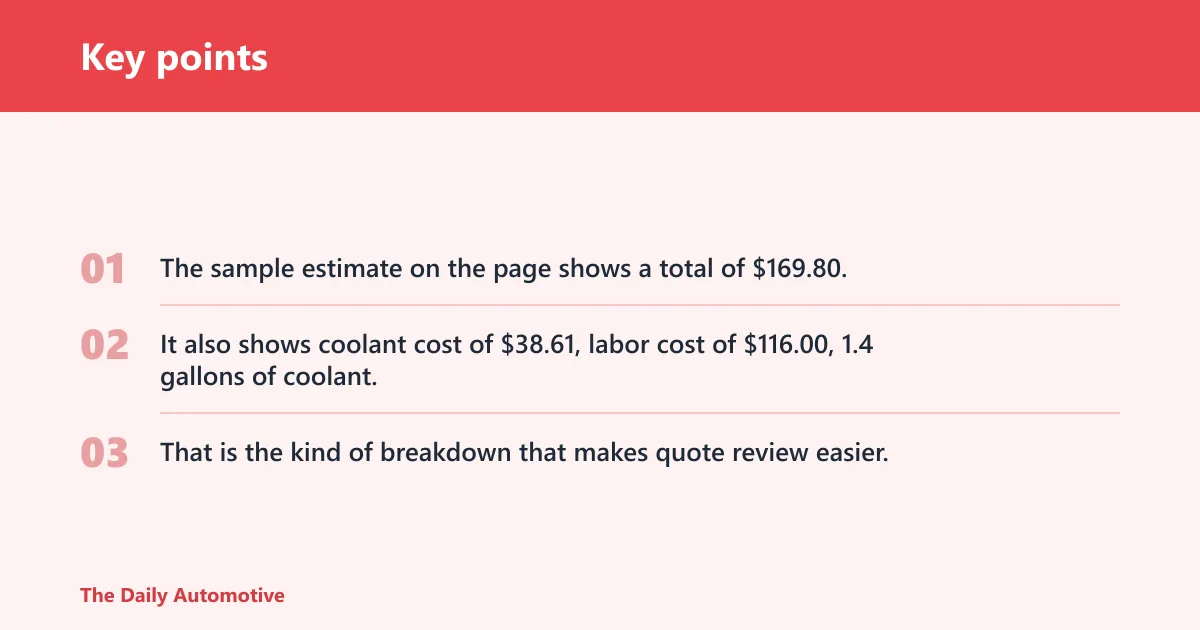
The sample estimate on the page shows a total of $169.80. It also shows coolant cost of $38.61, labor cost of $116.00, 1.4 gallons of coolant, 0.8 hours of labor, a $12.00 cooling system add-on line, and a $0.00 urgent service fee. That is the kind of breakdown that makes quote review easier.
How much should a coolant flush cost?
A fair coolant flush quote usually lands in a band, not a single number. For many drivers, a normal maintenance quote sits under dealer pricing and above a bare-bones drain-and-fill special. If the estimate is far outside the local norm, it should explain why with coolant spec, labor time, capacity, or a real inspection item.
Typical low, mid, and high ranges
The typical quote range listed on the page is $139.24 to $210.55. That makes a useful benchmark for a standard radiator or cooling-system service estimate. Below that range may reflect a simple service; above it may still be fair if the quote includes more labor, special coolant, or a full system check.
A common mistake is comparing an advertised coolant flush special at an independent shop to a full-service estimate that also covers hose checks, pressure testing, and new coolant. Those are different services. If the quote is for a car with a larger capacity or a special coolant, the total can move higher without being a markup.
When a quote is too high
A quote starts to look inflated when the shop charges for every line item without explaining the need for each one. Watch for a high labor rate paired with extra diagnostic time on a car that does not have a symptom, or a cleaner charge on a system that is due only for routine coolant replacement. If the service is simple, the invoice should read simple too.
When a simple drain and fill is enough
A drain and fill can be enough when the coolant is on schedule, the system is not contaminated, and the owner manual does not call for a full flush. That is especially true when the fluid is still clean and there is no sign of overheating, contamination, or coolant loss. Ask the shop to separate maintenance from repairs before authorizing anything larger.
What should be on the invoice?
A good invoice should show what is included, what is optional, and what is being charged separately. The cleaner the line items, the easier it is to tell whether the quote is routine maintenance or a deeper cooling-system service. This is where disposal fees, sales tax, and diagnostic time matter.
Disposal fee and sales tax
Disposal fees are common because used coolant has to be handled properly. Sales tax can also change the final bill, depending on local rules and which items are taxable. If the estimate leaves these out until checkout, the total may be higher than the quote you approved.
Leak test and thermostat inspection
Leak testing and thermostat inspection are legitimate line items when the shop has a reason to check them. They can also be bundled into a larger service. They should not be treated as automatic upsells for every flush request, especially when you are asking for scheduled maintenance rather than a diagnosis.
Cleaner and diagnostic time
Chemical cleaner and diagnostic time can make sense on a dirty or problem system. They are not always needed for a normal flush. If the shop says the system needs cleaning, ask what condition it found and whether the manual or the coolant condition supports that step.
Suppose a midsize sedan comes in for scheduled maintenance and the coolant is due by age, not by failure. A quote that adds diagnostic time, cleaner, and a pressure test can be legitimate only if the shop explains a concern such as contamination or a past overheating event.
When to question the quote
Question the quote when the price seems tied to a repair, not maintenance. A flush quote should not quietly become a leak repair, thermostat job, or water pump estimate unless the car actually needs that work. If the invoice blurs those lines, ask for a new estimate with each item separated.
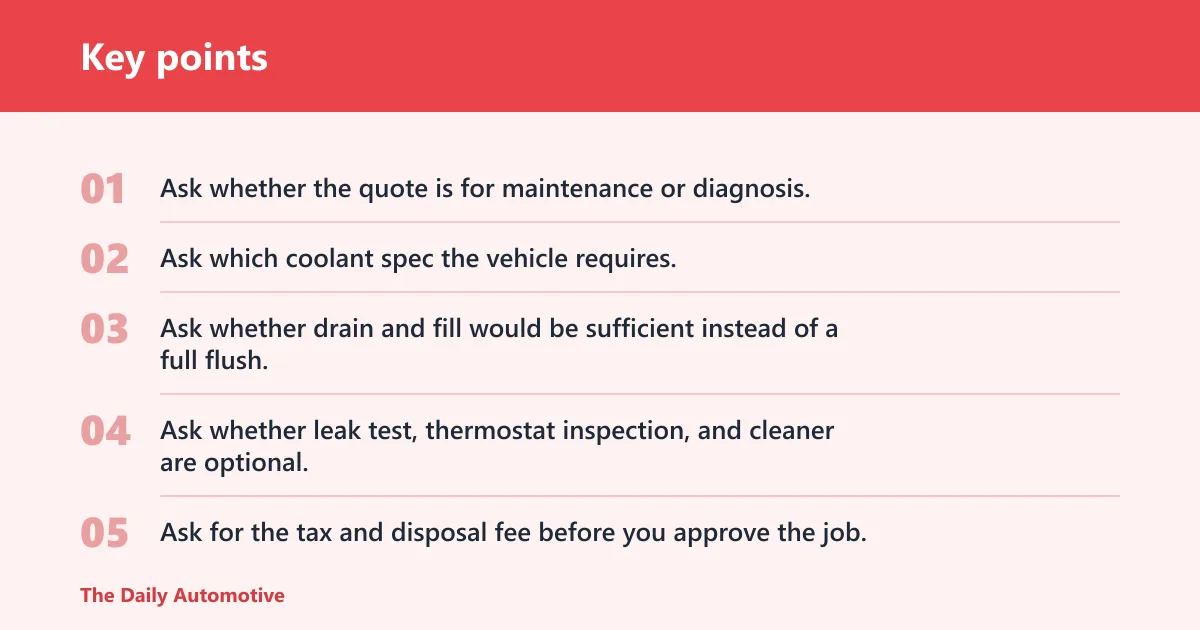
- Ask whether the quote is for maintenance or diagnosis.
- Ask which coolant spec the vehicle requires.
- Ask whether drain and fill would be sufficient instead of a full flush.
- Ask whether leak test, thermostat inspection, and cleaner are optional.
- Ask for the tax and disposal fee before you approve the job.
How much is a coolant flush near me? That depends on your local labor rate, the shop type, and the coolant formula required by your vehicle. The right comparison is between quotes with the same scope, not between two totals that hide different work.
Frequently asked questions
How much does a coolant flush cost at Valvoline?
Pricing can vary by location, vehicle, and service scope, but quick-lube stores usually sit on the lower side of the market. Compare the invoice line by line so you can see whether the quote includes coolant, labor, disposal, and tax, or whether it adds extra items you may not need.
How much does a coolant flush cost at Jiffy Lube?
Like other quick-lube shops, Jiffy Lube pricing depends on coolant type, system capacity, and the exact service method. A basic drain and fill is usually less than a full flush with bleeding or inspection, so make sure the quote names the service before you compare it.
How much does a coolant flush cost at a dealership?
Dealer service centers often charge more because of higher labor rates and vehicle-specific coolant requirements. A dealer quote can still be fair if it includes the correct formula, complete bleeding, and a proper inspection. Compare the dealer total against the same service scope at an independent shop.
How much does a coolant flush cost in Canada?
Canadian pricing depends on the same factors as any other market: coolant type, labor rate, shop type, and system size. Taxes and disposal charges can also shift the final bill. Use the invoice breakdown to compare quotes, since currency and local rules can change what “typical” means.
How much does a coolant flush cost in the UK?
UK quotes vary by vehicle, coolant specification, and workshop labor rate. European formula coolant can be more common there, and the quote may include bleed time or inspection. Treat the price as a maintenance quote only if the invoice does not mix in cooling-system repair work.
How much does a coolant flush and refill cost?
A flush and refill should be priced as routine maintenance, not as a repair estimate. The cost usually depends on the coolant needed, the amount of labor, and any disposal or tax charges. If the quote starts adding leak tests or parts, ask whether the shop has found a fault.
Products related to this article
Sponsored / affiliate links. As an Amazon Associate I earn from qualifying purchases. I may earn additional commission from eligible campaigns.