How to Tune a 2-Stroke Carb the Right Way
Getting your 2-stroke engine running smoothly can sometimes feel tricky, especially when it comes to the carburetor. Many folks find adjusting it a bit confusing at first, wondering if they’re doing it right. But don’t worry, it’s not as hard as it might seem!
This guide is here to make How to Tune a 2-Stroke Carb the Right Way super simple. We’ll walk through it step by step so you can get your machine purring like a kitten. Get ready to learn the easy way to get that perfect engine tune.
Why Carburetor Tuning Matters for 2-Stroke Engines
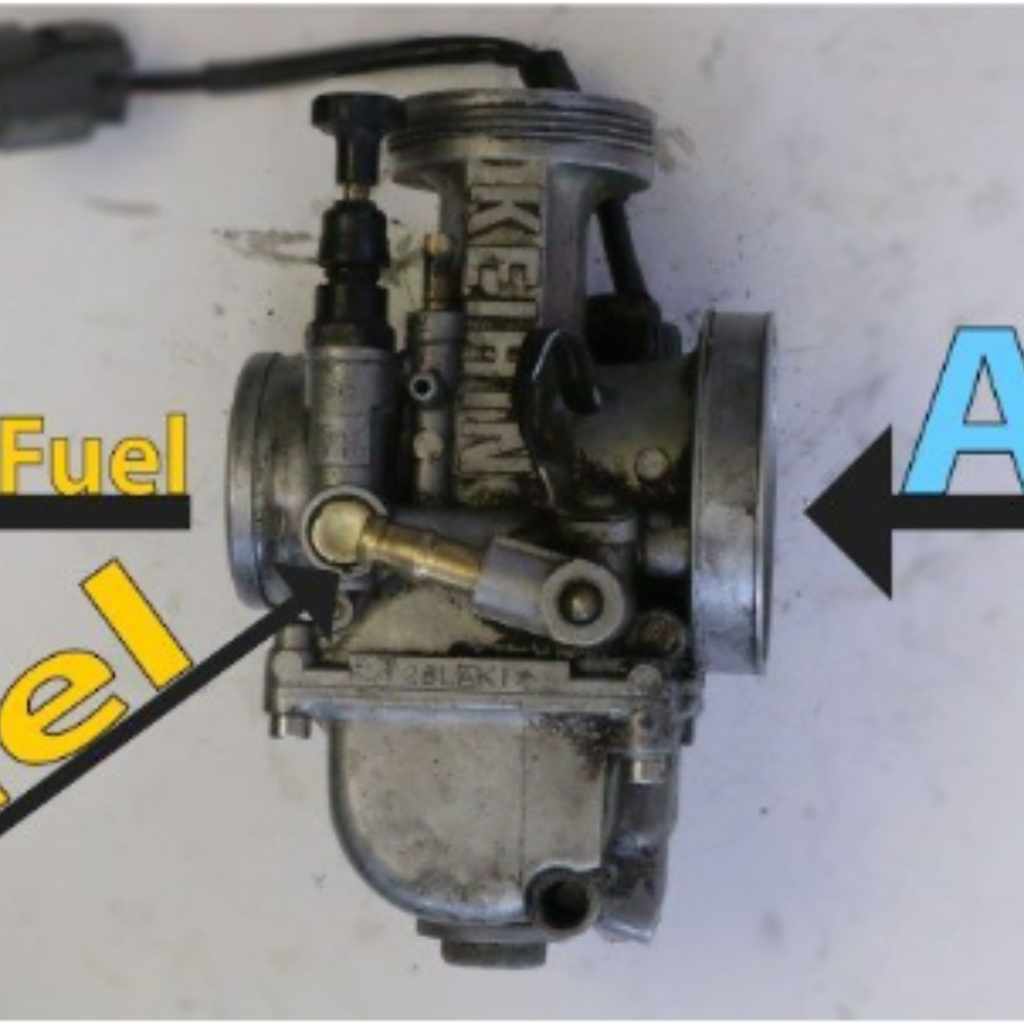
Your carburetor is like the engine’s lungs and stomach combined. It mixes air and fuel in just the right amounts for your 2-stroke engine to run. When this mix is off, your engine might sputter, lose power, or even run too hot.
Getting the carburetor tuned correctly ensures your engine gets the optimal air-fuel mixture it needs to perform its best.
What Does a Tuned Carburetor Do?
A properly tuned carburetor means your 2-stroke engine will:
- Start easily
- Run smoothly at idle
- Accelerate without hesitation
- Reach its full power
- Run cooler and more efficiently
Common Carburetor Problems and Symptoms
If your 2-stroke engine isn’t running right, the carburetor is often the culprit. Here are some signs you might need to tune it:
- Engine won’t start or is hard to start: This could mean too much or too little fuel.
- Engine sputters or bogs down: Often a sign of a rich mixture (too much fuel).
- Engine runs poorly at high speeds: Might be a lean mixture (too little fuel).
- Engine dies when you hit the throttle: Could be a lean mixture.
- Black smoke from the exhaust: Usually indicates a rich mixture.
- Engine overheating: A lean mixture can cause this.
- Poor idle: The engine might run rough or stall when not accelerating.
Understanding the Parts of a 2-Stroke Carburetor
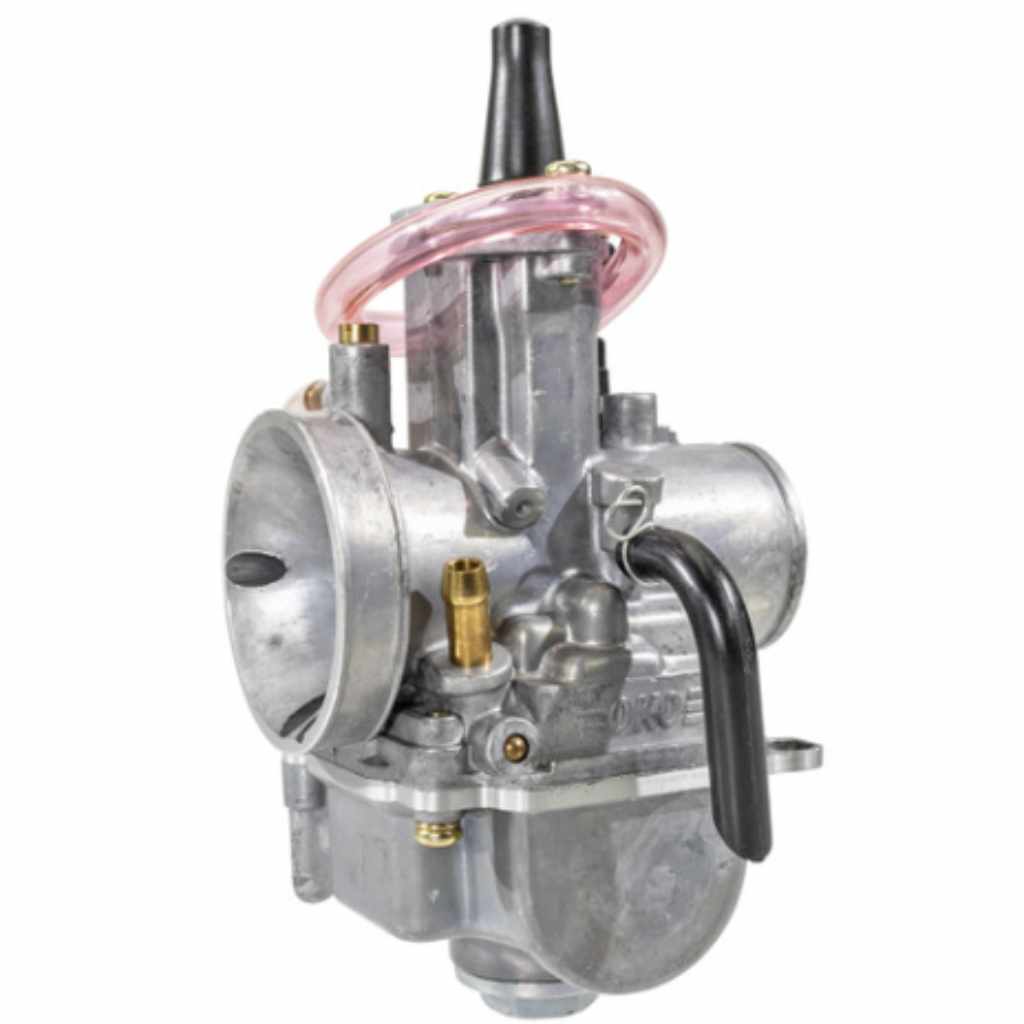
Before you start adjusting, it helps to know what you’re dealing with. Most simple 2-stroke carburetors have a few key adjustable parts:
The Idle Screw
This screw controls the engine’s idle speed. Turning it in (clockwise) will increase the idle speed, and turning it out (counter-clockwise) will decrease it. It affects how much fuel the engine gets when your throttle is completely closed.
The Mixture Screw(s)
These screws control the air-fuel ratio at different throttle positions. Many carburetors have two mixture screws:
- Low-Speed (Idle) Mixture Screw: This screw controls the air-fuel mixture when the engine is idling and at low throttle. It works in conjunction with the idle speed screw.
- High-Speed (Main) Mixture Screw: This screw controls the air-fuel mixture at higher throttle positions and full throttle.
Some simpler carbs might only have one mixture screw that affects a wider range of operation, or no adjustable mixture screws at all, relying on internal jets.
The Jet System
Inside the carburetor are small brass fittings called jets. These have tiny holes that meter the fuel flow.
- Pilot Jet (or Idle Jet): Controls fuel flow at idle and low throttle.
- Main Jet: Controls fuel flow at higher throttle openings.
While not typically adjusted during a standard tuning session (changing jets requires disassembly), their size is critical for the carburetor’s overall function.
If you’ve tried adjusting the screws and still have issues, the jets might be clogged or the wrong size.
Tools You’ll Need
You don’t need a workshop full of tools to tune your carburetor. Here’s what you’ll likely need:
- Screwdriver set (flathead and Phillips, depending on your screws)
- Small wrenches or sockets (if needed for nuts holding the carb)
- A clean rag
- A way to warm up the engine (e.g., by riding it or letting it run)
How to Tune a 2-Stroke Carb the Right Way Step-by-Step
Tuning your carburetor is all about finding the sweet spot where the engine runs its best. We’ll focus on adjusting the idle and mixture screws for optimal performance.
Step 1: Prepare the Engine and Carburetor
First, make sure your engine is at normal operating temperature. A cold engine won’t give you accurate tuning results. If you can’t ride the machine, let it run for about 5-10 minutes to warm up.
Ensure your air filter is clean. A dirty air filter restricts airflow, making the mixture richer, which will throw off your tuning. Check that there are no air leaks around the carburetor or intake manifold, as these will cause a lean condition.
Step 2: Set the Idle Speed
Find the idle speed screw. Gently turn it clockwise until it seats, then back it out about 1 to 1.5 turns. This gives you a starting point.
Now, start the engine. If it’s running, adjust the idle speed screw until the engine idles steadily without stalling. The idle should be at the manufacturer’s recommended RPM, or at a speed where the clutch doesn’t engage (for most scooters and motorcycles).
Step 3: Adjust the Low-Speed (Idle) Mixture Screw
This is where we fine-tune the fuel mixture for idle and low throttle. With the engine idling, slowly turn the low-speed mixture screw inwards (clockwise) until the engine speed starts to drop or the engine begins to run roughly. Then, slowly turn it outwards (counter-clockwise) until the engine speed drops again or it starts to run roughly.
The ideal setting is usually in the middle of these two points, where the engine runs the smoothest and fastest.
After finding the sweet spot for the mixture screw, you may need to readjust the idle speed screw slightly to get the idle speed back to where you want it.
Step 4: Test Acceleration and Low-End Performance
Now, gently blip the throttle. The engine should respond quickly and smoothly without hesitation or bogging down. If it hesitates or stumbles when you give it gas, the low-speed mixture might be a bit lean (turn the screw out a tiny bit) or too rich (turn the screw in a tiny bit).
Small adjustments are key. A quarter turn at a time is usually enough. Listen to your engine and feel how it responds.
This part of tuning is often the trickiest and requires a bit of patience and feel.
Step 5: Adjust the High-Speed (Main) Mixture Screw
This screw affects performance at higher throttle openings, from mid-throttle to full throttle. The best way to test this is to ride the machine. Accelerate moderately through all gears.
Pay attention to how the engine pulls.
- Lean Condition (too little fuel): The engine might feel weak at higher RPMs, hesitate, or even make pinging or knocking sounds (detonation). It might also feel like it’s running out of gas when you open it up.
-
Rich Condition (too much fuel): The engine might feel sluggish, not rev out cleanly, and you might see black smoke from the exhaust.
It won’t reach its top speed easily.
You’ll need to adjust the high-speed mixture screw based on these symptoms. Turning it inwards (clockwise) leans the mixture, and turning it outwards (counter-clockwise) enriches it. Again, make very small adjustments, ride and test, and repeat.
Some carburetors have a “power jet” or other circuits that affect high-speed running, but for most basic 2-stroke carbs, the main jet and high-speed mixture screw are the primary adjustments.
Step 6: Final Check and Fine-Tuning
Once you feel you’ve got the high-speed performance dialed in, go back and re-check the idle and low-speed performance. Sometimes adjusting one screw can slightly affect the other. Ride the machine again and pay attention to how it transitions from idle to acceleration and through the gears.
You’re looking for smooth, consistent power delivery throughout the entire RPM range.
Tips for Different Carburetor Types
While the basic principles apply, some carburetors have variations:
Single Screw Carburetors
Simpler carbs might have only one mixture screw. In this case, this single screw will have a significant effect on both low-end and mid-range performance. You’ll need to find a compromise that provides the best overall running condition.
Adjustments here often impact idle stability and initial acceleration.
Carburetors with No Adjustable Mixture Screws
Some very basic 2-stroke carburetors are not designed for user mixture adjustment. They rely entirely on fixed jet sizes and needle positioning. If you have one of these and your engine is running poorly, the solution usually involves cleaning the carburetor thoroughly or changing the pilot or main jets to a different size.
This is a more involved process and may require consulting a manual for your specific model.
Common Pitfalls to Avoid
It’s easy to make mistakes when tuning. Here are some common ones:
- Adjusting a cold engine: Always tune a warm engine.
- Making large adjustments: Small changes have big effects.
- Not checking the air filter: A dirty filter drastically alters the air-fuel ratio.
- Ignoring air leaks: Leaks make the mixture lean and the engine run poorly.
- Getting frustrated: Tuning takes practice and patience. If you’re struggling, take a break and come back with fresh ears and eyes.
When to Consider Other Issues
If you’ve tuned your carburetor and the engine still runs poorly, the problem might lie elsewhere. Consider:
- Spark plug condition: A fouled or worn spark plug can cause misfires.
- Ignition system problems: Weak spark can lead to poor running.
- Clogged fuel filter or lines: Restricts fuel flow.
- Worn piston rings or seals: Affects compression and overall engine performance.
- Incorrect timing: Though less common on simple 2-strokes, it’s possible.
Frequently Asked Questions
Question: How do I know if my 2-stroke carb is too rich or too lean?
Answer: A rich condition usually shows up as black smoke from the exhaust, a strong smell of unburnt fuel, and the engine bogging down or not revving cleanly. A lean condition can cause the engine to overheat, make pinging or knocking sounds, hesitate when you accelerate, or even stall. You might also see a white or very light tan color on the spark plug if it’s too lean.
Question: Can I tune my 2-stroke carb without riding it?
Answer: You can do a basic idle and low-speed mixture adjustment without riding. However, to properly tune the high-speed circuit, you absolutely need to be able to ride the machine and test its performance under load at various throttle positions.
Question: How many turns should the mixture screws be out from seated?
Answer: There’s no single answer because it depends on the carburetor design, engine, and environment. A common starting point is 1 to 1.5 turns out for both low-speed and high-speed mixture screws. You then fine-tune from there based on how the engine performs.
Question: What happens if I turn the mixture screw all the way in?
Answer: Turning the mixture screw all the way in will likely cause the engine to run very rich or stall, especially at idle. It can also damage the screw or the carburetor’s seat if forced. Always turn screws gently until they seat, and then back them out to start adjustments.
Question: Should I clean my carburetor before tuning it?
Answer: Yes, it’s highly recommended. A dirty carburetor, especially clogged jets or passages, will prevent proper fuel flow and make tuning impossible or ineffective. Cleaning it first ensures you’re working with a clean slate and can achieve optimal results.
Final Thoughts
Mastering How to Tune a 2-Stroke Carb the Right Way is all about patience and listening to your engine. By following these steps, you’re giving your 2-stroke the best chance to run smoothly and powerfully. Remember to warm up your engine first, make small, gradual adjustments to the idle and mixture screws, and test frequently.
Paying attention to how the engine sounds and feels during acceleration and at idle is your best guide. Don’t get discouraged if it takes a few tries; each adjustment brings you closer to that sweet spot. Once tuned, you’ll enjoy better performance, easier starting, and a more reliable ride.