Car Running Rich: Causes, Symptoms & How to Fix It
A car running rich means the air-fuel mixture has too much gasoline relative to air — the ideal ratio for a gas engine is about 14.7:1, and a rich-running engine burns well below that, wasting fuel and coating the spark plugs and catalytic converter in black soot.
The most common causes are a failing oxygen (O2) sensor, a dirty mass airflow (MAF) sensor, a stuck fuel pressure regulator, or a vacuum leak that tricks the engine computer into adding fuel it does not actually need.
Left alone, it usually shows up as OBD-II code P0172 (or P0175 on the second bank of a V6 or V8), a rough idle, and a strong gasoline smell from the exhaust. Here is how to confirm which part is actually at fault and fix it without guessing.
Identifying the Symptoms of a Rich-Running Engine
BEST FOR DIAGNOSING A RICH CONDITION
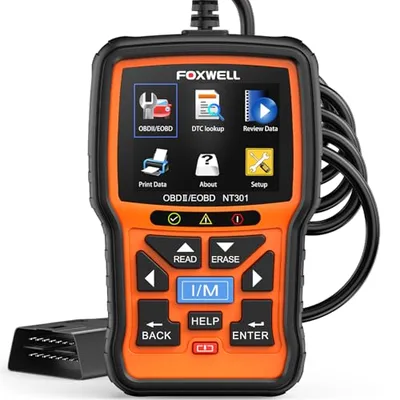 |
FOXWELL NT301 OBD2 Scanner – $55.95 Reads the P0172/P0175 code plus live long-term fuel trim data, the two numbers that actually confirm a rich condition instead of guessing at parts.
|
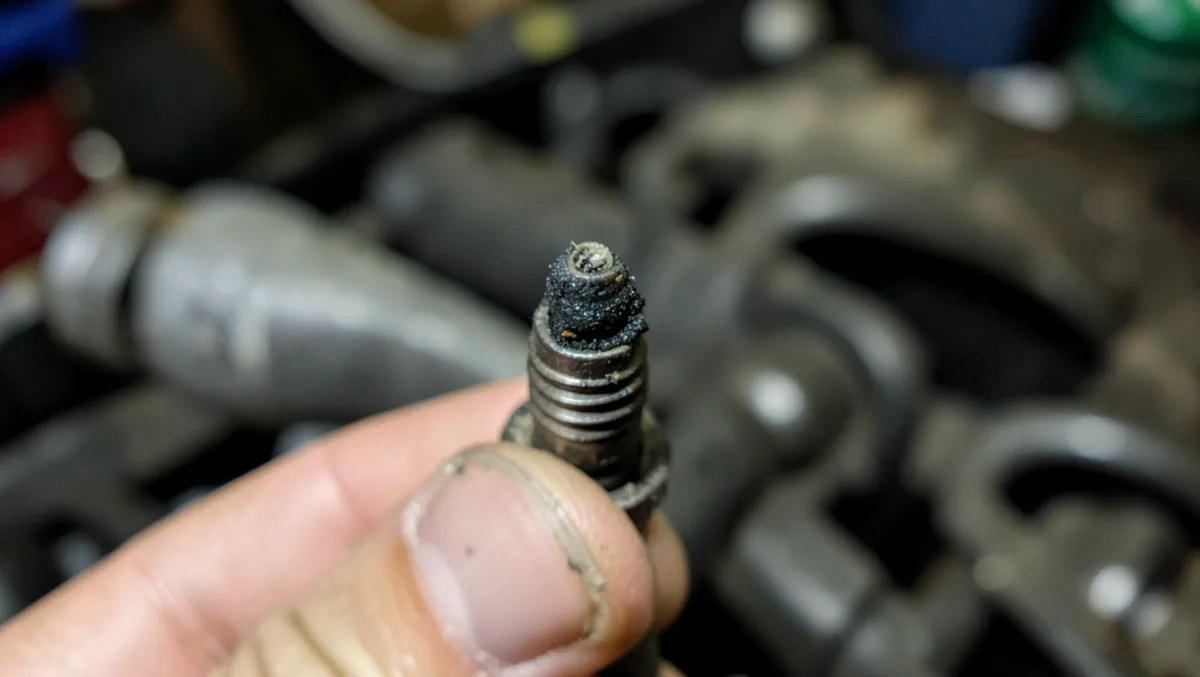
The clearest sign of a rich mixture is black or dark gray smoke from the tailpipe, especially under acceleration — that is unburned fuel exiting the exhaust instead of combusting. Pulling a spark plug confirms it: a healthy plug looks light tan or gray, while a rich-running engine leaves the tip black and sooty, as shown below.
Other giveaways include a strong raw-gasoline smell around the exhaust, fuel economy that is noticeably worse than normal, a rough or hunting idle, hesitation on acceleration, and occasional stalling. Most drivers first notice something is wrong when the check engine light comes on with a code in the P0172-P0175 range.
What Causes a Car to Run Rich?
A rich condition almost always traces back to one component feeding the engine computer bad information, not a problem with the fuel itself. The usual suspects, roughly in order of how often they turn up on a scan tool:
- Failing oxygen (O2) sensor — the O2 sensor tells the ECU how much unburned oxygen is left in the exhaust so it can fine-tune the mixture in real time. A sensor that is aging, contaminated, or reporting a false-lean signal makes the computer add fuel it does not need.
- Dirty or failing mass airflow (MAF) sensor — the MAF measures how much air is entering the engine. An oil-fouled or dirty sensor element under-reports the real airflow, so the ECU calculates fuel for less air than is actually there and over-fuels the mix.
- Stuck-open or failing fuel pressure regulator — this part holds fuel rail pressure at a set value. If the diaphragm fails or the regulator sticks, rail pressure runs too high and every injector pulse delivers more fuel than it should.
- Clogged air filter — a heavily restricted filter starves the engine of air. On MAF-based systems especially, the ECU still commands fuel based on the airflow it thinks is happening, which pushes the ratio rich even though the real problem is a lack of air.
- Leaking or stuck-open fuel injector — an injector that does not seal, or is stuck partly open, dribbles extra fuel into the cylinder outside its normal pulse.
- Vacuum leak or a bad MAP sensor — counterintuitively, an unmetered vacuum leak or a MAP sensor misreading intake pressure can also set a rich code, because the ECU misjudges engine load and over-corrects with fuel.
- Faulty coolant temperature sensor — if this sensor reports a colder engine than it really is, the ECU keeps running its cold-start enrichment strategy long after the engine has actually warmed up.
How to Diagnose a Rich-Running Engine
Start with an OBD-II scanner rather than guessing at parts. Plug it into the diagnostic port (usually under the dash near the steering column), turn the key to the “on” position, and pull any stored codes. P0172 means “System Too Rich (Bank 1),” and P0175 is the same fault on Bank 2 — the side of a V6 or V8 that holds the number-2 cylinder. Either code confirms what you are smelling and seeing is not in your head.
A scanner that shows live data is far more useful than the stored code alone. Check long-term fuel trim (LTFT): this number shows how much the ECU is already correcting the mixture from its baseline. A large negative LTFT, commonly beyond −10%, means the computer is already pulling fuel out because it is seeing too much of it — that points at a sensor feeding it bad information rather than a mechanical fuel-delivery problem. A positive trim, by contrast, usually points toward a lean condition instead.
From there, a visual and physical check narrows things down further. Pull the air filter and check for heavy dirt or oil contamination. Inspect the intake hoses and manifold gaskets for cracks, and spray a little brake cleaner or unlit propane near suspected leak points — a change in idle speed confirms a leak at that spot. Finally, pull a spark plug and check for the sooty, black tip described above.
Fixing the Fuel System
If the injectors are the culprit, a can of good fuel-injector cleaner run through a full tank can clear light clogging, but a leaking or stuck-open injector needs to be cleaned on a bench or replaced outright — cleaner alone will not fix a torn seal. While you are in there, check the injector wiring for chafed insulation or a loose connector; an injector held partly open by a bad ground signal looks identical to a mechanically stuck one.
Fuel pressure is worth measuring directly with a mechanical gauge on the fuel rail test port rather than assumed. Compare the reading to your vehicle’s spec (commonly 35-65 psi depending on the system). Pressure that is running high points at a failed regulator or a kinked fuel return line; a new fuel filter is worth ruling out first since a clogged filter can confuse the picture. If the fuel pump itself is weak or surging, pressure will fluctuate under load even if it looks fine at idle.
Fixing the Air Intake Side
A dirty air filter is the cheapest possible fix here — pull it, hold it up to a light, and replace it if you cannot see much light through the pleats. That alone resolves a surprising number of rich complaints on older, MAF-based fuel systems.
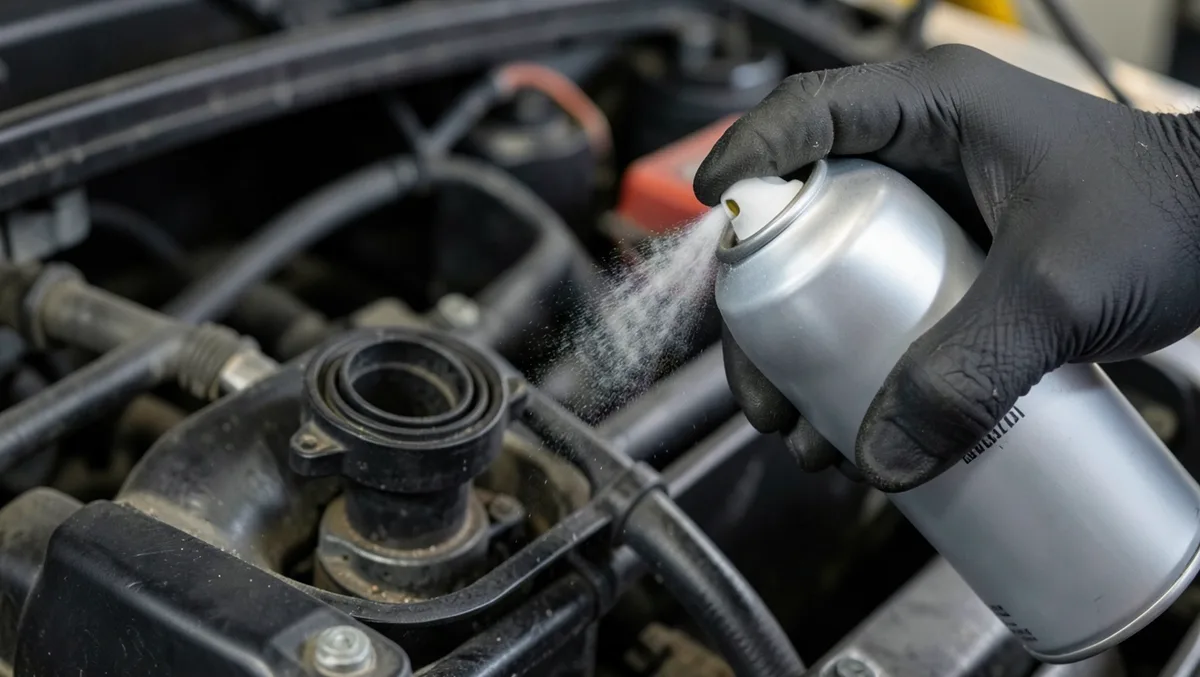
The mass airflow sensor is the next stop. It sits in the intake tract between the air filter housing and the throttle body, and its thin heated wire or film element is easily fouled by oil residue from an over-oiled aftermarket air filter. Remove it, spray it with dedicated MAF sensor cleaner (never brake cleaner or carb cleaner, which can damage the element), and let it air-dry completely before reinstalling — as shown below.
While the intake is apart, check every rubber hose and the intake manifold gasket for cracks or a loose clamp. A vacuum leak downstream of the MAF sensor lets in air the sensor never measured, which throws off the calculated fuel needed even though the sensor itself is working correctly.
The ECU, Sensors, and When a Reflash Actually Helps
The engine control unit (ECU) is the computer that decides how much fuel to inject based on what its sensors report. In the vast majority of rich-condition cases, the ECU itself is not broken — it is doing exactly what a faulty O2, MAF, coolant temperature, or MAP sensor is telling it to do. Replacing the sensor at fault, not reflashing the computer, resolves most of these cases.
A reflash or ECU reprogram is worth considering only in narrower situations: a known factory calibration bug for your specific model year, a recent aftermarket tune that was set up incorrectly, or a replacement ECU that needs to be flashed to match the vehicle. That work should go through a dealer or a shop with the correct factory software, since an incorrect flash can cause worse problems than the original rich condition.
Preventive Maintenance
Most rich-condition repairs are also prevention for the next one. Replace the air filter on the manufacturer’s schedule (typically every 12,000-15,000 miles, sooner in dusty conditions), and if you run an aftermarket oiled filter, do not over-oil it — that is one of the most common causes of a fouled MAF sensor. Keep spark plugs on their replacement interval, since worn plugs cause incomplete combustion that can mimic a rich condition on their own. Use fuel from a reputable station and avoid letting the tank run low for long stretches, since sediment at the bottom of an older tank is more likely to reach the fuel filter and pump.
When to Call a Mechanic
A DIY scan tool and a little patience solve most single-sensor rich conditions. It is time to bring in a professional if the code keeps coming back after a sensor replacement, if fuel trim numbers do not improve, or if you smell fuel strongly enough to suspect a leak rather than just exhaust odor — that is a safety issue, not a diagnostic one. A shop with a bidirectional scan tool can also force-test the injectors and fuel pump directly instead of inferring their condition from trim data alone.
Ask any shop what specific code and fuel trim numbers they pulled before they quote a repair. A mechanic who can explain the reading, not just the part they want to replace, is worth the extra few minutes it takes to ask.
Frequently Asked Questions
What Happens If a Car Runs Too Rich?
A car running too rich burns excess fuel, leading to poor fuel economy and higher emissions. Over time the unburned fuel can foul spark plugs, wash oil off the cylinder walls, and damage the catalytic converter. Engine performance drops too, showing up as rough idle and hesitation on acceleration.
What Does the P0172 or P0175 Code Mean?
P0172 means “Fuel System Too Rich (Bank 1)” and P0175 is the identical fault on Bank 2 of a V6 or V8 engine. Both mean the engine control unit has detected too much fuel and not enough oxygen in the exhaust and is already trying to compensate, which is exactly the fuel-trim behavior described above.
How Do I Fix a Car That Is Running Rich?
Scan for codes and check long-term fuel trim first. Then inspect and, if needed, clean or replace the mass airflow sensor and oxygen sensor, check fuel pressure against spec, replace a clogged air filter, and look for vacuum leaks in the intake hoses and gaskets. Fixing the specific part the fuel trim points to, rather than replacing parts at random, is what actually clears the code.
How Do I Stop My Car From Idling High?
High idle usually points at a vacuum leak or a dirty throttle body rather than a rich condition on its own. Check for vacuum leaks and clean the throttle body, inspect the idle air control valve, and confirm the idle speed is within spec. If the problem persists after those checks, have a mechanic look at the throttle position and coolant temperature sensors.
Can Bad Spark Plugs Cause a Car to Run Rich?
Yes. Worn or fouled spark plugs cause incomplete combustion, which pushes more unburned fuel into the exhaust and can look and smell like a rich condition even when the fuel and air sensors are working correctly. Replacing plugs on schedule rules this out quickly and cheaply.
Can Putting Diesel in a Gas Car Make It Run Rich?
Yes. Diesel does not ignite from a spark plug the way gasoline does, so it burns incompletely in a gas engine. That shows up as dark exhaust smoke, a strong fuel smell, sooty plugs, and can trigger the same P0172-range rich code a bad sensor would, on top of rough running or stalling. If diesel goes into a gas tank, do not start the engine — have the tank drained and the fuel lines flushed first, since even a small amount can damage the catalytic converter.
What Does the ECU Have to Do With a Rich Condition?
The ECU (engine control unit) is the computer that decides how much fuel to inject based on its sensor inputs. It is rarely broken itself; almost always it is correctly reacting to bad data from a failing O2, MAF, coolant temperature, or MAP sensor. That is why replacing the faulty sensor, not reflashing the ECU, fixes most rich conditions.
Conclusion
A rich-running engine almost always comes down to one part feeding the ECU bad information: a failing O2 sensor, a dirty MAF sensor, a bad fuel pressure regulator, or a vacuum leak. Scan for the code, check long-term fuel trim, and let that number point you to the right part instead of guessing.
Fix that one component, confirm the trim numbers come back toward zero, and keep up with air filter and spark plug replacement to keep it from coming back.
Products related to this article
Sponsored / affiliate links. As an Amazon Associate I earn from qualifying purchases. I may earn additional commission from eligible campaigns.