How to Turn Off Auto Start Stop on Equinox
Many drivers find the auto start-stop feature on their 2018 Chevy Equinox to be a bit tricky. It turns the engine off at stops to save gas. While good for the environment and your wallet, sometimes you just want it to stay on. Figuring out how to disable it can seem like a puzzle for new car owners. But don’t worry, it’s easier than you might think. We’ll walk you through the simple steps to control this feature. Get ready to learn exactly How to Turn Off Auto Start-Stop on 2018 Chevy Equinox with this clear guide.
Understanding Your Chevy Equinox Auto Start-Stop System
This section will explain what the auto start-stop system is, why it’s included in vehicles like the 2018 Chevy Equinox, and how it generally functions. We’ll break down the technology behind it in simple terms so you can grasp its purpose. Understanding the basics will help you appreciate why some drivers prefer to disable it. It’s a smart system designed for efficiency, but driver preference is also important.
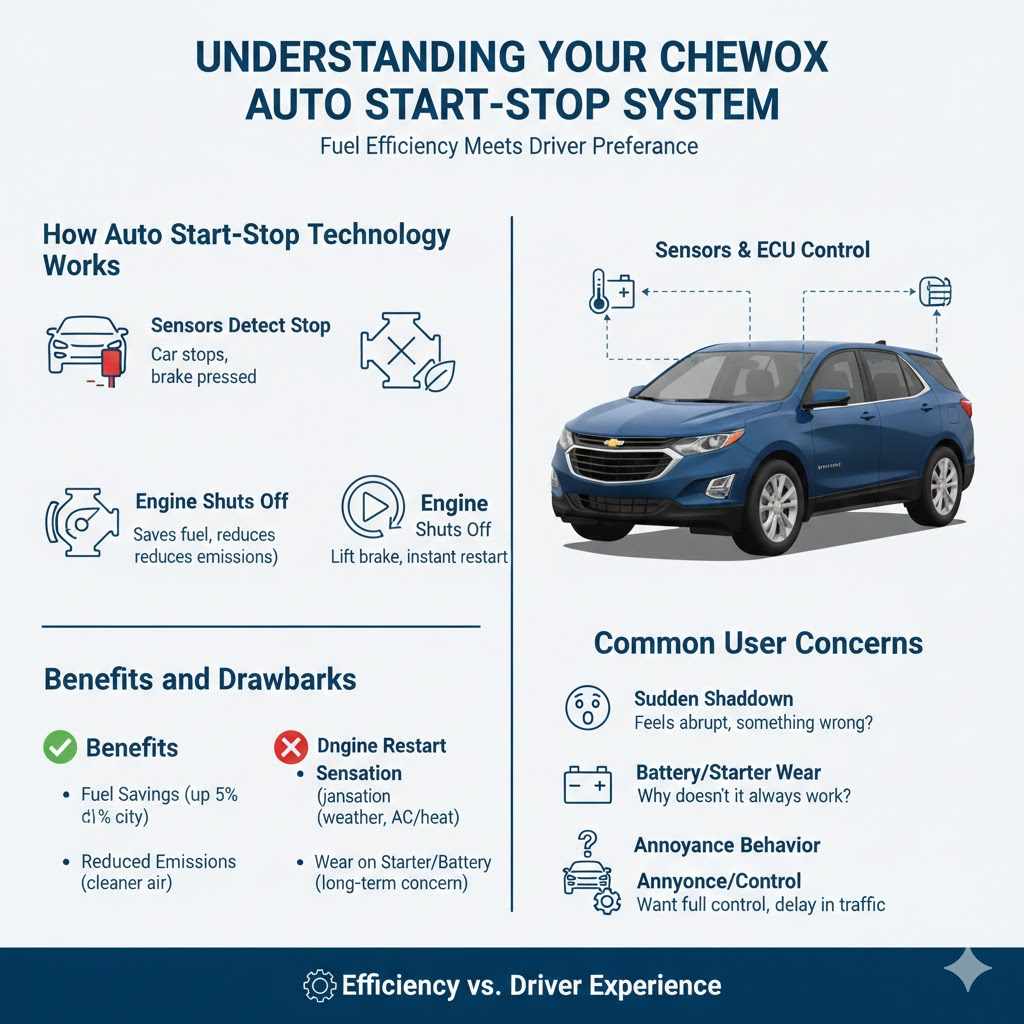
The auto start-stop system is a technology designed to improve fuel economy and reduce emissions. When your vehicle comes to a complete stop, such as at a traffic light or in stop-and-go traffic, the system automatically shuts off the engine. This prevents fuel from being consumed while the vehicle is stationary. Once you lift your foot off the brake pedal, the engine instantly restarts, allowing you to accelerate away. This process happens quickly and seamlessly, often without the driver noticing much.
The primary goal of this feature is to reduce the amount of time your engine spends idling. Idling consumes fuel without the vehicle moving, and it also releases exhaust gases into the atmosphere. By shutting off the engine during these idle periods, manufacturers aim to lower overall fuel consumption and thereby decrease the vehicle’s carbon footprint. This aligns with stricter environmental regulations and growing consumer demand for more fuel-efficient vehicles.
The system relies on several sensors and sophisticated control modules to operate. These include sensors that monitor brake pedal application, vehicle speed, battery charge levels, and engine temperature. The engine control unit (ECU) makes the decision to shut off or restart the engine based on the data from these sensors. For instance, if the battery charge is low or the cabin temperature needs significant adjustment from the climate control system, the system might choose not to shut off the engine.
While the benefits of auto start-stop are clear for fuel saving and emissions reduction, some drivers find it inconvenient or distracting. The frequent engine restarts can be noticeable, especially in very hot or cold weather, or when the climate control system is working hard. For some, the abrupt stop and go can feel less smooth. This is where knowing how to manage the system comes into play.
How Auto Start-Stop Technology Works
Auto start-stop technology is a clever system that helps save fuel and cut down on pollution. It works by sensing when your vehicle is stopped. When you press the brake pedal and the car comes to a halt, the engine automatically turns off. This stops fuel from being used while you’re waiting. As soon as you take your foot off the brake, the engine quickly starts up again. This makes sure you can move forward without delay.
The system uses many parts to do this. Sensors check if the brake is pushed, how fast the car is going, and how much power is in the battery. The car’s computer uses this information to decide when to turn the engine off and on. It needs enough battery power to restart the engine quickly every time. It also checks if the engine is too hot or too cold.
When the system works correctly, you might not even notice it’s happening. The engine restart is usually very fast. It’s designed to be smooth and quick. This technology is becoming more common in cars because it helps meet government rules about saving gas and reducing pollution. It’s a key part of making modern vehicles more efficient for everyday driving.
Benefits and Drawbacks of Auto Start-Stop
The auto start-stop system offers several advantages. The most significant is fuel efficiency. By reducing engine idling time, vehicles equipped with this feature consume less fuel. For instance, a study by the EPA found that auto start-stop systems can improve fuel economy by up to 5% in city driving conditions. This can translate into noticeable savings at the gas pump over time.
Another key benefit is reduced emissions. Less idling means less fuel is burned, and consequently, fewer pollutants are released into the atmosphere. This contributes to cleaner air and helps manufacturers meet increasingly stringent environmental regulations. For drivers concerned about their environmental impact, this feature is a positive step.
However, there are also drawbacks that lead some drivers to seek ways to disable the system. Some people find the frequent engine restarts to be irritating or disruptive, especially in heavy traffic. The sensation of the engine shutting off and then quickly restarting can be jarring for some drivers.
In very hot or cold weather, the system might not engage as frequently. This is because the air conditioning or heating system needs the engine running to maintain the cabin temperature. If the system has to work harder to keep you comfortable, it may override the auto start-stop function. This can lead to inconsistent operation, which some drivers find confusing.
Additionally, in some cases, repeated starting and stopping can put additional wear on the starter motor and battery. While modern systems are designed to handle this, it’s a concern for some vehicle owners who plan to keep their cars for many years. The overall impact on component longevity is still a topic of discussion among automotive experts.
Common User Concerns About Start-Stop
Many drivers who are new to vehicles with auto start-stop technology express a common set of concerns. One of the most frequent is the feeling of sudden engine shutdown. This can feel abrupt to those unaccustomed to it, making them wonder if something is wrong with their car.
Another concern is the perceived impact on battery life and starter motor wear. While manufacturers design these systems to withstand numerous cycles, drivers often worry about the long-term effects. They wonder if their car’s battery will need replacement sooner or if the starter motor will wear out faster.
Some drivers also find the system’s operation inconsistent. They might notice it doesn’t always shut the engine off when expected, or it restarts for reasons they don’t understand. This lack of predictable behavior can lead to confusion and a desire for more control.
Drivers also mention annoyance in certain situations. For example, if they need to quickly move their vehicle, like to let another car pass or to avoid a sudden obstacle, the brief delay while the engine restarts can feel inconvenient. This is particularly true for drivers who appreciate immediate responsiveness from their vehicle.
Finally, some drivers simply prefer the traditional driving experience where the engine remains on. They enjoy the continuous hum of the engine and the feeling of being in complete control of its operation. For them, the auto start-stop feature removes a sense of direct engagement with their vehicle. These concerns are valid and highlight why many people look for ways to disable the system.
How to Turn Off Auto Start-Stop on 2018 Chevy Equinox Step-by-Step
This section will provide a clear, easy-to-follow, step-by-step guide on how to disable the auto start-stop feature on a 2018 Chevy Equinox. We will detail the exact button to press and what to expect. This is the core of the solution, presented in a way that anyone can understand. We aim to make this process simple and stress-free.
The 2018 Chevy Equinox has a straightforward method for temporarily disabling the auto start-stop system. You do not need any special tools or technical expertise. It’s a simple button press that you can do each time you start your vehicle if you prefer the engine to remain on. This is the most direct way to control the feature according to your preference.
To turn off the auto start-stop system, you need to locate a specific button on your dashboard. This button is designed for driver convenience and is easily accessible. Once you know where it is, the process is very quick. You can do this as soon as you get into your car and start the engine.
Locating the Auto Start-Stop Disable Button
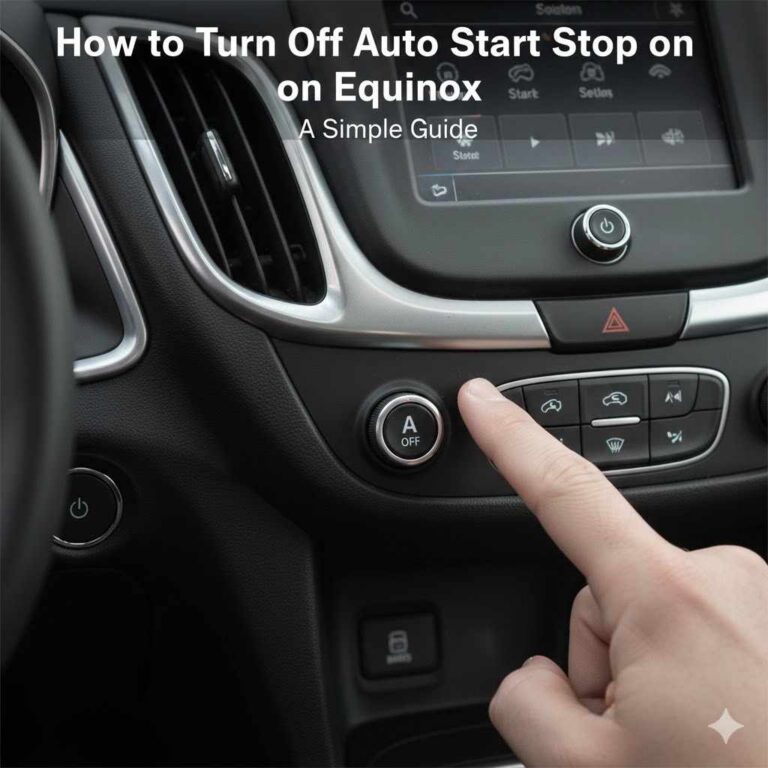
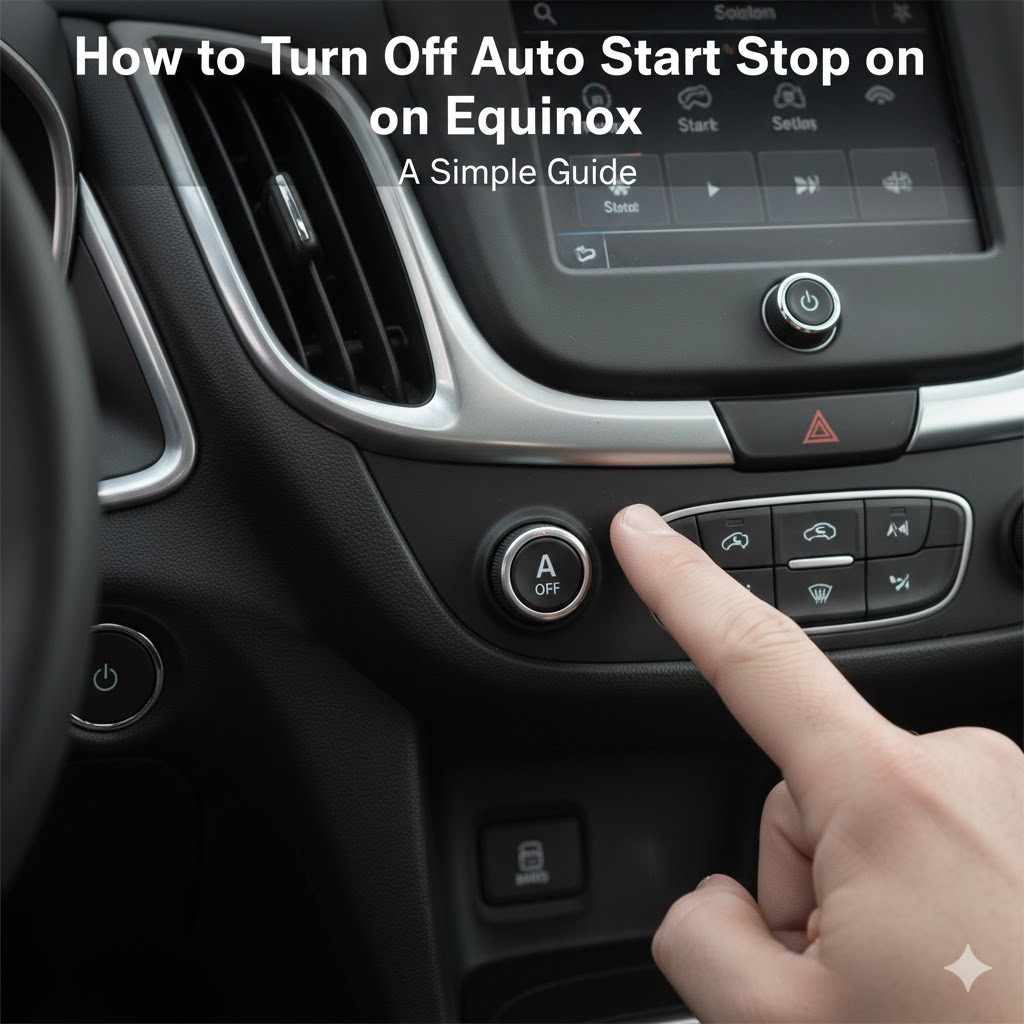
The auto start-stop disable button on your 2018 Chevy Equinox is typically located on the center console, often near the gear shifter or other climate control buttons. It’s a small button with a symbol that usually depicts an “A” with a circular arrow around it, sometimes with a line through it. This symbol is standard across many General Motors vehicles for this function.
You will need to look carefully on the dashboard or center stack of your vehicle. It’s not usually a large button, so it might be overlooked if you aren’t specifically searching for it. The exact placement can vary slightly depending on the specific trim level of your 2018 Equinox, but it will be in a readily accessible area for the driver.
Once you find the button, pay attention to its label or symbol. This will confirm that you have located the correct control for the auto start-stop system. Knowing its location will make it easy for you to deactivate the system every time you start your car, should you choose to do so. This button allows you direct control over the system’s operation.
The Simple Button Press Method
The most common and easiest way to turn off the auto start-stop feature on your 2018 Chevy Equinox is by pressing a specific button. This method is intended for temporary disabling, meaning you will typically need to press it each time you start your vehicle if you want the system off. It’s a user-friendly design for driver preference.
After starting your engine, look for the button marked with the auto start-stop symbol. This symbol usually looks like the letter ‘A’ enclosed in a circle, often with an arrow going around it, and sometimes a line through it to indicate it’s off. It’s usually located on the center console.
Simply press this button once. When you press it, the symbol on the button or a corresponding indicator light on your dashboard should illuminate or change color. This indicates that the auto start-stop system has been deactivated for that driving cycle. The engine will now remain on when you stop, and will not automatically shut off.
It’s important to remember that this setting usually resets every time you turn off your engine and restart the vehicle. So, if you want to keep auto start-stop off, you will need to press this button each time you begin a new trip. This simple action gives you immediate control over the feature.
What to Expect After Pressing the Button
Once you press the auto start-stop disable button, you will notice a visual cue that confirms the system is off. This is typically an indicator light on the dashboard or on the button itself. The light will illuminate to show that the auto start-stop function is temporarily deactivated.
With the system disabled, your 2018 Chevy Equinox’s engine will no longer shut off automatically when you come to a complete stop. It will continue to run, just as it would in a vehicle without this feature. This means you won’t experience the engine turning off when you are at a red light or in slow-moving traffic.
This state of deactivation lasts for the duration of your current driving session. When you turn off the engine and then start your car again for a new trip, the auto start-stop system will typically re-engage by default. This is a safety and efficiency measure implemented by the manufacturer. Therefore, if you prefer the engine to stay on, you will need to press the disable button again after starting your vehicle.
The car’s computer remembers your preference for the current ignition cycle. If you press the button, it stays off until you shut off the engine. This allows you to easily switch the system on or off as needed for different driving conditions or personal preferences. It’s a simple override that gives you direct command.
Advanced Methods and Considerations
While the button press is the standard method, some owners might look for more permanent solutions. This section will touch upon advanced considerations. It is crucial to understand that these methods can involve more complex procedures. We will discuss why these might be sought and what they generally entail.
For drivers who wish to permanently disable the auto start-stop system without having to press the button each time they start their car, there are more advanced options. These methods are typically not endorsed by the manufacturer and can sometimes void warranties if not performed correctly or if they interfere with other vehicle systems. It is important to proceed with caution and understand the potential implications.
These advanced solutions often involve modifying the vehicle’s electronic control systems. This can range from simple plug-and-play devices that intercept the start-stop signal to more involved programming changes to the vehicle’s computer. Each approach has its own set of pros and cons, and the effectiveness can vary.
Aftermarket Devices for Permanent Disabling
Some companies offer aftermarket devices that can permanently disable the auto start-stop system. These are often small modules that you can install yourself or have installed by a professional. They work by tricking the car’s computer into thinking the disable button has been pressed every time the car starts.
These devices typically connect to the vehicle’s wiring harness, often near the steering column or the start-stop button itself. They are designed to be plug-and-play, meaning you don’t need to cut or splice wires. The installation is usually straightforward, but it does require some comfort with working with car electronics.
The advantage of these devices is that you don’t have to remember to press the button every time you start your car. The system remains off until you manually re-enable it, if the device even allows for that. This provides a consistent driving experience without interruption.
However, it’s important to research the reliability and compatibility of any aftermarket device before purchasing. Some devices might not work perfectly with all models or could potentially cause other electronic issues. It’s also worth noting that using such devices might affect your vehicle’s warranty, so it’s wise to check your warranty terms.
Here are some general points to consider when looking at aftermarket disable modules:
Compatibility Ensure the device is specifically made for your 2018 Chevy Equinox.
Ease of Installation Look for modules that offer a simple plug-and-play setup.
Reviews Read customer reviews to gauge the product’s effectiveness and any potential issues.
Warranty Impact Understand how using the device might affect your vehicle’s warranty.
Potential Risks and Warranty Implications
While disabling the auto start-stop system can be desirable for some drivers, it’s crucial to be aware of the potential risks involved, especially when using aftermarket solutions. These risks primarily revolve around the vehicle’s warranty and the potential for unintended electronic issues.
Many vehicle manufacturers design their systems with the expectation that all features will be used as intended. If you modify the electronic systems, particularly by installing bypass modules or altering software settings, you could inadvertently void parts of your vehicle’s warranty. Specifically, any problems that arise which can be traced back to the modification might not be covered by the manufacturer.
For example, if a new electronic control unit fails after you’ve installed a start-stop disabler, the dealership may deny warranty coverage for that component. They could argue that the modification caused or contributed to the failure. This can lead to unexpected repair costs, which might outweigh the fuel savings or convenience gained from disabling the system.
Furthermore, some aftermarket devices, if not designed or installed correctly, could potentially interfere with other vehicle functions. This might include the engine management system, safety features, or even the infotainment system. While rare, it’s a possibility that drivers should consider.
It’s always a good practice to consult with a trusted mechanic or dealership if you have concerns about how a modification might affect your vehicle. They can provide advice based on their experience and knowledge of your specific car model. Understanding these potential implications before proceeding is key to making an informed decision.
Understanding the System’s Default Behavior
It’s important to understand how the auto start-stop system is designed to behave by default. When you start your 2018 Chevy Equinox, the system is automatically enabled. This means it is ready to function as designed, shutting off the engine when you come to a stop. This default setting is a result of the manufacturer’s programming aimed at maximizing fuel efficiency and reducing emissions.
The system monitors various parameters to decide whether to shut down the engine. These parameters include the vehicle’s speed, whether the brake pedal is applied, the battery charge level, engine temperature, and the demands placed on the climate control system. If any of these conditions aren’t met, the engine may not shut off even when the vehicle is stopped.
For instance, if the battery charge is low, the system might refrain from shutting off the engine to ensure there’s enough power to restart it. Similarly, if the ambient temperature is extremely hot or cold and the climate control is working hard, the engine might continue to run to power the A/C or heater. The system aims to be intelligent and considerate of passenger comfort and vehicle operational needs.
When you manually disable the system by pressing the dedicated button, you are essentially overriding this default setting for the current ignition cycle. The system will remain deactivated until you turn off the vehicle. Upon restarting, it reverts to its default enabled state. This built-in reset mechanism is a standard feature across many vehicles with such systems.
Knowing this default behavior helps you understand why you might need to press the disable button each time you start your car if you prefer it off. It also helps you appreciate the complex logic that the system uses to operate. The system is designed for efficiency, but driver control is also provided for personal preference.
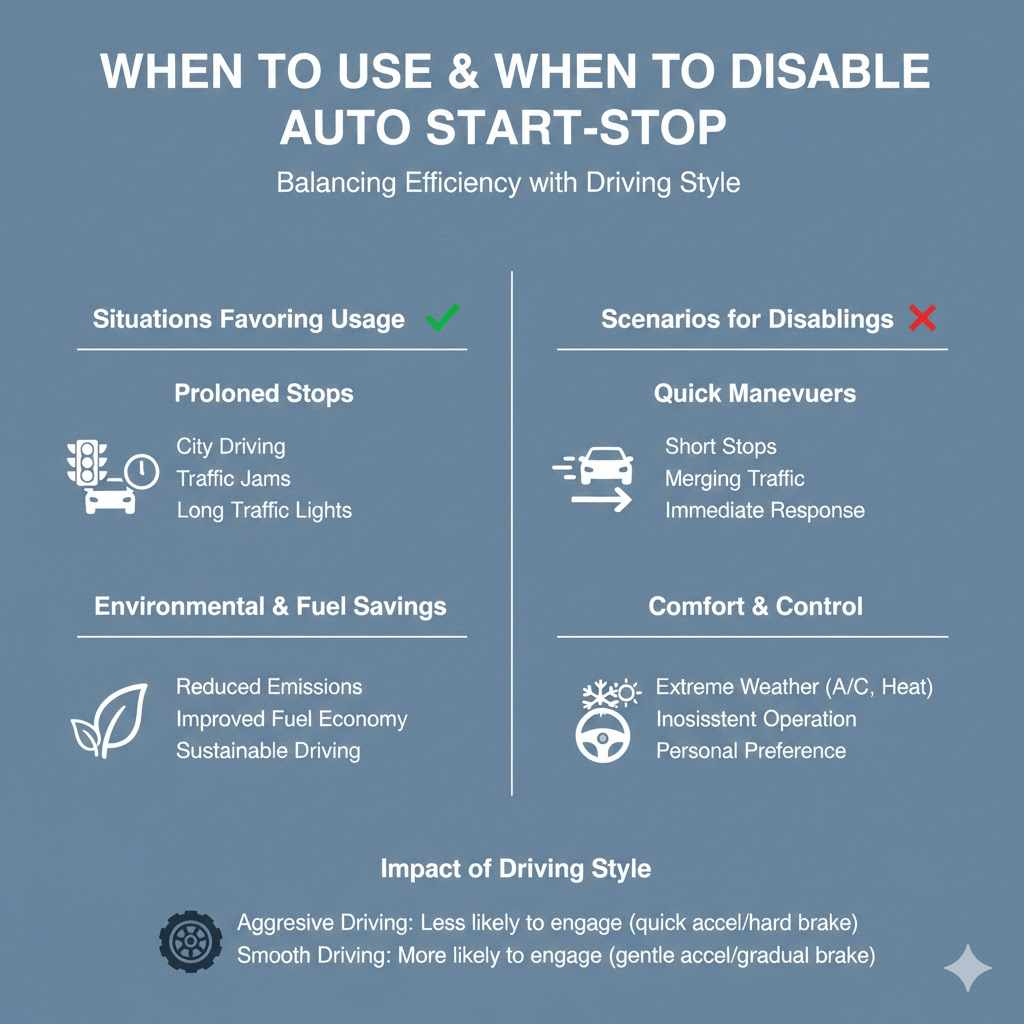
When to Use Auto Start-Stop and When to Disable It
Deciding whether to use the auto start-stop feature or disable it often depends on the driving situation and personal preference. This section will explore scenarios where each choice might be more suitable. It aims to provide a practical perspective on managing this feature.
The auto start-stop system is most beneficial in situations where you expect to be stationary for a noticeable amount of time. This includes prolonged waits at traffic lights, particularly in urban areas with frequent stops, or in heavy traffic conditions where the vehicle is moving very slowly and stopping often. In these scenarios, the system actively contributes to saving fuel and reducing your car’s emissions.
For example, imagine you are commuting through a city during rush hour. You stop and go every few minutes for extended periods. Activating the auto start-stop function here means your engine is off for a significant portion of your commute, leading to noticeable fuel savings. Over a week of such driving, this can add up.
Conversely, there are driving conditions where disabling the auto start-stop system might be preferable. These situations often involve short stops, frequent quick movements, or when driver comfort and immediate responsiveness are prioritized over maximum fuel economy.
Situations Favoring Auto Start-Stop Usage
The auto start-stop system shines in situations where the vehicle is stationary for more than a few seconds. This is typically found in city driving, congested traffic, and waiting at extended traffic signals. In these environments, the system effectively minimizes fuel consumption and reduces idle emissions.
Consider a scenario where you are waiting for a train to pass at a railway crossing. The wait can sometimes be several minutes long. During this time, the auto start-stop system will shut down the engine, preventing any unnecessary fuel burn. This directly translates to savings and a smaller environmental footprint for that period.
Another prime example is in stop-and-go traffic on a highway. When the vehicle is crawling along, stopping and starting frequently, the auto start-stop feature is constantly engaging. This reduces the overall idling time, which is a significant contributor to fuel usage in such conditions. The EPA estimates significant fuel economy gains, up to 5%, in city driving with this feature enabled.
Furthermore, for drivers who are conscious of their environmental impact, keeping the auto start-stop system active is a way to actively contribute to reducing air pollution. By minimizing idling, fewer greenhouse gases are emitted. This aligns with a desire to drive more sustainably.
The system is also designed to maintain cabin comfort. If the battery is sufficiently charged and other conditions are met, it will shut off the engine. However, if the climate control system detects that significant cooling or heating is needed, it may prevent the engine from shutting off to ensure your comfort. This intelligent operation means it tries to save fuel without sacrificing your comfort.
Scenarios Calling for Auto Start-Stop Disabling
There are several driving scenarios where disabling the auto start-stop system can enhance your driving experience or performance. These often involve situations where you need immediate engine response or where the system’s operation might be less beneficial.
One common reason to disable the system is during short stops. If you are at a traffic light that is notoriously short, or if you anticipate moving again very quickly, having the engine shut off and then restart can feel like a delay. Disabling it ensures instant readiness to accelerate.
Another situation is when driving in very cold or very hot weather, especially if you rely heavily on your climate control. While the system is designed to prevent shutdowns when cabin comfort is at risk, sometimes it might still shut off the engine more than you would like. Disabling it ensures consistent A/C or heat performance.
Drivers who frequently need to make quick maneuvers, such as merging into fast traffic or navigating busy intersections where rapid acceleration is sometimes necessary, may prefer to have the engine constantly running. The slight delay in engine restart from auto start-stop can be a concern in these dynamic situations.
Additionally, some drivers simply prefer the continuous sound and feel of their engine running. For them, the interruption of the auto start-stop system breaks their connection to the driving experience. They may disable it for a more traditional and uninterrupted feel.
Finally, if you notice that the system is frequently shutting off and restarting the engine in a way that feels disruptive or annoying for your specific driving patterns, disabling it provides a more predictable and smooth driving experience. It is a matter of personal preference and adapting to different driving conditions.
The Impact of Driving Style on System Performance
Your driving style can significantly influence how the auto start-stop system performs and whether it engages frequently. Aggressive acceleration and braking patterns tend to make the system less active, while a smoother, more conservative driving style encourages it to engage more often.
When you accelerate quickly from a stop, you demand more power from the engine. The vehicle’s computer registers this demand and is less likely to shut off the engine when you stop again. This is because it anticipates needing that immediate power for subsequent accelerations.
Similarly, if you brake very hard, the system might interpret this as an emergency stop or a situation requiring immediate readiness to move. In such cases, it may keep the engine running to ensure you can accelerate without any delay.
On the other hand, if you drive smoothly, accelerating gently and braking gradually, you are signaling to the system that less immediate power is required. When you come to a stop after this type of driving, the conditions are more likely to be met for the engine to shut off.
The system also monitors the rate at which you release the brake pedal. If you lift your foot off the brake very slowly and smoothly, the system has more time to prepare for the engine restart. If you lift it quickly, it needs to be ready to restart instantly.
Understanding this relationship allows drivers to anticipate when the auto start-stop system is more likely to engage. By adapting your driving style, you can indirectly control its behavior to some extent, even without pressing the disable button. This awareness can lead to a more comfortable and efficient driving experience.
Frequently Asked Questions
Question: Does disabling auto start-stop save more gas
Answer: No, the auto start-stop system is designed to save gas. Disabling it will mean your engine idles more, which uses more fuel.
Question: Will disabling auto start-stop hurt my car
Answer: Generally, no. Using the button to temporarily disable it is safe. Using aftermarket devices might carry risks.
Question: Can I leave auto start-stop off all the time
Answer: You can press the disable button each time you start your car. Some aftermarket devices offer a more permanent solution.
Question: Does auto start-stop affect battery life
Answer: The system is designed to work with your car’s battery. Frequent starts can put more stress on components over the long term.
Question: Is there a way to permanently disable auto start-stop without a button press
Answer: Yes, some drivers use aftermarket devices. However, these may affect your vehicle’s warranty and could have other implications.
Conclusion
Disabling the auto start-stop on your 2018 Chevy Equinox is simple. A quick press of a button on the console temporarily turns off the engine shut-off feature. This is the easiest way to control the system for your driving needs. You can enjoy a continuous engine operation for smoother drives. Remember to press the button each time you start your car if you prefer it off.