How To Unlock Brakes When Car Is Off: Effortless Guide
To unlock brakes when your car is off, you typically need to engage the vehicle’s parking brake release mechanism, often a lever, button, or pedal. For electronic parking brakes, power is usually required, so you might need the ignition on but the engine off, or consult your owner’s manual for specific override procedures.
Ever found yourself in a situation where your car won’t budge, and you suspect the brakes are stubbornly engaged, especially when the engine is off? It can be a puzzling and sometimes frustrating experience, especially if you’re not near a mechanic. Many modern cars have sophisticated brake systems, and understanding how they work when the power is off is key to avoiding unnecessary stress. This guide is designed to break down exactly how to handle this common issue, making it simple and stress-free. We’ll walk through the typical ways brakes engage and disengage on a turned-off vehicle, promising an effortless solution by the end.
Understanding Your Car’s Brakes When Off
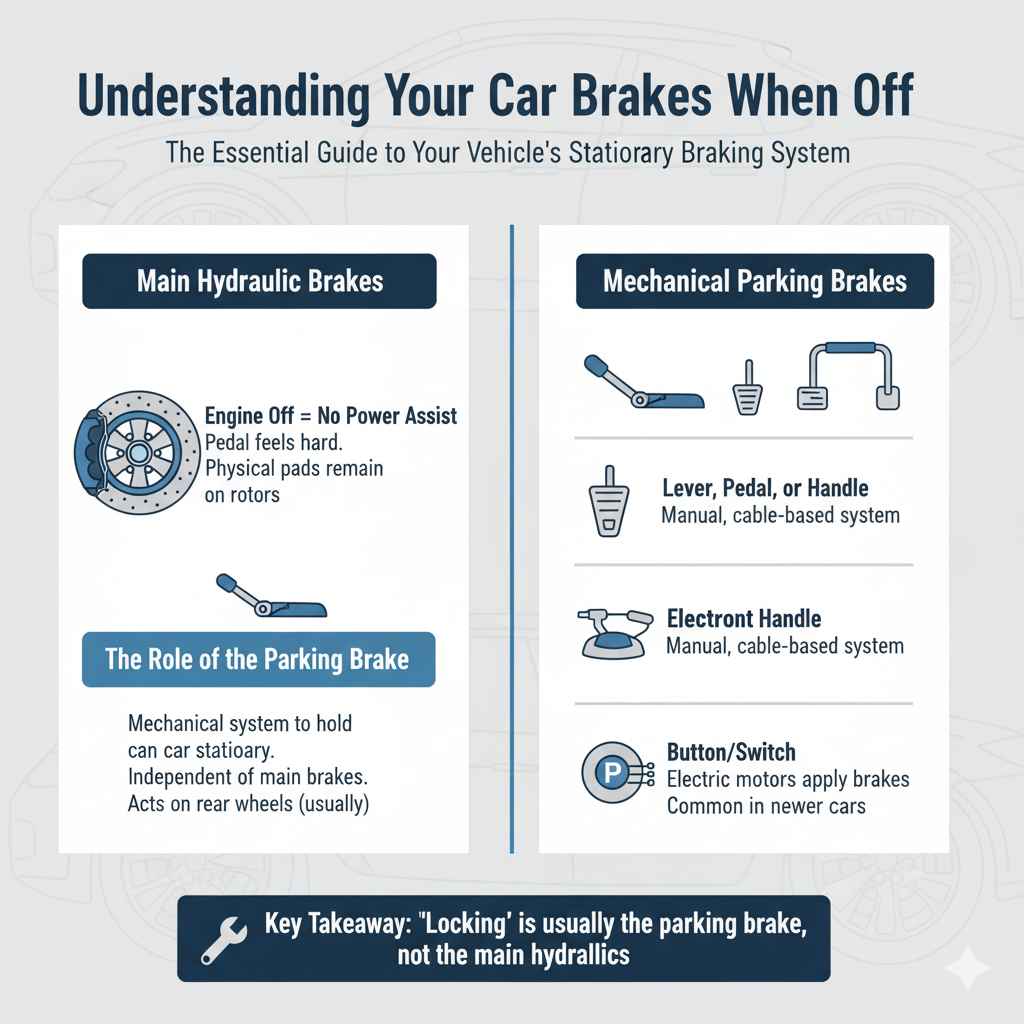
When your car is off, its braking system behaves differently than when it’s running. Modern vehicles have a complex interplay of mechanical and sometimes electronic components designed for safety and convenience. The primary concern when the car is off is usually the parking brake, also known as the emergency brake or handbrake. This is a separate system from your main hydraulic brakes, which rely on engine power (vacuum assist) to function effectively when you press the pedal.
Your main brakes, the ones you use to stop the car while driving, are powered by hydraulics. When the engine is off, the power assist that makes pressing the brake pedal feel light disappears. However, the physical brake pads and rotors remain in place, and they don’t magically disengage on their own. The real “locking” sensation when the engine is off and you can’t move the car is almost always due to the parking brake being engaged.
The Role of the Parking Brake
The parking brake is a mechanical system designed to hold your vehicle stationary, especially on inclines, or as a secondary safety measure. It typically works by applying force to the rear wheels (though some systems engage the front or all four). This is why even with the engine off and in neutral, the car won’t roll if the parking brake is applied.
Understanding how your specific car’s parking brake operates is the first step to mastering how to unlock it when the car is off. Most cars have one of two main types:
- Mechanical Parking Brake: This is the traditional system, usually operated by a lever between the front seats, a foot pedal to the left of the driver’s footwell, or a pull-up handle. You engage it by pulling or pushing, and it mechanically applies pressure to the brakes
- Electronic Parking Brake (EPB): Increasingly common in newer vehicles, EPBs use electric motors to apply the brakes, usually controlled by a button or switch on the dashboard or center console.
How to Unlock Brakes: Step-by-Step with a Mechanical Parking Brake
Mechanical parking brakes are generally straightforward to operate and release. If your car has a lever, pedal, or handle, chances are you already know how to use it. Releasing it is the reverse of engaging it.
1. Locate Your Parking Brake
First, identify which type of mechanical parking brake your car has and its location.
- Center Console Lever: This is the most common. It’s a sturdy lever situated between the driver and passenger seats.
- Foot Pedal: Found in some older vehicles or specific models, this is a pedal typically located to the far left of the driver’s footwell, near the clutch pedal (if applicable).
- Stalk-Mounted Lever: Less common, but present on some cars, this might be a smaller lever mounted under the steering column.
2. Engage the Release Mechanism
Once located, you’ll need to activate its release.
- For a Lever: Most levers have a button or switch on the top or front. You typically need to squeeze this button while pulling the lever fully up (to disengage a stuck brake) or push the lever down (if it’s a pull-up type that stays engaged when pulled). For a normal release, you’ll pull the lever up towards you and press the button, then lower it completely. If it’s stuck, try rocking the car gently while applying pressure to the release button and lever.
- For a Foot Pedal: You’ll usually disengage it by pulling the pedal up towards you using your foot or a slight upward flick. Some might have a pull-release strap or lever attached.
- For a Stalk-Mounted Lever: Similar to the center console lever, there will likely be a small button to press as you move the stalk downwards.
3. Check if Brakes are Released
After activating the release, you should feel or hear the mechanism disengage. The lever will move more freely, the pedal will return to its resting position, or the stalk will lower. Gently try to push or roll the car. If it moves with little resistance, the parking brake is off.
Troubleshooting a Stuck Mechanical Parking Brake
Sometimes, the parking brake can become stuck due to rust, corrosion, or simply being left engaged for a very long time, especially in humid or salty environments. Here are a few things you can try:
- Gentle Wiggling: Try to gently wiggle the car back and forth while holding the release button and moving the lever/pedal. This can sometimes jolt the brake mechanism free.
- “Stomp” on the Pedal (if applicable): For a foot pedal, sometimes a firm, quick “stomp” on the pedal while holding the release can dislodge it.
- Lubrication (Caution): In severe cases, a small amount of penetrating lubricant sprayed near the brake cable connection points (where accessible) might help, but be very careful not to spray brake cleaner or lubricant onto the brake pads or rotors, as this will compromise your main braking system. This is an advanced step and might require professional help.
- Professional Help: If the above methods don’t work, the brake cables might be seized, or there could be an issue with the brake shoes or calipers. It’s best to consult a mechanic.
How to Unlock Brakes: Step-by-Step with an Electronic Parking Brake (EPB)
Electronic Parking Brakes (EPBs) are controlled by a computer and electric motors. This means they often require some form of electrical power to operate, meaning the car’s accessory power or ignition might need to be on.
1. Understand EPB Operation
EPBs are typically engaged by pressing a button or pulling a switch. To disengage them, you usually press the same button/switch. However, the system is designed with safety features, so simply trying to force it won’t work. Many EPBs also automatically disengage when you start the car, put it in gear, and press the accelerator pedal. This is a clever feature to prevent you from forgetting to release the brake.
2. Turn on the Ignition (Accessory Mode)
For most EPBs to release, the car needs to have power. You don’t necessarily need to start the engine, but you usually need to turn the key to the “ON” position without starting the engine, or press the Start/Stop button once or twice without touching the brake pedal (check your owner’s manual for the exact sequence).
This powers up the car’s electrical systems, including the EPB module.
3. Locate and Operate the EPB Switch
Find the EPB switch. It’s usually shaped like a “P” inside a circle, or simply labeled “EPB” or “Park.” It might be a physical button or a pull-up switch.
4. Disengage the EPB
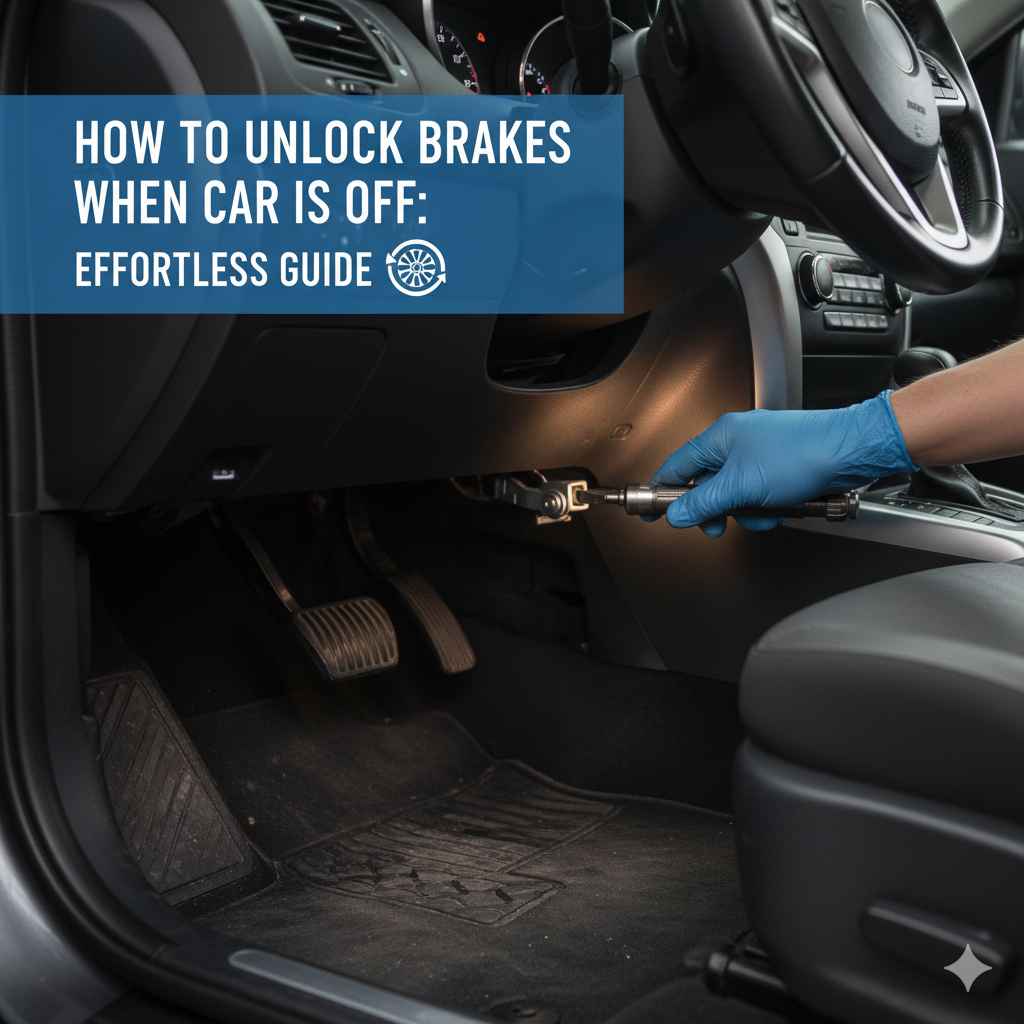
With the ignition ON (but engine OFF), press and hold the EPB release button or switch. You should hear a motor whirring as the brake releases. On some systems, you might need to press the brake pedal simultaneously for the EPB to disengage. Consult your owner’s manual for the precise procedure. For instance, many EPBs require you to press the brake pedal and then press the EPB release button.
5. Verify Release
An indicator light on your dashboard related to the parking brake should turn off. If it stays on, the brake might not have fully released, or there could be a system fault.
Troubleshooting a Stuck Electronic Parking Brake
EPBs are generally reliable, but like any electronic system, they can encounter glitches or failures.
- Check for Dashboard Warnings: Look for any warning lights related to the EPB. These can often provide clues.
- Owner’s Manual is Key: Your car’s owner’s manual has a section on the EPB and often includes emergency release procedures. These are designed for situations exactly like this. For example, some manuals describe a manual override that involves fuses or specialized tools. A great resource for understanding common EPB systems and their manuals can be found via official manufacturer websites or comprehensive automotive databases. For instance, the National Highway Traffic Safety Administration (NHTSA) website can offer general safety information on vehicle systems.
- Battery Issues: A low or dead battery can prevent the EPB from operating correctly. If your battery is weak, try jump-starting your car or charging the battery.
- Fuse Check: Locate the fuse box and check the fuse(s) for the parking brake system. A blown fuse will need to be replaced with one of the exact same amperage.
- “Service” Mode or Emergency Release: Some vehicles have a specific “service” mode or a physical emergency release mechanism, often hidden behind a panel in the trunk or near the rear wheels. This is usually a last resort and often requires tools or specific knowledge. The owner’s manual is invaluable here.
- Professional Diagnosis: If you cannot release the EPB using the recommended methods, or if you suspect a malfunction, do not force it. Contact a qualified mechanic or roadside assistance. They have the specialized diagnostic tools to identify and resolve EPB issues without damaging the system.
Reasons Your Brakes Might Be Locked When Car is Off
The primary reason your car’s brakes feel locked when the engine is off is that the parking brake has been engaged. However, several factors can contribute to this, making it feel like a more complex problem than it is.
Common Causes:
- Parking Brake Engaged: This is the most straightforward reason. Whether by habit, necessity (on a hill), or accidental activation, the parking brake holding the car.
- Sticking Brake Cables (Mechanical): With mechanical parking brakes, the cables connecting the lever/pedal to the brake mechanism can corrode, rust, or seize, especially after exposure to water, salt, or prolonged disuse. This can make them difficult to release.
- Seized Brake Calipers or Drums (Mechanical): In rarer cases, especially on a car that has been sitting for a very long time, the brake pads can become rusted to the rotors, or the brake shoes can seize inside the drums. This can happen if moisture gets into the braking system and causes components to corrode together.
- EPB Malfunction: Electronic Parking Brakes can fail due to electrical issues, motor failure, sensor problems, or software glitches. A sudden malfunction can lead to the brake remaining engaged.
- Low Battery Voltage (EPB): As mentioned, EPBs require electrical power. If the car’s battery is critically low, the EPB might not be able to disengage properly.
- Worn Components: Over time, components of the parking brake system (cables, actuators, brake shoes/pads) can wear out, leading to sticking or failure.
Tools You Might Need (and What to Avoid)
For most situations involving unlocking brakes on a car that is off, you won’t need many specialized tools. However, for troubleshooting or more stubborn cases, a few items can be helpful. It’s also crucial to know what not to use.
Helpful Tools:
- Owner’s Manual: This is your most important tool. It contains specific information about your car’s parking brake system, including release procedures and potential emergency overrides.
- Flashlight: For better visibility in dimly lit areas under the dashboard or around the parking brake mechanism.
- Gloves: To keep your hands clean and for better grip.
- Basic Pliers (for some EPB emergencies): In rare instances, certain EPB manual releases might require basic pliers, though this is uncommon and usually detailed in the owner’s manual.
- Screwdriver Set: Might be needed if you have to remove a small panel to access an emergency release on an EPB system.
- Car Jack and Jack Stands: If you suspect seized calipers or drums, or need to inspect brake components, you’ll need these to safely lift and support your vehicle. Always use jack stands, never rely solely on a jack. NHTSA offers safety guidelines for vehicle lifting.
- Penetrating Lubricant (use with extreme caution): For mechanical brake cable issues, a small amount of a product like WD-40 or PB Blaster might help free seized cables, but be incredibly careful not to get it on brake pads or rotors.
Tools to Avoid:
- Hammer: Never use a hammer to strike brake components. This can cause irreparable damage and compromise safety.
- Excessive Force/Cheater Bars: Applying brute force can break critical components. Electronic systems are particularly sensitive.
- Brake Cleaner/Degreaser on Calipers or Rotors: If the brakes are seized onto the rotor, applying brake cleaner directly to the rotor or caliper to free them is counterproductive and dangerous, as it will contaminate the braking surfaces.
- Cutting Tools: Do not attempt to cut brake lines or cables. This is dangerous and will render your brakes inoperable.
When to Call the Professionals
While many brake issues can be handled with basic knowledge, there are times when it’s crucial to seek professional help. Your safety and the longevity of your vehicle depend on it.
Signs You Need a Mechanic:
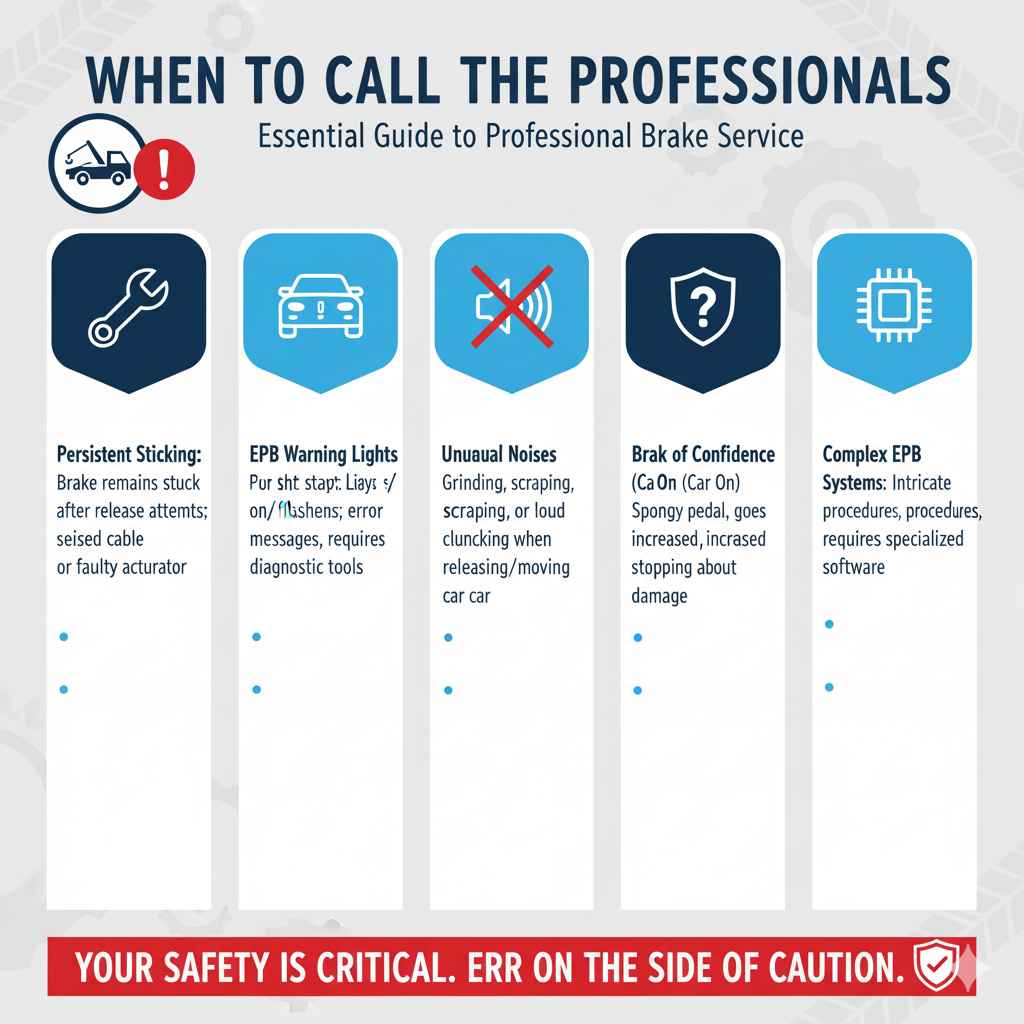
- Persistent Sticking: If you’ve tried the basic release methods and the parking brake remains stuck, it’s time for professional intervention. The issue could be more complex, like a seized cable or a faulty actuator.
- EPB Warning Lights Persist: If your EPB warning light stays on or flashes after attempting a release, or if you get error messages on your dashboard, a professional mechanic with diagnostic tools is needed to read the system codes.
- Unusual Noises: Grinding, scraping, or loud clunking noises when attempting to release the brake or move the car indicate a serious mechanical problem.
- Brake Pedal Issues (When Car is On): If your main brake pedal feels spongy, goes to the floor when the car is running, or if your stopping distance has increased, these are signs of serious hydraulic brake problems requiring immediate attention.
- Lack of Confidence: If you’re unsure about any step, uncomfortable with the process, or worried about causing further damage, it’s always best to let a trained professional handle it.
- Complex EPB Systems: Some advanced EPB systems have intricate release procedures or require specialized software to reset. Mechanics are equipped for these situations.
Remember, your brakes are a critical safety system. If you have any doubts about their condition or operation, err on the side of caution.
FAQ Section
Here are some common questions about unlocking car brakes when the engine is off:
Q1: My car’s parking brake lever is stuck. What should I do?
A1: First, ensure you are fully pressing the release button on the lever while trying to move it. Gently try rocking the car back and forth while maintaining pressure on the release. If it remains stuck, it might require professional help to free seized cables.
Q2: I have an electronic parking brake (EPB), and it won’t release. Do I need the engine running?
A2: Typically, you need the ignition to be on (ACC or ON position) but not necessarily the engine running. Often, you’ll need to press the brake pedal and then press the EPB release button. Always refer to your owner’s manual for the specific procedure, as it can vary between car models.
Q3: Can I just force the parking brake release?
A3: No, you should never force the parking brake release. Applying excessive force can break the lever, cables, or electronic components, leading to more expensive repairs.
Q4: What if my car battery is dead? Can I still release the parking brake?
A4: Mechanical parking brakes usually operate independently of the battery, so they should release. However, electronic parking brakes (EPBs) require electrical power. If your battery is dead, you likely won’t be able to release an EPB without a jump start or a specialized tool (which a roadside assistance provider would use).