How to Vacuum a Car AC System: Refrigerant Rules and EPA Guide
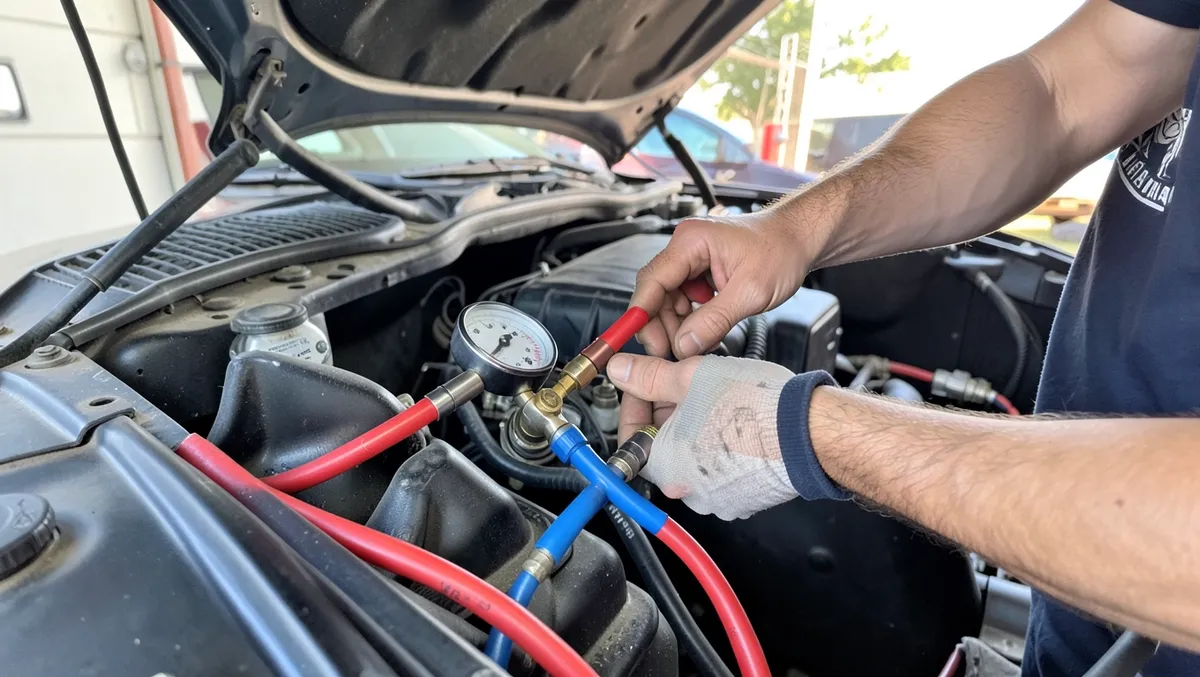
Vacuuming a car AC system means connecting a vacuum pump to the service ports to pull out trapped air and moisture before the system is recharged with refrigerant — it has nothing to do with vacuuming the carpets. Skipping this step, or cutting it short, is one of the most common reasons a home AC recharge fails to cool properly or fails again within weeks.
This guide focuses on the parts of the job most other articles skip: whether you legally need a certification to buy the refrigerant, the real difference between R-134a and R-1234yf, and the actual vacuum time and target reading a shop would use — not the shortened numbers that get repeated online. For the full hose-by-hose walkthrough of connecting the gauge set and running the leak-down test, see our companion guide on pulling a vacuum and leak-testing the system.
Quick Answer
Connect a vacuum pump to the low-pressure service port and run it for at least 30 minutes (45–60 minutes is safer) until the gauge reads 29–30 inHg. Then close the valve, shut off the pump, and watch the gauge for 10–15 minutes — if it holds steady, the system is dry and sealed and ready for refrigerant. No pump means no real vacuum; there is no reliable substitute.
Do You Need an EPA Certification to Vacuum a Car AC System?
All-In-One Vacuum Pump Kit
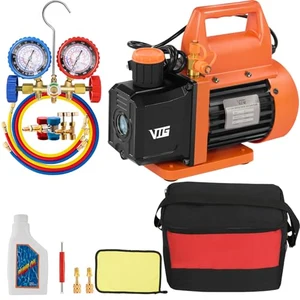 |
VTG VOGTEN 4.5 CFM AC Vacuum Pump and Gauge Set – $99.74 A vacuum pump and a three-way manifold gauge set are the two tools this whole job depends on, and this kit bundles both plus the hoses, couplers, and vacuum oil in one box.
|
Pulling the vacuum itself does not require a certification, because a system being vacuumed should already be empty of refrigerant — you are only removing air and moisture, not handling refrigerant gas. The certification requirement shows up at the next step: buying the refrigerant you will use to recharge the system.
Under the EPA’s refrigerant sales restriction, small cans of R-134a (2 pounds or less) with a self-sealing valve can still be bought by the public without any certification. Any container of 2 pounds or more requires an EPA Section 609 certification (Section 608 for stationary equipment). Check your state, too — a few states add their own rules on top of the federal ones.
Since model year 2025, EPA rules have restricted new light-duty vehicles from using R-134a at all, and automakers have already shifted new production almost entirely to R-1234yf. That shift matters for DIYers, which is the next thing to check before you buy anything.
What Is the Difference Between R-134a and R-1234yf Refrigerant?
Check the sticker under your hood (usually on the radiator support or near the AC compressor) before you buy anything — it lists the exact refrigerant your system needs, and the two are not interchangeable.
- R-134a — used in most vehicles built roughly from the mid-1990s through the early-to-mid 2020s. Cans, gauge sets, and recharge kits for it are widely sold and inexpensive.
- R-1234yf — the newer refrigerant now standard on most new vehicles. It has a far lower global warming potential than R-134a, but it is mildly flammable (classified A2L) and uses different service fittings, so equipment and refrigerant for it cost significantly more.
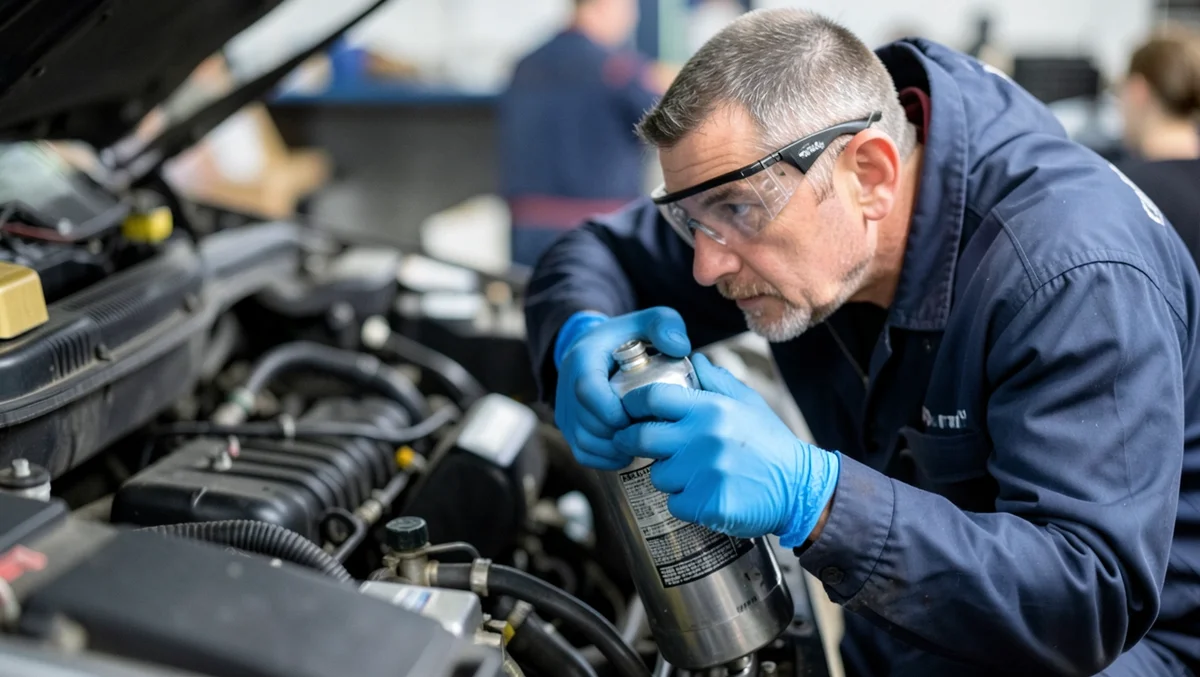
Because R-1234yf’s mild flammability calls for specific handling and leak-detection equipment, most independent shops recommend leaving R-1234yf service to a professional rather than doing it in a home garage. R-134a systems remain the realistic DIY option for most home mechanics.
How Long Should You Vacuum a Car AC System?
A lot of online guides repeat “15–30 minutes” as if it were a fixed rule. That is closer to a bare minimum than a real target. Most professional sources call for pulling the vacuum to 29–30 inHg (about 500 microns or less on a digital micron gauge) and holding the pump running for a minimum of 30 minutes, with 45–60 minutes recommended if the system sat open to the air for a while, if you live somewhere humid, or if you just are not sure how long it has been open.
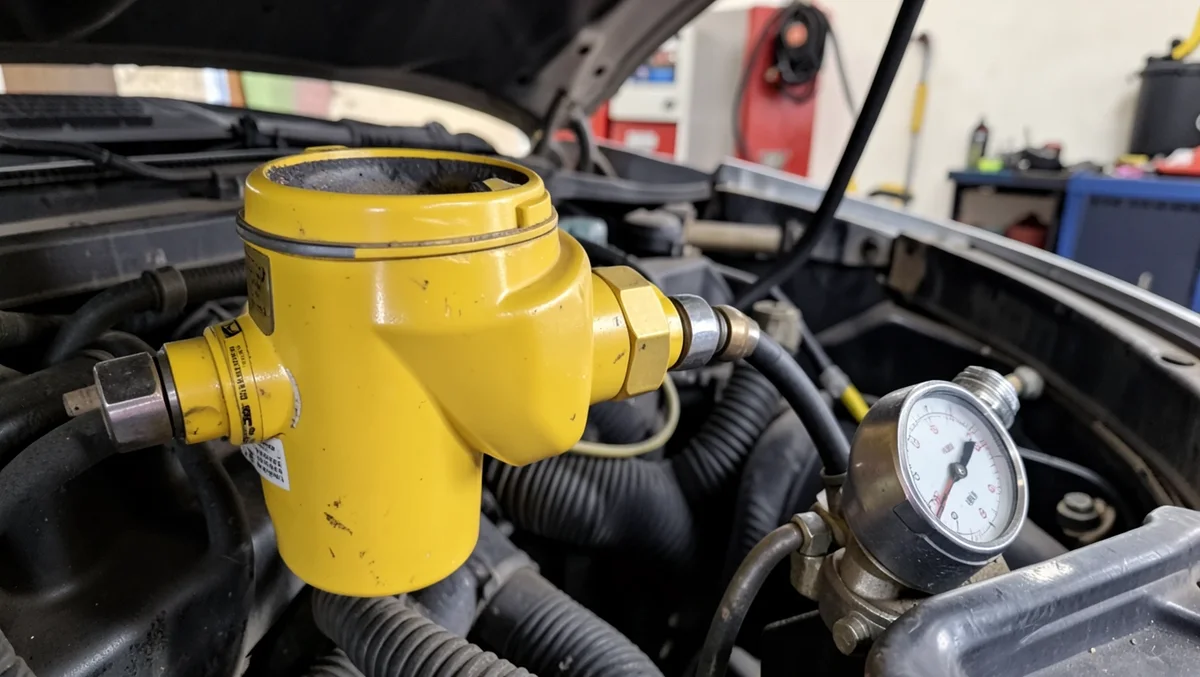
Once the gauge reaches that target, close the valve to isolate the system from the pump, shut the pump off, and watch the gauge for 10–15 minutes without touching anything. If the reading holds steady, the system is sealed and dry. If it climbs back toward zero, there is a leak (or moisture still boiling off) that needs to be found before you recharge. Our companion guide walks through that leak-down test and the full recharge sequence step by step.
Can You Vacuum a Car AC System Without a Vacuum Pump?
Not really, and it is worth being direct about this: connecting the low-pressure port to a shop air compressor is a method you will see suggested online, but an air compressor produces positive pressure, not a vacuum. It cannot pull air and moisture out of a sealed system — at best it does nothing useful, and at worst it forces more air and contaminated shop-air moisture into the lines.
A dedicated vacuum pump, or an AC recovery/recharge machine with a built-in pump, is the only equipment that actually creates the deep vacuum needed to boil off trapped moisture. If you do not own one, renting or borrowing one for an afternoon is a better option than skipping the step or trying a workaround — a system recharged without a proper vacuum is likely to develop ice, corrosion, or weak cooling within weeks.
Frequently Asked Questions
Do You Need an EPA Certification to Vacuum a Car AC System?
No, pulling the vacuum itself does not require certification since no refrigerant is being handled. Buying refrigerant to recharge the system afterward does have rules: cans of R-134a 2 pounds or less with a self-sealing valve are sold without certification, but larger containers require an EPA Section 609 (or 608) certification.
What Is the Difference Between R-134a and R-1234yf Refrigerant?
R-134a is the refrigerant used in most vehicles built from the mid-1990s through the early-to-mid 2020s. R-1234yf is the newer, lower-global-warming-potential refrigerant now standard on most new vehicles; it is mildly flammable, uses different fittings, and is generally best left to a professional shop.
How Long Should You Vacuum a Car AC System?
Run the vacuum pump for at least 30 minutes, and ideally 45–60 minutes, until the gauge reads 29–30 inHg (about 500 microns or less). Then isolate the system and watch the gauge for 10–15 minutes to confirm it holds steady before recharging.
Can You Vacuum a Car AC System Without a Vacuum Pump?
Not effectively. An air compressor creates positive pressure, not a vacuum, so it cannot remove air and moisture from the system. A dedicated vacuum pump, or a recovery/recharge machine with a built-in pump, is the only reliable way to do this job — renting one is a better option than skipping the step.
Is It Illegal to Release Refrigerant Into the Air?
Yes. Under the Clean Air Act, knowingly venting refrigerant — including R-134a and R-1234yf — into the atmosphere during service, repair, or disposal is prohibited for everyone, not just certified technicians. Refrigerant removed from a system should be captured with a recovery machine, not released.
How Do You Know If There Is a Leak During the Vacuum Process?
If the pump cannot pull the gauge down to 29–30 inHg at all, suspect a loose hose connection, a bad O-ring, or a service port valve core that is not fully seated. If the gauge reaches target but climbs back up during the 10–15 minute hold test, that indicates a leak (or moisture still evaporating) that needs to be located and repaired before recharging.
Conclusion
The mechanical steps of connecting a vacuum pump are not complicated, but the details that actually determine success — the correct refrigerant, the real vacuum time, and confirming the system holds before you recharge — are where most DIY jobs go wrong. Check your refrigerant type, budget for at least 30–45 minutes of pump time, and never skip the hold test.
Products related to this article
Sponsored / affiliate links. As an Amazon Associate I earn from qualifying purchases. I may earn additional commission from eligible campaigns.