Backup Camera for Car Stereo: Wired vs. Wireless Guide
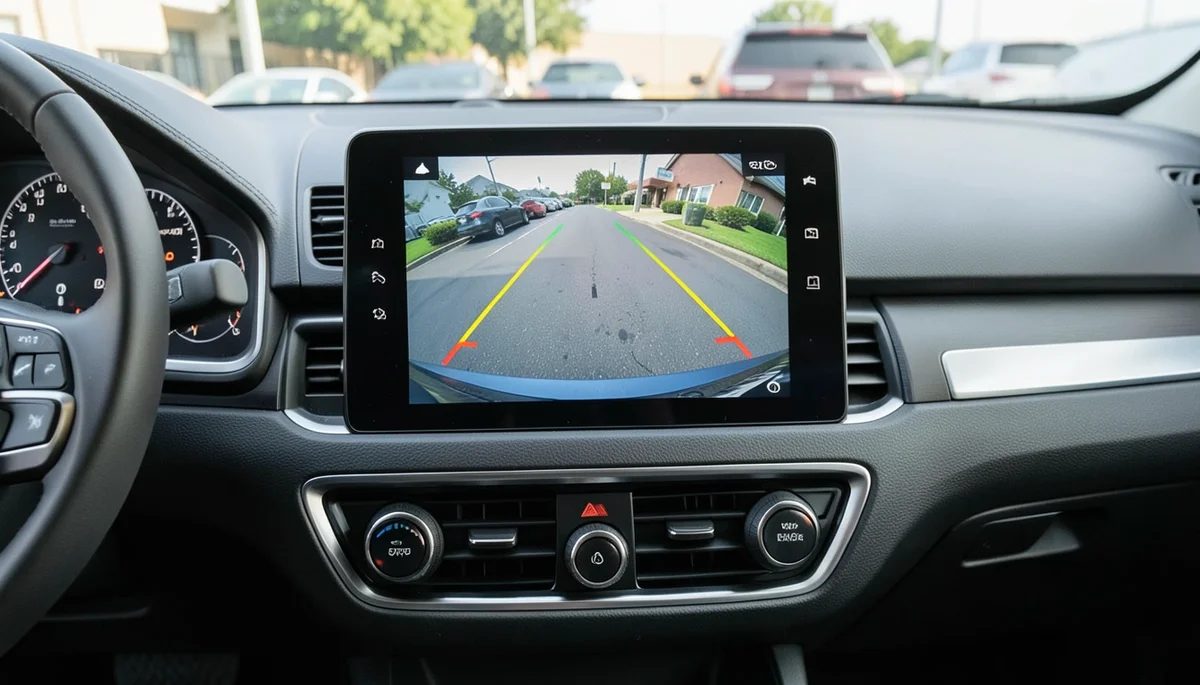
A backup camera connects to a car stereo through the stereo’s rear-camera RCA video input, wired directly with an analog (CVBS) or digital (AHD) cable, or paired with a wireless transmitter kit. The camera also needs a reverse-trigger wire tied into your reverse light circuit so the picture appears automatically when you shift into reverse.
Not every aftermarket stereo is built the same way. Some double-DIN touchscreen head units accept both wired signal types and support wireless add-on kits, while older single-DIN radios and a surprising number of budget double-DIN units have no camera input at all. Before buying a camera, it helps to know exactly what your stereo can accept, what the wired-versus-wireless trade-off actually costs you in image quality and lag, and how the install itself comes together.
Quick Answer
A backup camera connects to a car stereo through the stereo’s rear-camera RCA video input, using either a wired analog (CVBS) or digital (AHD) cable, or a wireless transmitter that sends the same signal over radio frequency. The stereo also needs a reverse-trigger wire tied into the vehicle’s reverse light circuit so the camera feed switches on automatically when you shift into reverse. Not every stereo has this input built in — single-DIN units and some basic double-DIN head units without a screen usually do not.
How a Backup Camera Actually Connects to a Car Stereo
AHD + CVBS COMPATIBLE
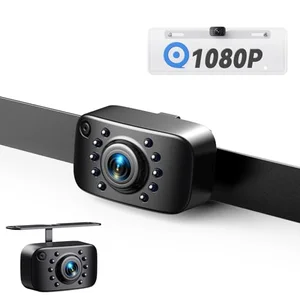 |
eRapta AGQT01 Backup Camera – $39.99 This is the camera to buy when you are not sure whether your aftermarket stereo takes a digital AHD feed or an older analog CVBS signal, since one camera covers both.
|
Most aftermarket backup cameras use a yellow RCA-style video plug on one end of a long cable, which runs from the camera at the rear of the vehicle up to the stereo. On the back of a camera-capable stereo, you will find a matching video-in port, usually labeled something like R-CAM, CAM, or REAR VIEW on the wiring harness diagram. Plugging the camera into that port is only half the job: the camera also needs power, and a separate reverse-trigger wire that connects to the vehicle’s reverse light circuit, so the stereo knows to switch to the camera feed the instant you shift into reverse.
Wireless kits work the same way from the stereo’s side. A small receiver box still plugs into that same RCA video-in port; the only difference is that the camera itself sends its signal over radio frequency instead of through a physical cable, which saves you from running a wire the length of the vehicle.
Wired vs. Wireless Backup Camera Kits: Which Should You Choose?
The right choice usually comes down to how much lag and interference you can tolerate versus how much work you want to put into running a cable.
| Connection Type | Video Quality | Typical Lag | Install Effort | Best For |
|---|---|---|---|---|
| Wired analog (CVBS) | Standard definition, roughly 480i | None | Moderate – run a cable to the rear of the vehicle | Budget builds and older stereos that only accept CVBS |
| Wired digital (AHD) | Sharper, 720p–1080p | None | Moderate – same cable run as CVBS | Newer double-DIN stereos with an AHD-capable input |
| Wireless 2.4GHz | Lower, prone to static | Slight, noticeable in stop-and-go traffic | Easy – no cable run needed | Retrofits where running a wire is impractical |
| Wireless 5GHz / digital | Better than 2.4GHz analog | Minimal | Easy – no cable run needed | Newer wireless kits in areas with less 2.4GHz congestion |
A wired connection, whether CVBS or AHD, will always be the most reliable option because there is no radio signal to interfere with. Wireless kits trade a small amount of picture quality and consistency for a much easier install, which is often the deciding factor for anyone not comfortable running a cable through the trunk and interior trim.
How to Check If Your Car Stereo Is Backup-Camera Ready
- Look at the back of the stereo (or its wiring diagram) for a yellow RCA-style port labeled R-CAM, CAM, or REAR VIEW.
- Check the stereo’s settings menu for an AHD/CVBS toggle, which confirms it supports at least one of the two wired signal types.
- Confirm there is a reverse-trigger wire on the harness, sometimes labeled REV or R-GEAR, meant to be tapped into the reverse light circuit.
- Single-DIN stereos without a screen generally cannot display a camera feed at all, so check the model’s spec sheet first.
- If the stereo already runs Apple CarPlay or Android Auto, the camera feed is still handled by the stereo’s own video-in path, not through the phone connection.
How to Install a Backup Camera on an Aftermarket Stereo
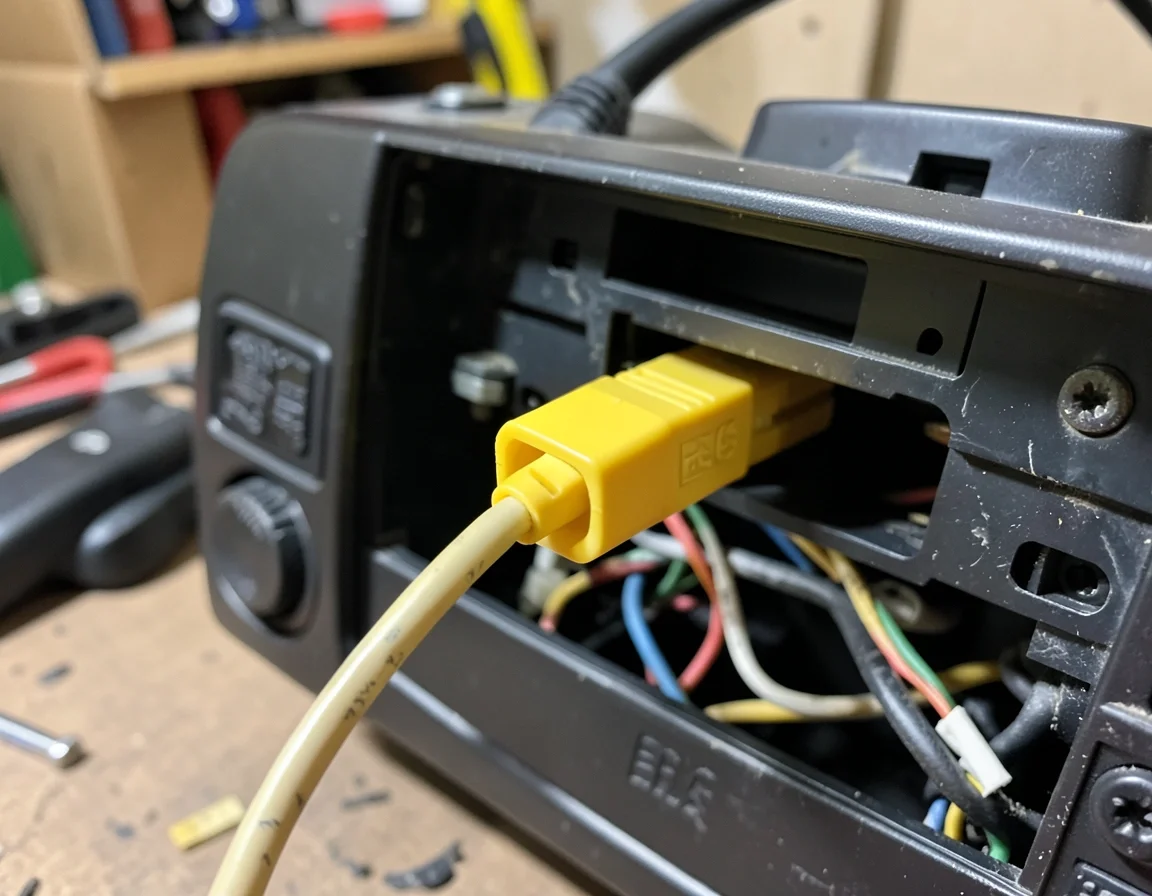
- Disconnect the vehicle’s battery negative terminal before starting any wiring work.
- Mount the camera at the rear of the vehicle, either on the license plate frame or in a drilled housing, depending on the camera’s design.
- Run the camera’s video and power cable from the rear of the vehicle to the stereo, reusing existing wiring grommets where possible to avoid drilling new holes.
- Plug the camera’s RCA video connector into the stereo’s rear-camera video-in port (or into the wireless receiver box, for a wireless kit).
- Connect the camera’s power wire and reverse-trigger wire to the vehicle’s reverse light circuit using a proper tap connector, not a bare splice.
- Reconnect the battery, shift into reverse, and confirm the picture appears. If the image looks wrong or does not appear, check the AHD/CVBS setting in the stereo’s menu first.
Common Backup Camera Compatibility Problems (and Fixes)
| Symptom | Likely Cause | Fix |
|---|---|---|
| No picture at all when in reverse | Reverse-trigger wire not connected to the reverse light circuit | Recheck the trigger wire connection and test continuity with a multimeter |
| Picture looks washed out, scrambled, or does not display correctly | AHD/CVBS setting in the stereo menu does not match the camera’s signal type | Switch the video input format in the stereo’s settings to match the camera |
| Grainy or static-filled picture (wired setup) | Poor RCA cable shielding or a ground loop near power wiring | Use a shielded RCA extension cable and route it away from power cables |
| Choppy or dropped feed (wireless setup) | Radio interference from other 2.4GHz devices in or near the vehicle | Switch to a 5GHz digital wireless kit, or reposition the transmitter |
| Picture is delayed by a second or more | Low-quality wireless transmitter and receiver pair | Switch to a wired connection, or upgrade to a higher-quality digital wireless kit |
Frequently Asked Questions
Does every car stereo support a backup camera?
No. A stereo needs a dedicated rear-camera RCA video input (often labeled R-CAM or CAM on the wiring harness) plus a reverse-trigger wire to switch the feed on automatically. Most modern double-DIN touchscreen head units have this built in, but many single-DIN stereos and older or budget double-DIN units do not, so it is worth checking your specific model’s wiring diagram before buying a camera.
What is the difference between AHD and CVBS backup camera signals?
CVBS (composite video) is the older analog standard, typically producing a lower-resolution image around 480i. AHD (Analog High Definition) sends a sharper digital-style 720p or 1080p picture over the same style of coaxial or RCA-style cable. A stereo built for one signal type usually will not display the other correctly, which is why some cameras, including combination cameras, let you choose which mode to use.
Can I add a backup camera to a stereo that does not currently have one?
Yes, as long as the stereo has (or can be given, via an aftermarket harness adapter) a rear-camera video input. If your factory or aftermarket stereo has no camera input at all, a wireless camera kit that includes its own small monitor, or a separate dash-mounted display, is usually the simplest workaround.
Do I need a reverse-trigger wire for a backup camera?
Yes, if you want the camera to switch on automatically when you shift into reverse. The trigger wire taps into the vehicle’s reverse light circuit and tells the stereo to display the camera feed. Without it, some setups can still work by manually selecting the camera input on the stereo, but that defeats the point of a hands-free safety feature.
Why is my backup camera picture delayed or laggy?
This is almost always a wireless-kit issue. Budget 2.4GHz wireless camera transmitters share the same radio band as Wi-Fi routers and Bluetooth devices, which causes latency and dropped frames. A wired RCA or AHD connection has no meaningful delay, and a 5GHz digital wireless kit is a better compromise than a basic 2.4GHz analog transmitter if running a wire is not practical.
Can a wireless backup camera work with any car stereo?
A wireless backup camera kit still needs the stereo to have a standard RCA rear-camera video input, since the wireless receiver box plugs into that same port and simply removes the need to run a cable to the rear of the vehicle. If the stereo has no camera input at all, a wireless kit with its own dedicated monitor is the only option that does not require a compatible head unit.
The Bottom Line
A backup camera only works with your stereo if the stereo has the right RCA video input, the correct AHD or CVBS setting, and a properly wired reverse-trigger connection. Get those three things right, and either a wired or wireless camera will do the job. If you are also planning to swap the head unit itself, confirm the new stereo has a camera input before you buy, since retaining a factory backup camera on a new screen sometimes needs an extra interface module. And if you would rather compare a wider range of specific camera models side by side, our full backup camera buying guide covers picks across more price points.
Products related to this article
Sponsored / affiliate links. As an Amazon Associate I earn from qualifying purchases. I may earn additional commission from eligible campaigns.