Factory Paint for Cars: How to Match Your Exact OEM Color Code
Factory paint for cars only counts as a real match when it’s mixed to your vehicle’s specific paint code, not just the color name printed on a can.
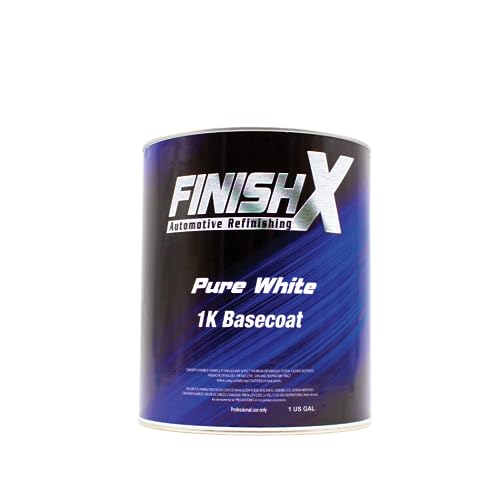
That code is usually on a small sticker inside the driver-side door jamb, sometimes in the glove box or trunk instead, and it matters because two paints both labeled “Diamond Black” from different brands can be completely different formulas. Basecoats like FinishX and Custom Shop are sold unreduced for this reason: a one-gallon can becomes roughly two gallons of sprayable paint once it’s mixed 1:1 with reducer, which is worth knowing before you size an order. Pure White and Diamond Black are two of the most common factory basecoat requests, and both mix at that same 1:1 ratio.
Before ordering, it also helps to know which paint system your car actually uses. A solid single-stage color like the Ebony Black basecoat reviewed below can go straight over a properly prepped and primed panel, while a factory color with pearl, mica, or a tri-coat finish needs a separate midcoat and clearcoat layered on top — spraying a single-stage basecoat over a tri-coat panel leaves a visibly flat, dull patch even when the base color itself is a perfect match.
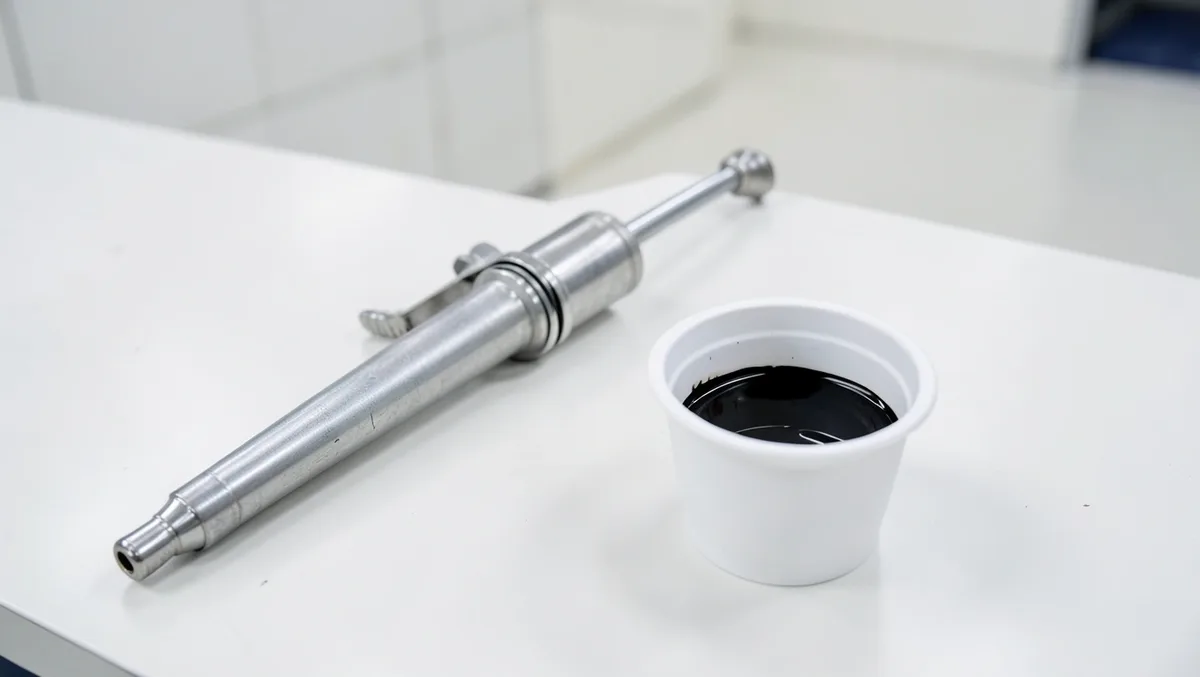
For full panels sprayed with a gun, that mixing step is unavoidable. For small trim pieces, dashboards, or bumper accents rather than a full repaint, an aerosol like SEM’s Satin Black Color Coat skips the spray gun and reducer step entirely and still gives a factory-style finish straight from the can. Whichever route fits the job, matching the real paint code protects the panel from rust and UV damage as well as the original factory coat did, and it keeps a repaired area from turning into an obvious mismatched patch that hurts resale value later.
Custom Shop SBC Solid Basecoat Automotive Paint, Bright White - Gallon
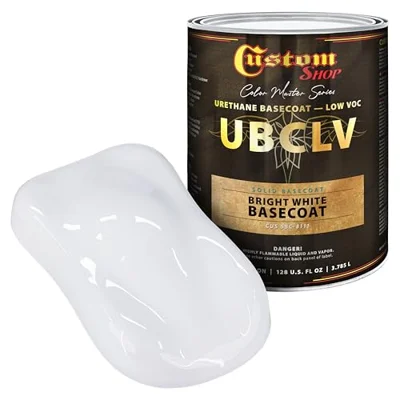
The Custom Shop SBC Solid Basecoat Automotive Paint, Bright White – Gallon is a solid pick for anyone repainting a full panel or a whole vehicle in a factory-style solid white rather than doing a small touch-up.
Pros:
- Exceptional Coverage and Vibrancy: Designed for superior coverage and color vibrancy, this basecoat delivers a professional-grade finish that ensures every panel matches evenly.
- High-Grade Pigments: Formulated with premium pigments to achieve rich, deep colors and excellent color stability, providing long-lasting results.
- Versatile Color Range: Available in a wide spectrum of hues, from classic shades to bold, vibrant tones, allowing for creative customization in any project.
- Seamless Integration: Works perfectly with Custom Shop’s advanced finishes, including metallic effects, candy coats, pearl coats, and protective topcoats.
Cons:
- Unreduced basecoat only — you’ll still need a compatible reducer and a spray gun on hand, it isn’t a brush-on touch-up bottle.
Check the current price on Amazon.
Sem Paints Sem15243 Satin Black Color Coat Aerosol
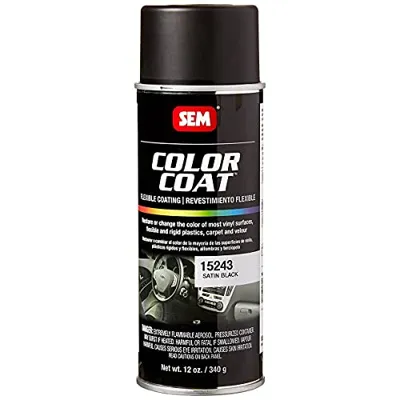
The SEM Paints SEM15243 Satin Black Color Coat Aerosol is an ideal choice for car enthusiasts, professional auto detailers, and DIY hobbyists looking to refresh vehicle interiors or small exterior components rather than mix a full basecoat batch. This product is built for a durable finish with a sleek satin black appearance, no spray gun required.
Pros:
- Provides a long-lasting finish that resists fading and wear.
- Easy-to-use aerosol format allows for quick application.
- Excellent adhesion on properly prepared surfaces.
- Compatible with a variety of materials including vinyl, plastic, and carpet.
Cons:
- Requires careful surface preparation for optimal results.
- Limited to a single color option.
- Not suitable for large surface areas.
One of its standout features is superior adhesion, which keeps the coating intact over time even on high-contact surfaces like dashboards, door panels, and trim, where longevity and resistance to wear matter most.
Because it’s an aerosol, application stays simple for both professionals and DIY users — there’s no spray gun setup, and the satin black finish adds a modern look while still shielding the surface from UV rays and everyday wear.
LAUCO Black 1K Basecoat Automotive Paint – Factory Color Match Ebony – 1 Gallon – Spray Gun Ready – Deep Black Finish – Mixing Ratio 1:1 – Auto Body Refinish- 87287
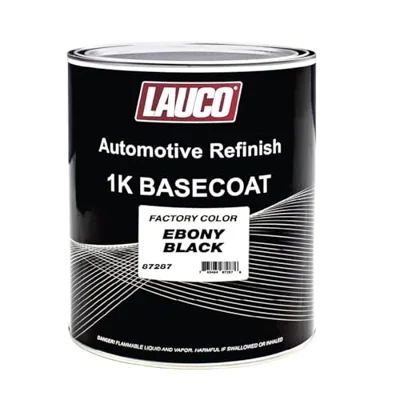
The LAUCO Black 1K Basecoat Automotive Paint – Factory Color Match Ebony – 1 Gallon is a solid pick for a full-panel or full-vehicle black repaint that needs to read as factory-original rather than an aftermarket black.
Pros:
- PROFESSIONAL 1K FORMULA: Single-component (1K) basecoat for ease of application; does not require a hardener, simplifying the mixing and spraying process.
- DEEP EBONY BLACK FINISH: Provides a rich, uniform, and factory-matched black color (Ebony) with excellent coverage and a deep black aesthetic.
- HIGH-VOLUME GALLON SIZE: Comes in a 1 Gallon (128 oz.) container, ideal for painting multiple panels or performing a complete vehicle color change/restoration.
- SPRAY GUN READY & EASY MIXING: Requires a simple 1:1 mixing ratio with a standard automotive reducer (sold separately) to achieve the right spray viscosity.
Cons:
- Reducer and clearcoat are sold separately, so budget for those before totaling the cost of a full panel job.
View current pricing on Amazon.
Frequently Asked Questions
What Is The Mixing Ratio For Pure White Basecoat?
FinishX Pure White basecoat mixes at a 1:1 ratio — one part basecoat to one part reducer — which is the standard ratio for most 1K automotive basecoats sold this way. Mixing it any thinner or thicker than that changes how it lays down and can leave streaking or poor coverage, so measure by volume rather than eyeballing it, and follow the manufacturer’s data sheet for the specific reducer you’re using.
Can I Use Sem Satin Black On Any Car?
SEM’s satin black aerosol works on most automotive surfaces and is specifically formulated for flexible substrates like vinyl, plastic, and carpet, not just painted metal. Clean and degrease the surface first, since any residue left behind will show through as poor adhesion later, and expect it to hold up on both interior trim and small exterior components.
How Do I Apply Finishx Diamond Black Basecoat?
Mix FinishX Diamond Black at the same 1:1 basecoat-to-reducer ratio, then spray it over a surface that’s already clean, sanded, and primed — skipping primer is the most common reason a basecoat won’t bond properly. Apply in thin, even coats with a spray gun rather than one heavy pass, and let each coat flash off before the next so the finish comes out smooth instead of glossy in some spots and dull in others.
Is Aerosol Paint Suitable For Diy Car Projects?
Yes — aerosol paint is a practical DIY option for small touch-ups, trim pieces, and interior components where setting up a spray gun and mixing reducer isn’t worth the extra step. Clean and prime the surface first, then work in light passes, and it holds up well for both first-time painters and experienced detailers who just want to skip the equipment.
Can These Paints Improve Car Appearance?
Yes, a properly matched factory basecoat noticeably improves how a car looks by removing the mismatched patch or faded panel that gives away a prior repair. The improvement depends on matching the actual paint code for your vehicle rather than the closest-looking color name, and on following the same prep and mixing steps covered above — get those right and the repaired area blends in instead of standing out.
Conclusion
Choosing the right factory paint for a repair starts with the paint code on your door jamb, not the color name on the can — get that part right and the rest is mostly a matter of picking the right format for the job. The Custom Shop Bright White and LAUCO Ebony Black basecoats both suit a full panel sprayed with a gun, while the SEM satin black aerosol covers smaller trim and interior pieces without any mixing at all.
Each option has its own best use case: gallon basecoats for full panels and color changes, aerosols for quick touch-ups and small components. Match the paint code, follow the 1:1 mixing ratio where one applies, and prep the surface properly, and factory-quality paint keeps a repaired car looking — and holding its value — like it was never damaged in the first place.
Products related to this article
Sponsored / affiliate links. As an Amazon Associate I earn from qualifying purchases. I may earn additional commission from eligible campaigns.
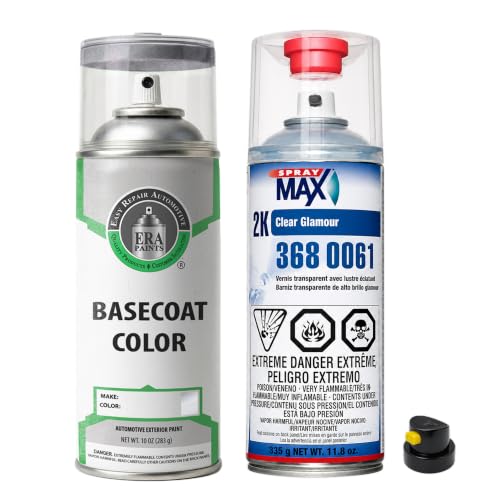 ERA Paints - WA220C - Light Sandrift Metallic for CADILLAC Exact OEM Color Match Automotive Touch Up Paint for Cars - Spray Paint with Premium Spray Nozzle - Essential Kit w/ 2K 3680061 Clearcoat - Made in USA
 ERA Paints - PC5 - Light Iris Metallic for JEEP Exact OEM Color Match Automotive Touch Up Paint for Cars - Spray Paint with Premium Spray Nozzle - Premium Kit w/ 2K 3680061 Clearcoat - Made in USA