Is 60000 Miles A Lot For A Car? Essential Guide
Is 60,000 miles a lot for a car? Generally, 60,000 miles is considered moderate mileage for a car. It’s often the point where a vehicle is no longer “new” but can still have significant life left. Regular maintenance is key to determining if this mileage is a lot or just a number.
Ever stared at your car’s odometer and wondered, “Is 60,000 miles a lot for a car?” You’re not alone! It’s a common question that pops up, especially when you’re thinking about buying a used car or wondering about your current vehicle’s future. A car hitting this milestone can feel significant, but honestly, it’s more about how that car was treated than just the number itself.
Think of it like this: some 60,000-mile cars are just getting warmed up, while others might be nearing retirement. The good news is, you don’t need to be a car expert to understand what this mileage means. We’ll break down what 60,000 miles usually signifies, what you can expect, and how to make sure your car keeps running smoothly, no matter the miles.
Understanding Car Mileage: What Does 60,000 Miles Really Mean?
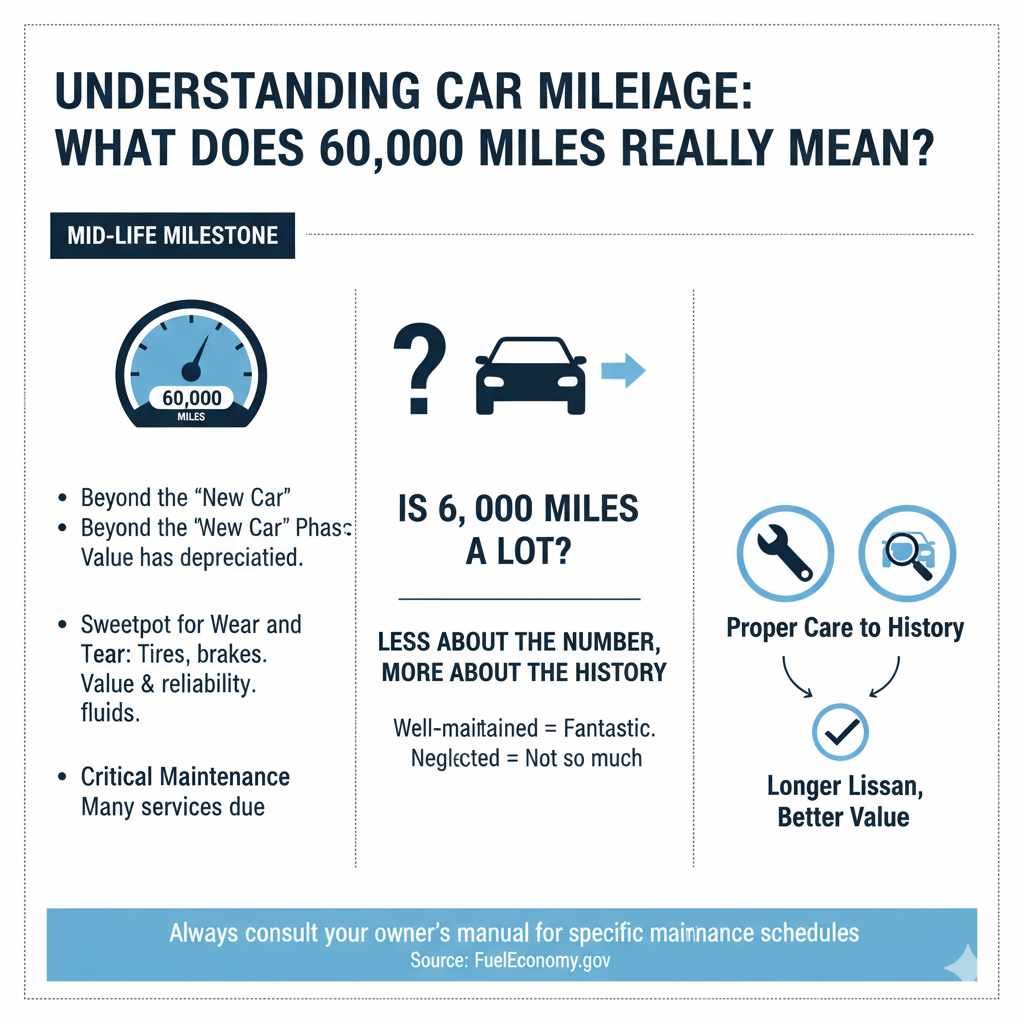
When a car reaches 60,000 miles, it’s often considered mid-life. It’s past the initial break-in period and has seen some regular use. This mileage is a benchmark that can tell you a few things:
- Beyond the “New Car” Phase: A car with 60,000 miles is definitely not new. Its value will have depreciated significantly from its original price.
- Potential for Wear and Tear: Some components might start showing signs of age at this point. Think about things like tires wearing down, brake pads needing attention, or maybe some fluids requiring a refresh based on time or mileage.
- The “Sweet Spot” for Some Buyers: For used car shoppers, a car around 60,000 miles can sometimes be a great deal. It’s often well past its steepest depreciation curve but, with proper care, can still offer many more years of reliable service.
- Critical Maintenance Intervals: Many manufacturers schedule important maintenance services around the 60,000-mile mark. Skipping these can lead to bigger problems down the road.
So, is 60,000 miles a lot? It’s less about the number and more about the history. A well-maintained 60,000-mile car can be a fantastic machine. A neglected one? Not so much.
Let’s dive into what typically happens around this mileage and what you should be aware of.
What to Expect at 60,000 Miles: Key Checks and Maintenance
Reaching 60,000 miles often triggers a set of recommended maintenance tasks from car manufacturers. These are designed to keep your car running efficiently and prevent smaller issues from becoming major repairs. Think of it as a thorough “check-up” for your vehicle.
Here’s a look at some common things that might need attention:
Engine Oil and Filter Change
This is the bread and butter of car maintenance. While engine oil is typically changed more frequently, the 60,000-mile mark is a good reminder to ensure it’s fresh. Fresh oil lubricates your engine, reduces friction, and helps keep it cool. A dirty filter can clog up and reduce oil flow.
Why it’s important: Clean oil and filter prevent premature engine wear. This is crucial for the longevity of your car’s most vital component.
Tire Rotation and Inspection
By 60,000 miles, your tires have seen significant action. Rotating them helps ensure they wear evenly, extending their life and improving your car’s handling. Your mechanic will also check the tire pressure, look for any signs of damage (like cuts or bulges), and assess the tread depth.
Why it’s important: Even tire wear means better grip, improved fuel economy, and safer driving. Worn tires are a major safety hazard.
Brake System Check
Your brakes work hard every time you drive. At 60,000 miles, it’s a good time for a thorough inspection of your brake pads, rotors, and brake fluid. Depending on your driving habits, you might need new brake pads or even rotors.
Why it’s important: Your brakes are critical for safety. Ensuring they are in good working order is non-negotiable.
Fluid Checks and Replacements
Several other vital fluids need attention:
- Brake Fluid: Over time, brake fluid can absorb moisture, which reduces its effectiveness and can corrode brake components. It may need to be flushed and replaced.
- Power Steering Fluid: Keeps your steering smooth and responsive. Low or dirty fluid can make steering difficult.
- Transmission Fluid: Crucial for smooth gear shifts and preventing transmission damage. Depending on your car, it might need changing or topping up.
- Coolant (Antifreeze): Prevents your engine from overheating or freezing. It should be flushed and replaced at recommended intervals, often around this mileage.
Why it’s important: These fluids are the lifeblood of different systems in your car. Keeping them in good condition ensures everything runs smoothly and prevents costly breakdowns.
Air Filter Replacement
Your engine needs to breathe clean air. A clogged engine air filter restricts airflow, making your engine work harder and reducing fuel efficiency. It’s usually an easy replacement.
Why it’s important: Better airflow means better engine performance and fuel economy.
Cabin Air Filter Replacement
This filter cleans the air that comes into your car’s cabin, so you and your passengers breathe easily. If it’s dirty, you might notice reduced airflow from your vents or an unpleasant smell.
Why it’s important: Improves the air quality inside your car and the performance of your HVAC system.
Spark Plug Inspection/Replacement
Spark plugs ignite the fuel-air mixture in your engine. Over time, they can wear out, leading to misfires, rough idling, and reduced fuel economy. Many manufacturers recommend checking or replacing them around 60,000 to 100,000 miles.
Why it’s important: Healthy spark plugs mean a smooth-running engine and optimal fuel combustion.
Belts and Hoses Inspection
Under the hood, you’ll find various belts (like the serpentine belt) and hoses that carry fluids. At 60,000 miles, it’s a good time to ensure they aren’t cracked, frayed, or leaking.
Why it’s important: A broken belt or hose can cause immediate and significant problems, sometimes leaving you stranded.
Factors That Influence Whether 60,000 Miles is “A Lot”
The number 60,000 itself doesn’t tell the whole story. Several factors can make this mileage feel like a lot or very little for a car.
1. Maintenance History
This is the biggest factor. A car that has had consistent, timely maintenance according to the manufacturer’s schedule will likely be in much better shape than one that hasn’t. Regular oil changes, fluid flushes, and component checks make a huge difference.
Example: Two identical cars, both at 60,000 miles. Car A had all its recommended services done on time. Car B skipped most of them. Car A will likely feel “younger” and have fewer issues.
2. Driving Conditions
How and where the car has been driven plays a massive role.
- City Driving: Frequent stop-and-go traffic puts more wear on brakes and the transmission due to constant acceleration and braking. Higher mileage might feel “heavier.”
- Highway Driving: Long stretches of highway driving are generally easier on a car. A car driven mainly on highways might feel much better at 60,000 miles than one driven in heavy city traffic.
- Harsh Climates/Roads: Cars driven in areas with extreme temperatures, heavy snow, or rough roads (e.g., unpaved roads) can experience more wear and tear on suspension and body components.
3. Make and Model of the Car
Some car brands and models are known for their durability and longevity. Well-engineered cars can often surpass 100,000 or even 200,000 miles with proper care. Others might start having more frequent issues closer to or even before the 60,000-mile mark.
Reputable sources like Consumer Reports often provide reliability ratings for different makes and models, which can give you an idea of their long-term durability.
4. Driver Habits
The way someone drives significantly impacts a car’s lifespan:
- Aggressive Driving: Rapid acceleration, hard braking, and aggressive cornering put extra stress on the engine, brakes, suspension, and tires.
- Gentle Driving: Smooth acceleration and braking that allows the car to coast more often is much kinder to components.
- Immediate Shutdowns: Constantly shutting off a turbocharged engine immediately after hard driving can sometimes be detrimental to the turbocharger.
5. Previous Repairs and Replacements
Has the car had major components replaced? For example, if a transmission was replaced at 40,000 miles, that specific component is essentially “newer” than the rest of the car. However, it’s also important to know why it was replaced.
Is 60,000 Miles a Lot When Buying a Used Car?
When looking for a used car, the 60,000-mile mark is a common point where vehicles appear on the market. Whether it’s “a lot” depends on what you’re looking for and what you’re willing to pay.
Pros of Buying a Car Around 60,000 Miles:
- Lower Price: These cars have usually undergone significant depreciation, making them more affordable than newer models.
- Recent Major Services: Some owners may have performed 60,000-mile maintenance before selling, meaning major tasks might already be done.
- Proven Track Record: A car that has made it to 60,000 miles with no major issues is often a sign of good initial build quality.
Cons of Buying a Car Around 60,000 Miles:
- Potential for Upcoming Repairs: As noted, this is often when certain wear-and-tear items need replacement (brakes, tires, battery).
- Out of Factory Warranty: Many manufacturer warranties expire before or around 60,000 miles, meaning you’ll be responsible for repair costs.
- Unknown Maintenance History: If the seller can’t provide records, you might be buying a car that’s due for some significant, costly maintenance.
Purchasing Tips for a 60,000-Mile Used Car:
- Get a Pre-Purchase Inspection (PPI): This is non-negotiable. Have an independent mechanic inspect the vehicle thoroughly. They can spot potential issues you might miss.
- Ask for Maintenance Records: A seller who has kept up with maintenance is usually a sign of a well-cared-for car.
- Check the Vehicle History Report: Services like CarFax or AutoCheck can reveal accident history, title issues, and sometimes reported maintenance.
- Research Reliability: Look up common problems for that specific make and model at around 60,000 miles.
- Factor in Upcoming Costs: Be prepared for potential brake jobs, tire replacements, or fluid services soon after purchase.
Is 60,000 Miles a Lot for Specific Car Components?
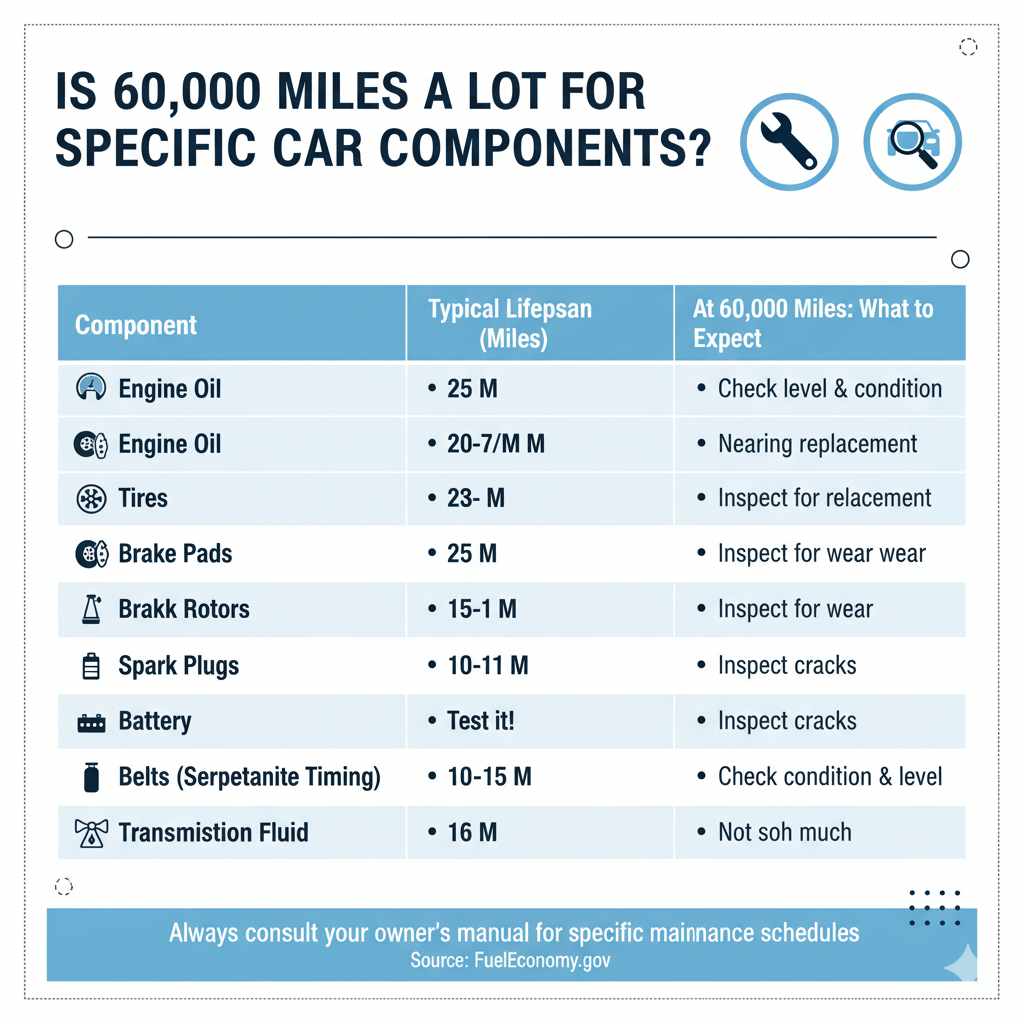
While the car as a whole can last well beyond 60,000 miles, individual components have different lifespans. Here’s a general idea:
| Component | Typical Lifespan (Miles) | At 60,000 Miles: What to Expect |
|---|---|---|
| Engine Oil | 3,000 – 10,000 (synthetic often longer) | Should have been changed multiple times. Important to check level and condition. |
| Tires | 30,000 – 70,000+ | Likely need rotation. May be nearing replacement depending on type and driving. |
| Brake Pads | 30,000 – 70,000 | May need replacement soon, especially if driven aggressively or in hilly/urban areas. |
| Brake Rotors | 50,000 – 100,000+ | Often good, but should be inspected for wear or warping. |
| Battery | 3 – 5 years (approx. 50,000 – 75,000 miles of driving) | Could be nearing the end of its life. Test it! |
| Spark Plugs | 30,000 – 100,000 (varies greatly by type) | Some cars may recommend replacement; others will just need inspection. |
| Belts (Serpentine, Timing) | 60,000 – 100,000+ (Timing belts often have strict intervals) | Serpentine belt should be inspected for cracks/wear. If your car has a timing belt, ensure its replacement interval is met; failure can be catastrophic. |
| Transmission Fluid | 60,000 – 100,000+ (varies by manufacturer and fluid type) | Often a recommended service interval; crucial to check condition and level. |
This table is a general guide. Always consult your vehicle’s owner’s manual for specific maintenance recommendations. For example, some modern vehicles use “lifetime” transmission fluid, though many mechanics still recommend changing it. Learning about your specific car is key!
You can find detailed information about your car’s maintenance schedule in the owner’s manual. If you don’t have it, you can often download a PDF version from the manufacturer’s website. For more general information on vehicle maintenance, resources like FuelEconomy.gov from the U.S. Department of Energy offer valuable insights into how maintenance impacts efficiency and lifespan.
Can a Car Last Beyond 100,000 Miles?
Absolutely! While 60,000 miles might feel like a lot, many cars are designed and built to last much longer. The common misconception that cars are disposable after 100,000 miles is largely outdated for most modern vehicles.
Cars that regularly exceed 100,000 miles, and often reach 200,000 or even 300,000 miles, typically share these characteristics:
- Diligent Maintenance: Owners followed the recommended service schedule religiously, using quality parts and fluids.
- Reliable Make/Model: They are from manufacturers and models known for their durability and engineering.
- Gentle Driving: The car wasn’t driven hard consistently over its lifetime.
- Timely Repairs: Small issues were addressed promptly before they could cause larger problems.
- Preventive Replacements: Key components like timing belts were replaced at the correct mileage intervals to prevent catastrophic engine failure.
So, if your car is at 60,000 miles and has been well cared for, you have plenty of good driving ahead. If you’re looking at a used car with 60,000 miles, don’t be discouraged – it could be a fantastic purchase with the right due diligence.
Is 60,000 Miles a Lot For A Car? FAQ
Here are some common questions car owners have about mileage.
Q1: How many years does it take to reach 60,000 miles?
| Average Miles Driven per Year | Years to Reach 60,000 Miles |
|---|---|
| 5,000 miles/year | 12 years |
| 10,000 miles/year | 6 years |
| 12,000 miles/year (U.S. avg) | 5 years |
| 15,000 miles/year | 4 years |