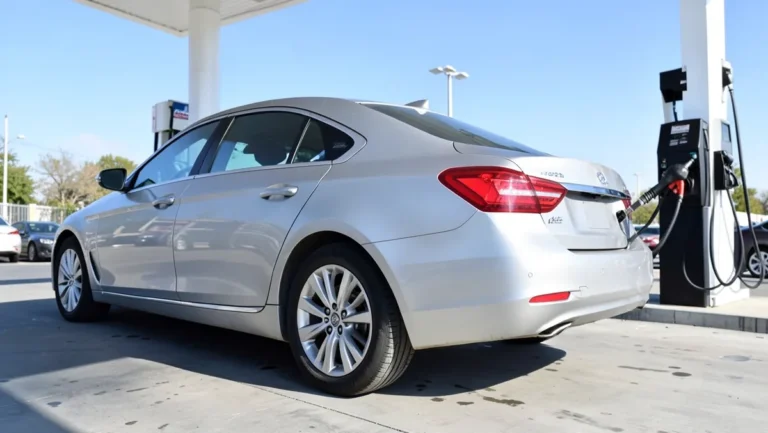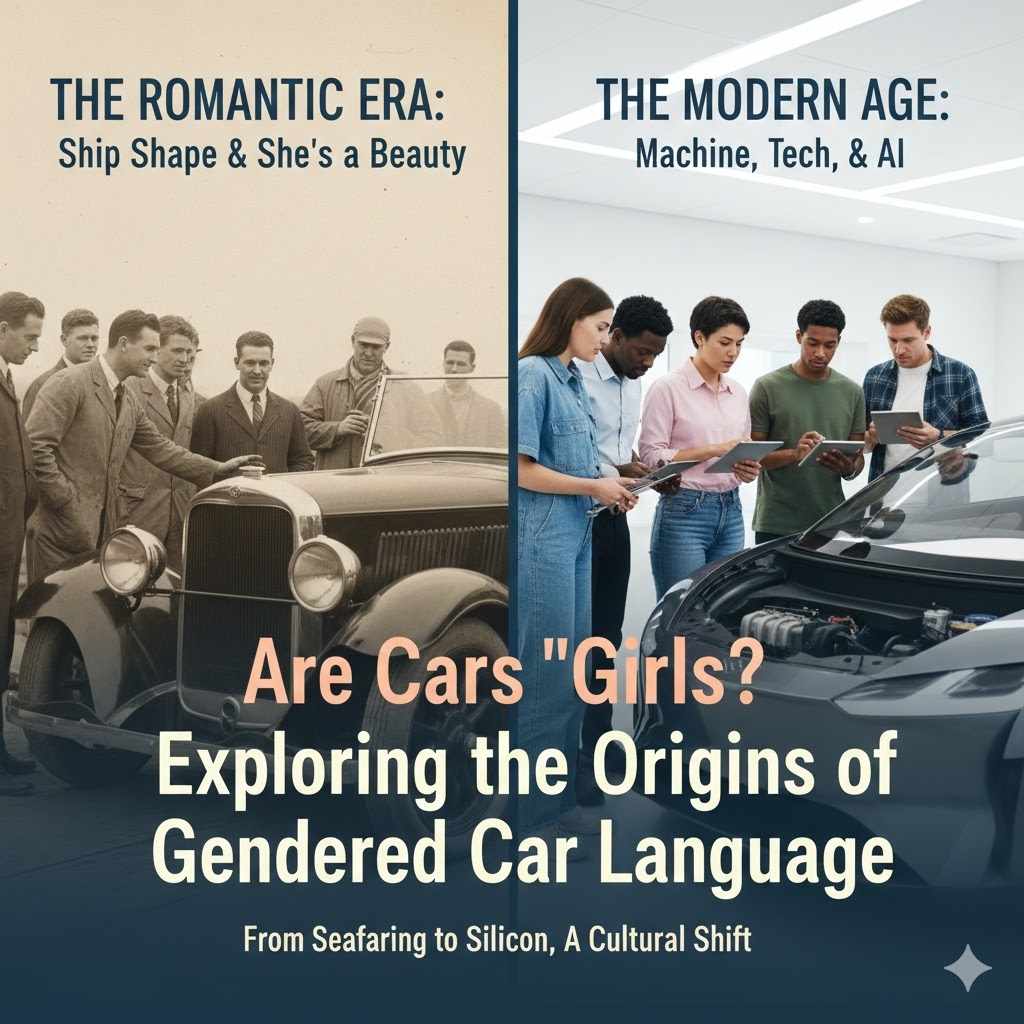
Why Do People Call Cars “She”? Origins of Gendered Car Language
Cars get called “she” through personification, not grammar — English nouns carry no gender, unlike French voiture (feminine) or Russian mashina (feminine). The habit traces to centuries of English sailors calling ships “she,” then took hold in cars after Italian writer Gabriele D’Annunzio declared the automobile feminine in a 1926 letter to Fiat’s founder. This guide covers that origin, the real linguistic term for it, and why the AP Stylebook now recommends against it.
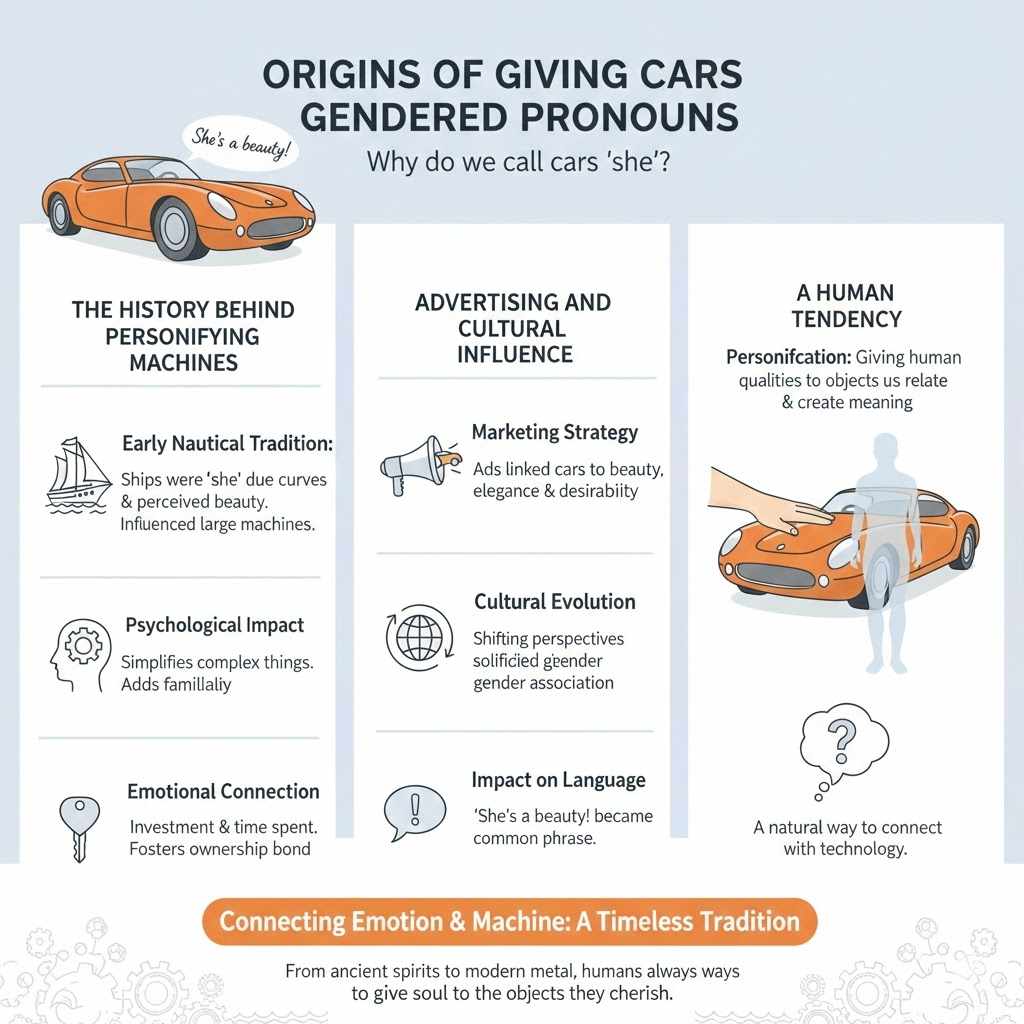
The Origins of Giving Cars Gendered Pronouns
The habit of assigning genders to inanimate objects like cars people feel emotionally attached to is far older than most people think. It’s part of a broader human tendency to personify things — giving them human-like qualities so they feel more approachable. The use of feminine pronouns in particular traces back to nautical tradition and, for cars specifically, a documented shift in early automotive culture. Here’s where the idea actually comes from.
The History Behind Personifying Machines
Humans have always found ways to connect emotionally with objects, giving them names, personalities, and sometimes genders. As technology evolved, so did our relationships with machines. Cars became symbols of status, freedom, and personal identity, and giving a car a gender — particularly “she” — let owners feel a closer bond with their vehicles.
- Early nautical tradition: English speakers have referred to ships as “she” since at least the late 1300s, likely reinforced by the fact that the Latin word for ship, navis, is grammatically feminine. This association carried over to other large, complex machines described later, including cars.
- Psychological impact: Personification is a natural human tendency. It simplifies complex things, making them easier to relate to. Assigning gender adds another layer of familiarity.
- Emotional connection: Cars are often a big investment, and drivers spend a lot of time with them. This connection encourages a sense of ownership, which makes calling the car “she” feel natural to many owners.
Advertising and Cultural Influence
Marketing played a real role in this tradition. Early advertisers realized that appealing to emotion resonated with buyers, and using feminine pronouns created a sense of intimacy and desirability. The car became a companion, a symbol of beauty, and a source of pride. As this framing spread across the auto industry, it became part of everyday language — “she’s a beauty!” became a common compliment.
- Marketing strategy: Early car ads often connected vehicles to ideas of beauty, elegance, and desirability, reinforcing the feminine association.
- Cultural evolution: Cultural shifts and changing perspectives helped shape how people view objects, and the association with cars solidified over time.
- Impact on language: As the association became widespread, it became a normal part of everyday speech about cars.
When Did Ships Start Being Called “She”? The Oldest Recorded Example
The earliest documented example of a ship described as female in the Oxford English Dictionary dates to roughly 1380 — long before cars existed. The habit stayed common in English writing for centuries; Herman Melville’s 1851 novel Moby-Dick describes the whaling ship Pequod as “she was a ship of the old school.” No single explanation is proven, but the Latin gender of navis and sailors’ habit of naming ships after wives and sweethearts are the two most-cited theories.
📊 Nearly 40% of millennials name their cars, compared with about 25% across all age groups — Source: Quick and Dirty Tips / Grammar Girl
Is “She” Grammar or Personification? The Real Linguistic Answer
Metaphorical gender is the linguistic term for calling an object like a car “she” without any grammatical rule requiring it. Modern English lost its formal grammatical gender system — the masculine, feminine, and neuter noun classes that Old English had — roughly between 1000 and 1200 AD, largely due to Norse and later French influence. Today, English pronouns follow natural or referential gender: they track a real person’s or animal’s actual sex, not a fixed grammatical category. Calling a car “she” is a deliberate, optional act of personification, not something English grammar requires the way French or Spanish grammar requires a gender for every noun.
How “Car” Is Gendered in Other Languages
In languages that do have grammatical gender, the word for “car” is assigned a gender by the language’s own noun-class rules — not by any cultural idea about what a car represents. Here’s how it breaks down across a few major languages:
| Language | Word for “car” | Grammatical gender |
|---|---|---|
| French | voiture | Feminine |
| Spanish | coche / carro | Masculine |
| Italian | automobile | Feminine (since 1926) |
| German | das Auto / der Wagen | Neuter or masculine, depending on the word used |
| Russian | машина (mashina) | Feminine |
Notice the difference: in French or Russian, the grammatical gender is baked into the language itself and doesn’t reflect a personal choice. In English, there’s no such rule — every time someone calls their car “she,” it’s a stylistic decision, not a grammatical requirement.
The 1926 Letter That Made “Automobile” Feminine in Italian
The clearest documented turning point for car gender didn’t happen in English at all. In Italian, automobile was originally treated as masculine — confirmed by lexicographer Alfredo Panzini’s 1905 dictionary. That changed in 1926, when the writer Gabriele D’Annunzio sent a letter to Fiat founder Giovanni Agnelli describing a gifted Fiat 509 Cabriolet:
“The car is feminine. Just as a woman can glide over life’s obstacles with ease, so too can a car” — described elsewhere in the same letter as “a sleek, lively, graceful seductress.”
D’Annunzio’s framing stuck. Italy’s Accademia della Crusca, the country’s authority on the Italian language, now confirms feminine usage for car brand names too — it’s una Ferrari, not un Ferrari. It’s a rare case where a single writer’s letter to an industrialist changed how an entire language talks about a product category, as Pirelli details in its own history of the automobile.
Why “She” and Not “He” for Automobiles?
When it comes to cars, the gender assigned is almost always feminine — you don’t often hear someone calling their car “he.” This is probably linked to qualities often associated with women, like beauty, grace, and care. Cars have curves and are often associated with elegance and style, and the pronoun reinforces that feeling. Here’s the historical context behind why “she” became the default.
The Feminine Attributes in Car Design
Vehicle design often plays into this association. Curves, sleek lines, and flowing shapes are typical of automotive styling, and the aesthetic similarities between cars and traditional ideas of feminine beauty likely fueled the tendency. Advertising frequently showcased a car’s attractive features to make it seem luxurious and desirable, strengthening the link between “she” and beauty. Over time, the term became more and more common in everyday speech.
- Curves and design: Many cars are designed with curves reminiscent of classic feminine silhouettes, creating a visual link.
- Beauty and elegance: The automobile industry often focuses on aesthetics, aiming for a look of beauty and prestige.
- Emotional appeal: Ads use these aspects to build emotional attachment, marketing cars as possessions to be desired and cared for.
Cultural Associations with Gender Roles
Historically, gender roles have affected the way people speak and think about the objects around them. “She” fits how cars are often treated, since caring for a car — washing it, maintaining it, worrying over it — has traditionally been framed as a feminine kind of attentiveness. This thinking, although challenged over time, has clearly influenced our language. As society’s view of gender roles keeps evolving, more people are starting to question these traditions.
- Protective instinct: Owners who invest time and money into a car often describe protecting it, echoing the same language sailors used for ships.
- Emotional connection: A car can be something you protect and love, which can also lead to gender association.
- Changing views: Some of these associations are no longer as common, as societal views continue to change.
Modern Perspectives and Alternatives
While the tradition of calling cars “she” remains common, a variety of factors are challenging it. More people are questioning stereotypes and cultural expectations, and some are pushing back against the practice, while others are embracing different names or pronouns entirely. Here are some modern viewpoints on how the conversation is evolving.
Challenging Gendered Language
Many people now question the tradition of labeling cars with gendered pronouns, part of a broader awareness of how language shapes expectations. Those concerned about it push for inclusive, unbiased language, which helps people feel welcomed and respected. People are also seeking new ways to describe cars that focus on function rather than gender.
- Inclusive language: It’s worth making sure everyday car talk doesn’t lean on stereotypes or exclude anyone.
- Avoiding stereotypes: Traditional gender roles tied to beauty and care feel outdated to many drivers today.
- Respect for diversity: Language that reflects a wider range of viewpoints tends to feel more welcoming.
Embracing Neutral or Alternative Terms
The move away from gendered descriptions is gaining pace. People are turning to more neutral language, including describing a car by its name or by its features and functions. One popular option is simply naming the car — drivers who do this tend to gravitate toward the same handful of names, like a nickname tied to the car’s color or personality rather than a generic pronoun. This shift toward more inclusive language reflects a much bigger change in the way people talk about their vehicles.
- Focus on functionality: Describe the vehicle in ways that reflect its design, not its assumed gender.
- Using car names: Using the brand, model, or a nickname is popular, clear, and simple.
- Modern approach: Using neutral and more inclusive language reflects shifting social values.
Examples and Case Studies
To really grasp how the “she” car naming works, it helps to look at real examples. This practice goes far back in time and is still common today, from old stories to modern experiences.
Classic Car Stories
Cars have been part of popular culture for years, often given a gendered personality. Think of famous cars in movies or books — from the Batmobile to the DeLorean, these vehicles are usually treated as “she” and given an identity that helps audiences form a connection with them.
- “Christine” (Stephen King): A well-known example where a car is given a clear, menacing feminine personality of her own.
- “Herbie” (The Love Bug): A cheerful Volkswagen Beetle, loved by generations of moviegoers, often given human traits and referred to as “she.”
- The Batmobile: Frequently portrayed as an extension of the hero, with its own personality and moods.
Modern Car Ownership Experiences
Even today, people refer to their cars with female pronouns, which reflects a real emotional connection with their vehicles. Some say it’s about the design, others say it’s about the care they put into the car. Whatever the reason, this custom is still very active.
- A woman refers to her vintage convertible as “she,” reflecting on its beauty and style.
- A car enthusiast talks with his buddies about how “she” is ready for a cross-country road trip.
- A driver gives her new car a name and talks about “her” safety features and performance.
The Future of Car Pronouns and Language
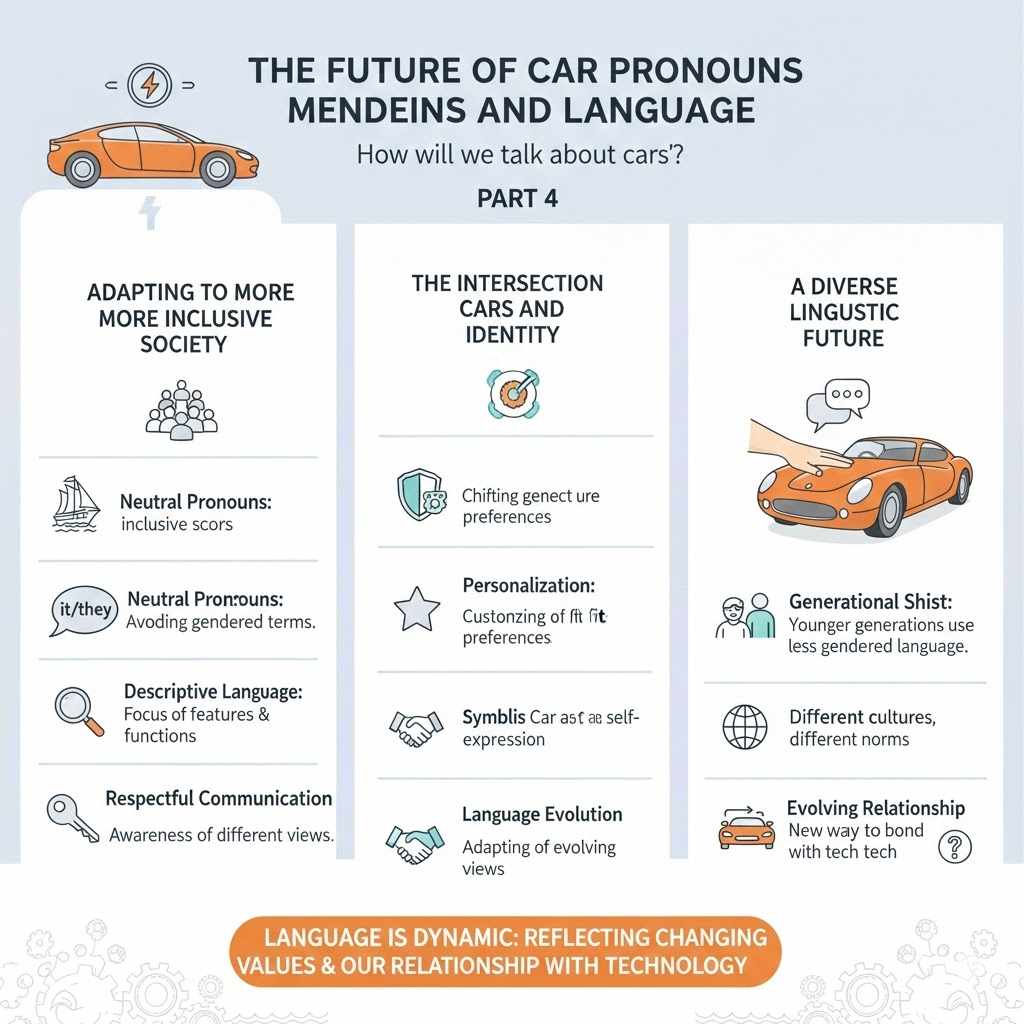
The way people talk about cars is changing as social attitudes shift, and language is adapting along with it. What’s likely ahead is a mix of older customs and newer, more neutral habits.
Adapting to a More Inclusive Society
As society becomes more accepting and diverse, the language used to describe cars will likely keep shifting toward more neutral words. This isn’t about banning a phrase people enjoy — it’s about being aware that older habits carry assumptions worth examining. Language is a living thing that changes along with people’s values.
- Neutral pronouns: More drivers are simply using “it” or avoiding pronouns altogether.
- Descriptive language: Describing a car by its features and functions instead of a gendered pronoun.
- Respectful communication: Staying aware of different views and speaking in a way that respects them.
The Intersection of Cars and Identity
Cars have long been a symbol of self-identity, and that connection is likely to stay even as the way people express it changes. As the bond between people and their cars continues, car ownership and car culture will keep giving drivers a broader range of options for expressing that relationship — gendered or not.
- Personalization: Customizing cars to fit personal preferences will keep growing.
- Symbolism: A car will likely stay an expression of individual taste and identity.
- Language evolution: The words people use will keep adapting to reflect how they actually feel about their cars.
Frequently Asked Questions
Why do people call cars “she”?
Mostly personification, not grammar. English nouns don’t carry gender, but English speakers have called ships “she” since at least the 1300s, and that habit extended to other complex machines people feel emotionally attached to, including cars. A 1926 letter from Italian writer Gabriele D’Annunzio to Fiat founder Giovanni Agnelli, describing the automobile as feminine, helped cement the association in car culture specifically.
Is it wrong or sexist to call a car “she”?
It’s not factually wrong, but style authorities increasingly discourage it. The AP Stylebook and The Chicago Manual of Style both recommend “it” over “she” for ships, and the same logic applies to cars: assigning a gender to a machine leans on outdated stereotypes about beauty and care being feminine traits. Whether it feels sexist is a matter of personal judgment, not settled grammar.
Does English actually have grammatical gender for cars?
No. English lost its formal grammatical gender system (masculine, feminine, neuter) roughly between 1000 and 1200 AD under Norse and French influence. Calling a car “she” today is what linguists call metaphorical gender or personification — a stylistic choice, not a rule. That’s different from French, Spanish, German, or Russian, where every noun, including the word for car, has a fixed grammatical gender built into the language itself.
What gender is the word “car” in other languages?
It varies by language and by which word is used. French voiture is feminine; Spanish coche and carro are masculine; Italian automobile became feminine after 1926 (so “una Ferrari,” not “un Ferrari”); German splits between neuter das Auto and masculine der Wagen; and Russian mashina is feminine. None of this reflects the object’s traits — it’s assigned by each language’s noun-class rules.
Are there alternatives to using gendered terms for a car?
Yes. Common alternatives include using the car’s given name (“Betsy needs an oil change”), the brand or model (“the Mustang is due for service”), or simply “it.” Any of these works — the choice comes down to personal comfort rather than a correct or incorrect answer.
How has this custom changed over time?
The habit of calling ships “she” dates back to at least 1380 in written English, and car culture picked it up alongside early-1900s advertising that leaned on feminine imagery to sell automobiles. Since then, major style guides have reversed course: both AP and Chicago now recommend “it,” and everyday usage has followed, with more drivers defaulting to neutral language or a car’s given name instead.
Will people keep calling cars “she” in the future?
Some will, especially in casual conversation and classic car culture where the tradition runs deep. But the overall trend is toward neutral language, matching the shift already documented in journalism and maritime writing. Expect the custom to persist informally while fading from formal and professional contexts.
Final Thoughts
So, why do people call cars “she”? It’s a mix of centuries-old nautical tradition, a specific 1926 letter that made “automobile” feminine in Italian, and the human habit of personifying things we care about — not a rule built into English grammar. While the “she” pronoun remains common, style guides and everyday usage are both drifting toward neutral language. For a look at the broader debate around this custom, see our companion piece on whether cars are “girls” and the arguments on both sides, or explore more of the traditions behind car culture as a lifestyle. However you refer to your car, it’s ultimately about the personal connection it represents.
Products related to this article
Sponsored / affiliate links. As an Amazon Associate I earn from qualifying purchases. I may earn additional commission from eligible campaigns.