Is A Leased Car An Asset? Proven Financial Truths
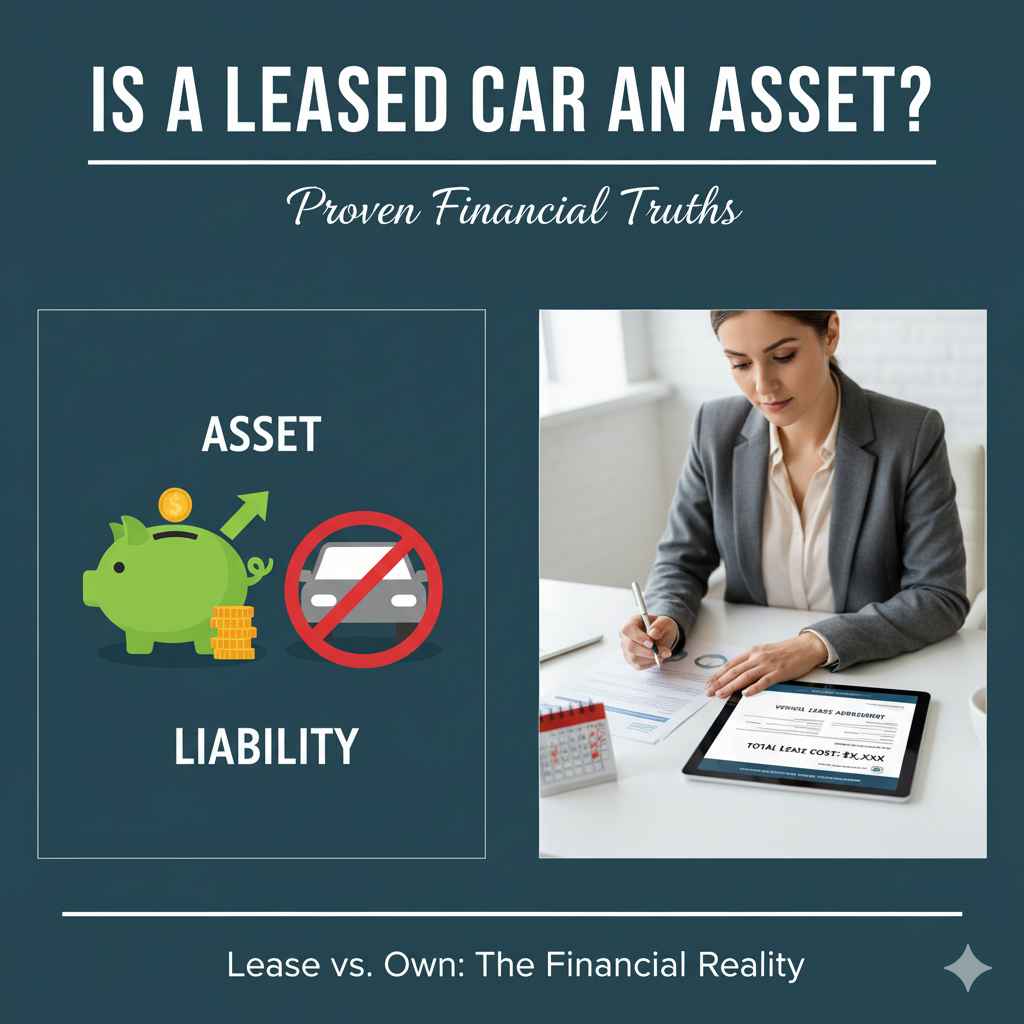
No, generally a leased car is not considered a personal asset. It’s a right to use a vehicle for a set period, with ownership remaining with the leasing company. While it provides transportation, it doesn’t build equity or add to your net worth like a purchased car would.
Hey there, fellow drivers! Ever wondered about the financial side of your car? If you’re leasing a car, you might be asking yourself, “Is this leased car an asset?” It’s a great question that many people ponder. Sometimes, big financial decisions can feel a bit confusing, especially when it comes to cars. We lease them for convenience, but does that convenience translate into building wealth? Let’s break it down in plain English.
We’ll explore what makes something an asset and why a leased car usually doesn’t fit that description. By the end, you’ll have a clear picture of how leasing impacts your finances and what you can do to make smarter car decisions.
Understanding What an Asset Really Is
Before we dive into the specifics of leased cars, it’s super important to understand what an “asset” means in the world of finance. Think of an asset as something you own that has value. When you own it, it can potentially make you money or, at the very least, hold its value or even increase over time. It’s something that can be sold, used to generate income, or contribute positively to your net worth. Your home, for example, is typically considered an asset because you own it, and its value might go up.
Assets are divided into a couple of main categories:
- Tangible Assets: These are physical things you can touch, like real estate, vehicles you own outright, equipment, or precious metals.
- Intangible Assets: These are non-physical assets that still have value, such as stocks, bonds, patents, copyrights, or goodwill.
The key feature of an asset is control and ownership. You have the power to use it, sell it, or pass it on. It’s yours to command. This is the fundamental difference we’ll be looking at when we compare it to a leased car.
Is a Leased Car an Asset? The Financial Reality
Now, let’s tackle the main question head-on: is a leased car an asset? The straightforward answer, in most financial definitions, is no. When you lease a car, you’re essentially renting it for an extended period, usually between two to four years. You get to drive a brand-new car, enjoy its features, and often have lower monthly payments compared to financing a purchase. However, you don’t actually own the vehicle.
The title of the car always remains with the leasing company – your lender. You’re making monthly payments for the depreciation of the car during your lease term, plus interest and fees. At the end of the lease, you have a few options: you can return the car, buy it for its residual value (a pre-determined price), or lease a new car. You don’t gain equity or ownership of the car itself as an asset that you can sell or that adds to your net worth in the traditional sense.
Leasing vs. Buying: A Financial Comparison
To truly understand why a leased car isn’t an asset, let’s compare leasing with buying a car. This comparison will highlight the core financial differences.
When You Buy a Car
When you buy a car, whether you pay cash or finance it with a loan, you are building ownership. If you pay cash, the car is a tangible asset from day one. If you finance, you are making payments towards owning that asset. Over time, the car depreciates, meaning it loses value, but it’s still an asset you own. Once the loan is paid off, you own the car outright. You can sell it, keep it, or trade it in, and the money you get from selling it (minus any remaining debt, if applicable) accrues to you. It also appears on your balance sheet as an asset.
Here’s a simplified view:
| Feature | Buying (Financed/Cash) | Leasing |
|---|---|---|
| Ownership | You own the vehicle. | The leasing company owns the vehicle. |
| Monthly Payments | Payments go towards ownership (principal + interest). | Payments cover depreciation + interest + fees. |
| Equity Building | You build equity as you pay down the loan or the car holds value. | No equity is built; you don’t own the car. |
| End of Term | You own the car outright (or have a loan balance to settle). You can sell it. | You return the car, buy it for residual value, or lease a new one. |
When You Lease a Car
With leasing, your monthly payments are lower because you’re only paying for the portion of the car’s value that you’ll use during the lease term. You’re essentially covering the expected depreciation. Once the lease is over, you hand the keys back. The car, which has depreciated, is no longer your responsibility, and you don’t benefit from any residual value it might still hold. It cannot become a tangible asset on your personal balance sheet.
Why the Distinction Matters for Your Finances
Understanding whether something is an asset or a liability is crucial for managing your personal finances. Assets generally contribute positively to your net worth, while liabilities represent what you owe.
Assets: Things that put money in your pocket or have value you can realize. Examples: cash, savings accounts, stocks, owned real estate, and owned vehicles.
Liabilities: Things that take money out of your pocket or that you owe. Examples: credit card debt, student loans, mortgages, car loans (until paid off), and lease payments. A leased car itself isn’t a liability, but the obligation to make lease payments is a form of financial commitment that doesn’t build ownership.
While a leased car provides the use of a vehicle, thereby offering utility, it doesn’t provide the financial benefit of ownership. When you’re looking at growing your net worth, focusing on acquiring assets that appreciate or generate income is key. A leased car, by its very nature, is a depreciating item that you don’t own, so it doesn’t fit the definition of a personal asset.
Key Financial Concepts to Remember
Let’s solidify a few financial terms that will help you understand this better:
- Depreciation: Most vehicles, whether bought or leased, depreciate. This means they lose value over time. For a purchased car, this is a reduction in your asset’s value. For a leased car, it’s a cost you’re paying for. The U.S. Department of Energy’s Alternative Fuels Data Center has good information on vehicle depreciation and its factors.
- Equity: This is the difference between the market value of an asset and the amount you owe on it. If you own a car worth $15,000 and owe $5,000 on the loan, you have $10,000 in equity. You build equity when you buy a car. You do not build equity with a leased car.
- Net Worth: This is calculated by taking all your assets and subtracting all your liabilities. The more assets you own (that aren’t offset by debt), the higher your net worth. Since a leased car isn’t owned, it doesn’t contribute to this calculation as an asset.
Are There Any Financial Benefits to Leasing?
Even though a leased car isn’t an asset, leasing still has its advantages for certain people and situations. It’s not all about ownership. Understanding these benefits can help you decide if leasing is the right choice for your lifestyle and financial goals, even if it doesn’t build equity.
- Lower Monthly Payments: Typically, lease payments are lower than loan payments for the same vehicle because you’re only paying for the car’s depreciation during the lease term, not its full value.
- Driving a New Car More Often: Leases are usually for 2-4 years. This means you can drive a new car with the latest technology and safety features more frequently, without the long-term commitment of buying.
- Minimal Maintenance Worries: Since you’re driving newer cars, they are often under warranty for the entire lease period, meaning fewer unexpected repair bills. For instance, The National Highway Traffic Safety Administration (NHTSA) provides valuable information on vehicle safety standards and recalls that are more likely to be covered under warranty for newer vehicles.
- Predictable Costs: For the lease term, your primary car expenses are known (payments, insurance). This can make budgeting easier.
- No Resale Hassle: At the end of the lease, you simply return the car (assuming it meets wear-and-tear guidelines). You don’t have to deal with the stress of selling it or trading it in.
When Leasing Might Make Financial Sense (Even Without Asset Building)
While leasing doesn’t build equity, it can be a financially savvy move in specific scenarios. These opportunities focus on saving money upfront or over a short period, rather than long-term wealth creation.
- If you love driving a new car every few years: If having the latest model is a priority and you’re financially stable enough to handle regular car payments, leasing allows this without the full cost of purchasing and selling.
- If you drive a predictable, lower mileage: Lease agreements come with mileage limits. If you know you won’t exceed, say, 12,000 miles a year, you can avoid the high per-mile charges that can make leasing expensive.
- For business use: Some business owners find leasing advantageous for tax purposes, as lease payments might be deductible as a business expense. It’s always best to consult a tax professional for personalized advice.
- When incentives are high: Manufacturers often offer attractive lease deals, such as low-interest rates (money factor) or significant down payment assistance, which can make leasing more cost-effective than financing for a short period.
Accounting for Leased Vehicles on Financial Statements
For businesses, the accounting treatment of leased vehicles has changed. Under new accounting standards (like ASC 842 in the U.S.), operating leases are now often recorded on the balance sheet as a right-to-use asset and a lease liability. This doesn’t mean the leased car is a personal asset for an individual, but rather an accounting recognition of the contractual obligation and the right to use the asset for businesses.
For personal finance, this distinction is less relevant. Your personal balance sheet doesn’t typically account for leased vehicles in this complex way. The focus remains on whether you own something of value that can be converted to cash or generate income. A leased car doesn’t meet this criterion.
What Happens at the End of a Lease?
Your lease term will eventually come to an end, and understanding your options is important. This is where the “leased car is not an asset” point becomes very clear.
- Return the Vehicle: This is the most common option. You’ll typically need to schedule an inspection, settle any outstanding charges (like excess mileage or wear and tear), and hand back the keys. You then walk away with no further financial obligation for that car.
- Purchase the Vehicle: You have the option to buy the car at its predetermined residual value. If the car’s market value at the end of the lease is higher than the residual value, this can be a good deal. You’ve effectively bought an asset at a discount. However, you must have the funds or secure financing for this purchase.
- Trade-In/Lease a New Car: You can use the car as a trade-in towards a new lease or purchase, but its trade-in value (which is distinct from the residual value) will be negotiated like any other car sale. If the trade-in value is less than what you owe on the lease (e.g., due to excess wear and tear or high mileage), you’ll have to pay the difference.
Notice that in options 1 and 3 (most common), you don’t end up owning the car. It doesn’t become a personal asset in your name.
Frequently Asked Questions (FAQs)
Q1: If I lease a car, does it show up on my credit report?
Yes. Your lease agreement is a form of credit. The leasing company reports your payment history to the credit bureaus. Making timely payments can help build your credit history, but missing payments can negatively impact it. You can find more details on how leases affect credit scores through resources like Experian.
Q2: Can I claim depreciation on a leased car?
Generally, no, you cannot claim depreciation on a leased car for personal tax purposes. Depreciation is a deduction for the owner of an asset. Since you do not own the leased car, you don’t get this tax benefit.
Q3: What is the “residual value” of a leased car?
The residual value is the estimated market value of the car at the end of the lease term. It’s a key factor in determining your monthly lease payment, as it represents the portion of the car’s original price that the leasing company expects it to be worth when you return it.
Q4: What happens if I exceed the mileage limit on my lease?
If you exceed the agreed-upon mileage limit, you will be charged a per-mile fee for every mile over the limit. These fees can add up quickly, so it’s important to accurately estimate your annual mileage before signing a lease agreement.
Q5: Are there any situations where a leased car could be considered an asset?
For accounting purposes in a business context under certain standards, a leased vehicle might be recorded as a “right-to-use” asset on the company’s balance sheet, along with a corresponding lease liability. However, for personal finance purposes, an individual’s leased car is not considered a personal asset. It does not add to your net worth.
Q6: If I have negative equity when my lease ends and I want to buy it, what does that mean?
Negative equity means the car’s market value is less than the purchase price (residual value) you’d pay. If you decide to buy the car, you’ll need to pay the residual value, and if it’s higher than what the car is actually worth, you’ve essentially paid more for it than you could sell it for immediately.
Making Smart Car Choices for Your Future
Deciding whether to buy or lease is a significant financial choice. While leasing offers a way to drive newer cars with potentially lower monthly payments, it’s crucial to remember it doesn’t contribute to building your personal assets or net worth. The financial truth is that ownership is what creates an asset.
If your goal is to build long-term wealth, purchasing a car (and paying it off) is generally the better route, as you acquire an asset that, while depreciating, you will eventually own outright. If leasing fits your lifestyle and you understand its financial implications—that you’re paying for the use of a vehicle for a limited time without gaining ownership—then it can be a manageable option. Always do your homework, crunch the numbers, and consider your personal financial goals before signing any agreement.
By understanding the difference between owning an asset and simply using a vehicle, you can make more informed decisions that align with your broader financial journey. Keep learning, stay curious, and drive smart!