Can I Bring a Car From Mexico to the US? CBP Rules Explained
Yes, you can bring a car from Mexico into the US, but only after it clears US Customs and Border Protection (CBP) with EPA Form 3520-1 and DOT Form HS-7 — a different, longer process than a short visit. Skip a required form and CBP can seize the vehicle at the border. This guide covers permanent import vs. a temporary visit, the real CBP duty rates, and the paperwork that actually gets checked.
[Insert your Affiliate Disclosure reusable block here]
Quick Answer
Yes — but only through the right process. Permanently importing a Mexican-plated car requires CBP clearance plus EPA Form 3520-1 and DOT Form HS-7, and duty of 2.5% for cars (25% for trucks) unless it qualifies under USMCA. If you’re only visiting the US, you can drive your Mexican-registered car for up to one year without importing it at all — as long as you don’t sell it and take it home before the year is up.
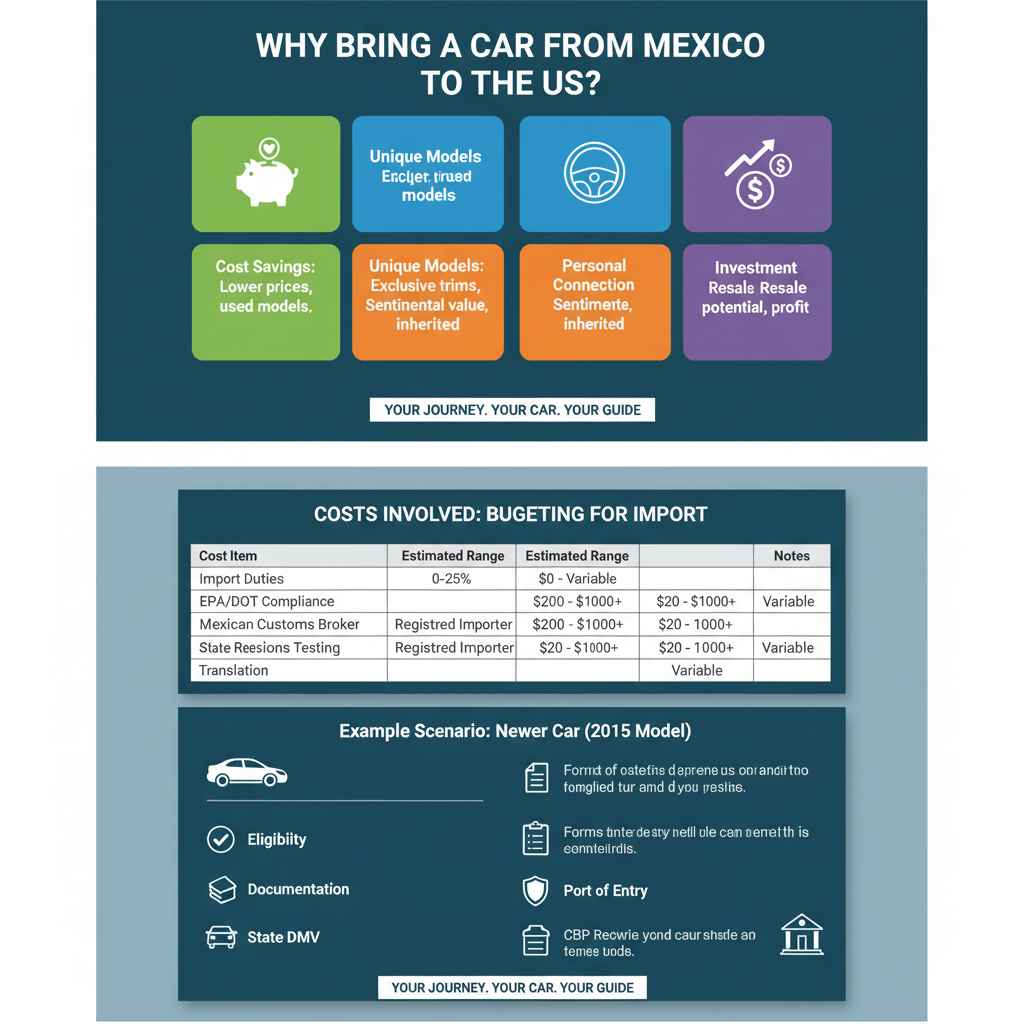
Why Bring a Car From Mexico to the US?
There are several reasons why someone might consider bringing a vehicle from Mexico into the United States. Understanding these motivations can help you clarify your own purposes and the importance of following the correct procedures.
- Cost Savings: Sometimes, specific models or used cars can be found at a lower price point in Mexico.
- Unique Models: Certain car models or trims might be available in Mexico that aren’t offered in the US market, appealing to collectors or enthusiasts.
- Personal Connection: You might have owned the car for a long time, perhaps inherited it or purchased it while living in Mexico, and want to continue driving it in the US.
- Investment: Some individuals see potential for profit by importing and reselling vehicles.
Permanent Import vs. a Temporary Visit: Which Process Applies to You?
Permanent import is the process for keeping, titling, and registering a Mexican-plated car in the US for good — it’s the six-step process this guide walks through below, and it requires the vehicle to conform (or be brought into conformance) with US EPA and DOT standards. A temporary visit is a completely different, much simpler situation: it applies to a nonresident (commonly a Mexican citizen on a tourist visa or Border Crossing Card) who is just driving their own Mexican-registered car into the US for a trip, not moving it here permanently.
Per CBP’s official guidance on importing a motor vehicle, nonresidents may bring a vehicle into the US duty-free for personal use for up to one year, provided it arrives with the owner and isn’t sold while here. A vehicle brought in this way does not need to meet US EPA or DOT standards during that visit — but it must be exported (or formally imported through the full process) before the one-year window closes. There is no exemption or extension of that export requirement.
| Question | Permanent Import | Temporary Visit |
|---|---|---|
| Who it’s for | Anyone keeping the car in the US long-term | Nonresidents visiting the US (e.g., on a tourist visa) |
| Must meet EPA/DOT standards? | Yes, unless exempt (21-year EPA / 25-year DOT rules) | No, not during the visit |
| Paperwork | EPA Form 3520-1, DOT Form HS-7, CBP entry, state title/registration | Valid Mexican registration, insurance, and driver’s license |
| Duty | 2.5% (cars) or 25% (trucks) of value, unless USMCA-exempt | Duty-free |
| Time limit | None — the car stays permanently once titled | Up to 1 year, then must be exported or formally imported |
| Can you sell it in the US? | Yes, once titled and registered | No — selling voids the exemption |
The rest of this guide focuses on the permanent import path, since that’s the process with real paperwork, deadlines, and costs attached.
Key Steps: Bringing Your Car From Mexico to the US
The process of bringing a car from Mexico to the US can seem a bit complex, but it’s essentially about meeting legal requirements and proving your vehicle is safe and compliant. We’ll break it down into manageable steps.
1. Determine Vehicle Eligibility
Not all cars can easily make the transition. The US has strict regulations, especially regarding emissions and safety standards. Newer cars are generally easier to import, while older ones might face more scrutiny.
Vehicle Standards:
- US Emission Standards: Vehicles must meet the Environmental Protection Agency’s (EPA) emission standards. Most cars manufactured for the US market and later models (typically 1997 or newer) will meet these standards. If your car was manufactured to meet Mexican standards, it might require modification or a specific certification to comply with US EPA standards. See EPA’s official page on importing vehicles for detailed information.
- US Safety Standards: Similarly, vehicles must meet the Department of Transportation’s (DOT) Federal Motor Vehicle Safety Standards (FMVSS). Most cars manufactured for export to the US market will already comply. If your vehicle was not originally intended for the US market, it may need modifications to pass DOT inspection. The National Highway Traffic Safety Administration (NHTSA) provides guidance on vehicle safety standards.
How Old Does a Car Have to Be to Skip Emissions and Safety Rules?
There are two separate age cutoffs here, and most guides (including earlier versions of this one) blur them into a single “25 years” rule. They’re not the same:
- NHTSA’s 25-year safety exemption: a vehicle is exempt from Federal Motor Vehicle Safety Standards once it is at least 25 years old, counted from the month and year of manufacture on the door-jamb compliance plate — not the model year printed on the title.
- EPA’s 21-year emissions exemption: per EPA’s own guidance, vehicles at least 21 years old can skip Clean Air Act emissions requirements — but only if the engine is still the original model and configuration. Swap in a newer engine and the exemption no longer applies.
In practice, this means a 22-year-old Mexican-market car can already be exempt from EPA rules while still needing DOT/NHTSA compliance work (or a Registered Importer) for another three years until it turns 25.
Nonconforming Vehicles:
If your vehicle is deemed nonconforming, you have a few options:
- Modification by a Registered Importer (RI): You can hire an RI who is authorized by NHTSA to modify your vehicle to meet US safety standards. This can be a costly process. You can find a list of RIs on the NHTSA website.
- Permanent Export/Re-importation: If the vehicle was originally manufactured for the US, exported, and is now being brought back, it might be eligible for an exemption, but proper documentation is required.
- Show or Display Exemption: For vehicles that are at least 25 years old and are of historical or cultural significance, there might be an exemption from some regulations.
2. Gather Essential Documentation
Having the correct paperwork is crucial. Missing even one document can cause significant delays at the border.
Required Documents:
- Proof of Ownership: This is usually your Mexican title (título de propiedad) or bill of sale (factura de compraventa). Ensure it’s in your name and properly signed over to you.
- Bill of Sale: If you purchased the car, a detailed bill of sale is necessary.
- Identification: A valid government-issued ID (like a passport or driver’s license) is required.
- Mexican Registration and Insurance: You’ll need proof that the vehicle is legally registered in Mexico and carries valid Mexican insurance.
- Customs Declaration Forms: These forms will be provided by US Customs and Border Protection (CBP) at the port of entry.
- EPA and DOT Forms: You’ll need to complete EPA Form 3520-1 (Declaration Form for Importation of Motor Vehicles and Motor Vehicle Engines Subject to Federal Air Pollution Regulations) and DOT Form HS-7 (Declaration for Importation of Motor Vehicles and Motor Vehicle Equipment Subject to Federal Motor Vehicle Safety, Bumper, and Theft Prevention Standards). You can find these forms on the respective agency websites, but they will also be available at the port of entry.
- Spanish Translation: If any of your documents are not in English, you may need certified translations.
Best Import Document Organizer Pick

High Road Glove Box Organizer and Registration Holder
Seven expanding file pockets keep the Mexican title, bill of sale, EPA/DOT forms, and CBP paperwork sorted and easy to hand over at the port of entry.
- Best for: Keeping a multi-form import file (title, EPA 3520-1, DOT HS-7) organized for the CBP inspection
- Why we picked it: Import paperwork gets checked document-by-document at the border — a labeled folder avoids fumbling for the right form
- Main drawback: Sized for a glove box, not a full binder of receipts if you’re also using a customs broker
Compare more document organizer options
 Option 1 Large Capacity Vehicle Glove Box Organizer
|
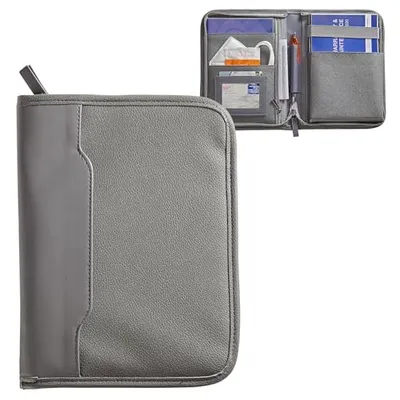
 Option 2 PlusXpres Compact Document Holder
|
 Option 3 High Road Owners Manual Case – Textured Faux Leather Glove Box Organizer
|
As an Amazon Associate we earn from qualifying purchases.
3. Understand Your Vehicle’s VIN and EPA/DOT Compliance
The Vehicle Identification Number (VIN) is a unique 17-character code that tells a lot about your car. For import purposes, it’s key to checking compliance.
VIN Check:
- Most vehicles manufactured for the US market from 1981 onwards have a 17-digit VIN that meets US standards.
- Vehicles manufactured for other markets might have different VIN formats or may not meet US EPA or DOT standards.
- If your vehicle doesn’t have a US-compliant VIN or if it’s unclear whether it meets standards, it may be considered a “non-conforming vehicle.”
“Vehicles entering the United States that do not conform with U.S. safety standards must be brought into compliance, exported, or destroyed. … Be skeptical of claims by a foreign dealer or other seller that a vehicle meets these standards or can readily be brought into compliance.”
4. Pre-Approval and Specific Ports of Entry
Not all border crossings are equipped to handle vehicle imports. It’s best to plan your entry.
Choosing a Port:
- Designated Ports: US Customs and Border Protection (CBP) has specific ports of entry designated for vehicle imports. You cannot simply drive your car across at any random crossing.
- Research: Before you travel, check the CBP page on importing a motor vehicle or contact them directly to identify which ports are authorized for vehicle importation and what their specific procedures are. Some popular ports known for vehicle processing include Otay Mesa (California), El Paso (Texas), and Nogales (Arizona).
- Pre-Approval: In some cases, especially for complex imports, it might be advisable to contact CBP or an experienced customs broker beforehand to ensure smooth processing.
5. The Crossing: Dealing with Customs
This is where you present your vehicle and all your documentation to CBP officials.
At the Border:
- Declare Your Intentions: Upon arrival at the designated port of entry, inform the CBP officer that you are importing a vehicle.
- Present Documents: Hand over all your gathered documentation (title, bill of sale, IDs, EPA/DOT forms, etc.). Be prepared to answer questions about the vehicle’s origin, ownership, and any modifications.
- Inspection: CBP officers will inspect the vehicle to verify its identity (matching VINs), condition, and compliance with US standards. The undercarriage must also be free of foreign soil per USDA requirements — have it steam-cleaned before you arrive.
- Pay Duties and Taxes: You will likely need to pay import duties and taxes on the vehicle (see the Costs Involved section below for current CBP rates).
- Bond Requirement: For certain types of imports, or if you cannot immediately prove compliance, CBP might require you to post a bond. This is a financial guarantee that ensures you will meet all import requirements.
6. Obtaining US Registration and Titling
Once your vehicle is cleared by CBP, you’re not quite done. You still need to make it legal on US roads.
State-Specific Process:
- State DMV: After CBP releases the vehicle, you’ll need to take it to your local Department of Motor Vehicles (DMV) or equivalent state agency in the US.
- Proof of Import: You’ll present your CBP-stamped import forms (like the EPA 3520-1 and DOT HS-7) and the original Mexican title to the DMV.
- VIN Inspection: Many states require a VIN inspection by law enforcement or an authorized inspector to ensure the VIN matches the paperwork and that the vehicle hasn’t been stolen or altered.
- Emissions Testing: Depending on the state and the vehicle’s age and origin, you may need to pass an emissions test. Some states have strict requirements, while others (especially newer models already meeting EPA standards) might be simpler.
- Pay State Fees: You will also pay state registration fees, sales tax (if applicable), and obtain US license plates and a title.
Important Considerations and Potential Challenges
While the steps above outline the general process, there are a few nuances to be aware of.
Vehicle Age and Compliance
The older the vehicle, the more complex the import can become — unless it clears the 21-year EPA or 25-year DOT exemptions covered above. Vehicles manufactured before 1997 might have more difficulty meeting current EPA emission standards without significant modification, and older safety features might not align with current FMVSS requirements. If you are considering an older or classic car, research its specific compliance needs thoroughly.
Modification Costs
If your vehicle doesn’t meet US standards, the cost to modify it can be substantial. This might include upgrades to the emissions control system, lighting, safety features, or even structural modifications. Always factor these potential costs into your decision before purchasing a vehicle in Mexico to import.
Customs Brokers and Importers
For a smoother process, especially if you are unfamiliar with import regulations or if your vehicle is particularly unique or doesn’t meet standard compliance, consider using a customs broker or a Registered Importer (RI).
- Customs Brokers: These professionals are licensed to handle customs clearance on your behalf. They can assist with paperwork, duty calculations, and navigating the CBP process.
- Registered Importers (RIs): For nonconforming vehicles, RIs are crucial. They can assess your vehicle, perform necessary modifications, and certify that it meets all US safety and emissions standards.
Using these services can add to the overall cost but can save you time, headaches, and potential pitfalls.
Temporary Importation (Short Visits)
If you’re a nonresident visiting the US rather than moving your car here for good, see the “Permanent Import vs. a Temporary Visit” comparison table above — the rules, paperwork, and time limits are entirely different from the permanent-import process this guide otherwise covers.
Costs Involved
It’s important to budget for the entire process. Here’s a breakdown of potential costs, using CBP’s published duty rates rather than a rough estimate:
| Cost Item | Estimated Range | Notes |
|---|---|---|
| Import Duty – Passenger Cars | 2.5% of purchase price | CBP’s published rate. May be duty-free under USMCA if the vehicle meets rules-of-origin requirements (generally built July 1, 2020 or later). |
| Import Duty – Trucks | 25% of purchase price | Same USMCA exemption logic applies if the vehicle qualifies. |
| Import Duty – Motorcycles | 2.4% or duty-free | Rate varies by engine displacement. |
| EPA/DOT Compliance Fees | Variable; could be $0 for compliant vehicles | Can be significant if modifications are needed. |
| Mexican Customs Broker Fees | $200 – $1,000+ | Depends on complexity and broker rates. |
| Registered Importer Fees | $2,000 – $10,000+ | For modifications to meet US standards. Highly variable. |
| US State Registration & Titling Fees | $50 – $500+ | Varies widely by state. Includes plates, title, registration card. |
| Emissions Testing Fees | $20 – $100+ | If required by the state. |
| VIN Inspection Fees | $20 – $100+ | If required by the state. |
| Translation Costs | Variable | If documents need certified translation. |
📊 Foreign-made passenger cars are dutiable at 2.5% of value, trucks at 25%, and motorcycles at 2.4% or duty-free — unless the vehicle qualifies for duty-free treatment under USMCA rules of origin. — Source: U.S. Customs and Border Protection, “Importing a Motor Vehicle,” 2026
On the USMCA point specifically: qualifying for duty-free treatment requires the vehicle to meet the trade agreement’s regional-value-content, labor-value-content, and steel/aluminum-sourcing rules, certified by the manufacturer. In practice, these requirements are strict enough that vehicles built before July 1, 2020 are unlikely to qualify — so don’t assume “made in North America” alone gets you duty-free entry. For context on which vehicles are actually built in Mexico in the first place, see our guide to what cars are made in Mexico.
Example Scenario: Bringing a Newer Car (2015 Model)
Let’s imagine you’re bringing a 2015 car that was originally manufactured for the US market, bought in Mexico.
- Eligibility: Being a 2015 model likely means it meets US EPA and DOT standards, especially if it has a US-compliant VIN.
- Documentation: You’ll need the Mexican title, bill of sale, ID, and proof of ownership.
- Forms: You’ll fill out EPA Form 3520-1 and DOT Form HS-7, declaring the vehicle is compliant.
- Port of Entry: Drive to a designated port like Otay Mesa. Declare your vehicle for import.
- CBP: Present all documents. CBP verifies the VIN and paperwork. If compliant, they will allow entry. You’ll pay the 2.5% import duty based on the car’s value (unless it qualifies for a USMCA or returning-goods exemption).
- State DMV: Take CBP release papers and Mexican title to your local DMV. Pass a VIN inspection and emissions test (if applicable in your state for a vehicle of this age). Pay registration and sales tax.
This scenario is generally straightforward, with main costs being the 2.5% import duty and state registration fees. For a broader cost breakdown across different vehicle types, see our guide on how much it costs to import a car.

If you’re researching this because you’re also considering towing rather than driving a vehicle across, the rules differ — see our guide on towing a car across the border for that specific process.
Frequently Asked Questions (FAQ)
How long does it take to import a car from Mexico?
The actual border crossing can take anywhere from a few hours to a full day, depending on the port’s traffic and how complete your paperwork is. After CBP releases the vehicle, getting a US title and registration varies by state but typically takes a few days to a couple of weeks.
Can I drive my car from Mexico to the US immediately after crossing?
No. You must complete the CBP importation process first and receive your stamped entry forms. You cannot keep driving on Mexican plates indefinitely once you’ve declared the vehicle for permanent import — you’ll need to get it titled and registered in your state promptly.
What’s the real age cutoff for skipping emissions and safety rules?
There are two separate cutoffs, not one. NHTSA exempts vehicles from Federal Motor Vehicle Safety Standards once they’re 25 years old, counted from the date of manufacture on the door-jamb plate — not the model year. The EPA’s emissions exemption kicks in at 21 years old, but only if the engine is still the original, unmodified engine. A 22-year-old car can already skip EPA rules but may still need DOT compliance work for another 3 years.
Do I need to speak Spanish to import a car?
Not strictly, but it helps. Your paperwork — the Mexican title, bill of sale, and registration — will likely be in Spanish, and non-English documents generally need a certified translation. CBP officers are used to working with international travelers either way.
Can I buy a car in Mexico and have it shipped to the US instead of driving it?
Yes. You can arrange shipping through a carrier, but the same CBP, EPA, and DOT paperwork still applies. You or a customs broker acting on your behalf will need to be present for the inspection and clearance at the port of entry.
What if the car I want to import isn’t sold in the US at all?
That’s a nonconforming vehicle, and it’s the hardest case. If a model was never built to US safety and emissions specs, you’ll generally need a NHTSA-Registered Importer to modify and certify it before EPA and DOT will release it for US registration.
How much duty will I actually pay to bring a car from Mexico?
Passenger cars are dutiable at 2.5% of the purchase price, trucks at 25%, and motorcycles at 2.4% or duty-free, per CBP’s published rates. A vehicle may qualify for duty-free treatment under USMCA if it meets the trade agreement’s regional-value-content rules — in practice, this mostly applies to vehicles built on or after July 1, 2020.
Conclusion
Bringing a car from Mexico to the US comes down to picking the right process for your situation: a full permanent import through CBP, EPA, and DOT if you’re keeping the car, or the much simpler one-year duty-free visit if you’re just a nonresident passing through. Understand which one applies, gather the documentation before you travel, confirm your vehicle’s real age-based exemption status, and check current requirements with CBP, EPA, and NHTSA directly, since rules and duty rates can change. When the paperwork doesn’t match the vehicle, a customs broker or Registered Importer is usually cheaper than a delay at the border.
Products related to this article
Sponsored / affiliate links. As an Amazon Associate I earn from qualifying purchases. I may earn additional commission from eligible campaigns.