Is Adaptive Cruise Control Standard on X3? 2026 Guide
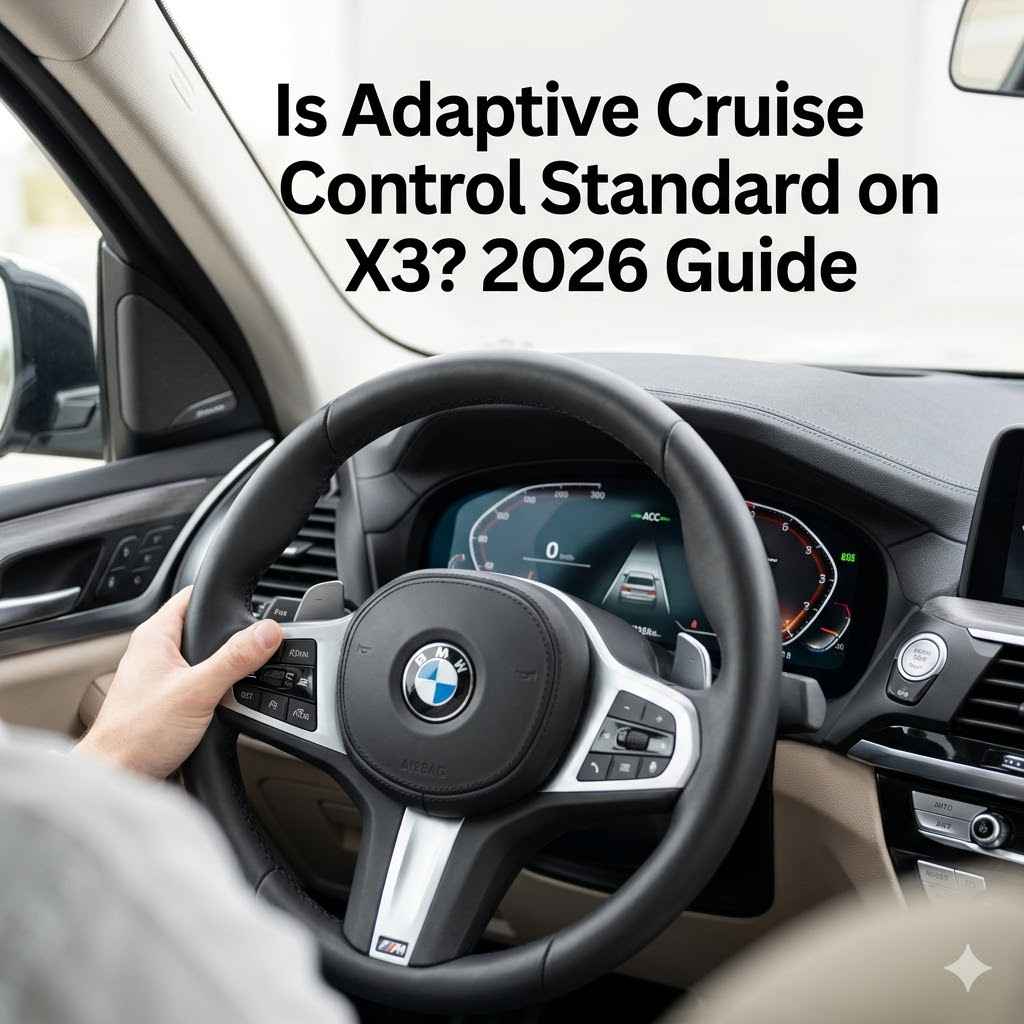
Many folks wonder, Is Adaptive Cruise Control Standard on X3? 2026 Guide. It can be tricky to figure out what features come with a car, especially when looking at new models.
This can make picking the right car feel a bit confusing. We’re here to make it super simple. We’ll walk you through it step-by-step so you know exactly what to expect.
Let’s get started and clear things up!
This section will look closely at what adaptive cruise control is and how it works. We’ll talk about why it’s a popular feature for many drivers. Understanding its basics helps us see why people ask if it’s standard on the BMW X3.
We’ll break down its functions and benefits in a way that’s easy to grasp.
What Is Adaptive Cruise Control
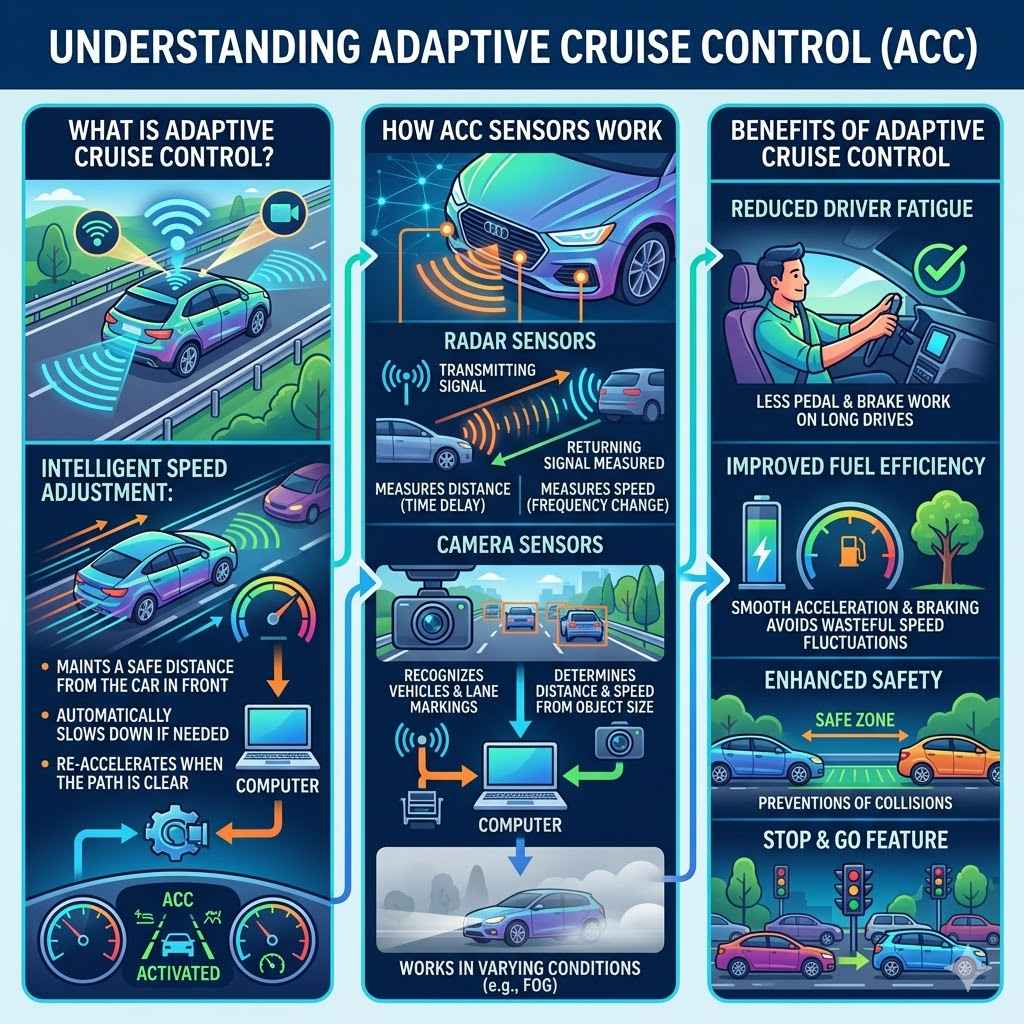
Adaptive cruise control, often called ACC, is a smart system that helps you drive on highways. It’s like regular cruise control but with an extra trick. It can automatically adjust your car’s speed to keep a safe distance from the car in front of you.
This means it can slow down if the car ahead slows down, and speed up again when the path is clear, all by itself.
This system uses sensors, often radar or cameras, mounted on the front of your car. These sensors watch the car ahead. They tell the car’s computer how far away that car is and how fast it’s going.
The computer then tells the engine to speed up or slow down to match the flow of traffic. It’s all about making highway driving smoother and less work for you. It helps reduce the stress of constantly having to brake and accelerate yourself.
How ACC Sensors Work
Sensors are the eyes of the adaptive cruise control system. They are usually placed behind the front grille or bumper. Radar sensors send out radio waves.
These waves bounce off objects ahead and return to the sensor. The system measures how long it takes for the waves to come back. This tells it the distance to the car in front.
It also measures how the speed of the returning waves changes, which tells it the relative speed of that car.
Camera sensors work similarly but use light. They capture images of the road ahead. Special software in the car’s computer analyzes these images to identify other vehicles.
It can also detect lane markings. By tracking the size and position of vehicles in the camera’s view, the system can figure out distance and speed. Many modern ACC systems use a combination of radar and cameras for better accuracy and reliability in different weather conditions.
Benefits Of Adaptive Cruise Control
One of the biggest pluses of ACC is reduced driver fatigue. On long drives, you don’t have to keep your foot on the gas pedal or tap the brakes as much. This makes the drive feel less tiring.
It can also improve fuel efficiency because the system aims for smooth acceleration and braking, avoiding sudden gas guzzling. This consistency helps the engine run more efficiently.
ACC also enhances safety. By maintaining a set following distance, it can help prevent rear-end collisions. This is especially helpful in stop-and-go traffic, where it can bring the car to a complete stop and then resume speed.
This feature, often called Stop & Go, adds another layer of convenience and safety. It acts as an extra pair of eyes, constantly monitoring the distance to the vehicle ahead.
Is Adaptive Cruise Control Standard on X3? The 2026 Guide
Now, let’s get to the main question many are asking: Is Adaptive Cruise Control Standard on X3? 2026 Guide. Finding out if a feature like ACC is standard or an option can be confusing.
Car manufacturers often bundle features differently across their model lineups and trim levels. What’s standard on one version might be an extra cost on another.
This section will aim to provide clarity on the standard equipment for the BMW X3, specifically addressing adaptive cruise control. We will look at how BMW typically packages its driver assistance features. This will help you understand whether ACC is likely to be included in the base price of a 2026 X3 or if it will require an optional package.
We’ll explore common packages and what they usually contain.
BMW X3 Trim Levels and Features
BMW offers its vehicles in various trim levels, each with different features and price points. The X3 is no different. The base models usually come with essential features for comfort and performance.
Higher trim levels or optional packages often add more advanced technology and luxury items.
Driver assistance features are frequently part of optional packages. These packages are designed to offer a collection of advanced safety and convenience systems together. For instance, a “Driving Assistance Professional Package” might include ACC along with other systems like lane keeping assist and blind-spot monitoring.
It is rare for advanced systems like ACC to be standard on base models across most manufacturers, and BMW often follows this trend.
Optional Packages for the X3
To get adaptive cruise control on a BMW X3, it’s often bundled within a specific option package. These packages can vary from year to year, but common themes exist. BMW’s “Driving Assistance Package” or “Driving Assistance Professional Package” are typically where you’ll find ACC.
These packages are curated to offer a comprehensive suite of safety and convenience technologies. For example, the Driving Assistance Professional Package might include features such as extended traffic jam assistant, steering and lane keeping assist, and emergency stop assist. Therefore, when looking to purchase an X3, verifying the exact content of these packages for the specific model year is crucial.
What to Expect for the 2026 Model Year
While official specifications for the 2026 BMW X3 are often released closer to its production date, we can make informed predictions based on BMW’s recent trends. BMW has been increasingly standardizing certain basic safety features across its lineup. However, more advanced driver assistance systems like full adaptive cruise control with Stop & Go functionality often remain optional or tied to specific packages.
It is highly probable that for the 2026 X3, adaptive cruise control will not be standard on the base models. Instead, it will likely be a key component of an optional driver assistance package. To be certain, always check the official BMW configurator or speak with a dealership when the 2026 models become available.
Comparing ACC to Other Driver Assistance Systems
Adaptive cruise control is just one piece of the puzzle when it comes to modern car technology. Many cars now offer a suite of driver assistance systems that work together to make driving safer and easier. It’s helpful to know how ACC fits in with these other features.
We’ll explore some of these related systems and explain how they complement ACC. This will give you a clearer picture of the overall technology available in vehicles like the BMW X3. Understanding these differences helps you make informed decisions about which features are most important to you.
Lane Keeping Assist and Lane Centering
Lane keeping assist (LKA) is a system that helps keep your car centered in its lane. It uses cameras to detect lane markings on the road. If the system senses the car drifting out of its lane without the turn signal being used, it can gently steer the car back into the lane.
Some advanced systems can even alert the driver with a vibration in the steering wheel or an audible warning.
Lane centering is a more advanced version of LKA. Instead of just preventing the car from drifting out of the lane, lane centering actively keeps the vehicle in the middle of the lane. When paired with adaptive cruise control, this creates a semi-autonomous driving experience.
The car will maintain a set speed and distance from the vehicle ahead while also staying centered in the lane. This is part of what’s often called “Level 2” autonomous driving, where the driver is still responsible but the car handles many tasks.
Blind Spot Monitoring
Blind spot monitoring (BSM) is a system designed to alert you when a vehicle is in your blind spot. This is the area next to and slightly behind your car that you can’t see in your mirrors. BSM uses sensors, usually in the rear bumper, to detect vehicles in these zones.
When a vehicle is detected, a warning light typically illuminates in the side mirror or on the dashboard. If you activate your turn signal while a car is in the blind spot, the warning light usually flashes to alert you more strongly.
BSM is an excellent complement to adaptive cruise control. While ACC manages your speed and distance to the front, BSM watches your sides. This provides a more comprehensive safety net, especially when changing lanes.
It helps prevent common accidents that occur when drivers don’t see a car in their blind spot. Together, ACC and BSM significantly reduce driver workload and enhance overall safety.
Automatic Emergency Braking
Automatic emergency braking (AEB) is a critical safety feature that can help prevent or mitigate the severity of a frontal collision. Like ACC, AEB systems use forward-facing sensors, such as radar or cameras. These sensors continuously monitor the distance and speed of vehicles and other obstacles ahead.
If the system detects an imminent collision and the driver doesn’t respond by braking, AEB will automatically apply the brakes. This can be done in stages. First, it might issue a warning to the driver.
If the driver still doesn’t react, it will then apply the brakes forcefully to avoid or lessen the impact. AEB is a vital system that works independently of ACC but shares the same sensor technology. It’s a direct safety intervention that aims to prevent accidents altogether.
Real-Life Examples and Scenarios
Let’s look at how adaptive cruise control and related systems actually help drivers in everyday situations. These real-world examples show the practical benefits of these advanced technologies.
Scenario 1 Highway Driving
Imagine you are driving on a busy highway on your way to visit family. You set your adaptive cruise control to 70 mph with a two-second following distance. Ahead, a slower car merges into your lane.
Your X3 automatically detects the slower car and gently reduces its speed to match, maintaining that two-second gap. You don’t have to lift your foot off the floor or touch the brakes. This allows you to relax and enjoy the ride.
Suddenly, another car cuts in front of the car you are following. Your ACC system reacts instantly, slowing your vehicle further to keep the safe distance. Meanwhile, you notice your blind spot monitor lights up because a car is in your right lane.
You decide not to change lanes. This scenario shows how ACC, coupled with blind spot monitoring, makes highway driving less stressful and safer by handling speed adjustments and alerting you to potential hazards.
Scenario 2 Stop-and-Go Traffic
It’s rush hour, and you are stuck in slow-moving traffic on your commute home. With your adaptive cruise control’s “Stop & Go” function activated, your X3 will now bring you to a complete stop behind the car in front. You can take your foot completely off the brake pedal.
After a few moments, the car ahead starts to move. Your X3 will then automatically resume its previous speed, or creep forward at a low speed if it’s still very congested. This feature is a lifesaver in gridlock.
It significantly reduces the constant stop-and-start effort, preventing leg fatigue and the mental strain of constantly monitoring brake lights. It makes a frustrating situation much more manageable.
Scenario 3 Unexpected Braking
You are driving on a two-lane road at moderate speed, and the car in front of you suddenly brakes hard. If your adaptive cruise control is active, its sensors will detect the rapid deceleration of the vehicle ahead. The system will immediately apply the brakes to your X3 to match the slowdown and maintain the set following distance.
If you also have automatic emergency braking, and the system determines a collision is unavoidable, it will engage the brakes with maximum force to prevent or minimize the impact.
This quick reaction from ACC and AEB can often prevent a collision entirely, especially at moderate speeds. It highlights how these systems are designed to react faster than a human driver might in certain emergency situations. The combination of adaptive cruise control and automatic emergency braking provides a crucial layer of safety in unexpected driving events.
Statistics on Driver Assistance Systems
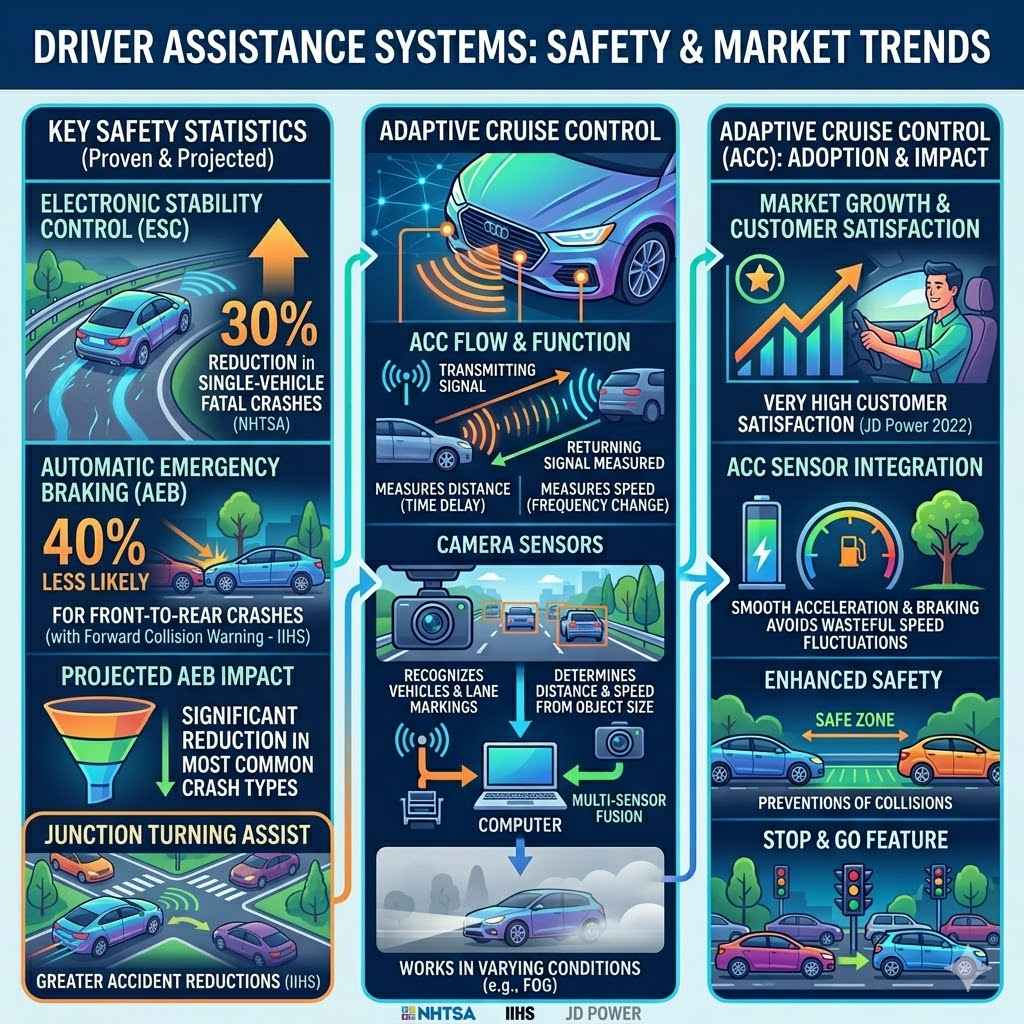
Driver assistance systems are proven to reduce accidents. According to the National Highway Traffic Safety Administration (NHTSA), Electronic Stability Control (ESC), which is now standard on all new vehicles, has been credited with reducing single-vehicle fatal crashes by about 30%. Systems like AEB are projected to significantly reduce the number of frontal crashes, which are the most common type of accident.
Research from the Insurance Institute for Highway Safety (IIHS) has shown that vehicles equipped with automatic emergency braking systems with forward collision warning are 40% less likely to be involved in a front-to-rear crash. Furthermore, systems that include junction turning, where the car can also detect oncoming traffic when turning left, show even greater reductions in crashes. These statistics underscore the real-world impact of these technologies on road safety.
Market Adoption of ACC
The adoption of adaptive cruise control has been growing steadily. Many new car buyers now expect this feature. A 2022 study by JD Power found that customer satisfaction with driver assistance features like adaptive cruise control is very high.
Owners reported feeling safer and more relaxed when using these systems.
As more manufacturers equip their vehicles with ACC as standard or as part of affordable option packages, its presence in the market continues to expand. This trend indicates a strong consumer demand for these technologies. It also suggests that automakers recognize their value in both safety and driver convenience.
Final Thoughts
So, to answer the question, Is Adaptive Cruise Control Standard on X3? 2026 Guide, it’s most likely an optional feature. You’ll likely find it within a driver assistance package for the 2026 BMW X3.
Keep an eye on official BMW releases for exact details. Checking package contents when buying will ensure you get this helpful technology.