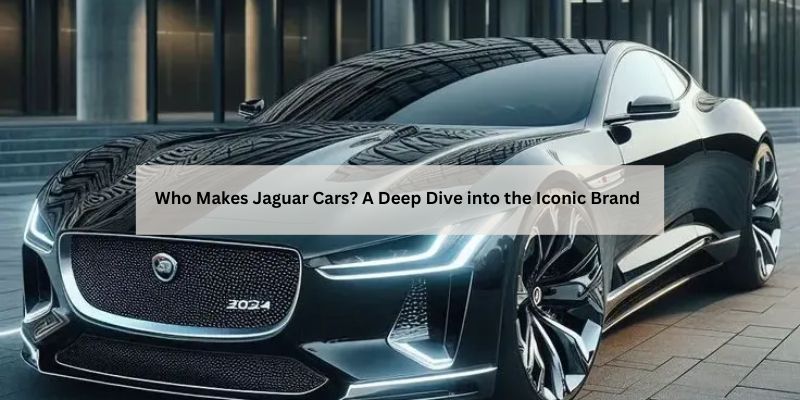
Who Makes Jaguar Cars? Ownership, Factories & 2026 Comeback
Hey there! So, you’re curious about who makes Jaguar cars? I get it — those sleek, stylish vehicles with the iconic leaping cat logo always catch the eye. Here’s the short answer: Jaguar Cars is owned by Tata Motors (an Indian company) through Jaguar Land Rover, but as of 2026, Jaguar isn’t currently building or selling any new cars — it paused its entire lineup in late 2024 to relaunch as an all-electric luxury brand, with its first new model, the Type 01, arriving in showrooms in 2027.
Quick Answer
Jaguar cars are made by Jaguar Land Rover (JLR), a British company owned by Tata Motors of India since 2008. Jaguar paused production and sales of its entire model lineup (XE, XF, F-PACE, F-TYPE) at the end of 2024 to relaunch as an all-electric-only luxury brand. Its first new car since the pause, the Type 01, debuts in late 2026 with deliveries starting in early 2027. Most Jaguars are engineered and built in the UK, at plants in Castle Bromwich and Solihull.
Is Jaguar Still Making Cars? The 2024-2026 Production Pause Explained
If you’ve searched “who makes Jaguar cars now” and found conflicting answers, here’s what actually happened. At the end of 2024, Jaguar stopped production and sales of its entire existing lineup — the XE, XF, F-PACE, and F-TYPE — as part of a planned relaunch into an all-electric, ultra-luxury brand. This wasn’t a bankruptcy or shutdown; it was a deliberate “gap year” strategy by parent company Tata Motors to reposition Jaguar above brands like BMW and Mercedes rather than compete with them directly.
The rebrand launch — a campaign called “Copy Nothing” that dropped Jaguar’s leaping cat badge from marketing and showed no actual cars — was widely criticized, and sales data reflected the disruption: Jaguar’s European sales fell as much as 97.5% year-over-year during the gap, with some months seeing fewer than 50 units sold across the continent. Dealers had little to sell throughout 2025 while the brand retooled for its EV-only future.
The first product of that relaunch is the Jaguar Type 01, a four-door electric GT unveiled in late 2026. It uses a tri-motor setup producing roughly 1,000 horsepower from a 120kWh battery, targets over 400 miles of range, and is expected to start around $130,000-$150,000 — positioning Jaguar firmly as an ultra-premium electric brand rather than the mainstream luxury marque it was for decades. Orders open following the reveal, with customer deliveries expected in early 2027.
The Origins of Jaguar: A British Classic
Jaguar’s story starts way back in 1922 in Blackpool, England. Two guys, William Lyons and William Walmsley, founded the Swallow Sidecar Company to make motorcycle sidecars. Those sidecars were super popular, and soon the company started building car bodies. By 1933, they renamed it S.S. Cars Limited and began producing their own vehicles.
In 1935, they launched the SS Jaguar, a sporty sedan that turned heads. After World War II, the name changed to Jaguar Cars Limited in 1945 to avoid any connection to the Nazi “SS” initials. That’s when Jaguar really started to shine as a luxury brand, known for its elegant designs and powerful performance.
Who Owns Jaguar Today?
So, who’s behind Jaguar now? Since 2008, Jaguar has been owned by Tata Motors, an Indian automotive giant based in Mumbai. Tata Motors bought Jaguar and Land Rover from Ford for $2.3 billion, and in 2013, they merged the two brands into Jaguar Land Rover Limited (JLR). Tata Motors is part of the Tata Group, a massive conglomerate that’s been around since 1868, doing everything from steel to hotels.
Despite being owned by an Indian company, Jaguar’s engineering and design headquarters stay in the UK, in Coventry and Gaydon. Tata’s ownership has given Jaguar the financial backing to fund the current — and expensive — bet on becoming an all-electric ultra-luxury brand.
Where Are Jaguar Cars Made?
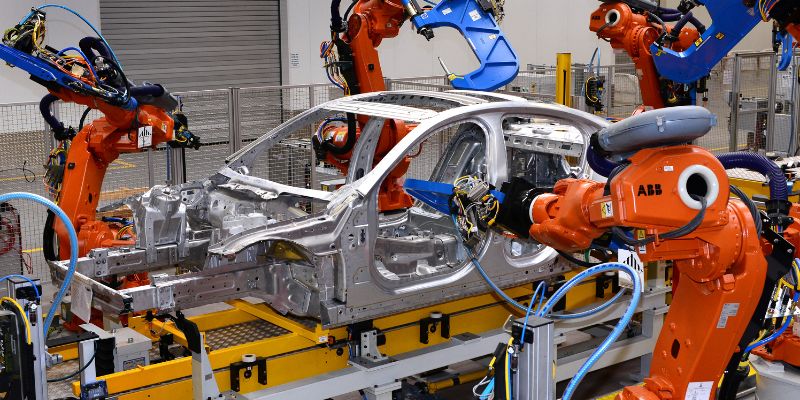
Jaguar’s manufacturing base remains in the United Kingdom. The main assembly plant is in Castle Bromwich, near Birmingham, England, where past models like the XE, XF, XJ, and F-TYPE were built. The Solihull plant assembled SUVs like the F-PACE, and a plant in Wolverhampton makes engines.
Jaguar also has a global manufacturing footprint through JLR: a factory in Graz, Austria (run by Magna Steyr) built the E-PACE and I-PACE, and Tata is expanding capacity further with a new JLR assembly plant in Chennai, India, which began operations in February 2026 with a planned annual capacity of up to 250,000 vehicles across the JLR portfolio.
Here’s a quick look at Jaguar and JLR’s main manufacturing sites:
| Location | What’s Made There |
|---|---|
| Castle Bromwich, UK | Former XE, XF, XJ, F-TYPE production |
| Solihull, UK | F-PACE (past), future Type 01 production planned |
| Wolverhampton, UK | Engines |
| Graz, Austria | E-PACE, I-PACE (Magna Steyr) |
| Chennai, India | New JLR assembly plant, operational Feb 2026 |
The Evolution of Jaguar’s Ownership
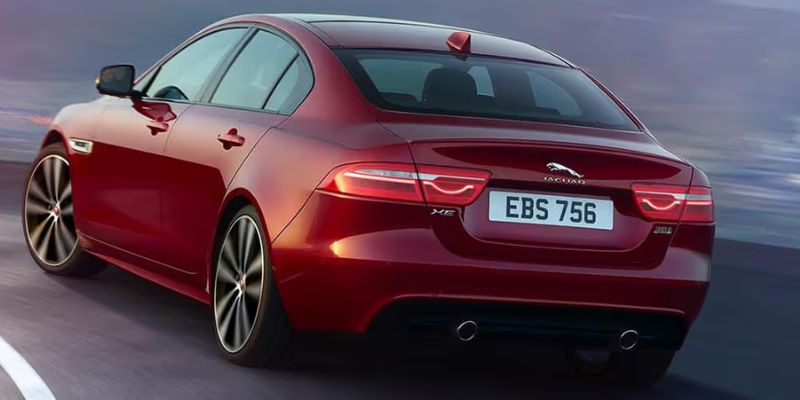
Jaguar’s ownership history is quite a ride. After starting as the Swallow Sidecar Company, it became S.S. Cars in 1933 and then Jaguar Cars Limited in 1945. In 1965, Jaguar joined British Motor Holdings Limited, which merged with Leyland Motor Corporation to form British Leyland in 1968. By 1975, financial troubles led to British Leyland being nationalized by the UK government.
In 1984, Jaguar broke free and became its own company again, thanks to the efforts of managing director John Egan. Ford Motor Company bought Jaguar in 1989, bringing in cash and tech to boost quality. Ford also picked up Land Rover in 2000, pairing the two brands. But by 2008, Ford sold both to Tata Motors, which has owned Jaguar ever since — through its most successful SUV years and now through its riskiest reinvention as an EV-only brand.
Jaguar’s Design and Engineering Philosophy
What makes a Jaguar a Jaguar? Historically it was “Grace, Space, Pace,” a slogan reflecting William Lyons’ original vision of cars that were beautiful, roomy, and fast — seen in models like the XK120, which hit 120 mph in 1948. Jaguar’s design team, based in Coventry and Gaydon, UK, is now applying that same design confidence to a completely different kind of car: an all-electric GT built to compete with the most expensive luxury EVs on the market, rather than compact executive sedans.
Jaguar’s Iconic Models Through the Years
Jaguar’s lineup has some real legends, even though none of them are currently in production:
- XK120 (1948): This sports car was the fastest production car at the time, hitting 133 mph.
- E-Type (1961): Often called the most beautiful car ever, the E-Type combined stunning looks with Le Mans-winning performance.
- XJ (1968): A luxury sedan that became the choice for UK prime ministers.
- I-PACE (2018): Jaguar’s first electric vehicle, discontinued in 2024 as part of the brand-wide production pause.
- F-PACE (2016): Jaguar’s first SUV and, before the 2024 pause, its best-selling model.
- Type 01 (2026): Jaguar’s first car since the relaunch — an ultra-luxury electric GT with roughly 1,000 horsepower.
How Tata Motors Shapes Jaguar’s Future
Tata Motors has committed to Jaguar being fully electric going forward, and the Type 01 is the proof point. Tata’s investment has also boosted research and development through a National Automotive Innovation Campus in Warwick, UK. Jaguar’s Formula E racing program continues to feed technology into road cars, and Tata’s global manufacturing expansion — including the new Chennai plant — means JLR brands are now built and sold across a wider footprint than ever, even while Jaguar itself sat out most new-car sales in 2025.
Why Jaguar Stays a British Icon
Even with Tata’s ownership and the current EV-only pivot, Jaguar’s headquarters remain in Coventry, about two hours north of London. The design centers in Whitley and Gaydon are still developing Jaguar’s future models. Jaguar’s racing history, including winning Le Mans five times in the 1950s, adds to its British legacy — a legacy the brand is now betting will carry over into an entirely new, all-electric identity.
Challenges and Controversies
Jaguar hasn’t always had a smooth ride. The British Leyland era in the 1970s brought quality issues and financial struggles. Ford’s ownership in the 1990s helped, but some purists worried Jaguar lost its soul. The 2024-2025 rebrand has been the most controversial chapter yet: dropping the leaping cat logo from marketing, going a full year with essentially no new car sales, and a launch campaign that showed no cars at all drew sharp criticism from longtime fans and the automotive press alike. Whether the strategy pays off depends heavily on how the market receives the Type 01 at its 2026 debut.
Frequently Asked Questions
Who owns Jaguar cars?
Jaguar is owned by Tata Motors, an Indian company that bought Jaguar and Land Rover from Ford in 2008 for $2.3 billion. They formed Jaguar Land Rover Limited (JLR) in 2013.
Is Jaguar still making cars in 2026?
Jaguar paused production and sales of its entire lineup at the end of 2024 to relaunch as an all-electric ultra-luxury brand. The company’s first new car since the pause, the Type 01, was unveiled in late 2026, with customer deliveries expected to begin in early 2027.
Why did Jaguar stop making cars?
Jaguar and parent company Tata Motors made a deliberate decision to discontinue the existing lineup (XE, XF, F-PACE, F-TYPE, I-PACE) and reposition the brand as an all-electric, ultra-premium marque rather than a mainstream luxury competitor to BMW and Mercedes. The “gap year” gave Jaguar time to retool before launching the Type 01.
Where are Jaguar cars made?
Most Jaguars have historically been made in the UK, at plants in Castle Bromwich and Solihull, with engines from Wolverhampton. Some JLR models are also built in Austria (Magna Steyr) and, starting February 2026, at a new JLR plant in Chennai, India.
Is Jaguar still a British brand?
Yes. Jaguar’s design, engineering, and headquarters remain in the UK (Coventry and Gaydon), even though the company is owned by India’s Tata Motors.
What is the Jaguar Type 01?
The Type 01 is Jaguar’s first new car since its 2024-2025 production pause — a four-door electric GT with a tri-motor setup producing roughly 1,000 horsepower, a 120kWh battery, over 400 miles of range, and an expected starting price around $130,000-$150,000.
Why did Tata Motors buy Jaguar?
Tata Motors bought Jaguar and Land Rover to expand its global presence and add luxury brands to its portfolio. The $2.3 billion deal closed in 2008.
Conclusion
Jaguar cars are made by Jaguar Land Rover, a British company owned by Tata Motors since 2008. What’s changed recently is significant: Jaguar paused its entire model lineup at the end of 2024 and spent 2025 retooling as an all-electric, ultra-luxury brand, with the Type 01 marking its return in 2026. From its roots in Blackpool, England, to its high-tech factories in the UK, Austria, and now India, Jaguar’s ownership has stayed remarkably stable even as its product lineup has undergone the biggest transformation in its 100-year history.
For more on who’s behind other major automakers, see our guides on who owns BMW and what car companies Fiat owns.
Products related to this article
Sponsored / affiliate links. As an Amazon Associate I earn from qualifying purchases. I may earn additional commission from eligible campaigns.