Are Car Washes Bad for Your Car? What Really Happens to Your Paint
Car washes are not inherently bad for your car — but the type of wash matters. A touchless automatic wash relies on stronger detergents instead of brushes, a brush-style tunnel wash can leave fine swirl marks over time, and a careless hand wash can do just as much damage as either one.
Every car needs regular washing. Dirt, road salt, tree sap, and bird droppings all sit on the clear coat and can etch into the paint if they’re left there long enough. The real question isn’t whether to wash your car, but which washing method is actually gentle on it. Automatic tunnels, touchless washes, and DIY hand washing each carry a different set of trade-offs for your paint, your car’s electronics, and the environment. Here’s what actually happens to your car at each type of wash, and how to keep the damage to a minimum.
Impact on Paint and Finish
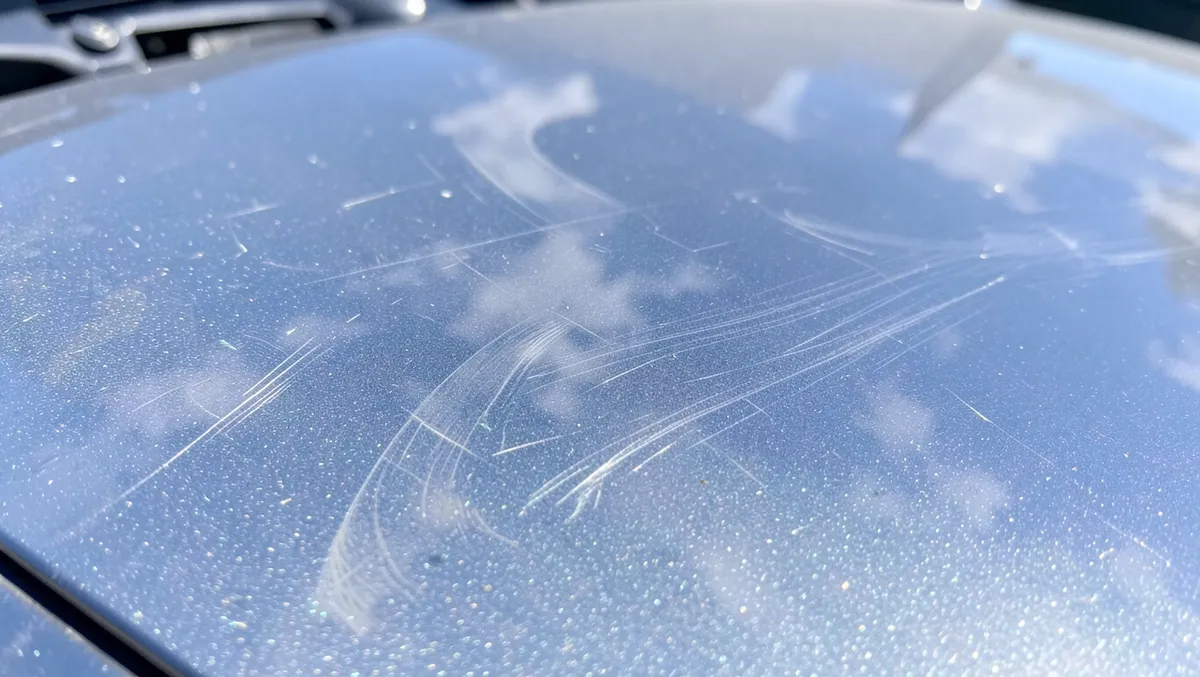
Swirl marks and fine scratches are the most common complaint about car washes, and they almost always come from brush-style automatic tunnels. The felt or cloth strips in these machines pick up grit from every car that goes through before yours, and that trapped grit acts like sandpaper as the brushes spin against your clear coat. Under direct sun or a garage light, the result shows up as a web of tiny circular scratches, especially on darker paint colors where they’re easiest to see.
Chemical stripping is the other real risk, and it applies most to touchless washes. Because touchless systems have no brushes to physically lift dirt, they rely on higher-strength alkaline or acidic detergents to break grime loose using chemistry instead of friction. Used occasionally, those detergents are fine. Used every week, they can gradually strip wax, sealant, or ceramic coating faster than a gentler soap-and-mitt wash would. Reading the soap label (or asking the wash operator what they use) tells you more about paint risk than whether the wash has brushes at all.
PH-NEUTRAL SOAP PICK
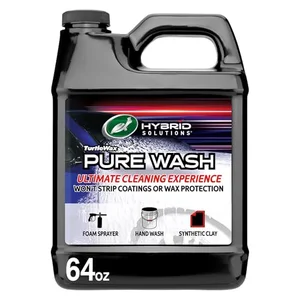 |
Turtle Wax Pure Wash Foaming pH-Neutral Car Soap (64 oz) – $20.00 The section above explains why pH-neutral soap matters more than whether a wash has brushes – this is a soap built specifically to avoid stripping wax, sealant, or ceramic coating.
|
Effects on Car Components
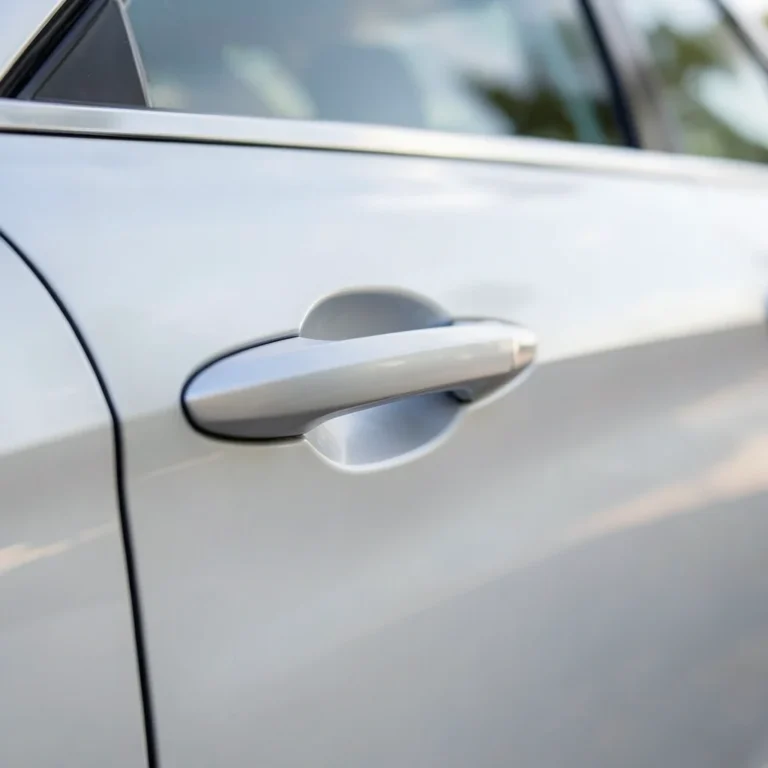
Water and soap working their way into small body seams and door edges is a slow, ongoing source of corrosion, especially once it reaches bare metal or a spot where factory paint has already chipped. Road salt makes this worse in winter climates, since salt residue left in wheel wells and along rocker panels holds moisture against the metal long after the car is dry on the outside. A quick check of your wheel wells and door bottoms every month or two catches early rust before it spreads.
Modern cars carry sensors and electronics in places a 1990s car never had them – parking-assist sensors in the bumpers, cameras near the grille and mirrors, and control modules tucked behind wheel liners. These are engineered to handle normal rain and splashing, and manufacturers design the seals around them for exactly that. High-pressure wands used incorrectly – held too close, or aimed directly at a seam or connector instead of across the panel – are the more likely way water gets somewhere it shouldn’t. If your owner’s manual calls out specific areas to avoid with a pressure washer, that’s worth following at any wash, automatic or DIY.
Water Use and the Environment
It’s a common assumption that professional car washes waste more water than washing at home. The opposite is generally true. According to the International Carwash Association’s 2018 water-use study, washing a car at home with a running hose typically uses 80 to 140 gallons of water, while a commercial automatic wash uses under 45 gallons per vehicle – and washes with a water-reclamation system can bring that down to as little as 9 to 15 gallons of fresh water per car. If minimizing water use matters to you, a professional wash with a visible reclaim system is usually the better choice, not the worse one.
The chemical side is a separate concern. Washing a car in your driveway sends soapy runoff straight into the storm drain, which in most cities flows untreated into a local river, lake, or bay – carrying oil residue, brake dust, and detergent with it. Commercial car washes are required to drain into the sanitary sewer system, where the wastewater actually gets treated before it reaches a waterway. Choosing a biodegradable, phosphate-free soap for at-home washing closes most of that gap if you prefer to wash in your own driveway.
Automatic, Touchless, or Hand Wash: Which Is Actually Gentlest?
Brush-style automatic washes are fast and cheap, but they’re the format most likely to leave swirl marks, since every car’s leftover grit passes through the same cloth strips. Newer tunnels use foam-cloth or “soft touch” material that’s gentler than old-style bristle brushes, but the risk of trapped grit never fully goes away.
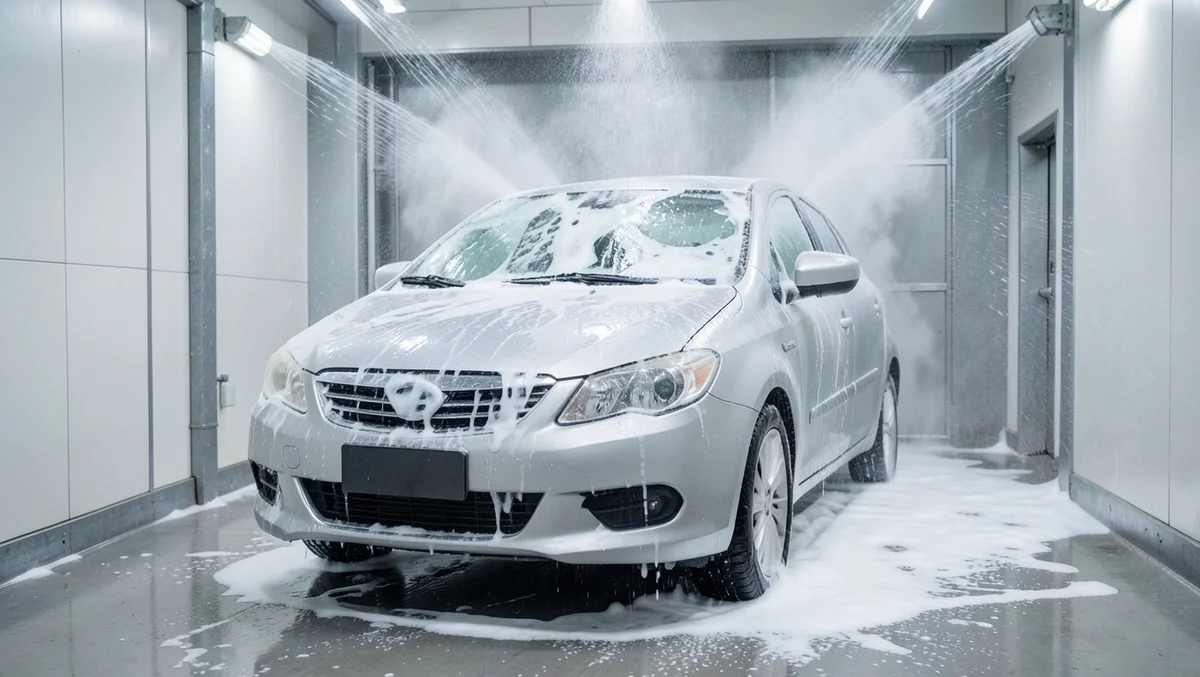
Touchless automatic washes skip the physical contact entirely, using high-pressure water and stronger detergent chemistry instead. That removes the scratch risk from brushes, but it can be harder on wax and sealant with frequent use, and it’s generally less effective at fully removing baked-on bug residue or heavy grime without a pre-soak.
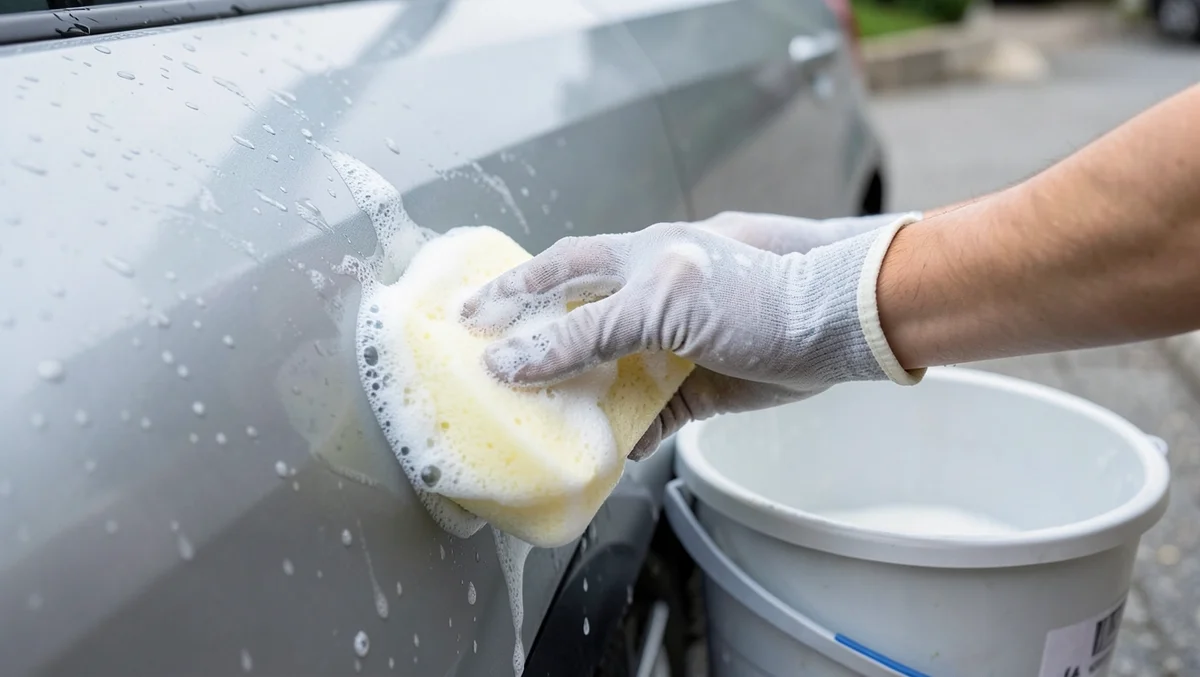
Hand washing gives you the most control: a soft microfiber mitt, a two-bucket rinse method, and a pH-neutral soap will out-perform either automated option for paint safety, because you can see and avoid problem spots as you go. The trade-off is time, water use per session, and the fact that a rushed or careless hand wash (a dirty mitt dragged over grit, or a cheap dish soap that strips wax) can undo that advantage just as easily.
How to Wash Your Car Without Damaging It
Whichever method you choose, a few habits cut the risk of damage no matter where you wash:
- Wash in the shade or on an overcast day – soap that dries on hot paint before you can rinse it off leaves water spots and can bake in residue.
- Use a pH-neutral car soap, not dish soap. Dish soap is formulated to strip grease and will strip wax and sealant right along with it.
- Rinse the car first to knock loose grit off the surface before a mitt or sponge ever touches the paint.
- Use the two-bucket method: one bucket of soapy water, one bucket of clean rinse water for the mitt, so you’re not dragging picked-up grit back onto the panel.
- Dry with a clean microfiber towel rather than letting the car air-dry, which is what causes most water spotting.
- Check door seams, wheel wells, and mirror housings for trapped water or early rust after every wash, especially in winter.
Waterless and Low-Water Alternatives
If you want to keep your car clean between full washes without adding to water use, a waterless wash spray is a legitimate option for a light layer of dust: spray it on, wipe with a clean microfiber towel, and buff dry. It’s not a substitute for a real wash once mud, salt, or heavy grime builds up, since wiping abrasive dirt with too little lubrication is exactly how you create swirl marks. Steam cleaning is a lower-water professional option that also sanitizes interior surfaces, though it’s less widely available and typically costs more per visit than a standard wash.
Does Car Wash Damage Affect Resale Value?
A clean car photographs and shows better, and buyers do notice obvious swirl marks or a dull, oxidized finish during an in-person inspection or test drive. In practice, the swirl marks that come from years of brush-tunnel washes are usually a cosmetic issue a detailer can polish out for a moderate cost, not structural damage that shows up on a vehicle history report or a mechanical inspection. Keeping the car clean consistently – and washing it in a way that doesn’t add fresh scratches every time – matters more for resale than any single wash choice.
Frequently Asked Questions
Is Taking Your Car Through a Carwash a Bad Idea?
No, not on its own. A well-maintained automatic or touchless car wash is safe for the vast majority of cars. The risk comes from a specific wash’s condition – worn or dirty brushes, poorly diluted chemicals, or high-pressure jets aimed carelessly – not from the concept of a car wash itself. Choosing a wash that keeps its equipment clean matters more than choosing automatic versus touchless versus hand washing.
Do Automatic Car Washes Damage Paint?
Brush-style automatic washes can cause fine swirl marks over repeated visits, since the cloth or felt strips carry grit from car to car. The damage is usually cosmetic and shows up as light circular scratches under direct light, especially on dark paint. It builds up gradually rather than appearing after a single wash.
Is a Touchless Car Wash Actually Safer Than a Brush Wash?
Touchless washes remove the scratch risk that comes from physical brushes, but they rely on stronger detergent chemistry to do the same cleaning job without contact. Used every week, those chemicals can strip wax or sealant faster than a soap-and-mitt wash would. For scratch risk alone, touchless is safer; for protecting a fresh wax or ceramic coating, an occasional gentle hand wash is usually the better call.
Do Car Washes Use a Lot of Water?
Less than most people assume, and typically less than washing at home. A commercial automatic wash uses under 45 gallons of water per car, and washes with water-reclamation systems can bring that down to 9–15 gallons of fresh water per vehicle, according to the International Carwash Association. Washing at home with a running hose commonly uses 80–140 gallons.
Can a Car Wash Damage Sensors or Electronics?
It’s uncommon at a properly operated wash. Manufacturers seal parking sensors, cameras, and control modules to handle normal rain and splashing. Problems are more likely to come from a high-pressure wand held too close to a seam or connector than from a standard automatic wash cycle. Check your owner’s manual for any areas it specifically says to avoid with a pressure washer.
How Often Should You Wash Your Car?
Every one to two weeks under normal conditions is a common baseline, with more frequent washing in winter climates with road salt, coastal areas with salt air, or heavy pollen season, since all three accelerate corrosion or etch into paint if left sitting on the surface.
Conclusion
Car washes aren’t bad for your car by default – the wash method, the soap, and how well the equipment is maintained determine whether you come out with a clean car or a scratched one. Brush tunnels carry the highest swirl-mark risk, touchless washes trade that for stronger chemicals, and hand washing gives you the most control if you do it with the right technique and a pH-neutral soap.
Whichever way you wash, rinsing first, using two buckets, and drying with a clean microfiber towel will do more to protect your paint long-term than which type of wash you pick.
Products related to this article
Sponsored / affiliate links. As an Amazon Associate I earn from qualifying purchases. I may earn additional commission from eligible campaigns.