Nikola Tesla Vs Tesla Cars A Simple Guide
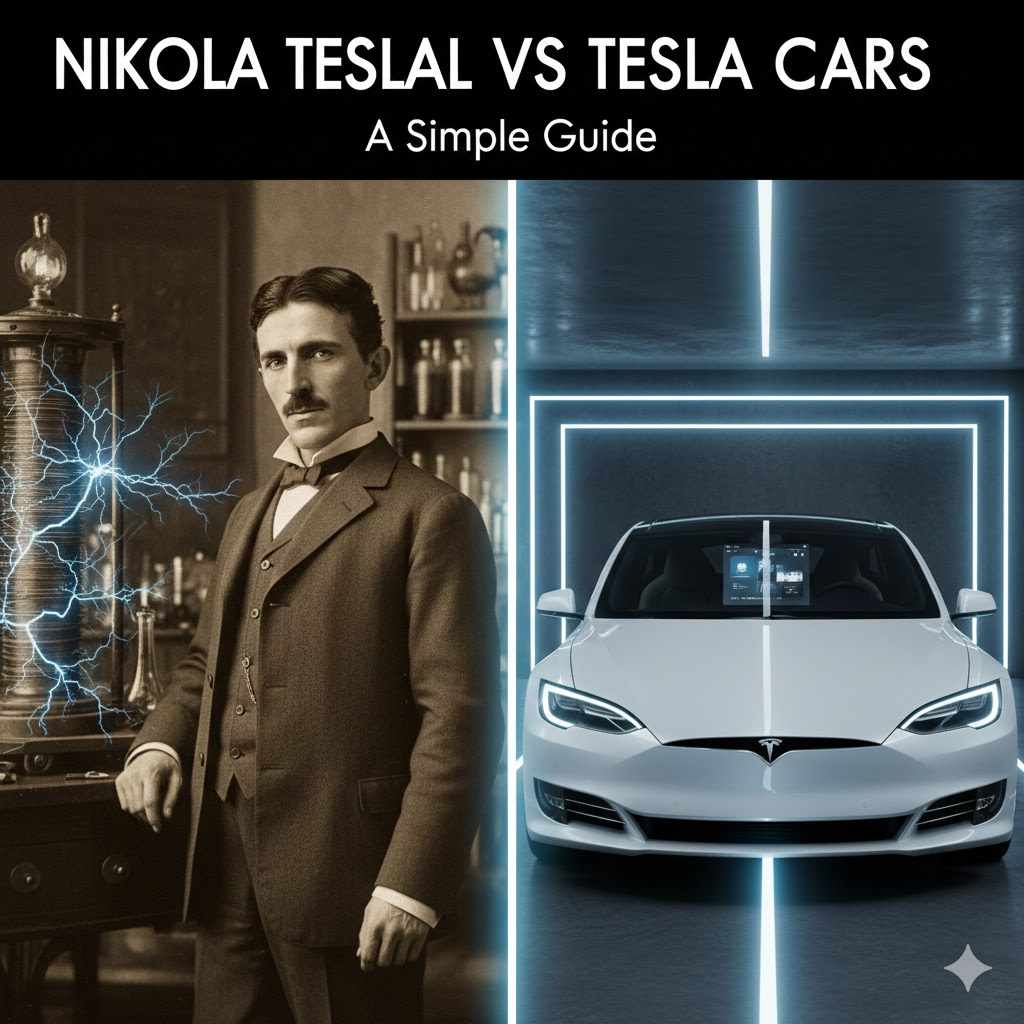
People often get confused between Nikola Tesla, the brilliant inventor, and Tesla, the car company. It’s a common question for folks just learning about them. Don’t worry, it’s pretty straightforward once you see how they’re connected.
We’ll break down the Nikola Tesla vs Tesla Cars: What’s the Real Difference? for you, step by step. Let’s clear things up so you know exactly who’s who and what’s what.
Who Was Nikola Tesla The Inventor
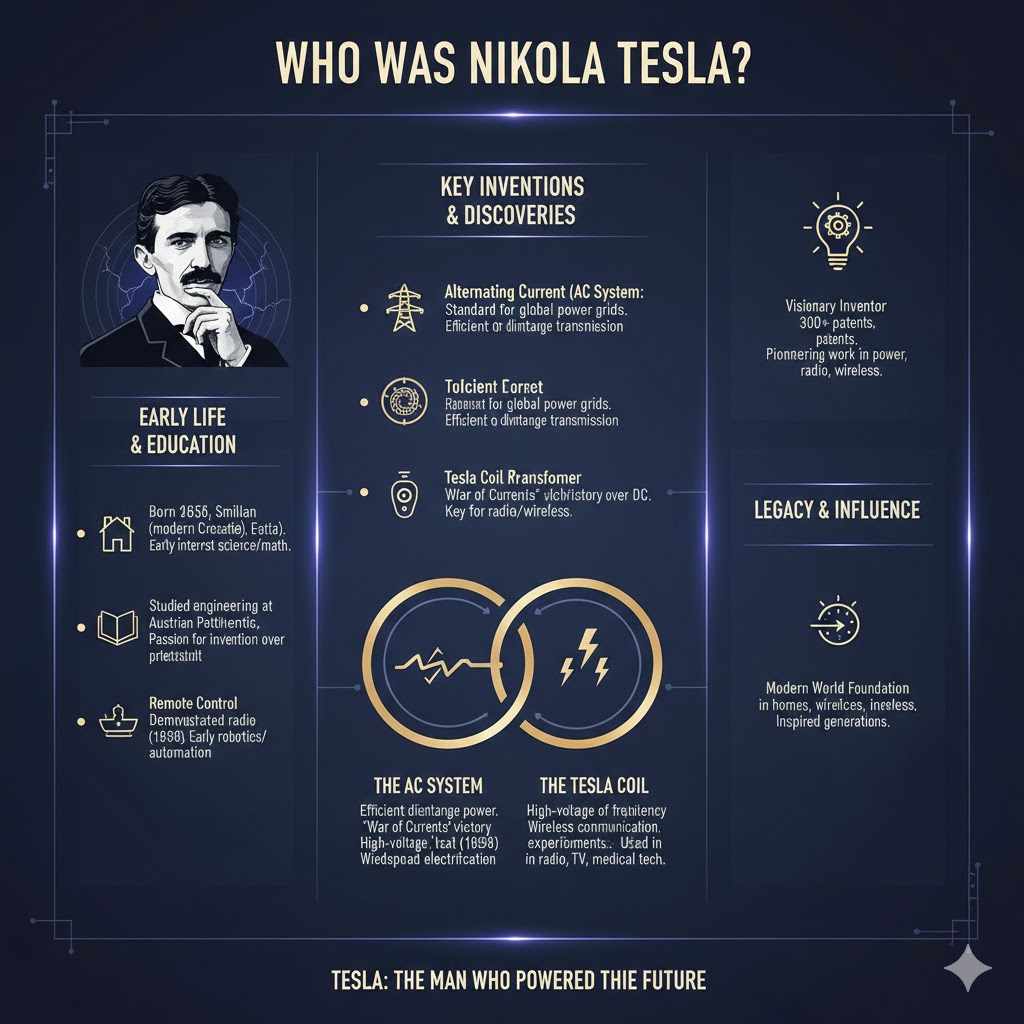
This section looks at the life and amazing work of Nikola Tesla, the genius inventor who gave the company its name. We will explore his most important inventions and his impact on the world, making his contributions clear and understandable for everyone. His ideas laid the groundwork for much of our modern technology, and understanding him is key to grasping the Tesla legacy.
Early Life and Education
Nikola Tesla was born in 1856 in a village called Smiljan. This is now part of Croatia. He showed an early interest in science and mathematics.
His father wanted him to become a priest, but Tesla followed his passion for invention. He studied engineering at the Austrian Polytechnic in Graz and later at the University of Prague. These studies gave him a strong foundation in physics and electrical engineering, fields where he would later make his greatest contributions.
Tesla’s mind was always buzzing with new ideas. He dreamed of harnessing the power of electricity in new ways. His academic journey, though sometimes challenging, fueled his curiosity and his drive to experiment and discover.
He wasn’t just learning existing science; he was already thinking about how to push its boundaries.
Key Inventions and Discoveries
Nikola Tesla was a prolific inventor with over 300 patents to his name. His most famous invention is the alternating current (AC) electrical system. This system is still the standard for power grids worldwide today.
It allowed electricity to be transmitted over long distances efficiently, which was a massive leap from direct current (DC) systems.
He also invented the Tesla coil, a resonant transformer circuit. This device can produce very high voltage and high-frequency alternating current electricity. The Tesla coil is a foundational piece of technology for radio transmission and other wireless communication methods.
His work on radio technology was so groundbreaking that he is sometimes considered the true inventor of radio, predating Marconi’s successful demonstrations.
Another significant contribution was his work on remote control. He demonstrated a radio-controlled boat in 1898, showcasing a revolutionary concept for its time. This was a very early example of what we now call robotics and wireless automation.
His visionary ideas were far ahead of his era, predicting technologies that would take decades to be fully realized.
The Alternating Current System
The development of the alternating current (AC) electrical system by Nikola Tesla was a pivotal moment in history. Before AC, direct current (DC) was the primary method of distributing electricity. However, DC systems were inefficient for transmitting power over long distances, losing significant energy as heat.
Tesla’s AC system, using transformers to step voltage up for transmission and then down for use, solved this problem elegantly.
This innovation led to the widespread electrification of homes and industries. It made possible the construction of large power plants far from urban centers, dramatically lowering costs and increasing accessibility. The “War of the Currents” between Tesla’s AC and Thomas Edison’s DC systems ultimately saw AC emerge victorious due to its superior practicality and scalability.
This victory cemented Tesla’s legacy as a foundational figure in electrical engineering.
The Tesla Coil
The Tesla coil is perhaps one of Nikola Tesla’s most visually striking inventions. It’s a special type of transformer that can generate high-voltage, high-frequency alternating current. These coils are capable of producing dramatic electrical discharges, like arcs of lightning, that are often seen in demonstrations.
This invention was not just for show; it was crucial for early radio development.
Tesla used his coil to experiment with wireless communication and power transmission. He theorized about sending electricity through the air without wires. While wireless power transmission on a large scale wasn’t realized in his lifetime, the Tesla coil’s principles are still used today in various applications, including radio frequency broadcasting, televisions, and medical equipment like X-ray machines.
Its ability to create powerful electrical fields makes it a versatile tool for scientific research and technological advancement.
Legacy and Influence
Nikola Tesla’s legacy extends far beyond his patents. He was a true visionary whose ideas sparked numerous technological revolutions. His pioneering work in AC power, radio, and wireless communication laid the foundation for much of the modern world we live in.
Even though he faced financial difficulties and his later years were marked by obscurity, his contributions are undeniable.
Many technologies we take for granted today, from the electricity powering our homes to the wireless signals connecting our devices, owe a debt to Tesla’s genius. He inspired generations of scientists and engineers with his forward-thinking approach and his relentless pursuit of innovation. His name is synonymous with brilliant, transformative invention.
What Are Tesla Cars
Now let’s talk about Tesla, the company that makes electric cars. It’s named after Nikola Tesla to honor his visionary work with electricity. Tesla Motors, as it was originally called, was founded with the goal of accelerating the world’s transition to sustainable energy.
They design and manufacture electric vehicles (EVs), battery energy storage, and solar panels.
The company is known for its cutting-edge technology, sleek designs, and focus on performance. They have become a major player in the automotive industry, pushing the boundaries of what electric cars can do. Understanding Tesla cars means looking at their innovation in battery technology, software, and autonomous driving features.
Founding and Mission
Tesla Motors was founded in 2003 by Martin Eberhard and Marc Tarpenning. Elon Musk joined the company as chairman in 2004 and became CEO in 2008. Their stated mission is to accelerate the world’s transition to sustainable energy.
This means creating products that help reduce reliance on fossil fuels and combat climate change.
The company’s vision goes beyond just selling cars. They aim to build a complete ecosystem of sustainable energy solutions. This includes generating clean energy with solar products and storing it with batteries, as well as powering transportation with electric vehicles.
This broad approach sets Tesla apart from traditional automakers.
Electric Vehicle Technology
Tesla cars are at the forefront of electric vehicle technology. They are known for their high-performance powertrains, long driving ranges, and fast charging capabilities. The company has invested heavily in battery technology, which is the heart of any electric car.
Tesla’s batteries are designed to be efficient, durable, and safe.
One of the key features of Tesla vehicles is their advanced software integration. The cars receive over-the-air (OTA) software updates, much like a smartphone. These updates can improve performance, add new features, and enhance safety over time, meaning the car can get better after you buy it.
This continuous improvement model is revolutionary in the automotive world.
Battery Technology
The battery is the most critical component of an electric vehicle, and Tesla has made significant advancements in this area. They use lithium-ion battery packs, specifically designed for automotive applications. These battery packs are not just power sources; they are integrated into the vehicle’s structure, contributing to its rigidity and safety.
Tesla’s Gigafactories are massive facilities dedicated to producing these batteries at scale. This vertical integration allows them to control costs and ensure a consistent supply. They are also constantly researching and developing new battery chemistries and designs to improve energy density, reduce charging times, and increase lifespan.
The goal is to make EVs more affordable and practical for everyone.
Autopilot and Full Self-Driving
Tesla is also a leader in developing advanced driver-assistance systems (ADAS), commonly referred to as Autopilot. This system uses cameras, sensors, and powerful onboard computers to help drivers with tasks like steering, acceleration, and braking. It is designed to make driving safer and less stressful, especially on highways.
Beyond Autopilot, Tesla is working towards a “Full Self-Driving” capability. This ambitious goal aims to enable cars to drive autonomously in most situations without human intervention. While still under development and subject to regulatory approval, Tesla’s approach to autonomous driving involves continuous learning from its fleet of vehicles, a data-driven strategy that sets it apart.
Impact on the Automotive Industry
The emergence of Tesla has fundamentally reshaped the automotive industry. Before Tesla, electric cars were often seen as niche products with limited appeal. Tesla proved that EVs could be desirable, high-performance vehicles that could compete with and even surpass traditional gasoline cars.
This success forced established automakers to accelerate their own EV development plans.
Tesla’s focus on technology, software updates, and direct sales models also challenged conventional automotive business practices. Their charging network, the Supercharger network, has also been instrumental in making long-distance EV travel more feasible. The company’s innovations have spurred a global shift towards electrification and sustainable transportation.
The Connection Nikola Tesla Vs Tesla Cars
The primary connection between Nikola Tesla the inventor and Tesla the car company is the name itself. Elon Musk and the co-founders chose the name “Tesla Motors” to honor the legendary inventor. They saw Nikola Tesla’s spirit of innovation and his groundbreaking work with electricity as a direct inspiration for their mission to advance sustainable energy and electric transportation.
Essentially, the company adopted the inventor’s name as a symbol of their ambition to revolutionize technology. Tesla’s vision for the future involved harnessing electrical power in new and transformative ways, which aligns perfectly with the goals of an electric car company aiming to shift the world away from fossil fuels. It’s a tribute to a visionary mind.
Why The Name Matters
Naming the company after Nikola Tesla was a deliberate choice to associate it with innovation, genius, and forward-thinking technology. Tesla was a pioneer in electrical engineering, and the company wanted to evoke that same sense of pioneering spirit. It’s a way to connect their modern electric vehicles to the historical roots of electrical advancement.
The name also serves as a powerful brand identity. It’s instantly recognizable and carries a certain prestige. For many, it conjures images of cutting-edge science and revolutionary ideas, which is exactly what the company aims to represent.
The inventor’s legacy provides a strong narrative foundation for the company’s ambitious goals.
Inspiration and Philosophy
Nikola Tesla’s philosophy of innovation and his bold ideas serve as a guiding principle for Tesla, the company. Tesla the inventor was known for thinking outside the box and pursuing concepts that others deemed impossible. This relentless pursuit of ambitious goals is mirrored in Tesla’s approach to developing electric cars, battery technology, and autonomous driving.
The company’s mission to accelerate the world’s transition to sustainable energy directly echoes Tesla’s own dreams of a future powered by clean, efficient electricity. While Nikola Tesla never invented a car, his foundational work in electrical engineering and his vision for harnessing power are what make his name a fitting symbol for a company focused on electric mobility and energy solutions.
Comparing Their Contributions
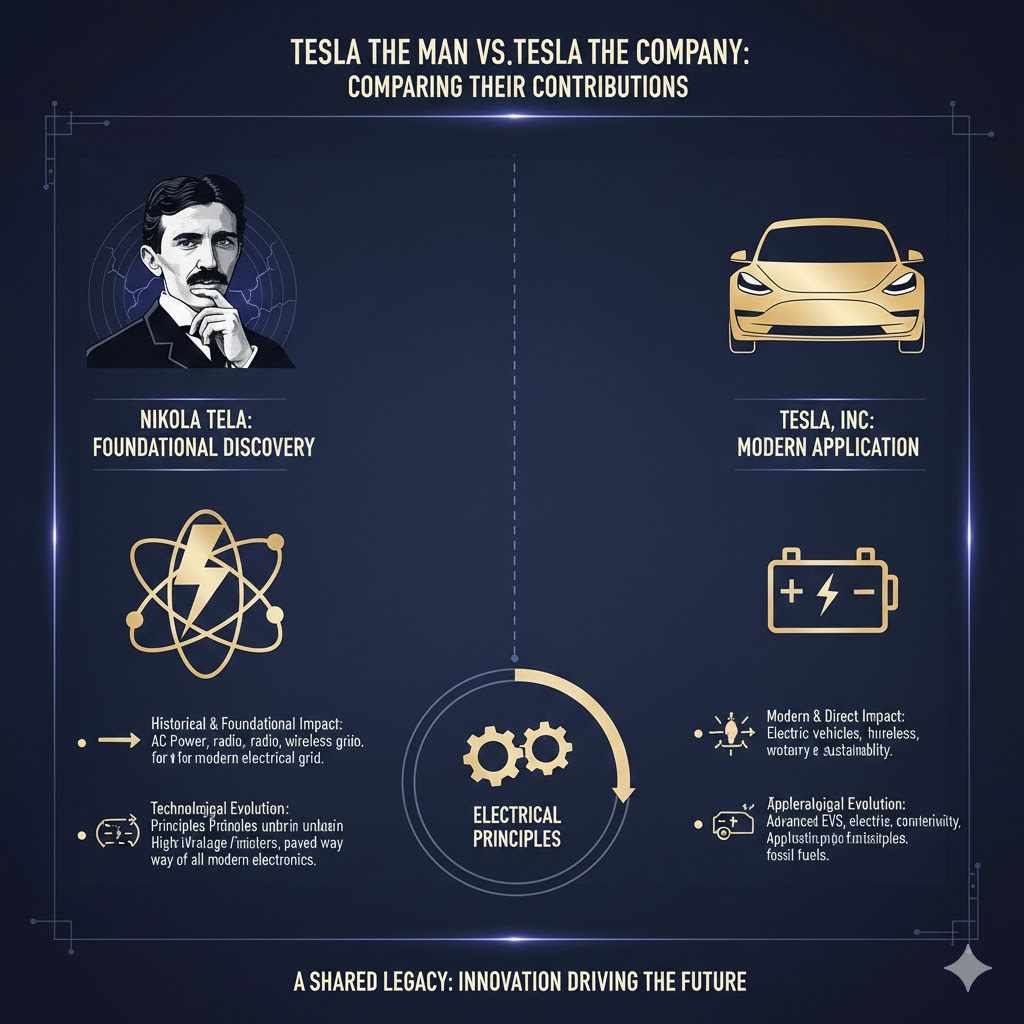
When we compare Nikola Tesla and Tesla cars, we are looking at two very different entities. One is a historical figure, an inventor whose discoveries changed the world. The other is a modern corporation that builds products inspired by those discoveries.
The comparison isn’t about direct competition, but about understanding their respective roles and impacts.
Nikola Tesla’s contribution is in the fundamental scientific and engineering principles that underpin our electrical infrastructure. Tesla, the company, applies these principles and other advanced technologies to create practical, consumer-facing products that aim to advance sustainability. Their impact is measured differently – one by scientific breakthroughs, the other by market disruption and product innovation.
Historical vs. Modern Impact
Nikola Tesla’s impact is historical and foundational. His inventions, like AC power, are woven into the fabric of global society. They enable the existence of virtually all modern electrical devices, including the computers and systems that design and manufacture Tesla cars.
His influence is pervasive but often unseen, a testament to its fundamental nature.
Tesla, the car company, has a modern, direct impact on consumers and the environment. It is making electric vehicles more desirable and accessible, accelerating the shift away from fossil fuels. Its impact is visible on roads, in charging stations, and in the market dynamics of the automotive industry.
They are taking the power of electricity and putting it into motion in a tangible, everyday way.
Technological Evolution
The technology embodied in Tesla cars is a direct evolution of the electrical principles that Nikola Tesla explored. His work on AC power transmission made the widespread use of electricity possible. This, in turn, paved the way for the development of electric motors and batteries that power modern EVs.
Tesla cars represent a highly advanced application of these fundamental concepts.
Furthermore, Tesla’s wireless communication experiments hint at the connected nature of modern vehicles. Tesla cars are packed with sophisticated electronics, wireless connectivity for updates and infotainment, and advanced driver assistance systems. While Nikola Tesla might not have envisioned electric cars with touchscreens and self-driving capabilities, his foundational research in electricity and electromagnetism made such advancements conceivable.
Frequently Asked Questions
Question: Is Tesla the car company named after the inventor Nikola Tesla
Answer: Yes, the electric car company Tesla is named in honor of the brilliant inventor Nikola Tesla, recognizing his pioneering contributions to electrical engineering and alternating current systems.
Question: Did Nikola Tesla invent electric cars
Answer: No, Nikola Tesla did not invent electric cars. While he was a prolific inventor in electricity and magnetism, his work predates the modern development of practical electric vehicles. The company Tesla adopted his name for inspiration.
Question: What is the main difference between Nikola Tesla and Tesla cars
Answer: Nikola Tesla was a scientist and inventor from the late 19th and early 20th centuries. Tesla cars are electric vehicles made by a modern company founded in 2003, named in honor of the inventor.
Question: How did Nikola Tesla influence the development of electric cars
Answer: Nikola Tesla’s most significant influence was his invention of the alternating current (AC) electrical system. This system made widespread electrification possible, which is the fundamental power source required for electric cars and their charging infrastructure.
Question: Is there any direct technological connection between Nikola Tesla’s inventions and Tesla cars beyond the name
Answer: The primary connection is philosophical and inspirational. However, the advancements in AC power and electrical engineering pioneered by Nikola Tesla are foundational to all electric vehicle technology, including the electric motors and charging systems used by Tesla cars.
Summary
Nikola Tesla was a visionary inventor, famous for AC power. Tesla cars are modern electric vehicles named in his honor. The company uses electrical principles he explored.
It’s a tribute to his genius, applying his foundational work to sustainable transport and energy.