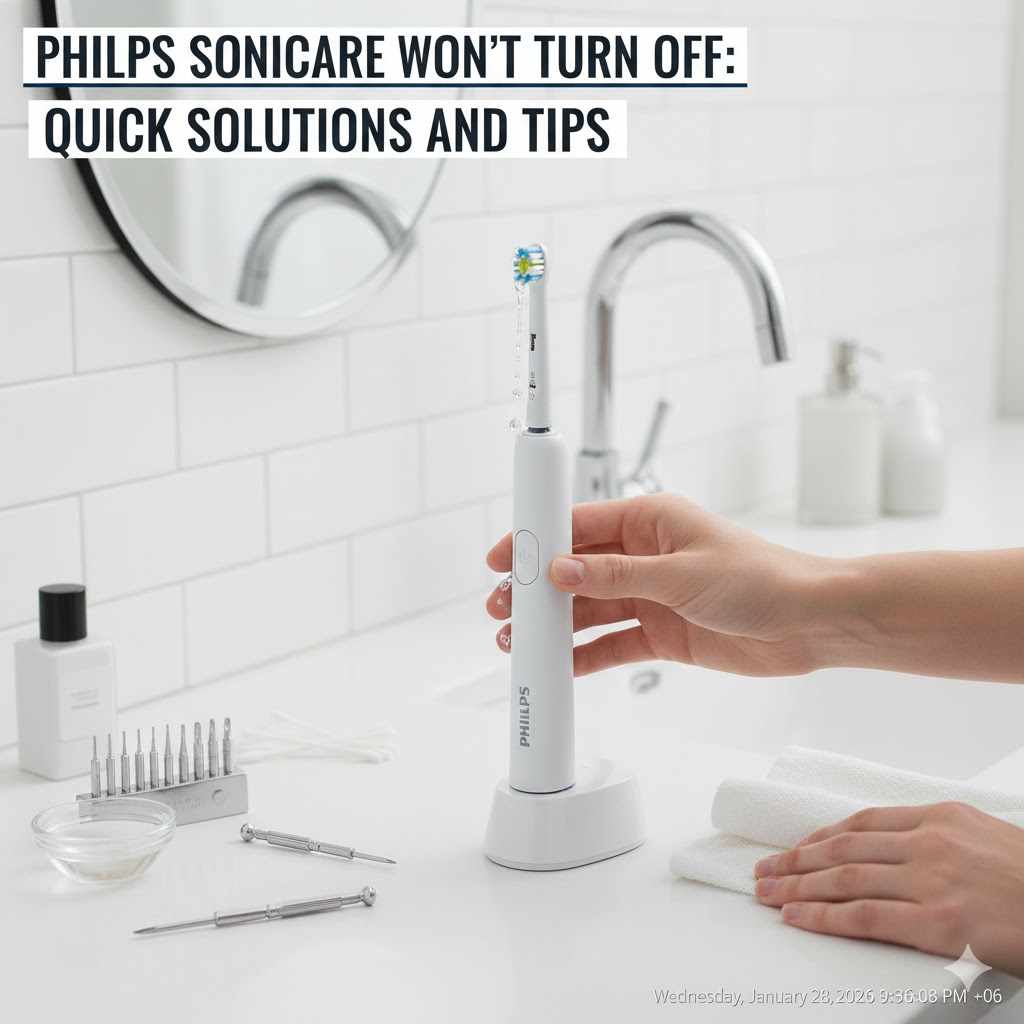
Philips Sonicare Won’t Turn Off: Quick Solutions and Tips
Having your Philips Sonicare Won’t Turn Off: Easy Fixes problem can be frustrating. It’s a pretty common issue for many people using these electric toothbrushes. Sometimes, the controls get a bit stuck, or there’s a problem with the charging. Don’t worry, though; fixing this is usually simple, even if you’re new to electric toothbrushes. We’ll look at the possible causes and give you straightforward steps to get your Sonicare working properly again. We’ll start with the basics, so let’s get started.
Common Causes of a Philips Sonicare That Won’t Shut Down
The Philips Sonicare is a popular electric toothbrush known for its effectiveness. However, it’s not immune to the occasional glitch. Often, when your Sonicare won’t shut off, the reasons are quite straightforward. Identifying the root cause is the first step toward a quick fix. Some of these issues are minor, easily resolved with a few simple steps. Others might require a bit more attention, but they’re typically manageable without needing to replace the toothbrush. Recognizing the typical culprits helps to avoid unnecessary replacements and get your toothbrush working again quickly.
Power Button Malfunctions
One of the most frequent reasons a Philips Sonicare won’t turn off is a faulty power button. Over time, the button can become stuck or lose its sensitivity. This can happen from regular use, exposure to moisture, or even just wear and tear. A stuck button will continue to send a signal to the device, even when you try to switch it off. This problem is more prevalent in older models or those that haven’t been maintained well. If the button sticks, it prevents the internal mechanisms from completing the shutdown cycle. Regular cleaning of the device, especially around the button, can help prevent this. Knowing how to troubleshoot the button can save time and frustration.
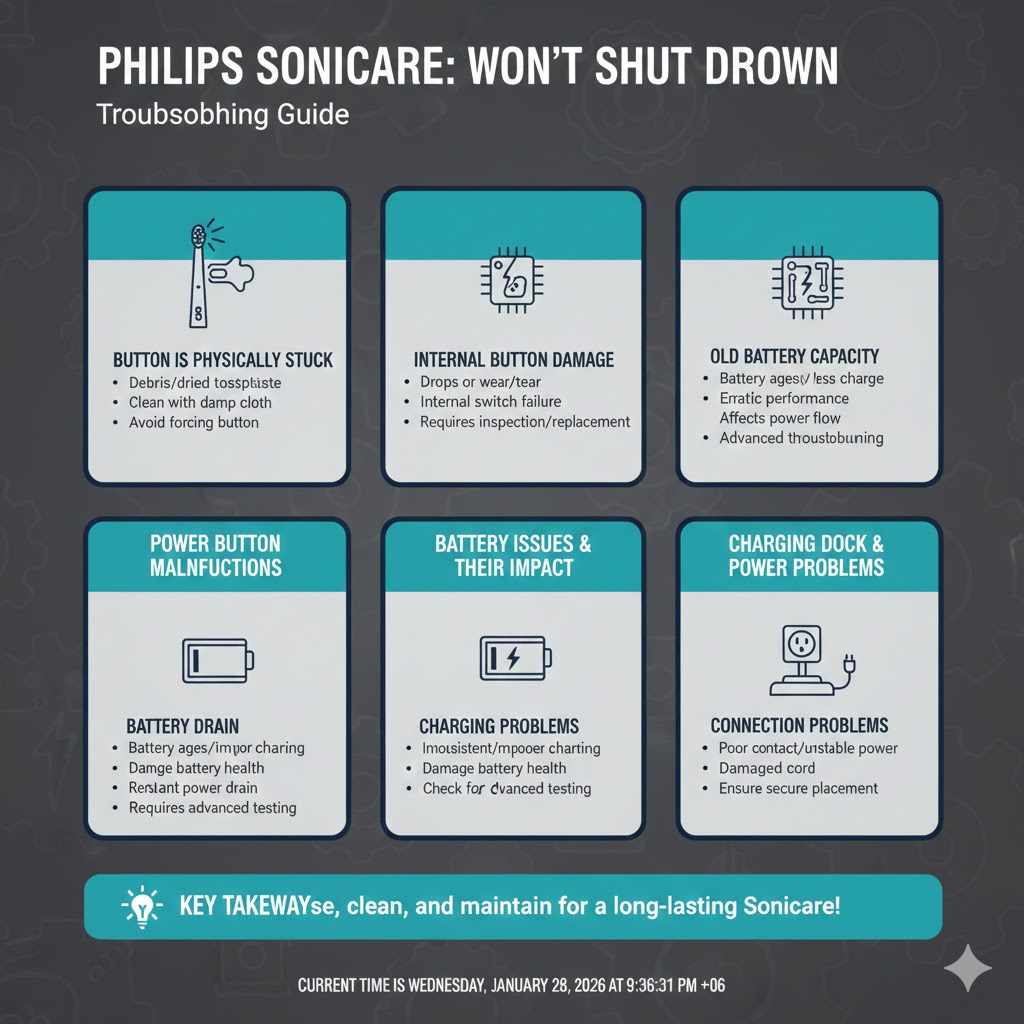
Button is Physically Stuck: Sometimes, the power button gets physically stuck due to debris or dried toothpaste. A visual inspection is the first step.
If the button feels sticky or doesn’t move freely, gently cleaning around it can often fix the issue. Use a soft, damp cloth and avoid forcing the button. This physical blockage often prevents the device from registering the shut-off command.
Internal Button Damage: Internal damage can result from drops or wear and tear, making it unable to properly register button presses.
If the button seems physically fine, but the toothbrush still doesn’t respond, internal damage may be the cause. This often means there’s a problem with the internal switch or the circuit board, leading to an inability to stop the device. This damage might require further inspection or potentially a replacement.
Faulty Circuitry: Problems with the internal circuitry can interfere with the power button’s function, causing the device to stay on.
The circuit board within the Philips Sonicare is responsible for controlling all functions, including powering the device on and off. If components on the circuit board are damaged or have failed, it might affect the button’s ability to interrupt power flow. This is a bit more complex, and advanced troubleshooting may be required.
Battery Issues and Their Impact
Another common cause for a continuous running Sonicare is battery trouble. The lithium-ion batteries used in these devices have a lifespan, and their performance diminishes over time. Battery problems can lead to unusual behavior, including failure to power off. This issue is frequently seen in toothbrushes that are frequently used and not charged properly. The gradual decay of the battery can also affect the internal control systems, which will often lead to failure to shut down. Properly maintaining and charging the battery is therefore important for the general operation of the device.
Old Battery Capacity: As the battery ages, it can hold less charge, leading to erratic performance. This can affect the shut-off function.
Over time, the maximum charge the battery can hold decreases. This can cause the toothbrush to behave unpredictably, including failing to shut off because it does not have the necessary power to manage the power cycle correctly. This is a natural result of battery degradation.
Charging Problems: Inconsistent or improper charging can damage the battery, contributing to the problem.
How you charge your Sonicare is important. Overcharging or using the wrong charger can damage the battery, reducing its effectiveness and potentially causing operational issues. Always use the charger that came with the device to make sure the toothbrush works properly. Poor charging practices can lead to the battery’s early degradation and shutdown failures.
Battery Drain: Internal shorts or problems with the charging circuit can cause the battery to drain quickly, affecting the shut-off function.
If there is an internal issue, such as a short circuit within the battery or the charging system, it can lead to constant power drain. This can lead to failure to power off. These types of problems often require more advanced testing to identify and repair, or may require replacing the toothbrush.
Troubleshooting the Charging Dock and Power
The charging dock is a critical element in the overall operation of your Philips Sonicare. Problems with the charging base can sometimes cause the toothbrush to behave erratically, including failing to power down. Issues in the dock can affect how power is supplied to the toothbrush. This is a fundamental aspect of the toothbrush’s functionality. Checking the power connection, inspecting the charging base, and making sure that the toothbrush is making good contact are all important troubleshooting steps.
Docking Station Malfunctions: A broken or faulty charging dock can cause inconsistent charging, which impacts the shut-off process.
If the charging base is not functioning correctly, it might not properly transfer power to the toothbrush, which can influence how it powers on and off. Damage to the dock’s internal components or issues with the power supply can create this problem. Check for any damage or obstructions in the charging base.
Power Supply Issues: Issues with the power source itself, such as a damaged cord, can prevent the toothbrush from powering off correctly.
If the power supply to the charging base is inadequate or unstable, it can affect the toothbrush’s ability to properly cycle on and off. Make sure the power cord is securely plugged into both the charging base and the wall outlet. Using a power outlet that is functioning correctly is also important.
Connection Problems: Poor contact between the toothbrush and the charging base can interfere with the charging and shut-off functions.
Ensure that the toothbrush is securely placed on the charging base and that there is good contact between the two. The toothbrush should sit level and make consistent contact with the charging pins. Any debris or corrosion on the charging contacts might prevent proper power transfer, affecting shut-off.
Step-by-Step Solutions If Your Philips Sonicare Won’t Turn Off: Easy Fixes
Let’s dive into practical, step-by-step solutions to address the issue of a Philips Sonicare Won’t Turn Off: Easy Fixes. These solutions are meant to be simple, with a focus on ease of use. You won’t need any special tools or technical expertise. Following these instructions will allow you to quickly identify and solve the problem, getting your toothbrush back to normal.
Initial Troubleshooting and Basic Checks
Before jumping into any deep repairs, there are simple steps you can take to see if these resolve the issue immediately. This approach can often address the problem quickly, saving time. This initial assessment involves simple checks that help you identify the root cause without advanced methods. It’s a fundamental part of the troubleshooting process.
Inspect the Power Button: Examine the power button for any visible issues, such as sticking or debris.
Carefully inspect the power button to make sure it’s not physically blocked or dirty. Toothpaste or other debris can prevent it from working properly. Try cleaning around the button using a soft, damp cloth to remove anything that might be causing it to stick. This step should be done gently to avoid damaging the button.
Check the Battery Level: Verify the battery level to ensure it isn’t critically low, as this can affect function.
A low battery might cause the toothbrush to malfunction, including its ability to turn off. Try charging the toothbrush completely and see if the issue is resolved. The charging indicator will help you understand the current battery status. Sometimes, a fully charged battery can fix the problem.
Reset the Toothbrush: Try a basic reset to clear any software glitches that might be causing the problem.
Simple resets are good for clearing minor software issues. Usually, a reset involves removing the toothbrush from the charger, removing the brush head, and then pressing the power button multiple times. The exact process can vary by model, so consult your manual if needed. This step often fixes simple software glitches that affect the power button.
Cleaning and Maintenance Procedures
Regular cleaning and maintenance of your Philips Sonicare are key for preventing issues like the one where it won’t turn off. These activities not only keep your device in good shape but also enhance its lifespan. Maintaining your toothbrush will keep it working properly and help avoid more complex problems. Making cleaning a habit can improve its performance and reliability.
Cleaning Around the Power Button: Carefully clean the area around the power button to remove any debris that might cause it to stick.
Toothpaste, water, and other debris can get into the small spaces around the power button, preventing it from functioning properly. Use a soft, slightly damp cloth or a cotton swab to clean around the button. Make sure to do this gently to avoid damaging the button’s mechanism.
Checking and Cleaning the Charging Contacts: Ensure that the charging contacts on both the toothbrush and the charging base are clean.
Over time, the charging contacts may accumulate dirt or corrosion, which can interfere with the charging process and lead to issues with power cycling. Use a dry, clean cloth or cotton swab to wipe the contacts on both the toothbrush and the charging base. Make sure these areas stay clean for proper operation.
Water Resistance and Avoiding Excessive Moisture: Keep the device away from excessive moisture as water can affect the internal components.
While the Sonicare is water-resistant, it’s not waterproof. Excess exposure to water, like submersion, may damage internal electronics. Always ensure that the toothbrush and charging base are dry before using them and storing them in a well-ventilated area.
Advanced Troubleshooting Techniques
If the basic methods don’t work, you might need more advanced methods to solve the issue. These techniques will involve more detailed steps, and possibly taking the device apart. If you aren’t confident in doing this, consider getting professional help. These methods can help pinpoint the problem and provide a resolution, ensuring the toothbrush works properly.
Hard Reset Procedure: Refer to your model’s manual for instructions on performing a hard reset, which often clears deeper software issues.
A hard reset goes deeper than a standard reset, targeting firmware or other deeper issues. This method often helps with persistent problems. The specific steps for a hard reset can vary by model, so be sure to check the user manual for the correct procedure. Follow the instructions to get your device back to its default settings and functioning correctly.
Battery Disconnection: In certain cases, you might need to temporarily disconnect the battery to reset the device’s internal systems. This is an option if you are comfortable with disassembling the product.
Disconnecting the battery can clear power-related issues that standard resets can’t address. It involves opening the toothbrush, locating the battery connection, and briefly disconnecting it. Make sure you know what you are doing before you open the device. Always follow the manufacturer’s recommendations and be very careful when manipulating internal components.
Circuit Board Inspection: If you’re comfortable, check the circuit board for any visible damage like corrosion or burned components.
Checking the circuit board is a next step if all other attempts have failed. Inspect it for obvious signs of damage, which may indicate what is causing the problem. If you spot something, it could be the reason why the device isn’t turning off. This is a complex task, and if you’re not skilled in electronics, consider getting professional support.
Comparative Analysis of Troubleshooting Techniques
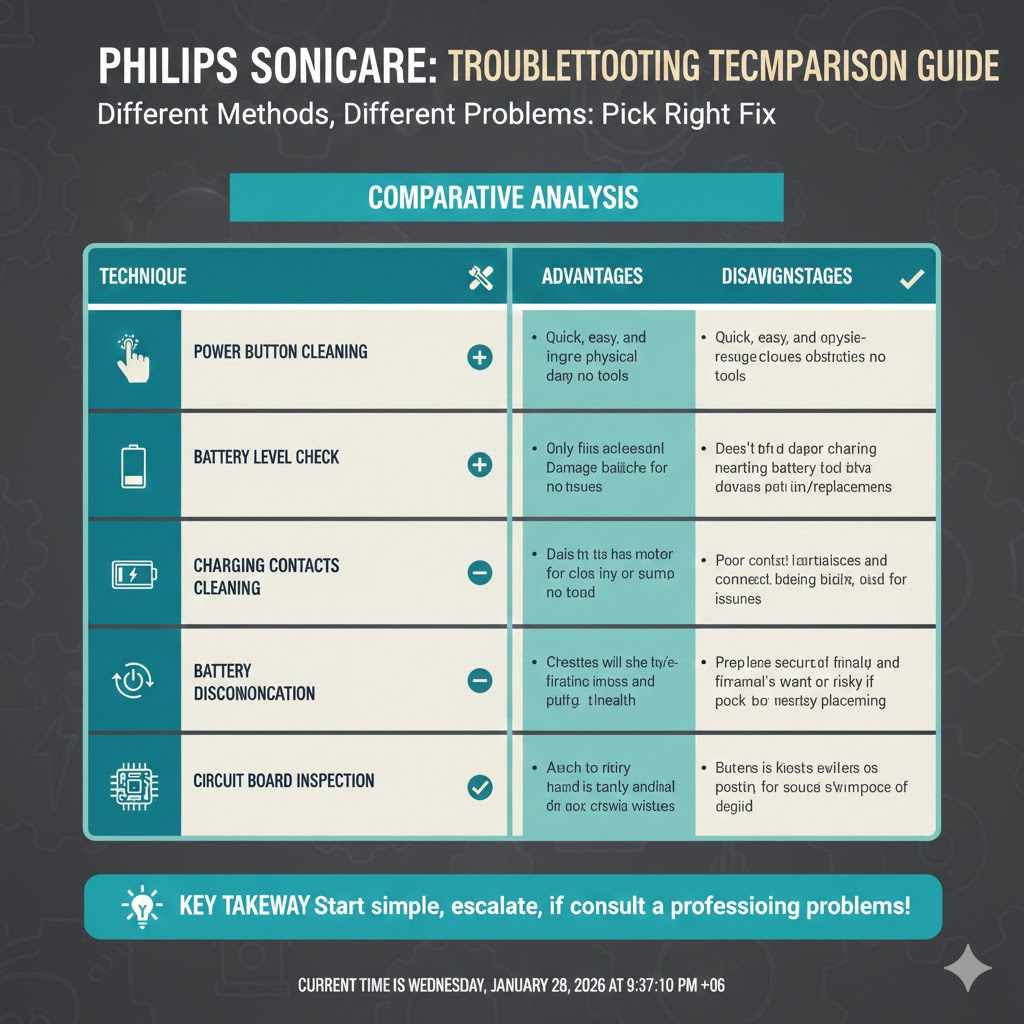
Different methods can be used to resolve the issue of a Philips Sonicare that won’t turn off. Every method has its own benefits and limitations. The method that is most effective depends on the source of the problem. This comparison will help you pick the right approach to solve the problem quickly and efficiently. By weighing the pros and cons, you can choose the right strategy.
| Technique | Advantages | Disadvantages | Best Use |
|---|---|---|---|
| Power Button Cleaning | Quick, easy, and requires no tools. | Only addresses physical obstruction issues. | Stuck or sticky power button. |
| Battery Level Check | Identifies simple battery-related issues. | Doesn’t fix battery degradation problems. | Low battery causing malfunction. |
| Basic Reset | Simple, often resolves minor software glitches. | May not fix deeper, persistent issues. | Minor software problems. |
| Charging Contacts Cleaning | Improves charging and power functionality. | Doesn’t address internal component issues. | Poor charging or connection issues. |
| Hard Reset | Addresses firmware or software issues. | Requires the model’s manual for specific instructions. | Persistent software or firmware problems. |
| Battery Disconnection | Resets the system, resolving power-related problems. | Requires device disassembly and can be risky if done improperly. | Problems with the power supply. |
| Circuit Board Inspection | Identifies physical damage to electronic components. | Requires electronics knowledge and may not lead to repair. | Visible damage like corrosion or burns. |
Consider the table a simple guide. For example, cleaning the power button is the first thing to try. If this does not work, move on to more advanced methods. This approach saves time and effort.
FAQ: Philips Sonicare Won’t Turn Off
Question: Why won’t my Philips Sonicare turn off after I press the button?
Answer: The most common causes are a stuck power button due to debris, battery issues, or internal component failure. Inspect the button, and make sure the battery is charged, then follow the steps.
Question: What should I do if the power button seems stuck?
Answer: Gently clean the area around the power button with a soft, slightly damp cloth to remove any debris. Avoid using excessive force, which could damage the button’s mechanism. If cleaning doesn’t work, there may be internal damage.
Question: Can charging problems affect the toothbrush’s ability to turn off?
Answer: Yes, problems with the charging dock or battery can cause the device not to turn off. Ensure the charging base is working and the toothbrush has proper contact. Charge it for the correct period, following the directions.
Question: Is there a reset procedure I can use if my Philips Sonicare won’t shut off?
Answer: Try a basic reset by taking the toothbrush off the charger and removing the brush head. Then, press the power button several times. If this doesn’t help, consult the manual for the hard reset instructions.
Question: When should I consider getting my Philips Sonicare professionally repaired or replaced?
Answer: If you’ve tried the troubleshooting steps and the issue continues, it is time to have the device examined or replaced. Also, if there is visible internal damage, such as corrosion or burned components on the circuit board, professional repair is often required.
Final Thoughts
Dealing with a Philips Sonicare Won’t Turn Off: Easy Fixes issue doesn’t have to be a major hassle. Often, the solution is straightforward and can be completed quickly. This post explored common reasons why these toothbrushes might not turn off, from stuck power buttons and battery issues to problems with the charging setup. We went over a series of troubleshooting steps, starting with simple actions like cleaning the power button and checking the battery level, and then looked at more detailed methods, such as resetting the device or checking the internal components. These techniques are usually enough to solve the problem.
You now have the knowledge and steps to solve the problem. Begin by trying the simpler methods, and then gradually move to more advanced ones if needed. Remember to always consult the user guide if you need further help. By following these steps, you can get your Philips Sonicare working properly again. Keep your toothbrush in great condition by following these steps to make sure it will last for a long time.