Portable Wheelchair Ramp for a Car: Sizing and Safety Guide
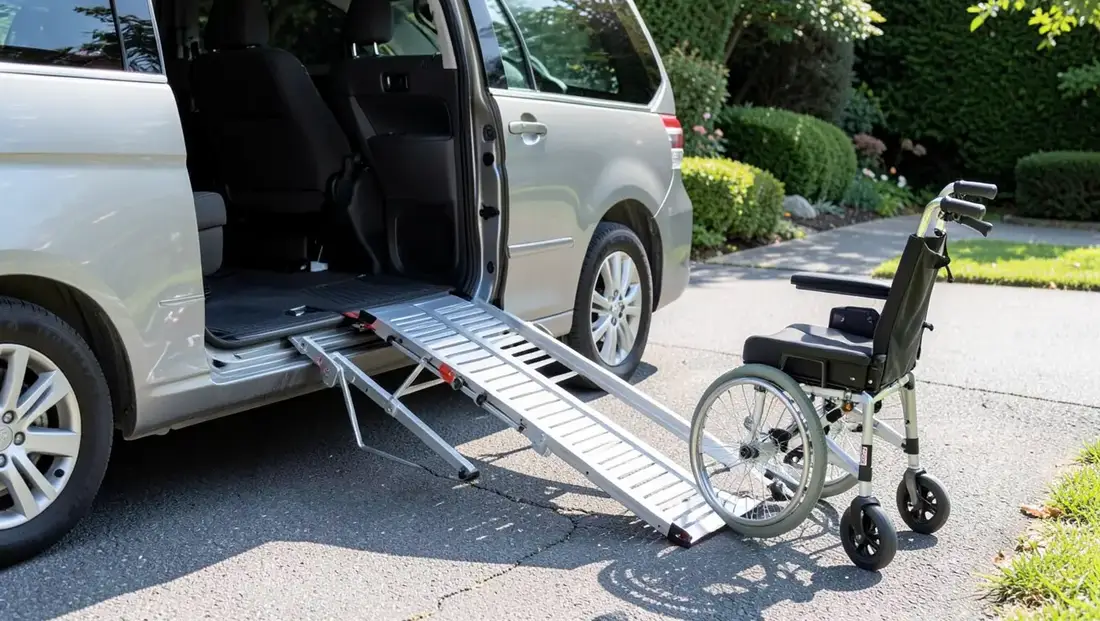
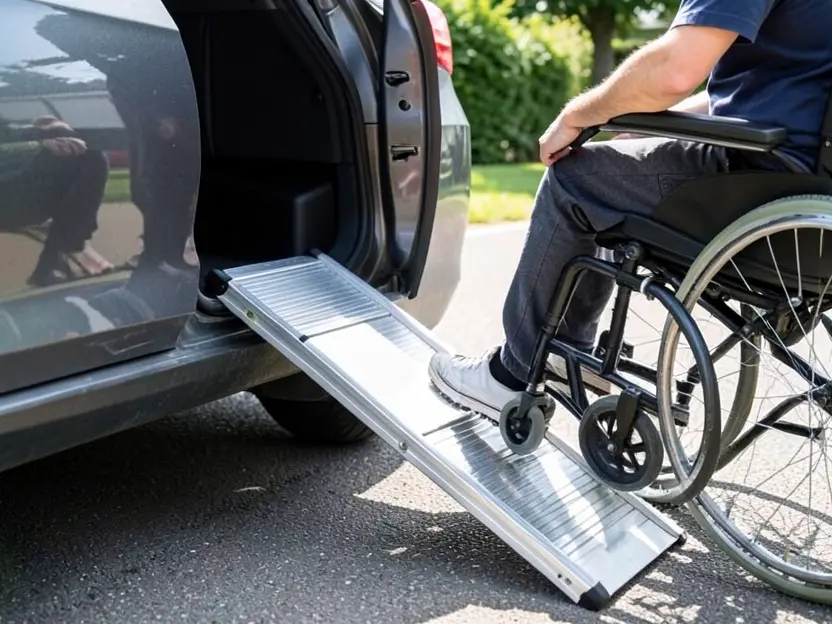
A portable wheelchair ramp for a car is a lightweight aluminum or fiberglass ramp that bridges the gap between a curb, driveway, or vehicle floor and a wheelchair or scooter, so a user can roll straight into a vehicle instead of being lifted.
The number that matters most is slope. Building codes call for a 1:12 ratio, meaning 12 inches of ramp for every 1 inch of rise, but a fully ADA-compliant ramp for an 8-inch step would be nearly 8 feet long, which is not something most people can fold up and carry. Portable car ramps compress that math to roughly 1:4 to 1:6, which is steep enough that an unassisted wheelchair user can struggle with it. Picking the wrong length or a ramp rated for less weight than the chair and rider combined is how people end up with a ramp they own but do not actually use.
This guide covers the ramp types actually sold for vehicle use, how to size the length against your rise and weight capacity, safe setup and loading technique, and when a ramp is the wrong tool and a powered lift makes more sense instead.
What Is a Portable Wheelchair Ramp for a Car?
A portable wheelchair ramp is a freestanding, non-permanent ramp that is not bolted to the vehicle or the ground. It is set in place before loading and picked up and folded afterward, which is what separates it from a permanently installed van conversion ramp or a powered vehicle lift. Most are made from aircraft-grade aluminum for a strong strength-to-weight ratio, with a textured or grit-coated surface to keep wheels from slipping when wet.
They are used in three main scenarios: getting a wheelchair or scooter up a single step or curb, bridging the sill of a minivan, SUV, or accessible van, and loading a wheelchair or scooter into a trunk, cargo area, or truck bed. The right ramp for each of those jobs is not the same ramp, which is why length, weight rating, and fold style matter more than brand.
800 LB CAPACITY, FOLDS FOR TRUNK STORAGE
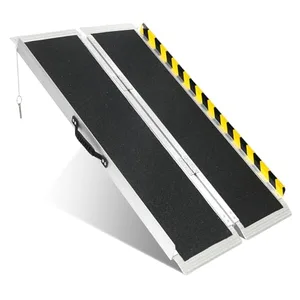 |
4FT Portable Wheelchair Ramp, Non-Slip Aluminum, 800 LBS Capacity – $119.99 At 4 feet long it covers roughly an 8-inch rise at the 1:6 practical slope this guide recommends for assisted loading, and its 800-lb rating covers a power wheelchair plus a heavier rider with room to spare.
|
Types of Portable Wheelchair Ramps for Vehicles
Four ramp styles cover almost every car-loading situation, and they are not interchangeable.
- Single-fold ramps fold once in the middle, are typically 2 to 4 feet long, and are the fastest to set up. They work well for a single curb or a low door sill.
- Multi-fold (suitcase) ramps fold into three or four sections, which lets a longer ramp, often 5 to 8 feet, pack down small enough to fit in a trunk. This is the common choice when the ramp itself needs to travel in the vehicle it is used with.
- Telescoping channel ramps are two separate tracks, one for each wheel, that slide to adjustable lengths. They are lighter to carry than a single solid ramp of the same length but need a wheel width that matches the track spacing, so they suit scooters and standard wheelchairs better than unusually wide power chairs.
- Threshold ramps are short, rigid ramps, usually under 2 feet, built for a single door sill or a small lip rather than a full step. They are not meant to span the height from ground to vehicle floor.
How to Size Ramp Length: The Slope Math That Matters
The Americans with Disabilities Act sets a 1:12 slope as the standard for a ramp a wheelchair user can climb unassisted with reasonable effort, which works out to 12 inches of ramp length for every 1 inch of rise. Applied to an 8-inch step, that is an 8-foot ramp, and applied to a 12-inch tailgate height, that is a 12-foot ramp. Almost no portable, foldable ramp on the market is built to that length, because it would be too long to store or carry.
In practice, most portable car ramps are sold at a 1:4 to 1:6 slope, which is roughly two to three times steeper than the ADA standard. That slope is manageable for a caregiver pushing a manual wheelchair or for most power wheelchairs and scooters under their own power, but it is often too steep for someone to self-propel a manual wheelchair up unassisted. If independent use without a helper is the goal, look for the longest ramp that will still fit in your trunk rather than the shortest one that technically reaches.
| Rise to Cover | ADA-Compliant Length (1:12) | Typical Portable Ramp Length (1:4 to 1:6) |
|---|---|---|
| 4 inches | 4 feet | 16 to 24 inches |
| 6 inches | 6 feet | 24 to 36 inches |
| 8 inches | 8 feet | 32 to 48 inches |
| 10 inches | 10 feet | 40 to 60 inches |
| 12 inches | 12 feet | 48 to 72 inches |
Measure the actual rise before buying: the vertical distance from where the wheelchair starts, whether that is a curb, driveway, or the ground next to the car, up to the vehicle floor, trunk lip, or door sill the ramp needs to reach. A ramp bought by guesswork is the most common reason people end up with one that is either too short to use safely or too long to store.
How Much Weight Capacity Do You Need?
The rated capacity has to cover the chair, the rider, and anything else on the ramp at the same time, such as a bag on the back of the chair or a person helping to push. Manufacturers post a maximum, not an average, so leaving margin matters more than hitting the number exactly.
| Equipment | Typical Weight Range |
|---|---|
| Ultralight manual wheelchair | 15 to 25 lbs |
| Standard manual wheelchair | 25 to 40 lbs |
| Heavy-duty or bariatric manual wheelchair | 40 to 55 lbs |
| Power wheelchair | 250 to 400 lbs |
| Mobility scooter | 100 to 300 lbs |
Add the rider’s weight to the chair’s weight and you can see why a ramp rated for only 300 pounds runs out of margin fast with a power wheelchair. As a rule of thumb, a ramp rated 600 to 800 lbs comfortably covers a manual wheelchair and almost any adult rider, while a power wheelchair or scooter setup is safer on an 800-lb-rated ramp or higher, especially if a second person will be on the ramp helping to push.
How to Use a Portable Wheelchair Ramp Safely
- Park on flat, level ground. A ramp set on a slope or uneven pavement changes the effective incline and can shift under load.
- Unfold the ramp fully and confirm every locking pin, hinge, or clip has clicked or seated. A ramp that is not fully locked can buckle mid-use.
- Set the top edge flush against the vehicle sill or trunk lip so there is no gap or lip for a wheel to catch on.
- Check that the bottom edge sits flat on the ground, not on a curb edge or in a gap that would leave the ramp unsupported.
- Approach straight on rather than at an angle, since a wheelchair crossing the ramp diagonally is far more likely to roll off the side rail.
- If a helper is pushing, they should stay behind and to the side of the chair, not directly in front, so they can catch it if it starts to roll back.
- Fold and store the ramp only after the wheelchair is fully inside and secured, not before.
Portable Ramp vs. a Vehicle Wheelchair Lift: Which Do You Need?
A portable ramp is the right tool for a curb, a single step, a door sill, or loading into a trunk or cargo area, where the rise is a few inches to about a foot. It costs a fraction of a lift, needs no installation, and travels with you.
A powered wheelchair lift or a permanently converted accessible van makes more sense when the rise is the full floor height of the vehicle, such as loading a power wheelchair from flat ground up into a raised van floor, since that gap is usually too large for any foldable ramp to cover at a usable slope. If you are weighing that decision, our guide to car ramps for scooters covers hitch-mounted carrier options, or see our guide to hitch-mount wheelchair carriers specifically, for equipment that rides on the outside of the vehicle rather than inside it.
Frequently Asked Questions
What Is a Portable Wheelchair Ramp for a Car?
It is a lightweight, freestanding aluminum or fiberglass ramp that is not bolted to the vehicle or the ground. It is set in place before loading a wheelchair or scooter and folded up and stored afterward, unlike a permanently mounted van ramp or lift.
How Do I Choose the Right Ramp Length for My Car?
Measure the vertical rise from the ground to the vehicle floor, trunk lip, or door sill you need to reach, then buy the longest ramp that will still fold up and fit in your storage space. A steeper ramp is manageable with a helper; a gentler one closer to a 1:6 slope is easier for a wheelchair user to climb alone.
What Weight Capacity Should a Portable Wheelchair Ramp Have?
Add the chair’s weight to the rider’s weight and leave margin. A 600 to 800-lb rating covers most manual wheelchairs and riders comfortably, while power wheelchairs and scooters, which can weigh 250 to 400 lbs on their own, are safer on an 800-lb-rated ramp or higher.
Are Portable Wheelchair Ramps Safe to Use Without Help?
They can be, but most portable ramps are set at a 1:4 to 1:6 slope, which is steeper than the 1:12 ADA standard for unassisted use. A power wheelchair or scooter can usually manage that slope on its own; a manual wheelchair user self-propelling is often safer with a helper present, especially on a shorter, steeper ramp.
Can a Portable Wheelchair Ramp Fold Up and Fit in a Trunk?
Yes. Single-fold and multi-fold (suitcase-style) ramps are built specifically to collapse down for trunk or cargo-area storage. A multi-fold ramp packs a longer overall length into a smaller footprint than a single-fold ramp of the same length.
What Is the Difference Between a Portable Ramp and a Vehicle Wheelchair Lift?
A portable ramp is a foldable, freestanding ramp for rises up to about a foot, such as a curb, step, or trunk lip. A vehicle wheelchair lift is a powered, permanently installed platform built for a much larger rise, such as lifting a power wheelchair from the ground up to a raised accessible-van floor, a gap most portable ramps cannot span at a safe slope.
Conclusion
A portable wheelchair ramp for a car earns its keep when the length matches the actual rise you need to cover and the weight rating covers the chair, rider, and anything else on it with margin to spare. Measure the rise first, lean toward the longest ramp you can still store and carry, and match the weight capacity to the heaviest combination of chair and rider it will ever need to support. Get those three numbers right and the ramp becomes something you actually reach for, instead of something folded up in the garage.
Products related to this article
Sponsored / affiliate links. As an Amazon Associate I earn from qualifying purchases. I may earn additional commission from eligible campaigns.