How Much Does a Full Car Audio System Cost?
A full car audio system usually costs about $800 to $5,000 installed, with higher-end builds sometimes reaching about $8,000 or more once head unit, speakers, amps, subwoofers, wiring, and tuning are included. Skip integration costs, and you can end up with weak sound, warning lights, or parts that do not work well with factory electronics. This guide breaks down parts, labor, and hidden costs by upgrade level so you can budget accurately.
Hidden costs behind factory audio integration
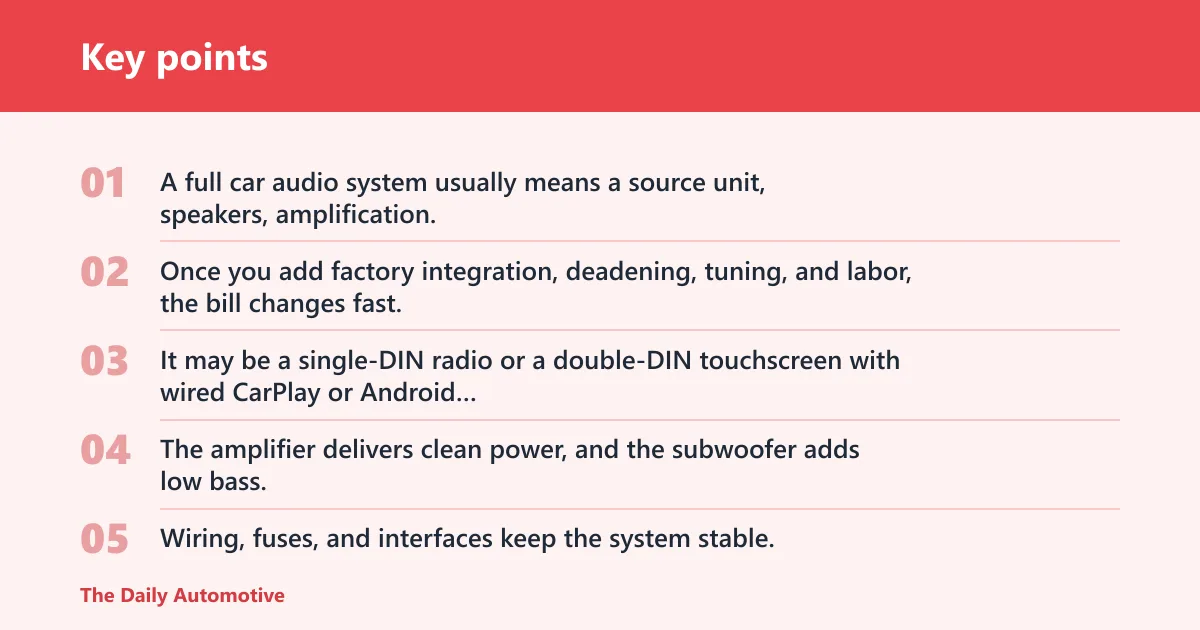


A full car audio system usually means a source unit, speakers, amplification, a subwoofer, wiring, and the install hardware that lets everything work together. A head unit swap alone is a partial upgrade. Once you add factory integration, deadening, tuning, and labor, the bill changes fast.
Source unit, speakers, amp, subwoofer, and wiring
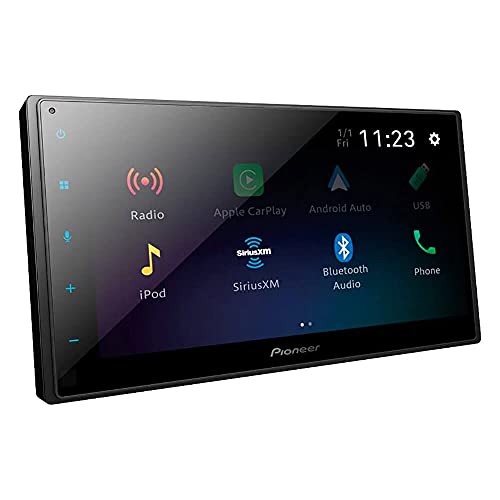
The source unit is the control center. It may be a single-DIN radio or a double-DIN touchscreen with wired CarPlay or Android Auto, Bluetooth, and USB inputs. Speakers handle midrange and treble. The amplifier delivers clean power, and the subwoofer adds low bass. Wiring, fuses, and interfaces keep the system stable.
When a head unit swap alone is not enough
If your vehicle has decent factory speakers and you only want modern phone connectivity, a head unit may be enough. If the stock system already uses a factory amplifier, a digital signal processor, or vehicle-specific software, the head unit alone often leaves sound quality on the table. That is where cost and complexity rise.
Why factory systems often need more than parts
Many newer cars route audio through CAN-bus networks, active factory amplifiers, or odd speaker-level signals. That means you may need adapter interfaces, a DSP, or a bypass strategy just to get clean output. The parts list looks simple until the install starts.
Car audio budget matrix
Use this as a realistic all-in map, not a parts-only chart. The hidden line items matter as much as the gear itself, especially in modern cars with factory integration or in trucks and luxury vehicles with more trim removal and adapter work.
| Build tier | Parts cost | Labor cost | Hidden install materials | Realistic all-in total |
|---|---|---|---|---|
| Basic replacement | $300 to $700 | $150 to $350 | $75 to $200 | $525 to $1,250 |
| Balanced daily-driver upgrade | $900 to $2,000 | $400 to $900 | $150 to $400 | $1,450 to $3,300 |
| Bass-focused build | $1,500 to $3,500 | $600 to $1,400 | $200 to $600 | $2,300 to $5,500 |
| Custom high-end build | $4,000 to $10,000+ | $1,500 to $4,000+ | $400 to $1,200+ | $5,900 to $15,200+ |
| Factory-system integration fees | $150 to $900 | $250 to $1,200 | $50 to $250 | $450 to $2,350 |
Basic replacement build
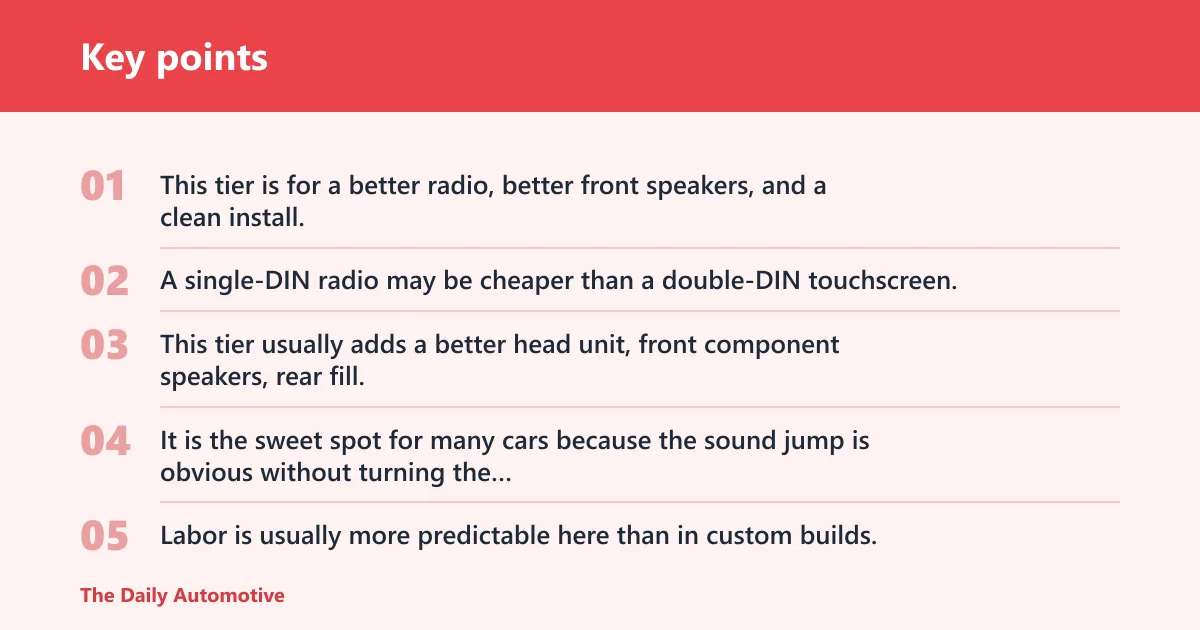
This tier is for a better radio, better front speakers, and a clean install. It often skips an amplifier and subwoofer. A single-DIN radio may be cheaper than a double-DIN touchscreen, but the install still needs the right dash kit, wiring adapter, and antenna adapter.
Balanced daily-driver upgrade
This tier usually adds a better head unit, front component speakers, rear fill, and a modest amplifier. It is the sweet spot for many cars because the sound jump is obvious without turning the vehicle into a project. Labor is usually more predictable here than in custom builds.
Bass-focused build
This tier adds a mono amp, a subwoofer, and often some door treatment. The bass impact raises the budget faster than many buyers expect. A 12-inch sub in a ported box can cost more in space, wiring, and tuning than a smaller sealed setup.
Custom high-end build
This tier is where the numbers jump. You may be paying for high-output amplification, a DSP, multiple speaker sets, custom enclosures, extra deadening, and hours of tuning. One audiophile system with all McIntosh components cost $250,000, while another McIntosh-based system with B&W speakers cost $45,000. An entry-level audiophile system cost $7,000, including a $4,000 integrated amplifier and a $3,000 pair of speakers.
Factory-system integration fees
Factory-system work is often a separate line because it is not the same as a normal aftermarket swap. A basic integration package can require signal summing, turn-on interfaces, steering-wheel control adapters, or a DSP with time alignment and crossovers. In difficult vehicles, the labor and interfaces can cost more than the speakers.
How much does a head unit add?
A head unit can add a few hundred dollars or a lot more, depending on screen size, smartphone compatibility, and the car’s dash layout. Single-DIN units are usually cheaper than double-DIN touchscreen models, but factory-style fitment, CarPlay, Android Auto, and steering-wheel control retention push the total up quickly.
Single-DIN vs double-DIN pricing
Single-DIN radios are usually the lower-cost option and fit older cars more easily. Double-DIN units bring larger screens, better menus, and more camera support, but the dash kit and trim work usually cost more. If the car was built for a different opening size, labor rises with it.
Wired CarPlay and Android Auto costs
Wired CarPlay and Android Auto compatibility often adds to the unit price. A basic Bluetooth-only radio may cost less, but many buyers want phone mirroring, USB inputs, and navigation apps. Those features are common in midrange touchscreen units, not in the cheapest replacements.
Bluetooth, USB, and screen-size differences
Bluetooth and USB are now standard on many units, but screen size still affects price. Smaller displays are usually cheaper, while larger touchscreens with better brightness and faster menus cost more. A larger screen also tends to need a more expensive dash kit in cars with unusual dashboard shapes.
Dash kits, steering-wheel controls, and wiring adapter modules
These are easy to miss in the budget. A dash kit, wiring adapter, antenna adapter, and steering-wheel control module can add meaningful cost even on a simple install. In vehicles with factory amplifiers or odd data networks, the interface hardware can become a real part of the bill.
How much do speakers cost?
Speaker costs depend on design, size, and how much power the rest of the system can deliver. Coaxial speakers are simpler and cheaper. Component speakers cost more because the tweeter, midbass driver, and crossover are separate. Front speaker quality usually matters more than rear fill.
Component vs coaxial speakers
Coaxial speakers are common for budget builds because they are easier to install and usually cost less. Component sets cost more, but they can sound cleaner and stage better in the front of the cabin. If the amplifier is weak, a high-sensitivity speaker can make more sense than a power-hungry model.
Front and rear pair pricing
A front pair often deserves the larger share of the budget. Many systems benefit more from strong front speakers than from pricey rear speakers. Rear speakers can be basic in a daily driver, while the front set carries most of the sound detail.
Sensitivity, power handling, and amp match
Sensitivity matters because a speaker that plays efficiently can sound louder on modest power. Power handling should match the amplifier’s RMS output at 4 ohms, not a peak rating on a box. Poor matching can leave you with weak output or a system that distorts before it should.
Fitment issues by car, truck, and SUV size
Vehicle size changes fitment and labor. Small cars may need shallow-depth speakers or adapter rings. Trucks and SUVs can have larger rear locations, but they may also need more trim work. Luxury vehicles often have odd speaker mounts, integrated grilles, or factory crossovers that complicate replacement.
What does an amplifier and subwoofer setup cost?
An amplifier and subwoofer setup can add a few hundred dollars or several thousand, depending on channel count, power output, enclosure type, and whether the system is passive or powered. This is also where wiring, fuse protection, and tuning costs start to matter more than buyers expect.
Two-channel, four-channel, and mono amp pricing
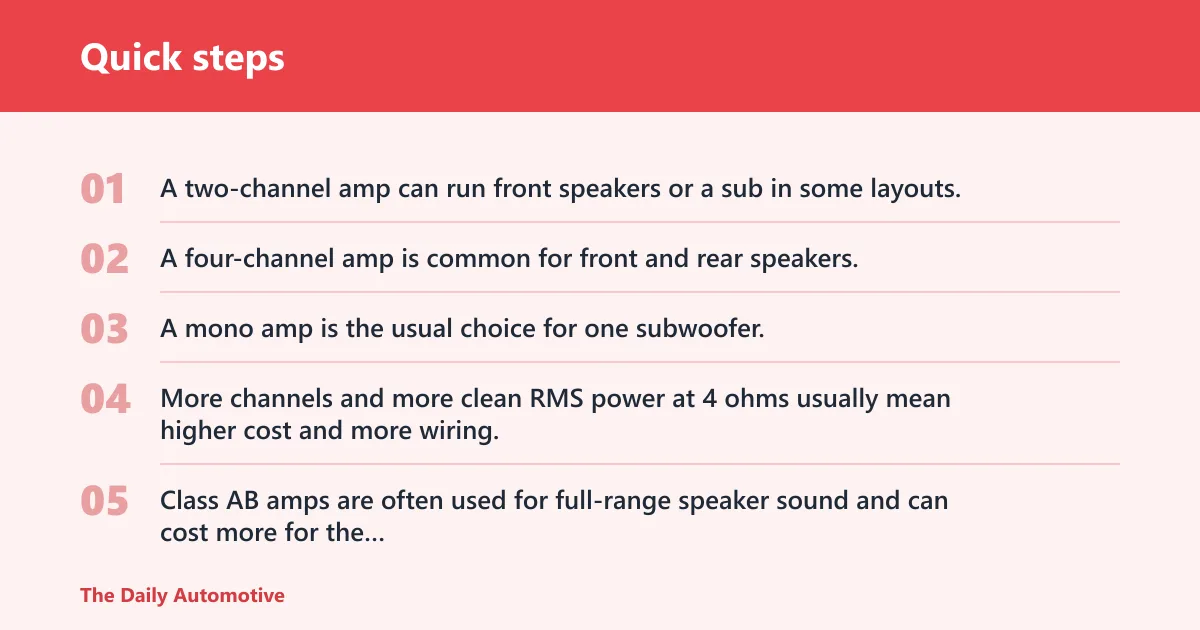
A two-channel amp can run front speakers or a sub in some layouts. A four-channel amp is common for front and rear speakers. A mono amp is the usual choice for one subwoofer. More channels and more clean RMS power at 4 ohms usually mean higher cost and more wiring.
Class AB vs class D pricing behavior
Class AB amps are often used for full-range speaker sound and can cost more for the power they deliver. Class D amps are common for subwoofers because they are efficient and compact. In practical budgeting, class D often wins for bass, while class AB shows up more in midrange and full-range builds.
10-inch vs 12-inch subwoofer costs
A 10-inch sub usually costs less and takes less space. A 12-inch sub can move more air and often hits harder, but it may need a larger box and more install room. The enclosure matters as much as the driver because sealed and ported boxes change the final sound and cost.
Sealed, ported, powered, and passive options
Sealed boxes are smaller and usually tighter in sound. Ported boxes are larger and can play louder. Powered subs combine amp and speaker in one unit, which can simplify wiring. Passive subs need a separate amplifier, which adds cost but also gives you more control over output.
Picture a compact sedan with front component speakers, a four-channel amp, and a sealed 10-inch sub. That setup can fit a sensible budget. Swap in a ported 12-inch box, add a mono amp, and the price rises because the enclosure, wiring, and tuning all grow with the bass plan.
Which hidden install costs should you expect?
Hidden costs are what turn a quoted parts list into a real invoice. Wiring quality, fuse protection, deadening, and adapter hardware are not optional details in a proper install. If a shop does not mention them up front, expect the final total to move.
Wiring kit quality and gauge size
An oxygen-free copper wiring kit costs more than budget aluminum wire, but the difference matters when current demand rises. Gauge size must match the amp load and cable length. Undersized wire can create voltage drop, which can reduce output and make the system less stable.
Fuse holders and distribution blocks
Any serious amplifier setup needs proper fuse protection near the battery. Multi-amp systems may also need a distribution block. These parts are small, but they are not throw-ins. The same goes for quality terminals and connectors.
Sound deadening per door
Door treatment often adds noticeable cost because it requires labor and material. Sound deadening helps reduce road noise and can improve bass punch and midrange clarity. A single door can be a modest add-on; four doors can become a separate budget line.
Adapters, brackets, and miscellaneous shop materials
Dash kits, speaker brackets, foam rings, clips, trim pieces, and small supplies can add up. These parts are easy to forget when comparing online component prices. They are also common on older cars, trucks, and luxury vehicles where the factory layout is less straightforward.
How much does professional installation cost?
Professional installation can range from a modest labor bill on a simple radio swap to a large charge for a full system with wiring, tuning, and factory integration. Shop rates vary by market, but vehicle complexity is usually the bigger factor. More trim, more electronics, and more tuning mean more labor.
Basic head unit install labor
A straightforward head unit install is the cheapest labor line. If the car has a standard dash, a simple wiring adapter, and no factory amplifier, the job can stay relatively contained. Add vehicle-specific interface modules and the price climbs.
Speaker install labor
Speaker labor usually rises when the doors need trimming, adapters, or sound treatment. Front component sets take longer than simple coaxials because the tweeters and crossovers add steps. Rear speakers are often simpler, but not always cheaper once panel removal is included.
Amp wiring and tuning labor
Amplifier work is more than bolting in a box. It includes power wiring, ground wiring, signal routing, protection, and gain setup. Tuning matters because the wrong gain setting can hurt sound quality even when every part is expensive.
How vehicle complexity changes the bill
Older cars are usually easier and cheaper. Trucks may need longer cable runs. Luxury vehicles often need more care because the audio system is tied into factory infotainment and vehicle data. A common first-timer mistake is budgeting for speakers and a head unit, then discovering the DSP and integration parts cost nearly as much as the hardware.
Frequently asked questions
How much does a full car stereo system cost?
A full car stereo system usually costs $800 to $5,000 installed, with high-end builds often higher once labor, wiring, and tuning are included. A simple replacement stays near the low end. A system with a DSP, subwoofer, and factory integration can move into the upper range fast.
How much does a car audio system cost?
A car audio system can cost a few hundred dollars for a basic upgrade or several thousand for a complete build. The real total depends on whether you are replacing a radio, adding amplification, or solving factory-system issues. Labor and hidden materials usually explain the gap between parts and final price.
How much does a full car sound system cost?
A full car sound system cost depends on speaker count, amplification, bass goals, and install complexity. Entry builds can stay under $1,500 installed, while stronger daily-driver systems often land between $1,500 and $3,300. Custom work, tuning, and integration can push the bill much higher.
How much does a good car audio system cost?
A good car audio system often lands in the $1,500 to $3,300 installed range if you want clear front sound, useful bass, and a modern source unit. That budget usually covers a balanced mix of parts and labor without chasing custom fabrication or premium-brand pricing.
How much does a new car audio system cost?
A new car audio system may cost less than many buyers expect if it is only a head unit and speaker swap. Once you add a subwoofer, amplifier, wiring adapters, and installation, the cost climbs quickly. Newer vehicles also tend to need more integration hardware than older ones.
How much does a custom car audio system cost?
A custom car audio system often starts around $4,000 and can move far beyond that when fabrication, DSP tuning, deadening, and premium parts are part of the plan. One all-McIntosh system reached $250,000. Another McIntosh and B&W build came in at $45,000.
How much does a decent car audio system cost?
A decent car audio system usually sits in the $1,000 to $2,500 installed range. That level can buy a better source unit, front speakers, some amplification, and modest bass without turning the car into a full custom project. The final number still depends on the vehicle.
How much does a car music system cost?
A car music system cost is usually the same budget question as a car audio system. For a basic setup, expect the low hundreds plus labor. For a complete system with modern phone integration, stronger speakers, and a subwoofer, the total more often reaches four figures than stays below them.
How much does a high end car audio system cost?
A high end car audio system can cost $8,000 or more once premium hardware, factory integration, and tuning are included. At the top end, the pricing is limited more by fabrication, electronics, and labor than by a single speaker or amplifier choice. Custom luxury builds can go much higher.
How much does a decent car sound system cost?
A decent car sound system usually falls into the same range as a good daily-driver upgrade: about $1,500 to $3,300 installed. If you want better clarity and bass without going custom, that is the range where the parts list and labor balance most naturally.
Products related to this article
Sponsored / affiliate links. As an Amazon Associate I earn from qualifying purchases. I may earn additional commission from eligible campaigns.