Best RC Car Jump Ramps for 1/5 to 1/16 Scale Models
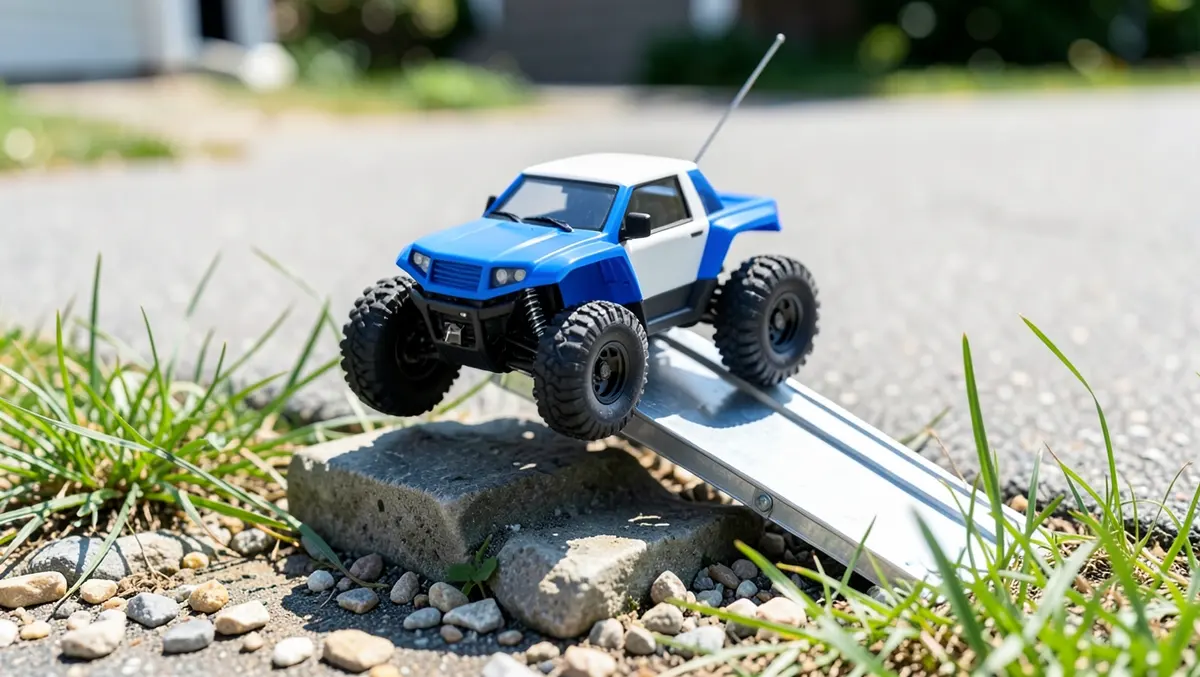
RC car jump ramps are metal or plastic ramps, usually set at an adjustable 40 to 60 degree angle, built to launch 1/5 to 1/16 scale RC cars into the air for jumps, stunts, and backflips.
A lower angle around 40 degrees sends a car farther for long, low jumps, while a steeper 60 degree setting is what most drivers use for backflips and vertical tricks. Below are three ramp styles worth knowing about – a heavy-duty ramp built for multiple scales, a foldable ramp made for easy transport, and a bolt-together kit ramp with adjustable angles – along with the sizing, angle, and material questions drivers ask most.
Rc Car Jump Ramp
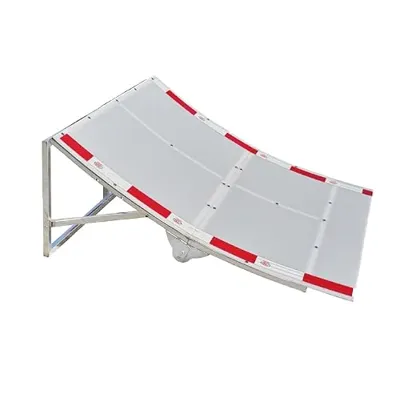
The RC Car Jump Ramp by RCJUMPANT is built for hobbyists who race and perform stunts across a wide range of RC car sizes. It works with 1/5, 1/10, 1/12, 1/14, and 1/16 scale cars, so one ramp covers most of a garage full of different RC vehicles.
Pros:
- Durable metal construction for long-lasting use.
- Versatile across five different RC car scales.
- Portable and easy to set up.
Cons:
- Bulky footprint needs more storage space than a folding ramp.
- Some assembly required before first use.
The ramp measures 39.4 x 31.5 x 15.8 inches, large enough to handle the speed and weight of most RC models without flexing on landing. That size also means it takes real storage space between sessions, which is the tradeoff for a ramp that fits everything from a 1/16 scale car up to a 1/5 scale basher.
Check current pricing and availability here.
PETSOLA RC Ramp for Jumping Gifts Easy Setup Accessory Repair Playset
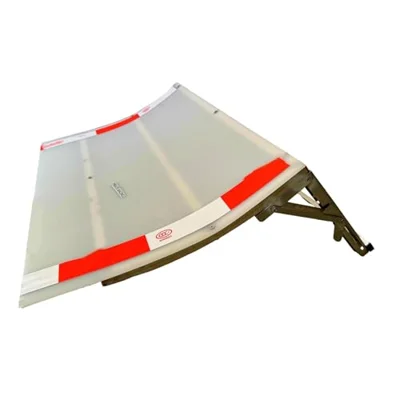
The PETSOLA RC Ramp measures 31.5 x 19.69 x 7.87 inches and weighs under 8 pounds, with support legs that fold flat against the ramp surface for compact storage between sessions. Setup is a one-person job: unfold the legs and the ramp is ready to run, with no separate assembly step.
Pros:
- Folds flat for easy storage and transport to practice or race day.
- Stainless steel frame paired with impact-resistant PC material for repeated landings.
- One-person setup, ready to use in under a minute.
- Curved deck engineered for a smooth takeoff with RC cars, monster trucks, and short course trucks.
Cons:
- Higher price than the other ramps in this lineup.
- Fixed ramp curve, so the launch angle is not adjustable like a kit-style ramp.
Because the legs fold flat instead of detaching completely, there is nothing extra to lose track of between sessions, which matters if you are packing a ramp into a car trunk along with the rest of your RC gear.
See the latest price and details here.
Rc Car Jump Ramp Kit
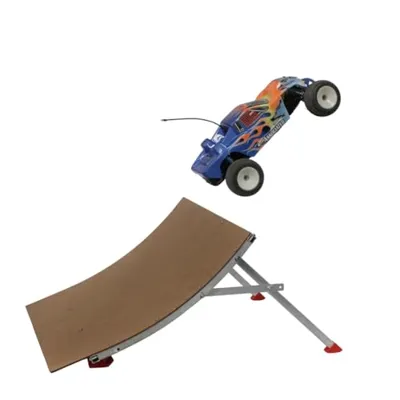
The 911 Motorsports 2’x2′ RC Car Jump Ramp is a Made in USA kit for 1/10 scale cars, with an aluminum frame and a 1/8 inch textured masonite deck. It ships as a kit that bolts and screws together in about 20 to 30 minutes, or as a pre-assembled RTR version where only the legs need to be bolted on.
Pros:
- Adjustable legs from 40° to 60°, so one ramp covers long jumps and backflips.
- Lightweight at 6 pounds, easy to carry between the garage and driveway.
- Aluminum frame and textured deck built for repeated landings.
- Made in the USA.
Cons:
- Kit version requires drilling pilot holes and assembly before first use.
- Rated for up to 1/10 scale only; larger 1/5 scale bashers need a wider ramp.
The manufacturer’s own angle guide is specific: 40° works as a long kicker, sending a car 20 to 40 feet; 50° launches a high jump well over 10 feet in the air; and 60° is the setting for low-to-medium speed backflips. That range is what makes a single adjustable ramp useful for both distance jumps and trick practice, instead of needing a separate ramp for each.
View this ramp kit on Amazon here.
Choosing the Right RC Ramp Angle
Ramp angle matters more than ramp size for most jumps. On an adjustable kit ramp, a shallow 40 degree angle keeps the car low and sends it farther forward, which is what most drivers use for distance jumps on a straight track. Moving up to 50 degrees trades distance for height, launching the car well over 10 feet into the air. A steep 60 degree angle is the setting drivers reach for when practicing backflips, since it points the car more upward than forward.
Fixed-angle ramps like the RCJUMPANT and PETSOLA models above are built around one moderate curve that works for general jumping without any setup, which is simpler if you do not need to dial in a specific trick. Speed also plays a role: a car needs enough approach speed to clear the ramp cleanly, so matching the angle to your car’s top speed and the space you have to land in matters as much as the ramp itself. If you would rather build a ramp from scratch, our guide on how to build an RC car ramp at home walks through the materials and angle math step by step.
Frequently Asked Questions
What Are Rc Car Ramps Used For?
RC car ramps are built for jumping and stunts. They let a car launch into the air for distance jumps, high jumps, or backflips, depending on the ramp’s angle. Drivers also use them to test how a car handles landings at speed. They work with scales from 1/16 up to 1/5, provided the ramp is rated for that size.
How Do You Choose The Right Rc Ramp?
Match the ramp to your car’s scale first – most ramps list a range like 1/16 to 1/5 or up to 1/10 scale. Then decide between a fixed-angle ramp, which needs no setup, and an adjustable kit ramp, which lets you dial in the angle for distance, height, or backflips. Metal frames and textured decks hold up better to repeated hard landings than lighter plastic ramps.
Are Adjustable Ramps Better For Rc Cars?
Adjustable ramps are better if you want one ramp to do more than one job. A typical range runs from about 40 degrees for long, low jumps up to 60 degrees for backflips, with 50 degrees as the middle setting for maximum height. A fixed-angle ramp is simpler and often cheaper, but it only does the one type of jump it was built for.
What Materials Are Best For Rc Ramps?
Aluminum and stainless steel frames hold up best to repeated jumps and outdoor weather. For the deck itself, textured masonite and impact-resistant plastics both grip well and resist cracking on hard landings, while thin sheet metal can dent over time. Ramps with mounting holes in the frame make it easier to adjust or reinforce the legs later.
Can Rc Ramps Handle Different Car Scales?
Most RC ramps are rated for a specific scale range, commonly 1/16 up to 1/10 or 1/5 scale, so check that range before buying. A ramp built for smaller 1/16 to 1/12 scale cars may flex or feel undersized under a heavier 1/5 scale basher. Wider, heavier-duty ramps exist specifically for larger scales, so match the ramp’s rated range to your car rather than assuming one size fits all.
Conclusion
A good RC ramp comes down to matching three things: your car’s scale, the angle you want, and how much storage space you have. The RCJUMPANT ramp covers the widest range of scales in one fixed unit, the PETSOLA ramp folds flat for easy transport, and the 911 Motorsports kit is the one to pick if you want an adjustable 40 to 60 degree angle for both distance jumps and backflips.
Whichever ramp you choose, metal frames and textured decks last longest under repeated hard landings. Start on the shallower end of the angle range while you get a feel for your car’s approach speed, then work up to steeper settings once you are comfortable with the landings.
Products related to this article
Sponsored / affiliate links. As an Amazon Associate I earn from qualifying purchases. I may earn additional commission from eligible campaigns.