How Much Do Struts Cost? Bare vs. Quick Strut Prices
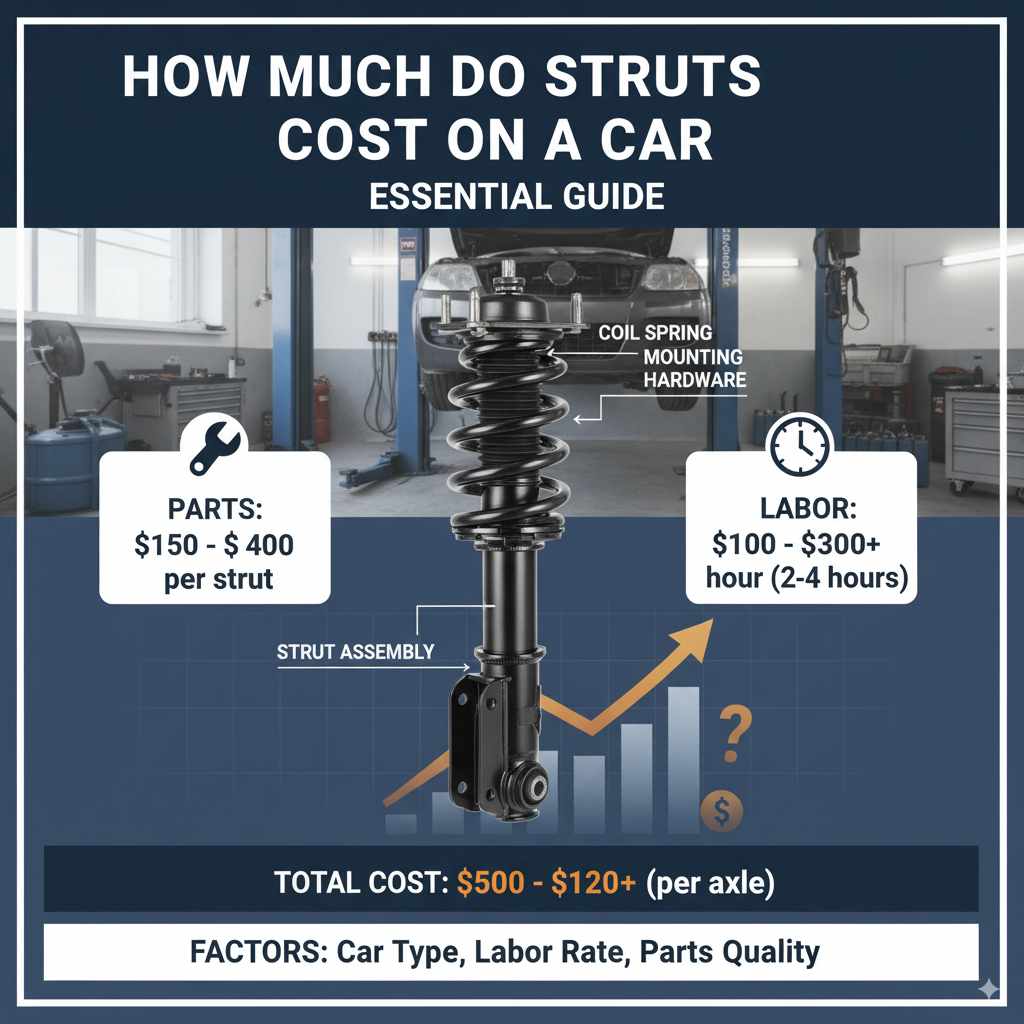
Strut replacement typically costs $300 to $900 per axle installed, or $600 to $1,800 for all four struts — luxury and adaptive-suspension vehicles run higher. Choosing a bare strut over a complete quick-strut assembly shifts the cost between parts and labor rather than lowering it, and skipping the required wheel alignment risks uneven tire wear. This guide breaks down parts vs. labor costs, bare vs. quick-strut pricing, and when replacing all four is worth it.
Quick Answer
Expect $300–$900 per axle installed (parts + labor) for a front or rear strut pair, or $600–$1,800 to replace all four. A complete quick-strut assembly costs more in parts than a bare strut but usually needs less labor, so the total is often close either way. Always replace struts in pairs on the same axle, and budget for a wheel alignment afterward.
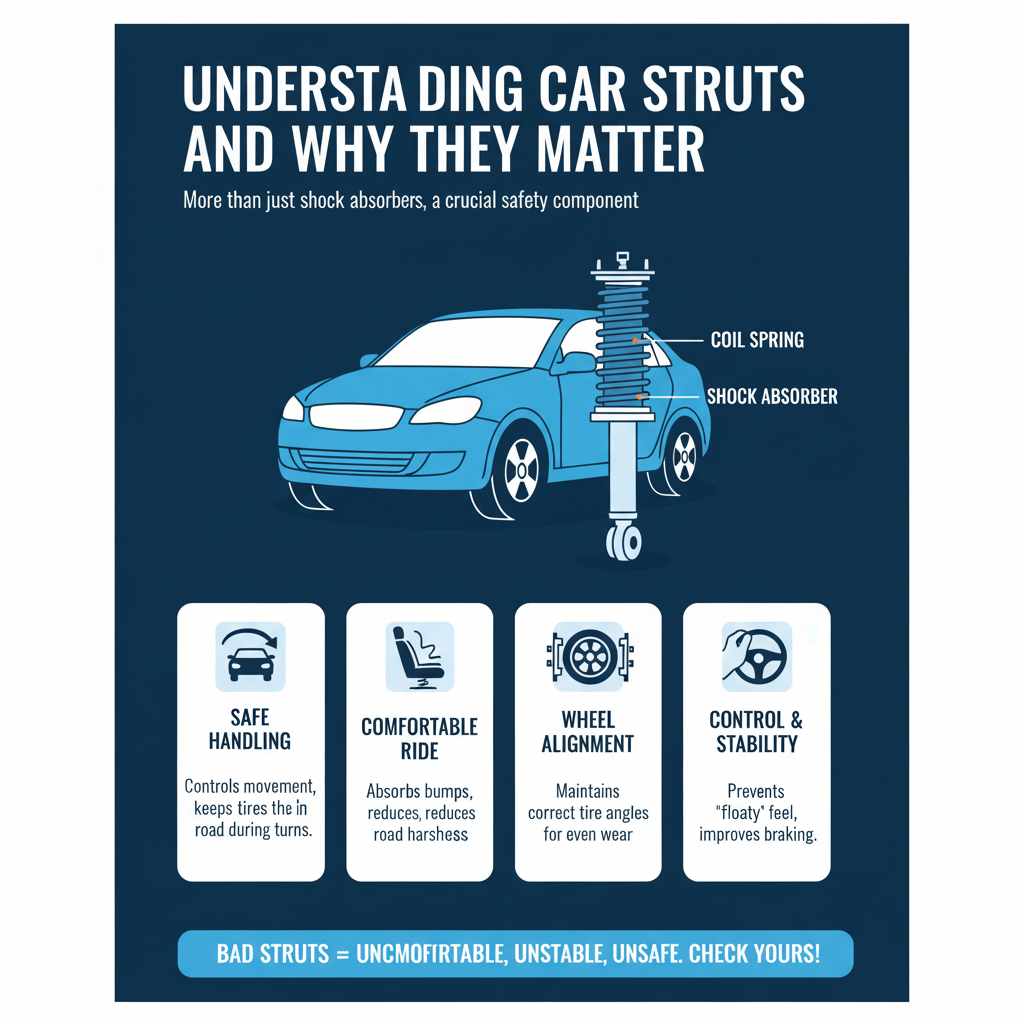
Understanding Car Struts and Why They Matter
Think of your car’s struts as unsung heroes of your ride. They’re not just shock absorbers; they’re a crucial part of your suspension system. Struts combine the shock absorber function with the structural support of the suspension — that combination is what separates a strut from a shock absorber, which only dampens movement and carries no structural load. This means they help control your car’s movement, like keeping the tires on the road during turns and absorbing bumps. They are essential for a comfortable ride, safe handling, and even your car’s alignment. When they start to fail, you’ll notice your car might feel “floaty,” dive excessively during braking, or handle poorly. For a full breakdown of how struts work, see our guide on what struts do on a car.
What’s Included in the Cost of Strut Replacement?
When you’re looking at the cost of replacing your car’s struts, it’s helpful to know what you’re actually paying for. The total price generally breaks down into two main parts:
1. Parts Cost
This is the price of the new strut assemblies themselves. Struts aren’t just a single piece; they often come as a complete assembly that includes the strut, spring, and mount. This design makes replacement easier and ensures all components work together perfectly. The quality and brand of the struts you choose will significantly impact this cost.
2. Labor Cost
This is the fee charged by the mechanic for their time and expertise to remove the old struts and install the new ones. Replacing struts is a moderately complex job that requires specialized tools and knowledge of suspension systems. The labor cost can vary based on the mechanic’s hourly rate, the complexity of your car’s suspension, and how long the job takes.
Bare Strut vs. Quick Strut (Complete) Assembly: Which Costs More?
A bare strut is just the strut body — your mechanic has to reuse the old coil spring, mount, and boot, which means compressing and transferring the spring with a spring compressor tool. A quick-strut (complete) assembly is a category that comes pre-loaded with a new spring, mount, and boot already installed, so it bolts straight onto the car with no spring compressor needed.
| Factor | Bare Strut | Quick Strut (Complete) Assembly |
|---|---|---|
| Parts cost (per side) | Lower — around $50–$150, but only if the old spring and mount are reused | Higher — around $100–$300+, since the spring and mount are included |
| Labor time (per side) | Longer — spring compressor setup, disassembly, and reassembly add time | Shorter — bolts in directly, no spring compressor required |
| Best for | Reusing a spring/mount that’s still in good shape, or a shop billing flat labor either way | Most DIY jobs and shop visits — avoids the riskiest step of a strut job |
📊 A quick-strut assembly costs more upfront in parts, but a bare strut usually needs more labor time to install. Monroe, one of the largest strut manufacturers, notes that once labor is factored in, the total price difference between the two options “may be negligible.” — Source: Monroe Shocks & Struts, Strut Assemblies vs. Bare Struts
Best Quick Strut Assembly Pick
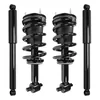
COMPLETESTRUTS Front Quick Complete Strut Assembly with Coil Spring
A pre-assembled quick-strut unit with the coil spring, mount, and boot already installed — no spring compressor required.
- Best for: Drivers replacing a front pair who want to skip the dangerous spring-compression step
- Why we picked it: Bolts in directly, cutting labor time versus a bare-strut rebuild
- Main drawback: Strut assemblies are vehicle-specific — confirm exact fitment for your make, model, and year before ordering
Compare more strut-job tools
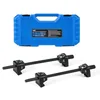 Option 1 OMT Macpherson Strut Spring Compressor Tool Set
|
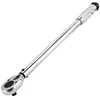 Option 2 Powerbuilt 1/2-Inch Drive Micrometer Torque Wrench
|
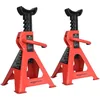 Option 3 Amazon Basics Steel Jack Stands, 3 Ton Pair
|
As an Amazon Associate we earn from qualifying purchases.
Factors Influencing Strut Replacement Costs
Several things can make the price tag for new struts go up or down. Understanding these factors can help you get a clearer picture of your budget.
Your Car’s Make and Model
Luxury vehicles or cars with advanced suspension systems (like adaptive or magnetic ride control) often have more expensive, specialized struts. Simpler, more common cars usually have more affordable, standard parts. For example, a strut for a performance sports car might cost much more than one for a standard sedan.
Parts Quality and Brand
Just like with anything else, there are different levels of quality when it comes to car parts. You can find:
- OEM (Original Equipment Manufacturer) parts: These are made by the same company that manufactured your car. They are typically the most expensive but offer the best fit and longest lifespan.
- Aftermarket parts: These are made by other companies. They can range from budget-friendly options to high-performance alternatives. Quality can vary, so it’s important to choose reputable brands.
- Rebuilt or remanufactured struts: These are used struts that have been repaired and tested. They are the cheapest option but may not last as long as new ones and can be harder to find.
Number of Struts Being Replaced
Your car has struts on at least the front axle, and sometimes all four wheels. It’s almost always recommended to replace struts in pairs (both front struts or both rear struts) to ensure balanced handling and suspension performance, since a new strut paired with a worn one on the same axle creates uneven damping side to side. Replacing all four will, naturally, cost more than just replacing the front pair.
Location and Mechanic’s Rates
Labor rates vary significantly depending on where you live. Mechanics in major cities or high-cost-of-living areas generally charge more per hour than those in rural areas. Dealerships also tend to have higher labor rates than independent repair shops.
Additional Repairs Needed
Sometimes, when a mechanic is replacing struts, they might discover other worn-out suspension components. This could include things like ball joints, tie rod ends, control arms, or sway bar links. If these parts also need replacing, it will add to the overall cost of the repair.
Average Strut Replacement Costs: A Breakdown
To give you a better idea, let’s look at some average cost ranges based on current 2026 pricing across multiple repair-cost sources. These are estimates and can vary greatly, but they provide a good starting point.
The cost of replacing just the front struts is usually less than doing all four. Here’s a general idea, combining both bare-strut and quick-strut jobs:
| Service | Estimated Parts Cost | Estimated Labor Cost | Estimated Total Cost (installed) |
|---|---|---|---|
| Front Strut Replacement (Pair) | $150 – $500 | $150 – $400 | $300 – $900 |
| Rear Strut/Shock Replacement (Pair) | $100 – $400 | $100 – $300 | $200 – $700 |
| All Four Struts/Shocks Replacement | $250 – $900 | $250 – $700 | $500 – $1,600 |
Note: These figures reflect a synthesis of current 2026 industry pricing data for standard vehicles. European luxury cars or vehicles with complex adaptive suspension systems may incur higher costs. Add roughly $100–$200 for the wheel alignment most shops recommend afterward.
DIY vs. Professional Repair: Which is Cheaper?
The decision to tackle strut replacement yourself or hire a professional can significantly impact the cost. Here’s a look at the pros and cons of each:
DIY (Do-It-Yourself)
-
Pros:
- Significant potential savings on labor costs.
- Sense of accomplishment and increased car knowledge.
-
Cons:
- Requires specialized tools (like spring compressors, which can be dangerous if not used correctly).
- Takes time and effort, and you need a safe space to work like a garage.
- Risk of injury or improper installation if not careful.
- Need to properly dispose of old parts.
Professional Repair
-
Pros:
- Done by experienced technicians with the right tools.
- Usually comes with a warranty on parts and labor.
- Saves you time and physical effort.
-
Cons:
- Higher overall cost due to labor charges.
- You need to find a trustworthy mechanic.
If you’re considering a DIY approach, always prioritize safety. Tools like spring compressors require very careful use, as a compressed spring can store a lot of energy. If you’re not comfortable or don’t have the necessary safety equipment, it’s always best to leave this job to the professionals.
When Should You Consider Replacing Your Struts?
Struts don’t last forever. They are wear-and-tear items, and their lifespan can vary depending on driving conditions. Here are some common signs that it’s time to check your struts:
- Bouncy or “Floaty” Ride: If your car bounces more than once or twice after hitting a bump, the struts may be worn out.
- Nose-Diving During Braking: When you brake, if the front of your car dips down excessively, it’s a strong indicator of failing struts.
- Tire Wear: Uneven tire wear, often appearing as cupping or scalloped patterns, can be caused by shocks and struts that aren’t keeping the tires firmly on the road.
- Leaking Fluid: Struts contain hydraulic fluid. If you see oily residue on the strut body, they are likely leaking and need replacement.
- Clunking or Knocking Noises: Worn struts or their mounting hardware can cause noises, especially when going over bumps or turning.
- Pothole Damage: After hitting a large pothole or curb, it’s a good idea to have your suspension, including struts, inspected.
“Monroe recommends that you change your shocks and struts in pairs” on the same axle — replacing only one side “can create uneven damping characteristics” between the two wheels.
Step-by-Step Guide to Replacing Car Struts (For the Ambitious DIYer)
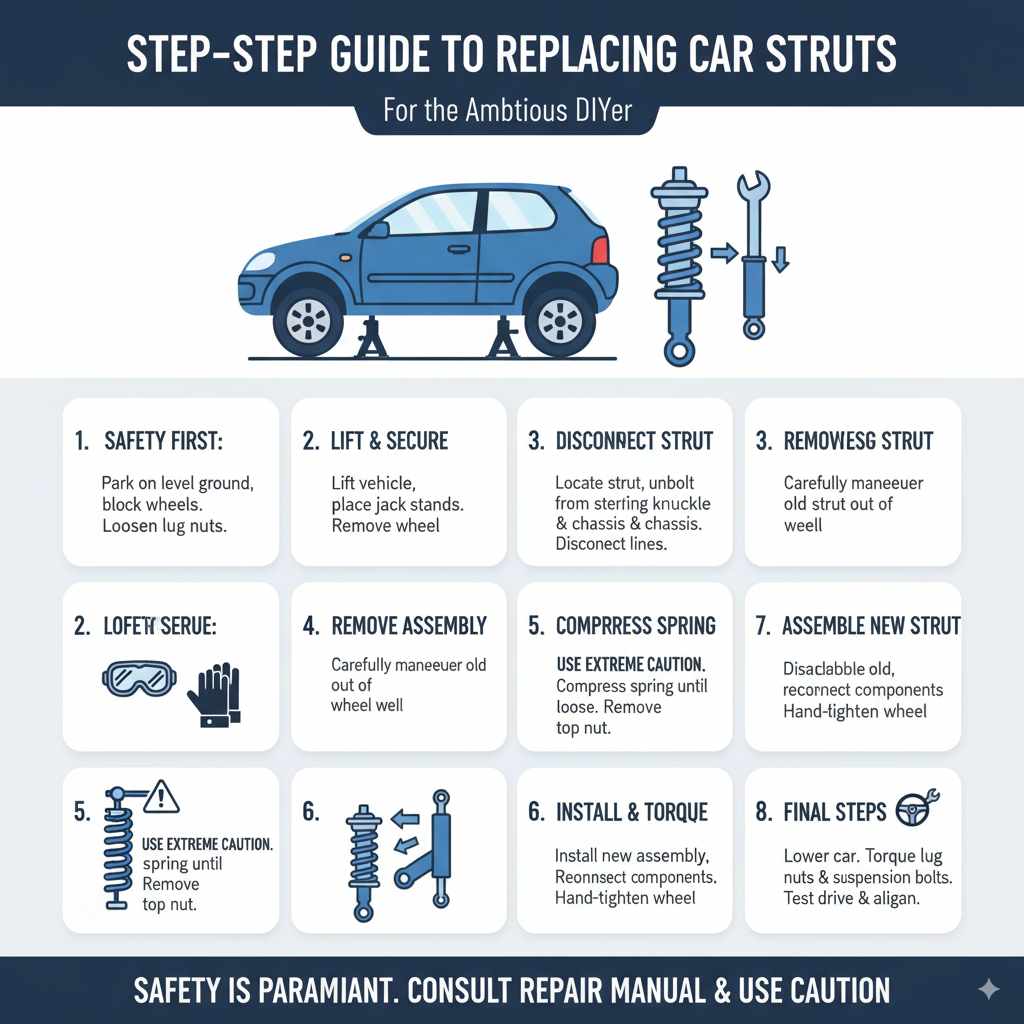
If you’ve decided to take on this project yourself, here’s a simplified overview of how the job affects your total cost and time. For the complete walkthrough with more detail on each stage — including the loaded-strut shortcut that skips the spring compressor — see our full guide: How to Install Struts on a Car. Remember, safety is paramount. Always consult your car’s specific repair manual for detailed instructions and torque specifications.
Tools You’ll Likely Need:
- Safety glasses and gloves
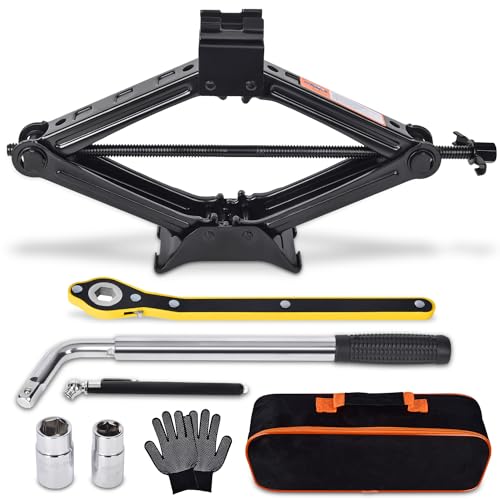
- Jack and jack stands
- Lug wrench
- Socket set and wrenches
- Pry bars
- Torque wrench
- Strut spring compressor tool (crucial and potentially dangerous – use with extreme caution!) – skip this entirely if you use a quick-strut assembly instead of a bare strut
- Penetrating oil (like WD-40)
- Wire brush (for cleaning corrosion off mounting bolts)
- Possibly a breaker bar
The Process:
- Safety First: Park your car on a level surface. Engage the parking brake and block the rear wheels. Loosen the lug nuts on the wheel you’ll be working on, but don’t remove them yet.
- Lift the Vehicle: Using your jack, lift the vehicle at the designated jack points near the wheel you’re working on. Securely place jack stands under the frame or designated support points before removing the jack.
- Remove the Wheel: Fully unthread the lug nuts and remove the wheel.
- Locate and Disconnect Strut: Identify the strut assembly. It’s usually bolted to the steering knuckle (at the bottom) and to the car’s chassis (at the top, often under a cap in the engine bay or trunk). You may need to disconnect other components like the sway bar link or ABS sensor wire to gain access. Use penetrating oil on stubborn bolts.
- Remove the Strut Assembly: Unbolt the strut from the steering knuckle and then from the upper strut mount. Carefully maneuver the assembly out of the wheel well.
- Compress the Spring (USE EXTREME CAUTION): This is the most dangerous step, and only applies if you’re using a bare strut. Securely install the spring compressor tool according to its instructions. Gradually compress the spring evenly until it’s no longer under tension. Once compressed, you can safely remove the top nut holding the strut, spring, and mount together.
- Disassemble Old Strut: Remove the old strut. Keep track of the order of all the components (top mount, bearing, rubber isolators, spring, bottom isolator).
- Assemble New Strut: Place the new strut into the coil spring. Reassemble all the components onto the new strut in the exact reverse order they came off the old one. Ensure the spring is seated correctly in its perches. Skip this step entirely if you’re installing a quick-strut assembly.
- Decompress the Spring: Carefully and evenly release the tension on the spring compressor tool until the spring is fully seated and no longer compressed.
- Install New Strut Assembly: Carefully place the new strut assembly back into position. Connect the top mount to the chassis and then align and bolt the bottom of the strut to the steering knuckle.
- Reassemble and Torque: Reconnect any components you disconnected earlier. Reinstall the wheel and hand-tighten the lug nuts. Lower the vehicle off the jack stands.
- Final Torque: With the car on the ground, use a torque wrench to tighten the lug nuts to your car manufacturer’s specifications. Also, torque all other suspension bolts to specification. Take a short, slow test drive to check for any unusual noises or handling issues. It’s highly recommended to get a wheel alignment after strut replacement.
Disclaimer: This is a simplified guide. Working on suspension components can be dangerous. If you are not experienced or comfortable with auto repair, it is strongly recommended to have a qualified mechanic perform this service. For proper procedures, always refer to your vehicle’s specific service manual and follow all safety precautions.
Frequently Asked Questions (FAQs) About Strut Costs
How long do car struts typically last?
On average, car struts last between 50,000 to 100,000 miles. However, this can vary greatly depending on your driving habits, the quality of the struts, and the type of roads you drive on. Rough roads and potholes will shorten their lifespan.
Is it okay to just replace one strut?
While you might be tempted to save money by replacing only the faulty strut, it’s strongly recommended to replace them in pairs (both front struts or both rear struts). This ensures balanced handling, prevents premature wear on the other side, and maintains the integrity of your suspension system.
Do I need a wheel alignment after replacing struts?
Yes, it is almost always recommended to get a wheel alignment after replacing struts or any other major suspension components. Strut replacement can slightly alter your suspension geometry, and an alignment ensures your wheels are properly aligned for optimal tire wear, handling, and safety. Budget roughly $100–$200 for this on top of the strut replacement cost.
Can I feel a difference if my struts are worn?
Absolutely. Worn struts will make your car feel less stable. You might notice excessive bouncing after hitting bumps, the car dipping excessively when braking, leaning more in turns, or even hearing clunking noises. If you notice any of these, it’s time to get them checked.
Are cheaper aftermarket struts worth the savings?
It depends on the brand and your needs. Many aftermarket brands offer good quality at a lower price than OEM parts. However, extremely cheap or unbranded struts might compromise on durability, ride quality, or safety. It’s wise to research reviews and choose reputable aftermarket brands known for reliability.
How much does it cost to replace just the springs?
Springs are often replaced as part of a complete strut assembly. If you only need springs, the parts themselves can cost $50-$150 per spring. However, the labor to compress the old springs, transfer them to new struts, and reassemble can be just as involved as replacing the entire assembly, so the labor cost might not be significantly less. It’s often more cost-effective and safer to replace the entire strut assembly.
Is a quick-strut assembly worth the extra cost over a bare strut?
In most cases, yes. The extra $50–$150 in parts cost is often offset by lower labor time, and it avoids the riskiest part of the job — working with a compressed coil spring. A bare strut makes more sense mainly when the existing spring and mount are still in good condition and your shop charges the same flat labor rate either way.
Maintaining Your Suspension for Longevity
Taking good care of your car’s suspension can help extend the life of your struts and other components. Here are a few tips:
- Avoid Potholes: Whenever possible, steer clear of potholes and rough road surfaces. Hitting these hard can damage not only your struts but also your tires and wheels.
- Drive Sensibly: Smooth acceleration and braking, and taking turns at moderate speeds, put less stress on your suspension system. Over time, this care can prevent premature wear.
- Regular Inspections: When you get your oil changed or go for other routine maintenance, ask your mechanic to visually inspect your suspension components. They can spot leaks or early signs of wear that you might miss.
- Address Noises Promptly: If you start hearing odd noises from your suspension, don’t ignore them. Getting them checked out early can sometimes prevent minor issues from becoming major, more expensive repairs.
By being mindful of how you drive and what you drive over, you can contribute to a healthier suspension system and potentially save money on future repairs like strut replacements. If you want a full cost breakdown on another common brake-and-suspension repair, see our guide on how much it costs to replace rotors on a car.
Conclusion
Replacing your car’s struts is a necessary maintenance task that ensures a safe and comfortable driving experience. The cost typically runs $300 to $900 per axle installed, or up to $1,800 for all four, and understanding what drives that price — your car’s make and model, bare strut vs. quick-strut assembly, parts quality, and labor rates — helps you budget accurately and avoid surprises. Whether you go the DIY route to save on labor or hire a professional for the warranty and peace of mind, replacing struts in pairs and getting a wheel alignment afterward will protect the investment either way.
Products related to this article
Sponsored / affiliate links. As an Amazon Associate I earn from qualifying purchases. I may earn additional commission from eligible campaigns.