R-1234yf Car AC Refrigerant: Safety Facts & Best Cans
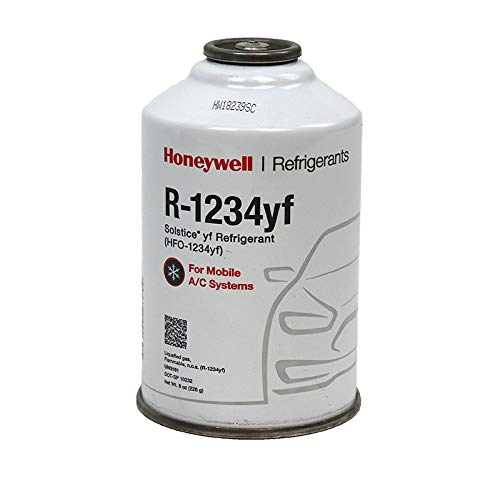
R-1234yf (HFO-1234yf) is the refrigerant used in most cars built since around 2013, and it has now largely replaced R-134a in factory air conditioning systems. It is classified as A2L: mildly flammable, built around reverse-thread service fittings, and not interchangeable with R-134a.
This guide covers what actually makes R-1234yf different from the refrigerant it replaced, how to handle an 8oz can safely during a DIY top-off, and which ZeroR® cans and recharge kits are genuinely in stock and worth buying right now.
What Is R-1234yf and Why Isn’t It the Same as R-134a?
R-1234yf carries an ASHRAE A2L safety rating, meaning it is mildly flammable under specific conditions (an open flame or a hot surface can ignite it), while the R-134a it replaces is A1, or non-flammable. That single classification difference is why R-1234yf systems use dedicated components: reverse-thread (left-hand) service port fittings that physically won’t accept a standard R-134a hose, different refrigerant oil, and recovery equipment rated for A2L handling. None of that is interchangeable in either direction.
The other reason R-1234yf took over so quickly has more to do with paperwork than chemistry. R-134a has a global warming potential (GWP) of roughly 1,430; R-1234yf sits at about 4. An EPA rule finalized in 2015 tried to mandate the switch outright for 2021-model-year vehicles, but a federal court struck that specific mandate down in 2017. Automakers kept switching anyway, because using R-1234yf still earns manufacturers greenhouse-gas compliance credits under separate EPA fuel-economy rules, and because the EU banned R-134a in new-vehicle air conditioning back in 2017 — global platforms simply standardized on the lower-GWP refrigerant everywhere. By around model year 2021, R-1234yf was the factory fill in the large majority of new cars sold in the US.
For a DIY top-off, that mild flammability just means normal common sense: work in an open, ventilated space, keep the can away from open flame or a running engine’s exhaust manifold, and don’t smoke while charging the system. It also means you should never try to convert an R-1234yf system back to R-134a to save money — besides the seal and oil incompatibility, doing so counts as tampering with an emissions-related component under the Clean Air Act. If you ever need to fully evacuate a system rather than just top it off, our guide to removing refrigerant from a car AC without a recovery machine covers both R-134a and R-1234yf procedures.
ZeroR® HFO-1234YF R1234YF Refrigerant
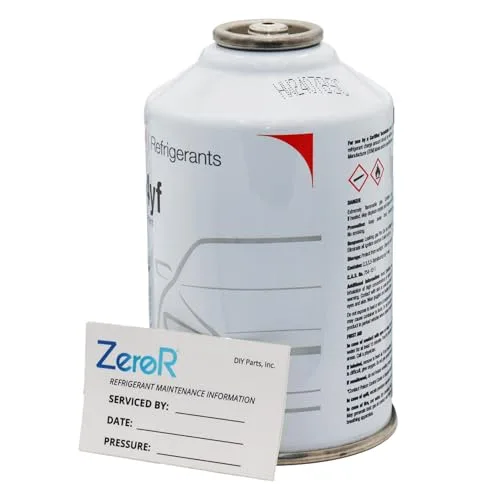
The ZeroR® HFO-1234YF R1234YF Refrigerant can is a straightforward, single-can option for topping off an R-1234yf system that’s already been checked for leaks. It suits vehicle owners doing routine maintenance and mechanics or shops that want a reliable, correctly labeled can on hand for MVAC service work, rather than anyone attempting a full system recharge or a first-time diagnosis.
Pros:
- Formulated specifically for R-1234yf MVAC systems, with the correct reverse-thread fitting
- Includes a paper maintenance label so you can log the service date and quantity used
- Low global warming potential compared to older R-134a-based products
Cons:
- Sold only in 8oz cans, so a larger vehicle or a bigger shortfall may need two or three
- Only works with a vehicle whose factory system is already R-1234yf — it will not fit or serve an R-134a car
The 8oz SSV can is sized for a single top-off rather than a full recharge from empty, and the reverse-thread valve is the same design used across the R-1234yf category, so it should thread onto any standard R-1234yf can-tap or recharge hose. The included maintenance label is a small but genuinely useful touch: writing the date and amount on it after service gives the next mechanic (or you, a year later) a real record instead of a guess.
To buy this product, click here.
ZeroR® R1234YF Refrigerant Recharge Kit – 2 Cans With Brass Can Tap Gauge
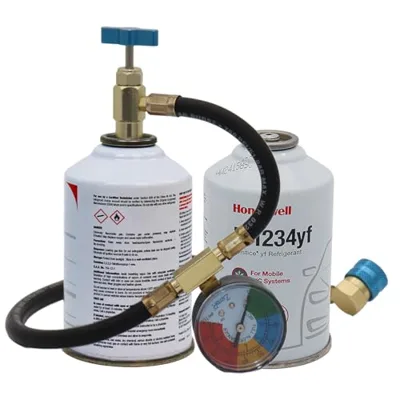
This kit pairs one 8oz can of R-1234YF with a 24-inch heavy-duty brass can tap and built-in pressure gauge, then throws in a second can — a sensible pick if your system needs more than a single can to get back to spec, or if you’d rather have a spare on hand than make a second trip to buy one later.
Pros:
- The 24-inch hose and brass can tap reach service ports tucked deep in the engine bay without you having to disconnect anything else nearby
- Both cans are authentic HFO-R1234YF sourced from authorized US suppliers, not a generic re-labeled fill
- Two cans on hand means you can finish a low charge in one session instead of stopping halfway through
Cons:
- Always confirm your vehicle actually takes R-1234yf, and check the gauge’s pressure range against your system’s spec before you start
Overall, the two-can version earns its slightly higher price by removing the guesswork — you won’t need to estimate how much you’ll use and buy a single can that turns out to be short. As always, check current pricing and stock on Amazon before you order.
To buy this product, click here.
ZeroR® R1234YF Refrigerant Recharge Kit – 1 Can With Brass Can Tap Gauge
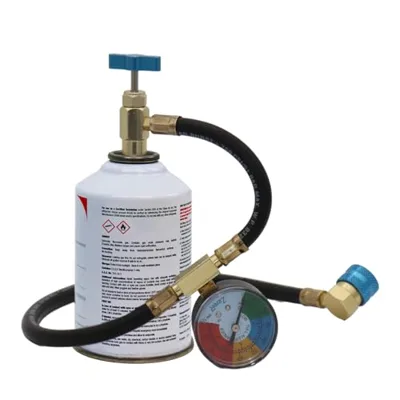
This is the same 24-inch brass can-tap-and-gauge setup as the two-can kit above, just bundled with a single 8oz can — the better choice if you already know one can is all your system needs, or if you’re buying the gauge itself and want to keep the upfront cost down.
Pros:
- Lower cost than the two-can kit if you only need to top off a small shortfall
- Same reach and gauge accuracy as the larger kit, so you’re not giving up capability, just extra refrigerant you might not use
- The included can is authentic HFO-R1234YF from an authorized US supplier
Cons:
- If your AC turns out to be significantly low, one can may not fully restore proper pressure and you’ll need to buy a second separately
If you’re unsure how low your charge actually is, it’s usually cheaper to start here and buy a second can only if the gauge shows you still need one, rather than paying up front for capacity you might not use.
To buy this product, click here.
Frequently Asked Questions
What Is R1234yf Refrigerant Used For?
R-1234yf refrigerant is used in automotive air conditioning systems as the lower-GWP replacement for R-134a. It is the factory refrigerant in most vehicles built since around 2013, and it requires its own reverse-thread service fittings and A2L-rated handling equipment.
How Do I Recharge Car AC With ZeroR®?
Connect the brass can tap gauge to the refrigerant can, then attach the hose to the vehicle’s low-pressure service port — on an R-1234yf system, this port only accepts the correct reverse-thread coupler, so it won’t connect to the wrong port by mistake. Open the valve slowly and watch the gauge, stopping once the reading reaches the pressure your vehicle’s AC label or service manual specifies for the current ambient temperature.
Does ZeroR® Refrigerant Include a Leak Detection Solution?
Not the three cans and kits covered on this page — they’re refrigerant and a can-tap gauge, not a leak-detection product. If you suspect an actual leak rather than a simple top-off, look for a separate R-1234yf-rated UV dye injector kit. Don’t add an R-134a leak-detection dye or additive to an R-1234yf system; the two aren’t formulated to be mixed.
Is R1234yf Refrigerant Environmentally Friendly?
Yes, relative to what it replaced. R-1234yf has a global warming potential of about 4, versus roughly 1,430 for R-134a, so a leak or an end-of-life release has a far smaller climate impact per pound of refrigerant.
How Do I Use the ZeroR® Maintenance Label?
Attach the label to your vehicle after recharging and write down the date and the amount of refrigerant added. It’s a small step, but it gives you or the next mechanic an actual service record instead of having to guess when the system was last topped off.
Is R-1234yf Refrigerant Flammable?
Yes, mildly. R-1234yf carries an ASHRAE A2L rating, meaning it can ignite under specific conditions such as an open flame or a very hot surface, unlike the non-flammable R-134a it replaced. In normal use — working in open air, away from flame or a hot exhaust manifold, without smoking nearby — the risk is low, and it’s the same reason R-1234yf service equipment is built to A2L safety standards.
Can I Use R-134a Instead of R-1234yf in My Car?
No. The two refrigerants use different service port threads specifically so they can’t be cross-connected, and R-1234yf systems use different seals and oil that aren’t compatible with R-134a. Beyond the physical mismatch, converting a factory R-1234yf system back to R-134a counts as tampering with an emissions-related component under the Clean Air Act.
Conclusion
R-1234yf isn’t just a rebranded R-134a with a lower carbon footprint — it’s a mildly flammable A2L refrigerant with its own fittings, its own oil, and its own handling rules, and none of that is optional or interchangeable with what came before it. Knowing that before you buy a can is what keeps a routine top-off routine.
For a straightforward top-off, the single ZeroR® HFO-1234YF can is the simplest option. If you don’t already own a can tap and gauge, either recharge kit above adds that hardware, with the two-can version making sense when your system needs more than a single can to reach spec. Whichever you choose, keep the maintenance label filled in and work in open air, away from any flame or heat source.
For a broader look at how automotive refrigerants work and what else can go wrong with a car’s AC system, see our guide to freon for cars.
Products related to this article
Sponsored / affiliate links. As an Amazon Associate I earn from qualifying purchases. I may earn additional commission from eligible campaigns.