Best Car Batteries for High-Load Vehicles (2026): We Compared
For most high-electrical-load vehicles, choose an AGM battery with at least the OEM group size and CCA rating, and step up to the highest reserve capacity you can fit if you idle, sit parked with accessories on, or restart often. Pick the wrong battery, and you get slow starts, voltage dips, shorter battery life, and accessory glitches. This guide compares battery chemistry, reserve capacity, CCA, and fitment so you can match the battery to the vehicle’s real electrical demand.
Quick comparison
| Product | Badge | Best for | Price | ||
|---|---|---|---|---|---|
 |
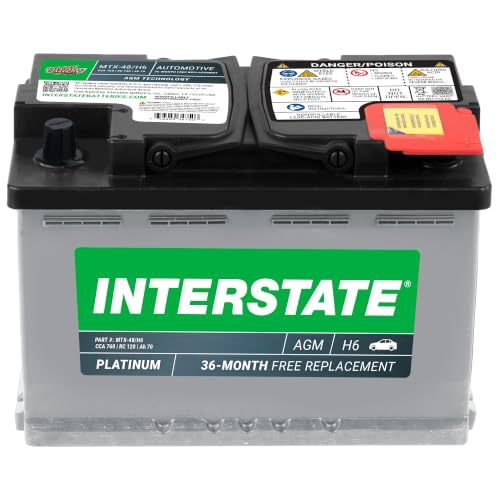
Weize Platinum AGM Battery Group 48WEIZE | Our pick | Group 48/H6 · 760 CCA · AGM | $159.99
Price as of 8 Nov 2026
|
View |
 |
OPTIMA® Batteries High Performance D34/78 YELLOWTOP® SealedOPTIMA | Also great | D34/78 · 750 CCA · YellowTop AGM | $318.59
Price as of 8 Nov 2026
|
View |
Use this page as a fitment-and-load guide. Do not treat it as a brand contest. The best battery depends on how much current the vehicle pulls at idle, how long accessories run with the engine off, and whether the charging system can refill the battery fast enough.
Reserve capacity matters most when the vehicle spends time parked with lights, audio, dashcams, or camping gear running. CCA still has to meet the owner’s manual, but accessory-heavy use calls for more than a strong starting number.
How we chose
Selection is based on manufacturer specs, listing details, published buyer feedback, group size fitment, and charging-system compatibility.
The focus is on chemistry, reserve capacity, cold cranking amps, amp-hour capacity where listed, and whether the battery matches start-stop or high-accessory use.
Only two products are included because only two were supplied, and each one appears in its own section below.
Fitment, venting, hold-down shape, and alternator limits matter as much as the battery label. A battery that fits the tray but outruns the charging system can wear out early.
Do you need AGM for lots of electronics?
AGM is the safer default for many vehicles with extra electronics, because it handles deeper cycling, faster recharge, and vibration better than flooded lead-acid. If the vehicle has a start-stop system, runs accessories at idle, or sees repeated short trips, AGM is usually the first chemistry to check against the owner’s manual.
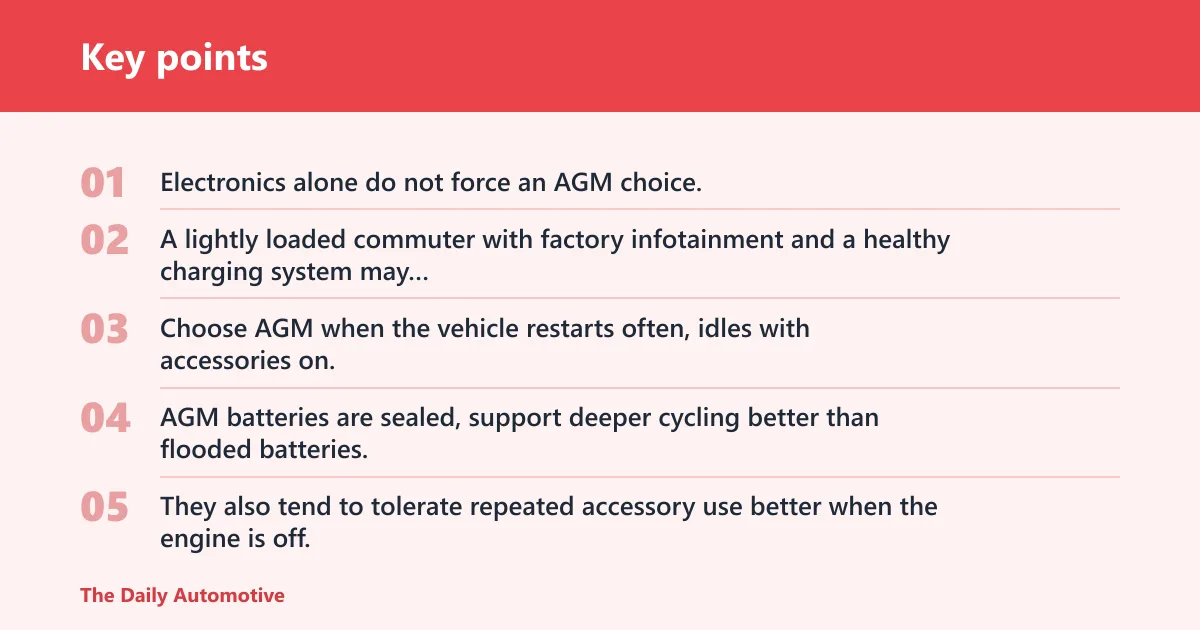
Electronics alone do not force an AGM choice. A lightly loaded commuter with factory infotainment and a healthy charging system may still do fine on flooded lead-acid if the manual allows it and the battery stays near full charge.
When AGM is the safer default
Choose AGM when the vehicle restarts often, idles with accessories on, or spends time in vibration-heavy use such as rough roads. AGM batteries are sealed, support deeper cycling better than flooded batteries, and are common in high-electrical-load vehicles because they recover faster after discharge.
They also tend to tolerate repeated accessory use better when the engine is off. That matters for dashcams, inverters, audio amplifiers, and auxiliary lighting.
When flooded lead-acid is enough
Flooded lead-acid still makes sense when the electrical load is light, the vehicle is not start-stop equipped, and cost matters more than accessory runtime. It is the traditional wet-cell design, usually cheaper up front, but it is less suited to deep cycling and heavy accessory loads.
Flooded batteries also need proper venting and maintenance considerations. If the battery sits in a confined area or the vehicle manual calls for AGM, do not treat flooded lead-acid as a universal substitute.
When lithium can make sense
Lithium 12V batteries can suit specific builds that need low weight and frequent deep cycling, but they are not the default answer for daily-driven vehicles. Most require a battery management system, and that BMS can affect alternator compatibility and charging behavior.
If the vehicle’s charging profile, software, or underhood temperatures are not a match, lithium can become the wrong fit. It is best treated as a system upgrade, not a drop-in shortcut.
Agm battery: best for start-stop and heavy accessories
The WEIZE Platinum AGM Group 48/H6 is presented as a sealed battery for start-stop systems and extra accessories. Its listed 760 CCA, 70Ah, and 120RC make it a stronger all-around fit among the two products here for repeated restarts and accessory use.
What stands out is the combination of reserve capacity and amp-hour capacity. That pairing helps when the vehicle spends time idling, when audio or infotainment draws current with the engine running, or when the battery needs to recover after short-trip use.
The main drawback is price relative to flooded lead-acid. It is also only a fit if Group 48/H6 matches the tray, terminal layout, and hold-down in the vehicle, so check the manufacturer’s listing for your model before buying.
Why AGM suits repeated restarts
Start-stop systems place high cycling demand on the battery. AGM is built to handle that pattern better than flooded lead-acid because it supports deeper cycling and faster recharge, which helps when the engine shuts off and restarts many times in traffic.
That advantage matters even more when accessories stay on during stops. A battery that can tolerate the cycle pattern still has to meet the vehicle’s OEM starting requirement.
Spec priorities: CCA, RC, Ah
For a start-stop or accessory-heavy vehicle, prioritize reserve capacity first if the engine often idles with loads on, then make sure CCA still meets the manual. Reserve capacity tells you how long the battery can supply power without alternator input. Higher is better here.
Ah is useful when the battery sheet lists it, because it shows stored energy for deeper cycling. CCA remains important because the engine still needs to crank at 0°F / -18°C, but CCA alone does not cover parked accessory use.
Say your SUV idles for 20 minutes while a dashcam, phone charger, and cabin fan run. A battery with a decent CCA number but low reserve capacity may still start the engine, then sag too quickly once you add a few more electrical loads.
Compatibility checks before you buy
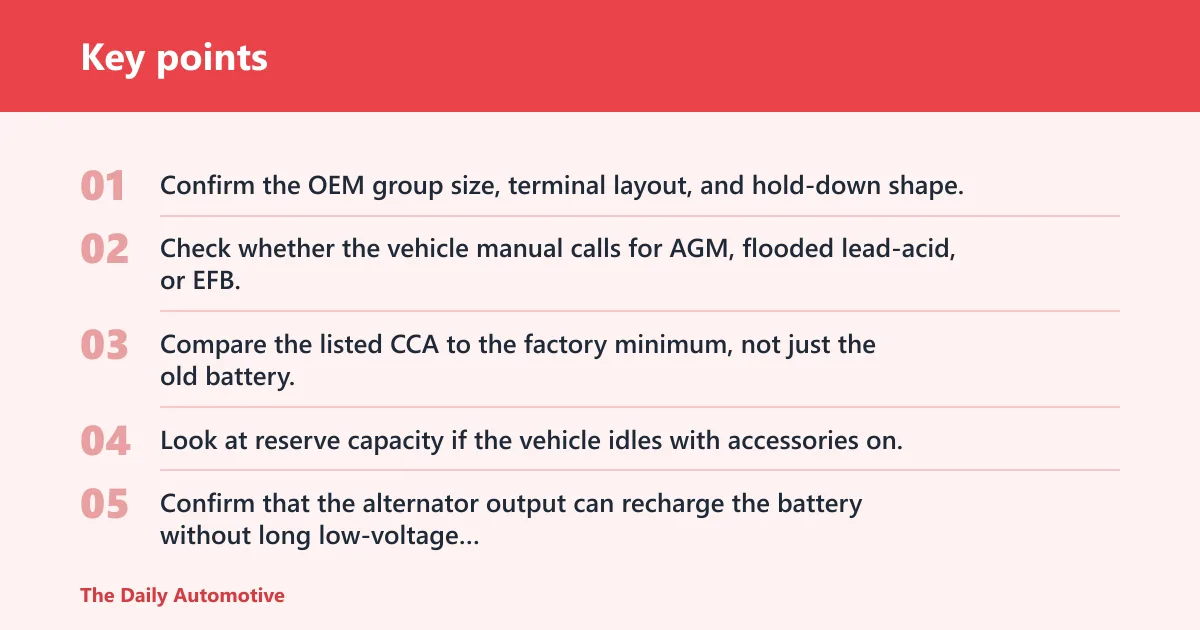
- Confirm the OEM group size, terminal layout, and hold-down shape.
- Check whether the vehicle manual calls for AGM, flooded lead-acid, or EFB.
- Compare the listed CCA to the factory minimum, not just the old battery.
- Look at reserve capacity if the vehicle idles with accessories on.
- Confirm that the alternator output can recharge the battery without long low-voltage periods.
A weak alternator can shorten battery life no matter how good the battery label looks. That is especially true after audio upgrades, winches, inverters, or extra lighting.
Flooded lead-acid battery: best budget pick
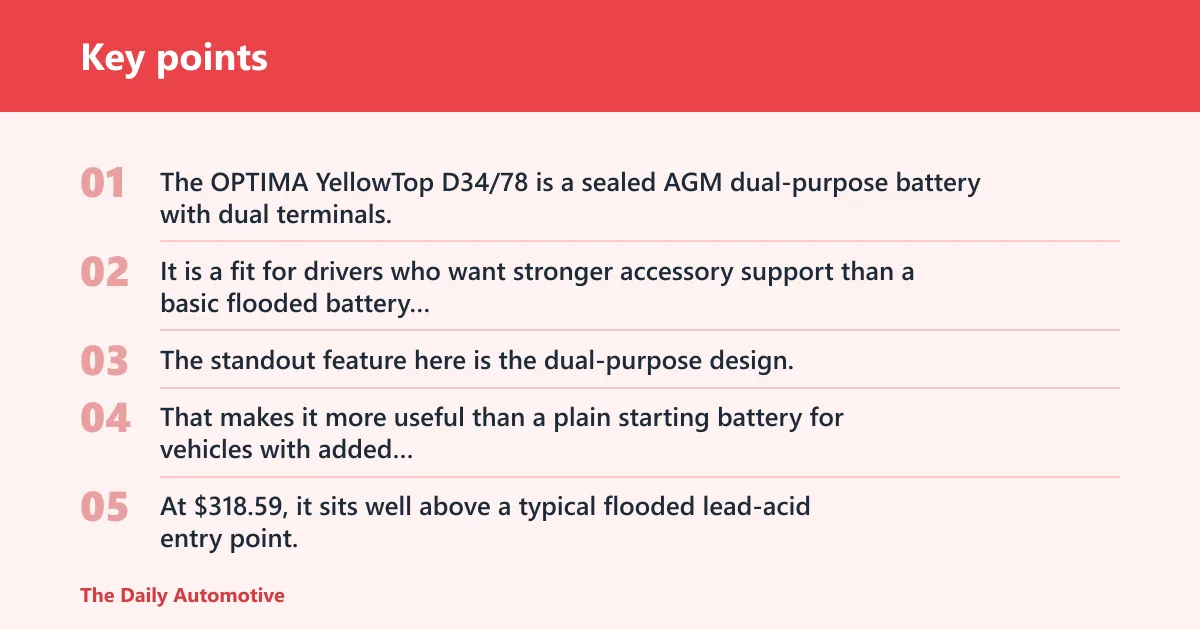
The OPTIMA YellowTop D34/78 is a sealed AGM dual-purpose battery with dual terminals, 750 CCA, and a listed 120-minute reserve capacity. It is a fit for drivers who want stronger accessory support than a basic flooded battery and need versatile mounting options.
The standout feature here is the dual-purpose design. That makes it more useful than a plain starting battery for vehicles with added electrical demand, especially when the load is not constant but appears in bursts.
The drawback is price. At $318.59, it sits well above a typical flooded lead-acid entry point, so buyers should only pay for it if the vehicle’s load pattern justifies the upgrade and the size fits the tray.
Where flooded batteries still fit
Flooded lead-acid batteries still belong in vehicles with light electrical demand, regular driving, and no start-stop requirement. They are the lower-cost entry option and can be fine when the vehicle is used mostly for standard commuting without parked accessory use.
They are less suited to deep cycling and heavy accessory loads, so they should not be the default choice for audio builds, inverter use, or repeated idle-time discharge.
What they give up under load
Under accessory load, flooded batteries usually lose ground faster than AGM. They are more sensitive to repeated low-state-of-charge cycling, and they do not tolerate deep discharge as well. That becomes obvious in vehicles that sit with the engine off while lights, cameras, or sound systems draw power.
A common first-timer mistake is buying a cheap flooded battery for a truck that runs a winch and auxiliary lights. The battery may crank fine on day one, then struggle after a few parked accessory sessions because the alternator never fully catches up.
Ventilation and maintenance checks
Flooded batteries need proper venting and more maintenance attention than sealed designs. If the battery lives in a trunk, cabin-adjacent space, or enclosed tray, check the vehicle manual before choosing flooded lead-acid.
Also confirm that the charging system is healthy. A tired alternator can leave any battery undercharged, but flooded lead-acid tends to show the stress sooner when the vehicle sees short trips and accessory use.
Lithium 12V battery: best for specific builds
Lithium 12V batteries can work well in specific builds with a known charging profile, enough alternator support, and a battery management system that matches the vehicle. They are not the safest default for daily drivers, and they are usually the least forgiving choice when alternator behavior or temperature control is uncertain.
The appeal is clear: low weight, strong cycling potential, and useful amp-hour output. The risk is compatibility. If the BMS and alternator are not matched, the battery may charge poorly or trigger system issues.
BMS requirements
Most lithium 12V batteries require a BMS to protect against overcharge and overdischarge. That system is part of the battery’s safety and control logic, so it is not optional in most applications.
Because the BMS changes how the battery accepts charge, a lithium swap should never be treated like a plain battery replacement. The vehicle’s charging behavior has to fit the battery, not the other way around.
Alternator and charging compatibility
Check whether the alternator output and voltage regulation suit lithium charging before buying. Some alternators are not happy charging lithium directly, especially in vehicles that were not designed for it from the factory.
That mismatch can lead to poor charging, odd warning lights, or shorter battery life. If the vehicle already uses smart charging, start-stop control, or battery monitoring software, compatibility becomes even more important.
Why lithium can be the wrong fit for daily driving
For daily driving, lithium is often too specialized unless the vehicle build is built around it. Cold weather performance, charging control, and system communication can create more trouble than the weight savings are worth.
If the vehicle is a normal commuter with extra electronics, AGM is usually the safer move. Lithium makes more sense when the build plan is explicit and the charging system has been matched to it.
Battery load decision matrix
This table turns the spec sheet into a use-case choice. Match the chemistry to how the vehicle is used, then verify CCA, reserve capacity, and fitment against the owner’s manual and the battery listing.
| Vehicle profile | Recommended chemistry | Minimum spec priorities | Red-flag compatibility checks |
|---|---|---|---|
| OEM start-stop sedan | AGM, or EFB if the manual specifically calls for it | OEM CCA first, then reserve capacity, then Ah if listed | Manual says AGM or EFB; battery monitoring reset may be required; group size and hold-down must match |
| Audio build | AGM | High reserve capacity, strong CCA, useful Ah rating | Amplifier draw can outpace alternator output; check trunk or cabin venting if the battery location changes |
| Overland SUV | AGM, or lithium only with a matched charging system | High reserve capacity, OEM CCA, fast recharge ability | Winch and fridge loads can exceed idle charging; verify alternator output and tray fitment |
| Commuter with dashcams | AGM if parked recording matters; flooded lead-acid if load is light | Reserve capacity, then OEM CCA | Parking mode can drain the battery; confirm the dashcam cutoff voltage and short-trip charging recovery |
| Truck with winch | AGM | High reserve capacity and strong CCA | Winch current is heavy; alternator recovery and cable sizing matter; never exceed the vehicle’s tow or payload rating in the owner’s manual |
| Luxury SUV with many modules | AGM | OEM CCA, reserve capacity, and fitment accuracy | Module coding, battery registration, or reset may be required; wrong fitment can cause warning lights or poor sleep behavior |
Picture a luxury SUV with a big infotainment screen, active safety modules, cooled seats, and a rear camera that keeps recording while parked. That vehicle may still need the same group size as the old battery, but it benefits from more reserve capacity because the modules draw power even when the engine is off.
Which one should you buy?
Buy AGM if the vehicle idles with accessories on, restarts often, or carries many electronics. Buy flooded lead-acid only when the electrical load is light, the manual allows it, and cost matters more than accessory runtime. Buy lithium only when the vehicle, alternator, and battery management system are all compatible.
If the vehicle is start-stop equipped, follow the manual first. If the old battery was AGM, replacing it with flooded lead-acid is usually the wrong move. If the old battery failed after repeated accessory use, look for more reserve capacity before chasing a higher CCA number.
When in doubt, prioritize the battery that matches the vehicle’s real draw pattern. A battery with the wrong chemistry but a shiny CCA label will not fix voltage sag at idle.
Professional installation is wise if the vehicle needs battery registration, coding, or reset procedures. That is common on newer vehicles with battery monitoring systems.
Frequently asked questions
What is the best car battery for high electrical loads?
AGM is the best default for most high-electrical-load vehicles because it handles deeper cycling, faster recharge, and vibration better than flooded lead-acid. Match the group size and OEM CCA first, then look for the highest reserve capacity that fits. Lithium only makes sense when the charging system and BMS are compatible.
Do I need AGM for a car with lots of electronics?
Not always, but AGM is usually the safer choice when the car has many modules, start-stop operation, or accessories that run with the engine off. Lots of electronics by itself does not force AGM, but it raises the value of reserve capacity and fast recharge.
What battery works best for aftermarket stereo systems?
AGM is usually the best fit for aftermarket audio because it tolerates repeated discharge better than flooded lead-acid and handles accessory loads more calmly. For audio builds, reserve capacity matters more than CCA alone, and the alternator must be able to recharge the battery after heavy bass use.
How many cold cranking amps do I need for a high-load vehicle?
Use the OEM minimum as your floor. High-load accessories do not let you ignore starting current, especially in cold weather. After you meet the factory CCA requirement, shift your attention to reserve capacity and charging support, because CCA alone will not keep the lights, radio, or inverter alive.
Is a lithium car battery worth it for daily driving?
Usually no, unless the vehicle and charging system were built or modified for lithium use. A BMS, alternator compatibility, and charging control all matter. For most daily drivers with extra electronics, AGM is easier to match and less likely to create charging or warning-light problems.
Can the wrong battery damage modern electronics?
It can contribute to low-voltage problems, warning lights, module faults, or poor sleep behavior if the battery does not match the vehicle’s electrical system. The bigger risk is often not direct damage, but unstable voltage, repeated low-state-of-charge cycling, and charging-system strain that shortens battery life.
Products related to this article
Sponsored / affiliate links. As an Amazon Associate I earn from qualifying purchases. I may earn additional commission from eligible campaigns.