Car Wash Foam Gun Price
Car wash foam gun prices usually run about $20 to $60; a common rule of thumb is to look in the $30 to $45 range if you want better fittings, a sturdier mixer, and a usable soap pattern for regular driveway washes. Pick badly and you can end up with leaks, weak foam, or an adapter that does not fit your hose or pressure washer. This guide breaks down what moves price, which fittings matter, and which price tier fits your wash routine.
How a foam gun works
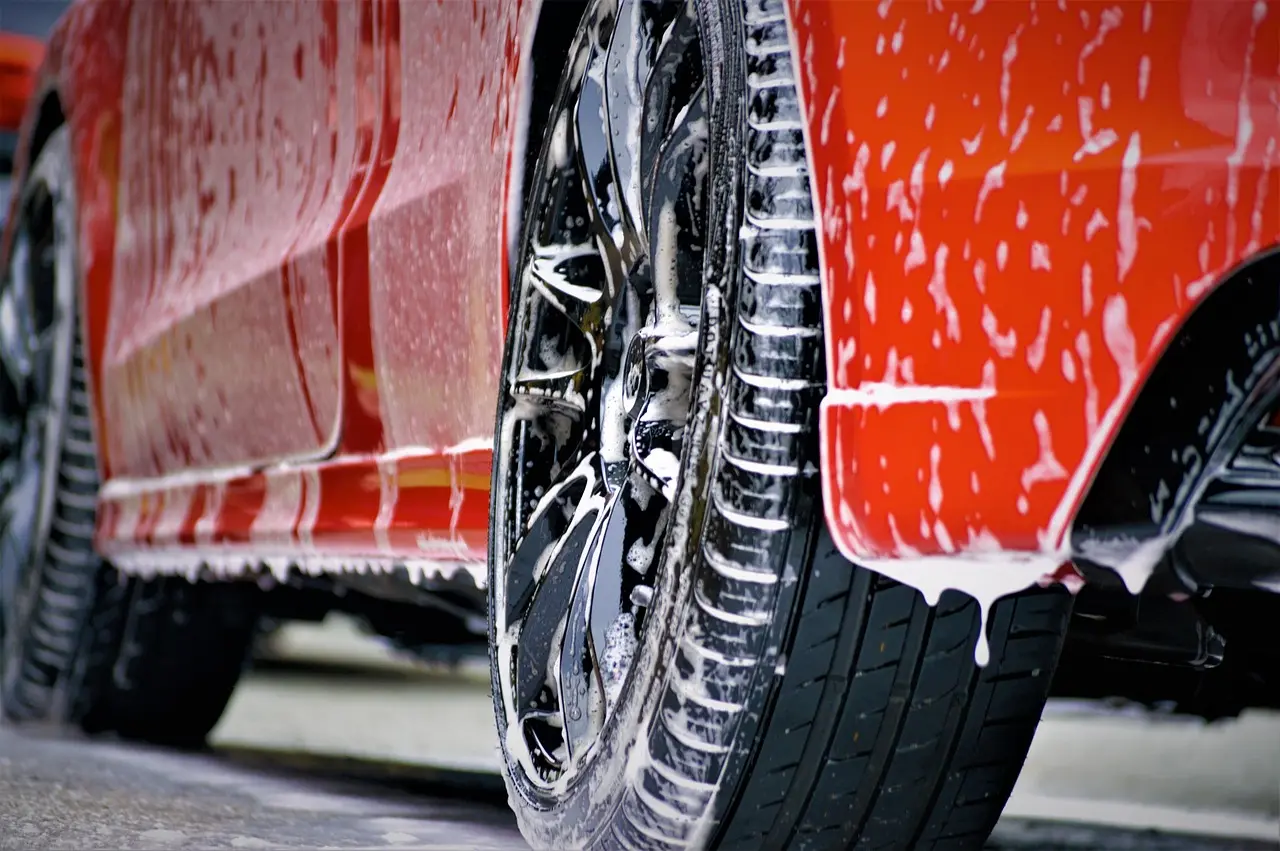


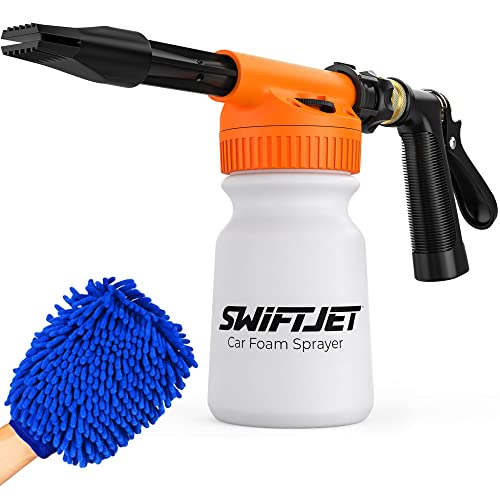
A car wash foam gun is a hose-fed wash attachment that blends water, soap, and air as you spray. The bottle holds diluted shampoo, the connector joins the gun to your hose, and the nozzle meters the mix so you can shift between a wide fan, a tighter stream, and a rinse pass. Hose pressure matters because it drives how well the mix atomizes.
The soap-to-water ratio matters too. Too weak, and the spray looks thin and runs off fast. Too strong, and the gun can waste shampoo, leave residue, or create thick foam that still does not rinse well if the hose pressure is low. The gun is only part of the result; the shampoo, hose flow, and nozzle design all shape the final output.
Soap, water, and air mixing
Inside most foam guns, water flows past a mixing chamber and pulls diluted shampoo into the stream. Air entering the spray path helps turn that liquid into a clingy foam layer. Bottle capacity, internal passages, and nozzle shape affect whether the foam looks even or breaks up into wet droplets.
Why spray control matters
A usable foam gun needs a flow control dial or similar valve. That lets you adjust how much shampoo enters the stream, which changes foam thickness and spray distance. A wider fan helps cover panels quickly. A tighter pattern helps target wheel arches, lower doors, and badges without flooding nearby trim.
Where hose pressure affects foam
Hose-fed foam guns depend on household water pressure and flow, so output varies by home. A strong supply can produce denser foam and better reach. A weak supply can leave the gun sputtering, with large wet droplets and short spray distance. That is one reason cheap guns often disappoint: the mixer cannot fix poor flow or a sloppy nozzle.
Foam gun vs foam cannon
A foam gun attaches to a garden hose and works with ordinary water pressure. A foam cannon attaches to a pressure washer and needs PSI and GPM that match the washer’s rating. The cannon usually throws denser foam because the pressure washer forces the shampoo mix through a smaller orifice at much higher pressure.
The price comparison matters because the cheapest foam gun may cost less than a pressure washer-ready cannon, but the cannon also adds equipment requirements. If you already own a pressure washer, a cannon can make sense. If you wash at a driveway spigot, a foam gun is the practical fit.
Hose-fed setup versus pressure washer setup
A foam gun usually uses a standard hose connector and is ready for basic home washing. A foam cannon needs a wand or gun on the pressure washer side, plus a fitting that matches the washer’s outlet style. That extra hardware changes the buying decision before price even enters the picture.
Foam density and cleaning use case
Foam cannons usually deliver thicker foam for pre-wash dwell time and heavier dirt. Foam guns make lighter foam, which is still useful for loosening dust, pollen, and road film before hand washing. For light weekly washing, a hose-fed gun can be enough. For thicker pre-soak coverage, a cannon has the edge.
Why the price comparison matters
Comparing a $35 foam gun with a $45 foam cannon without checking the required equipment misses the real cost. The gun may be cheaper, but it only fits a hose setup. The cannon can cost more upfront and still be the better buy if the rest of the wash setup is already in place.
Car wash foam gun price breakdown
Most foam guns fall into three price tiers. Budget foam gun models usually land around $20 to $30. Mid-range models commonly sit around $30 to $45. Premium hose-fed foam guns and kits can reach about $45 to $60 or a bit more, especially when they include extra fittings, a larger bottle, or a more refined nozzle and valve assembly.
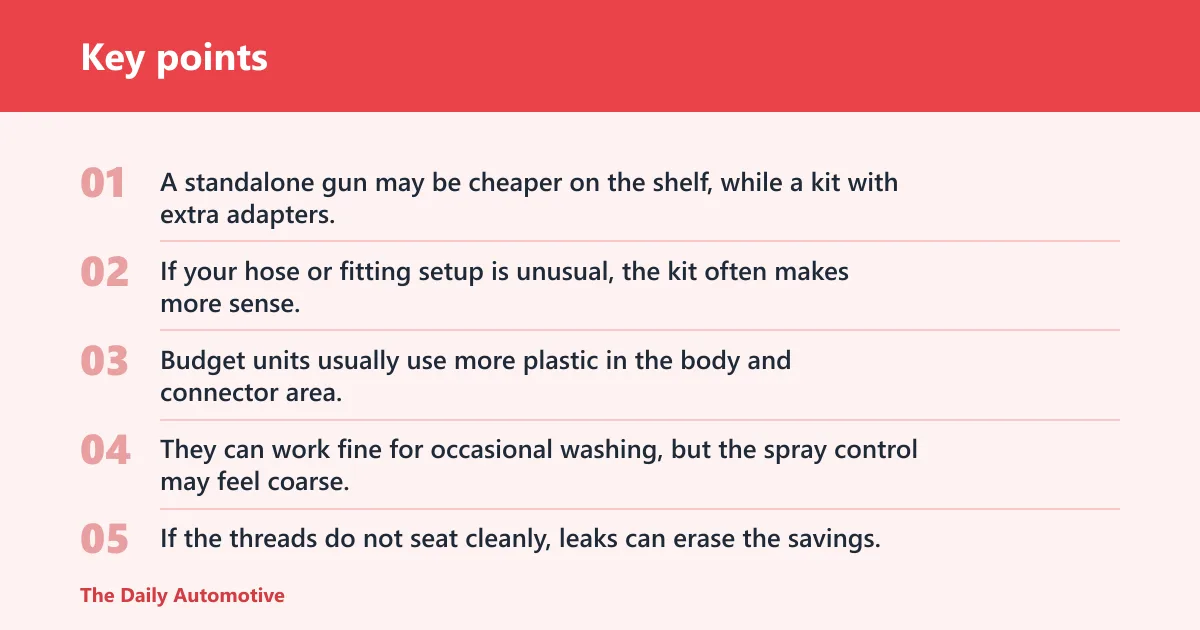
Bundle pricing changes the math. A standalone gun may be cheaper on the shelf, while a kit with extra adapters, a spare nozzle, or a larger bottle can cost more but reduce the chance of buying the wrong connector later. If your hose or fitting setup is unusual, the kit often makes more sense.
Budget foam guns
Budget units usually use more plastic in the body and connector area. They can work fine for occasional washing, but the spray control may feel coarse, the bottle markings may be vague, and the seal may not hold up as well. If the threads do not seat cleanly, leaks can erase the savings.
Mid-range foam guns
Mid-range models are where many buyers find the best balance. You usually get a sturdier valve, clearer dilution marks, better connector quality, and a bottle that is large enough for one full wash on most cars. For regular driveway use, this tier often gives the best value per dollar.
Premium foam guns
Premium hose-fed guns usually justify price with better sealing, more durable connectors, smoother spray adjustment, and a more stable spray pattern. Some use more metal in the body or internal parts. They are less about making the foam magically thicker and more about making the gun last longer and leak less.
Bundle pricing versus standalone pricing
Bundles are worth a close look when the connector type is unclear or when the listing includes a garden hose adapter, quick-connect pieces, or a larger soap bottle. Standalone pricing can look lower until you add missing fittings. The cheapest listing is not always the cheapest complete setup.
Foam gun value matrix
This matrix ties price to the parts that usually change cost. Use it to compare listings that look similar at first glance but differ in connector quality, bottle size, and spray control.
| Price tier | Build material | Connector type | Bottle capacity | Spray control and foam quality | Best-fit user type |
|---|---|---|---|---|---|
| Budget: $20 to $30 | Mostly plastic body, lighter seals | Basic hose thread, sometimes no quick-connect | 10 to 16 oz, about 300 to 475 mL | Simple fan control, lighter foam, more variation in spray | Occasional washer, first-time buyer, light-duty use |
| Mid-range: $30 to $45 | Plastic body with better valve parts or reinforced sections | Standard hose thread with more consistent fittings, sometimes quick-connect compatible | 16 to 24 oz, about 475 to 710 mL | Better flow dial, more even fan pattern, usable foam for weekly washes | Regular driveway washer, beginner who wants fewer fitting issues |
| Premium: $45 to $60+ | Heavier-duty plastic, more metal in nozzle or connector areas | Better-sealing connector, often includes adapters or quick-connect hardware | 20 to 32 oz, about 590 to 950 mL | Finer spray adjustment, better sealing, more consistent foam delivery | Frequent washer, detail-oriented buyer, higher use rate |
What fittings do you need?
A foam gun must match the hose or connector you already have. For many homes, that means a garden hose adapter built around the common 3/4-inch hose thread. If the thread is wrong, the gun may leak at the joint or fail to thread on at all. Quick-connect compatibility helps, but only if both sides use the same standard.
Regional fitting differences matter. Some listings assume US-style hose threads; others are built around local retail norms or adapter sets. Before buying, check the connector photo, the thread description, and whether the seller includes a washer or O-ring. Those small pieces help prevent drips and poor sealing.
Garden hose adapter basics
The common home setup uses 3/4-inch garden hose thread. A good adapter should seat flat, compress the washer evenly, and tighten without cross-threading. If a seller does not clearly state the thread size, skip it unless the package includes multiple adapters.
Quick-connect compatibility
Quick-connect parts save time, but they also add another point where mismatch can happen. If your hose end already uses a quick-connect, confirm the plug style and the seal type. If it does not, a standard threaded connector may be the safer choice, especially for first-time buyers.
Thread size and leak prevention
Leak prevention starts with matching the right thread and using an intact washer. A loose fit often shows up as a dripping connector, weak spray, or a hose that sprays backward at the joint. That kind of leak may seem minor, but it can make a low-cost gun a poor buy by the second wash.
Regional fitting differences
In India and Pakistan, listings often include local retail markup, import cost, and adapter bundles that change the final price more than the gun itself does. Currency conversion also matters. A hose gun priced at $30 may land much higher once shipping, duty, or retailer margin is added, so compare the full landed cost, not just the sticker price.
What makes a cheap foam gun worth it?
A cheap foam gun can be worth buying if you wash occasionally, use a standard hose, and do not need thick foam. It becomes a poor buy when the connector leaks, the spray is weak, or the dilution control is so loose that every wash uses a different soap mix. At that point, the low price is a false economy.
Suppose a buyer picks a $22 gun because the listing looks simple. If the connector is off by a thread standard or the bottle markings are vague, the first wash can already show the problem: a wet spray, little cling, and drips at the hose joint. Paying a bit more for a better seal often saves the second purchase.
When budget models make sense
Budget models make sense for light use, a small sedan, or a buyer who wants a simple pre-soak tool without paying for extras. If the foam gun is for occasional pollen removal or weekly maintenance, a basic unit can be enough, provided the connector fits cleanly and the spray control is usable.
When low price turns into false economy
Low price turns into false economy when the foam gun cannot hold pressure, cannot meter shampoo well, or needs extra adapters to stop leaks. If the seal fails or the spray pattern breaks apart, the wash takes longer and uses more shampoo. That erases much of the upfront savings.
Signs of weak spray or poor sealing
Watch for a short spray reach, uneven fan edges, soap that pours instead of atomizing, or a connector that needs repeated tightening. Those are signs that the nozzle, the body, or the fitting is the weak point. A better bottle or bigger capacity does not fix that problem.
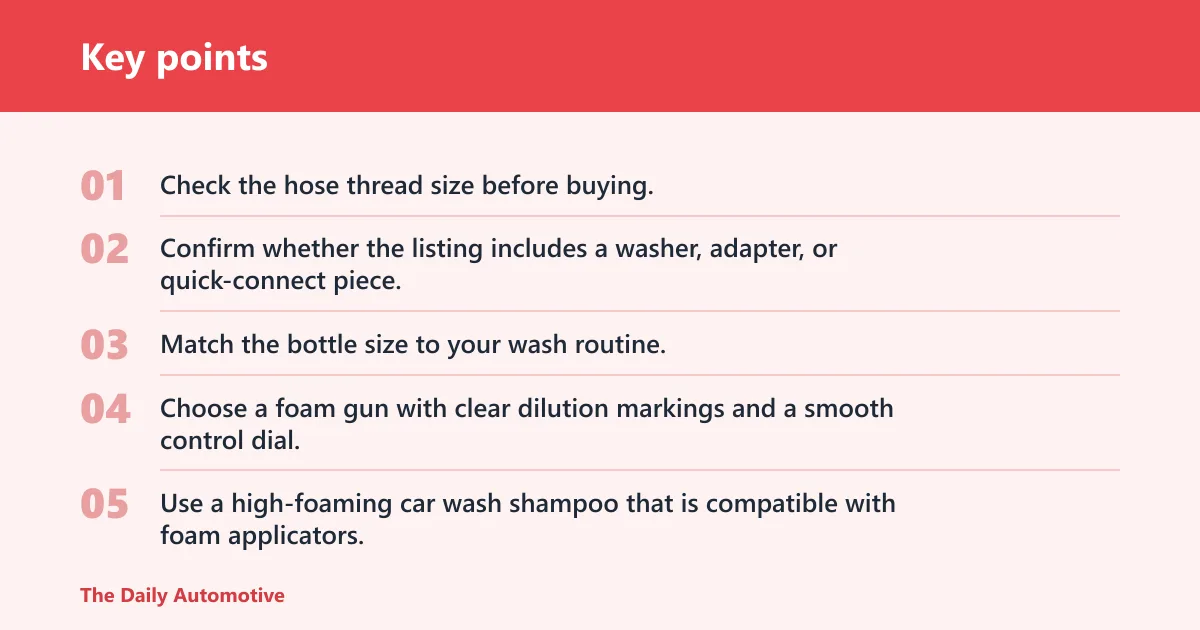
- Check the hose thread size before buying.
- Confirm whether the listing includes a washer, adapter, or quick-connect piece.
- Match the bottle size to your wash routine.
- Choose a foam gun with clear dilution markings and a smooth control dial.
- Use a high-foaming car wash shampoo that is compatible with foam applicators.
- Prefer pH-neutral or wax-safe formulas if you maintain coated or waxed paint.
A common first-timer mistake is buying a bottle with a large capacity and assuming it will produce better foam on its own. The result depends more on the soap, the dilution setting, and the hose pressure than on the bottle size alone. A 16 oz bottle with good spray control can outperform a bigger one with a poor nozzle.
Picture a driveway wash with a compact hatchback and a standard hose spigot. A mid-range foam gun with a 16 to 24 oz bottle, a clean 3/4-inch hose thread, and a simple flow dial usually fits that setup better than a cheap oversized kit with extra adapters that still leaks at the joint.
Frequently asked questions
How does a car wash foam gun work?
A foam gun pulls diluted shampoo from its bottle and mixes it with water and air as it sprays through the nozzle. The hose pressure drives the mix, while the flow dial and spray pattern shape how thick the foam looks and how far it reaches on the paint.
What is the average car wash foam gun price?
The average car wash foam gun price usually lands in the $20 to $60 range, with many useful options in the $30 to $45 band. That middle tier tends to offer better connectors, clearer spray control, and fewer sealing problems than the cheapest listings.
What is the difference between a foam gun and a foam cannon?
A foam gun works with a garden hose and household water pressure. A foam cannon needs a pressure washer and proper PSI/GPM match. The cannon usually makes denser foam, while the hose-fed gun is simpler, cheaper, and easier to use for routine driveway washes.
Are cheap foam guns worth buying?
Cheap foam guns can be worth it for light, occasional use if the hose connection fits cleanly and the spray pattern is usable. They are not a good buy if they leak, spray weakly, or need extra adapters just to connect without dripping.
What attachments or hose fittings do foam guns need?
Most foam guns need a garden hose adapter, often built around 3/4-inch hose thread, plus a washer or O-ring for sealing. Some models also support quick-connect hardware. The exact fitting must match your hose end, or leaks and poor spray performance can follow.
Which foam gun is best for beginners?
For beginners, the best foam gun is usually a mid-range model with clear dilution marks, a standard hose connector, and simple spray control. That tier reduces the chance of leaks or mismatch while still keeping the price reasonable for a first driveway wash setup.
Products related to this article
Sponsored / affiliate links. As an Amazon Associate I earn from qualifying purchases. I may earn additional commission from eligible campaigns.