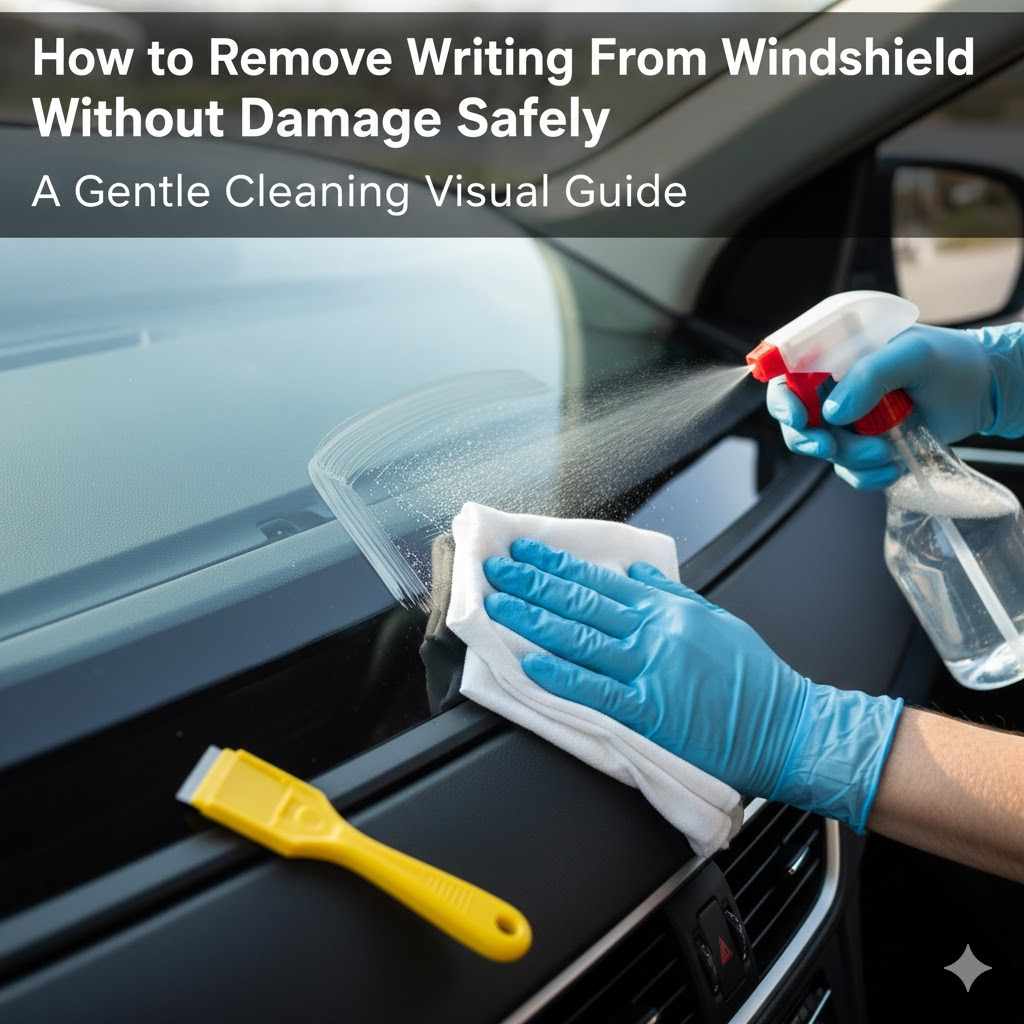
Remove Writing From Windshield Without Damage Safely
It can be really annoying when someone scribbles on your car’s windshield, right? You want to clean it off quickly, but you’re worried about scratching the glass. Many people find it tricky to Remove Writing From Windshield Without Damage because they don’t know the best tools or methods.
It’s like a mini puzzle you need to solve carefully. Don’t worry, this guide is here to help! We’ll walk through each step simply so you can get your windshield looking clear and clean again, no problem.
Let’s find out how easy it can be.
Why Removing Windshield Markings Is Tricky
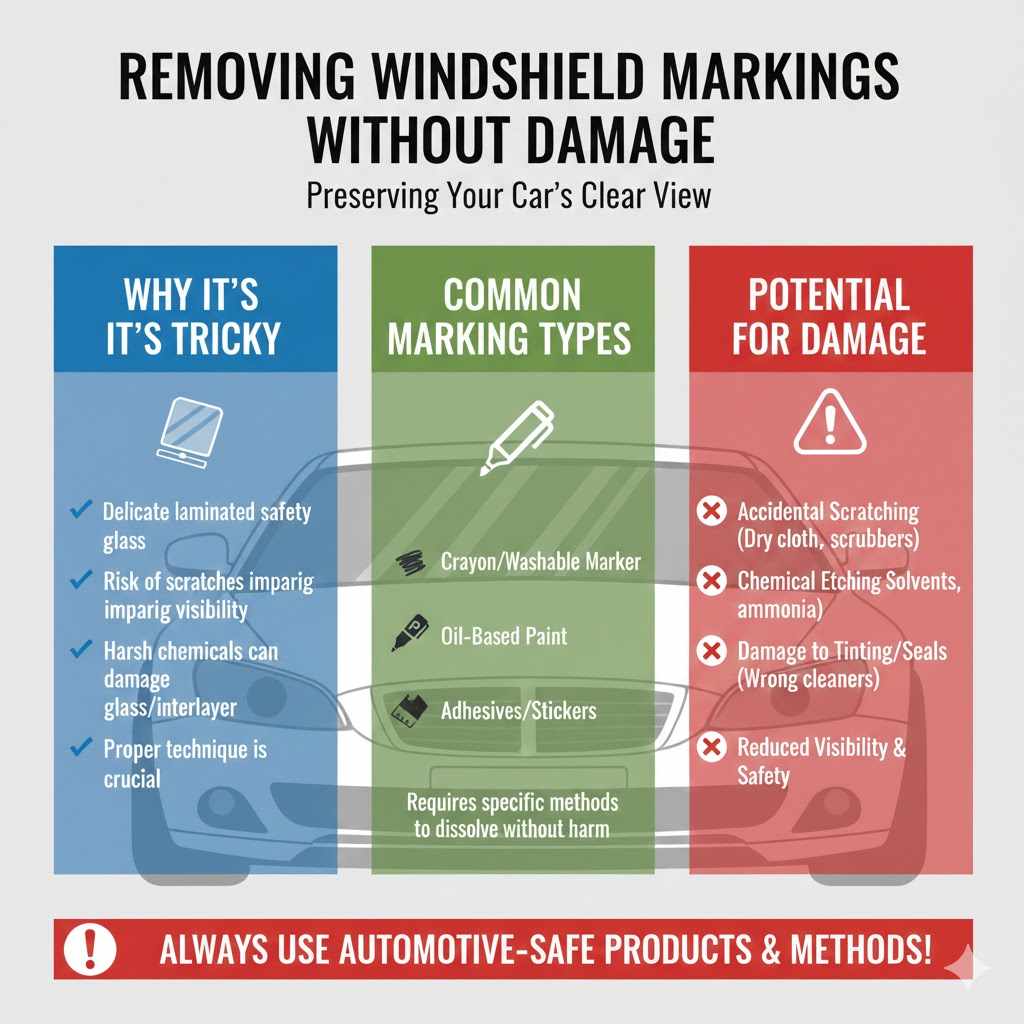
It’s a common issue for car owners to deal with unwanted writing or marks on their windshields. This could be anything from a child’s drawing to temporary markings from a car wash or a parking attendant. The challenge lies in cleaning these marks away effectively without causing any harm to the delicate glass surface.
Many people worry about making the problem worse by scratching the windshield or leaving behind dull spots. This is why knowing the right techniques and products is key to a successful cleanup.
Understanding Windshield Surfaces
Car windshields are typically made of laminated safety glass. This means two layers of glass are bonded together with a plastic layer in between. While it’s strong, the outer surface can still be scratched if the wrong tools or abrasive cleaners are used.
It’s important to remember that even fine scratches can impair visibility, which is crucial for safe driving. Therefore, any cleaning method must prioritize preserving the smooth, clear surface of the glass.
The plastic layer in laminated glass provides strength and prevents the glass from shattering. However, this plastic layer can be sensitive to harsh chemicals. Some cleaners, especially those with strong solvents or ammonia, can damage this interlayer or the glass coating.
It’s vital to choose cleaning agents that are specifically designed for automotive glass or are known to be gentle.
Common Types of Windshield Markings
The type of writing or marking on your windshield often dictates the best removal method. Simple crayon or washable marker can usually be wiped away with basic soap and water. However, more stubborn substances like permanent marker, oil-based paints, or even strong adhesives can be much harder to tackle.
These require more specific approaches to break down the mark without damaging the glass.
Permanent marker ink, for instance, contains pigments and solvents that bond strongly to surfaces. Removing it without scratching involves using a solvent that can dissolve the ink without harming the glass or surrounding rubber seals. Similarly, dried paint can be very difficult to remove.
It often requires careful scraping with a specialized tool or the use of a paint remover that is safe for automotive glass.
Potential for Damage
The biggest concern when trying to Remove Writing From Windshield Without Damage is accidental scratching. Using a dry cloth to wipe away something sticky or gritty can act like sandpaper. Similarly, using abrasive sponges or steel wool is a guaranteed way to ruin your windshield’s surface.
Even using the wrong type of scraper can leave deep marks. These aren’t just cosmetic issues; they can compromise the structural integrity of the glass and affect your view.
Another risk is chemical damage. Some household cleaners might seem like a quick fix, but they can etch the glass or damage tinting if your windshield has it. They can also degrade the rubber seals around the windshield, leading to leaks over time.
It’s always best to stick to products and methods known to be safe for automotive glass.
Safe Methods To Remove Writing
When faced with unwanted marks on your windshield, there are several safe and effective methods to consider. The key is to start with the gentlest approach and escalate only if necessary. This ensures that you minimize any risk of causing damage.
Whether it’s crayon, marker, or something else, having the right supplies and a bit of patience will make the job much easier and prevent costly mistakes.
Gentle Cleaning Solutions
For most light markings, like washable markers or smudges, a simple solution of mild dish soap and water is often sufficient. Mix a few drops of dish soap into a bucket of warm water. Use a soft, clean microfiber cloth dipped in the soapy water to gently wipe the affected area.
Rinse the cloth frequently to avoid spreading dirt and grime, which could cause scratches.
After washing, use a separate clean microfiber cloth dampened with plain water to wipe away any soap residue. Finally, dry the windshield with a dry microfiber cloth or a squeegee to prevent water spots. This method is non-abrasive and safe for all types of automotive glass and tints.
It’s the first line of defense for most common windshield marks.
Another excellent gentle option is a dedicated automotive glass cleaner. These products are formulated to be safe for car windows and often contain ingredients that help lift dirt and grime without harsh chemicals. Spray the cleaner onto a microfiber cloth, not directly onto the windshield if it’s very dirty, and then wipe the mark.
This prevents the cleaner from running into crevices and creating streaks.
Using Rubbing Alcohol
For more stubborn marks, such as permanent marker or sticker residue, isopropyl alcohol (rubbing alcohol) can be very effective. Isopropyl alcohol is a solvent that can break down many types of inks and adhesives without damaging the glass. Make sure to use a concentration of at least 70% isopropyl alcohol for best results.
Apply a small amount of rubbing alcohol to a clean microfiber cloth or cotton ball. Gently rub the marked area in a circular motion. You should see the ink or residue start to lift.
Avoid soaking the area, as excessive alcohol could potentially affect surrounding paint or trim if not handled carefully. Work in a well-ventilated area.
After the mark is removed, it’s essential to clean the area with mild soap and water again. This removes any alcohol residue. Then, rinse and dry thoroughly.
This step is important because alcohol can sometimes leave a slight haze if not completely removed.
The Power of Baking Soda Paste
Baking soda is a mild abrasive that can be used to gently scrub away tougher residue without scratching the glass. Mix baking soda with a little bit of water to create a paste. It should be thick enough to stick to the windshield but not so dry that it crumbles.
Apply the baking soda paste directly to the marked area. Use a soft cloth or sponge to gently rub the paste into the mark. Work in small circles.
The mild abrasive action of the baking soda will help lift the writing. Be patient; this might take a few minutes of gentle rubbing.
Once the writing is gone, rinse the area thoroughly with water to remove all traces of the baking soda paste. Then, clean the windshield with your regular glass cleaner or soap and water, and dry it to a streak-free finish. This method is particularly good for dried-on residue that soap and water alone can’t handle.
Specialized Cleaners and Tools
There are many specialized products available for cleaning car windshields that can help Remove Writing From Windshield Without Damage. For instance, automotive adhesive removers are designed to break down sticky residue from stickers or decals without harming paint or glass. Always follow the product instructions carefully.
For very tough, dried-on substances like paint overspray or old stickers, you might need a razor blade scraper. However, this tool must be used with extreme caution. The blade should be held at a very low angle to the glass, almost parallel, and used with plenty of lubricant like soapy water or glass cleaner.
Never use a dry razor blade on glass, as this is highly likely to cause scratches. Only use a sharp, new blade, and replace it if it shows any signs of nicks or damage.
Consider using a dedicated glass polish for a final touch. These polishes are very fine abrasives that can remove minor swirl marks or haziness and restore the clarity of the glass. Apply a small amount to a microfiber applicator pad and rub into the glass in a circular motion.
Buff off with a clean microfiber cloth.
Step-By-Step Guide To Remove Writing
Successfully removing writing from your windshield without causing damage requires a structured approach. By following these steps, you can tackle most common markings safely and effectively, restoring your windshield’s clarity and your peace of mind. Remember to always start with the gentlest methods and only move to stronger ones if the mark persists.
Step 1 Gather Your Supplies
Before you begin, make sure you have all the necessary items. This preparation will save you time and frustration. You’ll need:
- Microfiber cloths (several clean ones)
- Mild dish soap
- Warm water
- Isopropyl alcohol (70% or higher)
- Baking soda (optional, for tougher stains)
- Automotive glass cleaner
- A spray bottle for water
- A clean bucket
- Cotton balls or pads (optional, for alcohol)
- A razor blade scraper with a new blade (use with extreme caution and as a last resort)
Having a good variety of cleaning cloths is crucial. Microfiber cloths are ideal because they are soft, absorbent, and less likely to scratch surfaces compared to paper towels or old rags.
Step 2 Identify The Marking Type
Take a close look at the writing on your windshield. Is it a washable marker, a permanent marker, crayon, paint, or sticker residue? The type of marking will help you decide which cleaning agent to use first.
For instance, if it’s a child’s washable marker, you might be able to remove it with just soap and water. If it looks like permanent marker, you’ll likely need rubbing alcohol.
Sometimes, what looks like writing might actually be a type of film or residue that has adhered to the glass. Understanding the nature of the mark ensures you don’t waste time with ineffective methods or risk damage by using something too harsh prematurely.
Step 3 Start With The Gentlest Method
Begin with the mildest cleaning solution available. For most light marks, a solution of warm water and a few drops of mild dish soap is the best starting point.
- Mix the soap and water in your bucket.
- Dip a clean microfiber cloth into the solution and wring it out so it’s damp, not dripping.
- Gently rub the marked area in a circular motion.
- Rinse the cloth often in the soapy water to pick up debris.
If the mark starts to lift, continue with this method. If not, rinse the area with clean water and proceed to the next step.
Step 4 Escalate To Rubbing Alcohol
If soap and water didn’t fully remove the writing, it’s time to use isopropyl alcohol. This is a safe and effective solvent for many inks and residues.
- Apply a small amount of 70% or higher isopropyl alcohol to a clean microfiber cloth or a cotton ball.
- Gently rub the marked area. You should see the ink or residue begin to dissolve and transfer to the cloth.
- Work in small sections and use fresh parts of the cloth or new cotton balls as they pick up the marking.
- Avoid applying excessive pressure. Let the alcohol do the work.
It’s important to work in a well-ventilated area when using alcohol. You might feel a slight smell, which is normal. Continue rubbing until the mark is completely gone.
Step 5 Try Baking Soda Paste For Tough Stains
For very stubborn, dried-on marks that alcohol couldn’t remove, a baking soda paste can be useful. It acts as a very mild abrasive.
- Mix baking soda with a small amount of water to form a paste.
- Apply the paste to the marked area.
- Use a soft cloth or sponge to gently rub the paste into the stain.
- Scrub lightly in a circular motion.
Be patient. This process might take a little longer. The gentle abrasion helps lift the remaining residue.
After scrubbing, rinse the area thoroughly with clean water.
Step 6 Use A Razor Blade Scraper (Last Resort)
This step should only be used if all other methods have failed and the writing is a solid substance like dried paint or very stubborn adhesive. Extreme caution is required.
- Ensure the windshield is wet with soapy water or glass cleaner to provide lubrication.
- Hold the razor blade at a very shallow angle, almost flat against the glass.
- Gently push the blade forward to scrape away the material.
- Never use a dry blade or a chipped blade.
- Move slowly and steadily.
This method carries the highest risk of scratching. If you are not comfortable using a razor blade, it is best to seek professional help.
Step 7 Clean And Dry The Windshield
Once the writing is completely removed, it’s vital to clean the entire windshield to ensure a uniform finish and remove any residues from the cleaning agents.
- Spray the windshield with an automotive glass cleaner or use your soap and water solution.
- Wipe the entire windshield with a clean, damp microfiber cloth.
- Rinse the cloth and wipe again to remove all cleaning solution.
- Finally, dry the windshield thoroughly with a clean, dry microfiber cloth or a squeegee to prevent streaks and water spots.
A clean, dry finish will reveal a perfectly clear windshield, free from the unwanted markings and any cleaning residue.
Preventing Future Windshield Markings
While it’s good to know how to Remove Writing From Windshield Without Damage, preventing marks from appearing in the first place is even better. A little foresight can save you a lot of cleaning time and effort down the road. Consider these simple preventative measures to keep your windshield looking its best.
Using Protective Films
One of the most effective ways to protect your windshield is by applying a protective film. These are clear, thin layers of durable material that are applied directly to the exterior surface of your windshield. They act as a shield against minor scratches, chips, and even unwanted markings.
These films are designed to be highly resistant to abrasion and impact. They can absorb the brunt of small stone chips that might otherwise cause damage. For markings, a film can make them much easier to clean off without affecting the glass itself.
If a film gets too scratched or damaged, it can be removed and replaced, protecting the original windshield underneath.
The application of protective films can be a bit tricky and is often best left to professionals to ensure a bubble-free, seamless finish. However, once applied, they offer excellent long-term protection. The visibility through the film is typically very high, so it doesn’t impede your view.
Mindful Parking And Driving Habits
Parking your car in a garage or under a covered shelter can significantly reduce the chances of accidental markings. This is especially true for children’s chalk drawings or paint from nearby construction. Even parking away from areas where there’s a lot of activity, like busy sidewalks or playgrounds, can help.
When driving, maintaining a safe distance from other vehicles can prevent chips from kicked-up stones. While this doesn’t directly relate to writing, it contributes to the overall health and clarity of your windshield. Being aware of your surroundings can help you avoid situations where your windshield might be intentionally or accidentally marked.
Educating Children And Passengers
If children are often in your car, having a friendly chat about not drawing on the windows can make a big difference. You can explain that the windshield is important for seeing the road and that drawing on it can make it hard to see. Offering them coloring books or drawing pads to use instead can be a good alternative.
Similarly, if you often have passengers, a polite request to keep the windows clear can be helpful. Most people will respect your wishes once they understand the importance of a clear windshield for safe driving. It’s about setting expectations and communicating clearly about keeping the car’s windows clean.
When To Seek Professional Help
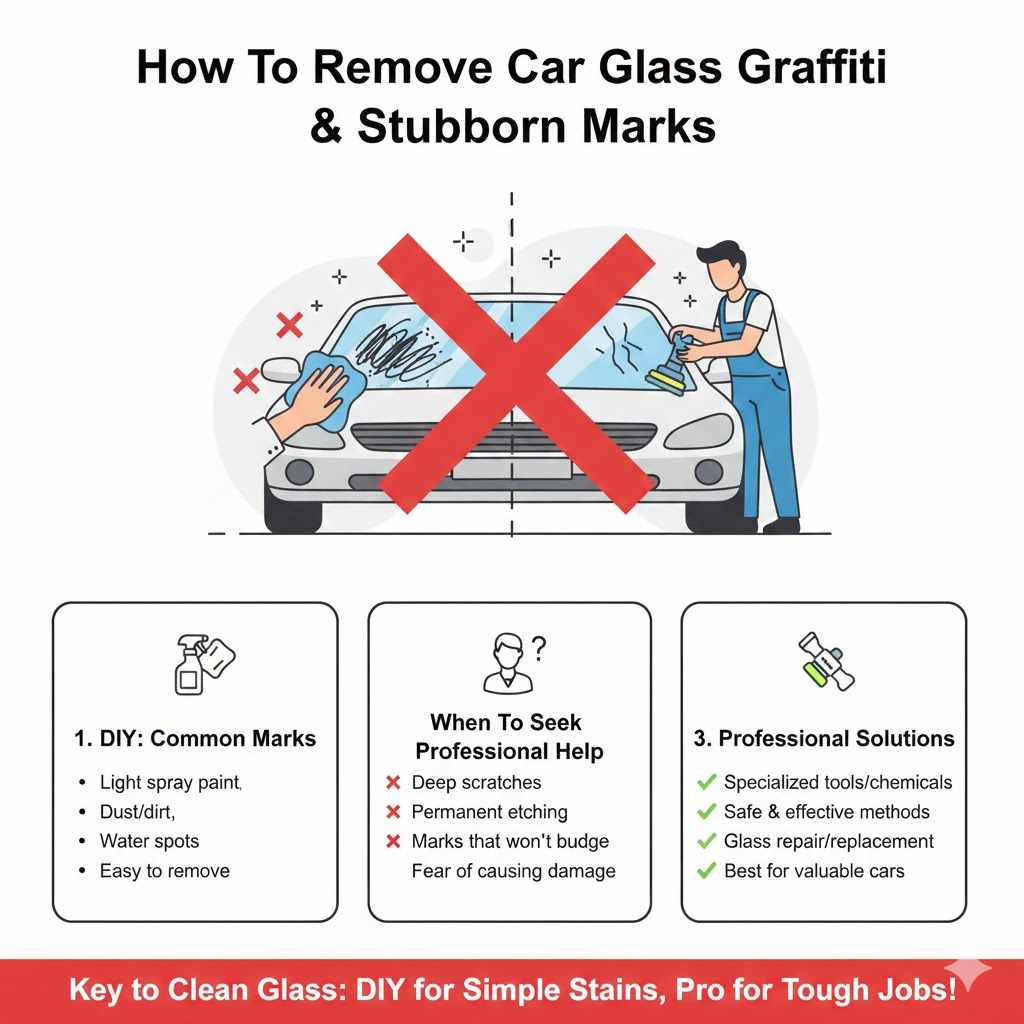
While most common markings can be removed with household items and a bit of effort, there are situations where it’s best to call in the experts. If you’ve tried several methods and the mark is still there, or if you’re worried about causing damage, professional services are available.
Professional auto detailers or glass repair specialists have access to specialized tools and chemicals that are safe and effective for even the most stubborn marks. They also have the experience to know exactly how to tackle different types of graffiti or residue without harming your vehicle. This is often the safest route for valuable or classic cars where damage is a significant concern.
Some markings, like deep scratches or permanent etching, cannot be removed with cleaning alone and might require professional glass repair or replacement. It’s always better to consult a professional than to attempt a repair that could potentially worsen the problem.
Frequently Asked Questions
Question: Can I use nail polish remover to remove permanent marker from my windshield?
Answer: Nail polish remover, especially acetone-based types, is a strong solvent that can break down permanent marker ink. However, it can also damage surrounding rubber seals and potentially the tint on your windows. It’s generally safer to use isopropyl alcohol, which is less harsh but still effective for most permanent marker issues on glass.
Question: How do I remove sticker residue from my windshield without scratching?
Answer: For sticker residue, start by gently peeling off as much of the sticker as possible. Then, apply a small amount of cooking oil (like vegetable or olive oil) or a specialized automotive adhesive remover to a microfiber cloth and rub the residue. Let it sit for a few minutes to soften.
Then, gently scrape with a plastic scraper or credit card, or rub with the cloth until it’s gone. Clean the area with soap and water afterward.
Question: Is window cleaner safe for removing writing on my car’s windshield?
Answer: Most standard automotive window cleaners are safe for general cleaning and can remove light marks like washable crayon or smudges. However, they may not be strong enough for permanent marker or dried paint. For tougher jobs, you’ll need to move to solutions like isopropyl alcohol or baking soda paste, as mentioned in the guide.
Question: What’s the difference between permanent and washable marker on glass?
Answer: Washable markers use water-based inks that are designed to be easily cleaned with water and soap. Permanent markers use alcohol-based or solvent-based inks that bond more strongly to surfaces, requiring solvents like isopropyl alcohol to break them down effectively.
Question: Can I use a magic eraser on my windshield?
Answer: Magic Erasers are made of melamine foam, which is a micro-abrasive. While they can be effective for some stains, they are generally not recommended for car windshields. The micro-abrasive nature can dull or scratch the glass over time, especially with repeated use or too much pressure, leading to a hazy appearance.
Wrap Up
You’ve learned how to safely Remove Writing From Windshield Without Damage using simple, common items. Start with gentle methods like soap and water, then try isopropyl alcohol or baking soda paste for tougher marks. Remember to always use clean microfiber cloths and avoid abrasive materials.
Keep your windshield clear and pristine with these easy steps.