Best Road Paint Remover for Cars (Plus How to Remove It)
The right road paint remover depends on what is actually on your car. Fresh tar and asphalt splatter wipes off with a solvent like Stoner Tarminator, while paint that has bonded to your clear coat needs a cutting compound like Carfidant, and wet or dried graffiti needs a chemical stripper like Motsenbocker’s Lift Off.
This guide covers all three, plus the step-by-step process professional detailers use to lift road paint without marring the clear coat underneath. If you would rather use household products like acetone or mineral spirits instead of a dedicated remover, see our companion guide on how to get road paint off your car safely.
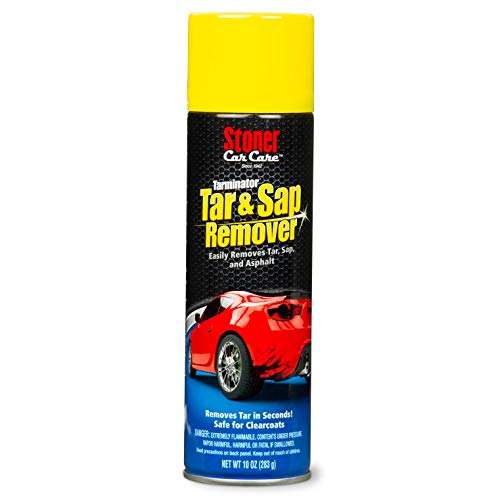
1. Stoner Car Care Tarminator Tar & Sap Remover
Check the current price on Amazon – 10 oz, about $9.38.
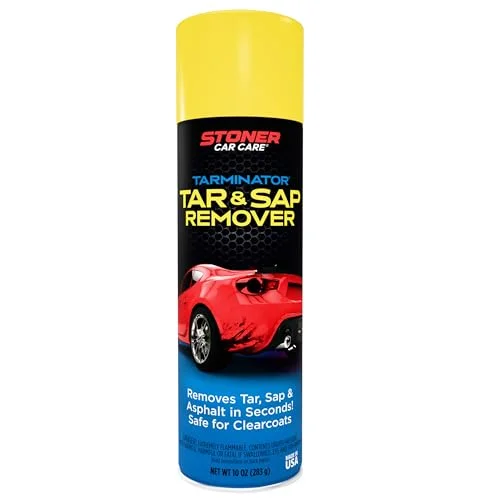
Tarminator is a solvent, not an abrasive, so it is the right first move for fresh tar, sap, and asphalt splatter that has not had time to bond with the clear coat. Spray it on, let it sit for a few seconds, and wipe with a microfiber towel; it is rated safe on paint, clear coats, and chrome, so it works across cars, trucks, RVs, motorcycles, and boats.
Pros:
- Fast-acting on fresh tar, sap, and asphalt
- Safe on paint, clear coats, and chrome
- Works across cars, trucks, RVs, motorcycles, and boats
Cons:
- Only 10 oz per can, so a full-body job may need two
- A solvent, not a compound – will not buff out paint that has already bonded to the clear coat
It will not remove old, sun-baked road paint that has fully cured into the clear coat; for that you need an abrasive compound like the Carfidant below, not another round of solvent.
2. Carfidant Ultimate Scratch & Swirl Remover
Check the current price on Amazon – 8.4 fl oz kit with applicator pad, about $21.97.
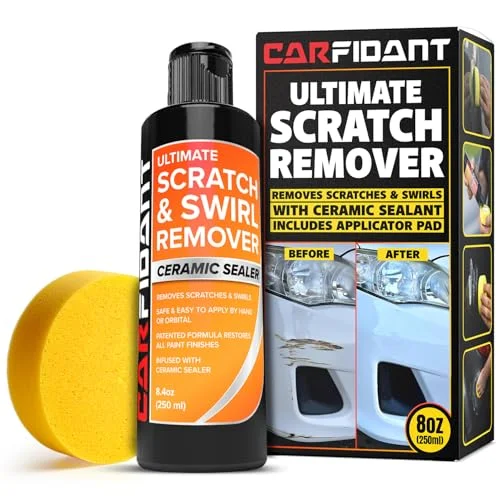
This is a cutting compound, not a solvent, which is exactly what you need when road paint has already transferred onto and bonded with your clear coat rather than just sitting on top of it. The kit ships with a foam applicator pad, works by hand or on an orbital polisher, and doubles as a general scratch and swirl remover for the rest of the panel.
Pros:
- Includes a buffer pad, so no separate tool purchase is needed
- Works on any paint color
- Also removes surface scratches and swirls, not just paint transfer
Cons:
- Deep or thick transfer usually needs two or three passes
- An abrasive compound, so it is not the right first step on fresh, still-soft splatter – try a solvent first
For best results, run a plastic clay bar over the area first to lift any loose grit, then work the compound in small, overlapping sections with light pressure rather than one long pass over the whole panel.
3. Motsenbocker’s Lift Off Paint Scuff & Graffiti Remover
Check the current price on Amazon – 16 fl oz spray, about $10.99.
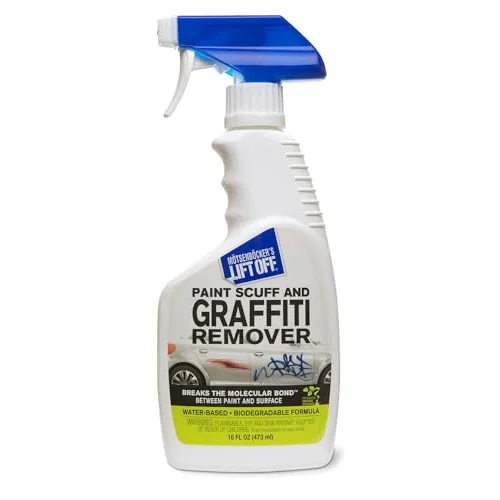
This one is built for a different problem than the other two: actual spray paint, marker, or acrylic paint on the surface, whether that is graffiti, a paintball hit, or overspray from a nearby line-striping job. The water-based, biodegradable formula works by breaking the molecular bond between the paint and the surface underneath it, and it is labeled safe for vehicles, boats, brick, and concrete.
Pros:
- Breaks down cured spray paint and graffiti, not just grime
- Water-based and biodegradable formula
- Works on multiple surfaces beyond just the car
Cons:
- 16 fl oz covers a limited area on a full panel of graffiti
- Stubborn or aged paint may need a second application
It is overkill for ordinary tar or sap, and it will not buff out paint that has physically bonded into the clear coat – save it for actual spray paint or marker on the surface.
How to Remove Road Paint From a Car (Step-by-Step)
The order matters more than the product. Working from least aggressive to most aggressive avoids marring the clear coat unnecessarily.
- Wash the area first. Loose grit left on the surface will scratch the clear coat once you start rubbing, so wash and dry the spot with a proper wash mitt before doing anything else.
- Identify what you are actually dealing with. Fresh, sticky splatter (tar, sap, asphalt) calls for a solvent like Tarminator. Paint that is flat, dry, and will not smear under a fingernail has already bonded to the clear coat and needs a cutting compound like Carfidant. Actual spray paint or graffiti needs a stripper like Lift Off.
- Apply the matching remover and let it dwell for the time listed on the label – usually a few seconds for a solvent, longer for a compound worked in by hand or machine.
- Work in small sections with light pressure rather than scrubbing one large area, checking your progress every few passes.
- Wash and wax the spot afterward. Every one of these products strips some of the car’s existing wax or sealant along with the contaminant, so reapply protection once the area is clean.
If a solvent alone will not shift it, do not reach for a razor blade or sandpaper – a clay bar followed by the cutting compound will remove the same bonded paint without the risk of cutting through the clear coat.
Frequently Asked Questions
How Effective Is the Tarminator at Removing Road Paint?
Tarminator works well on fresh tar, sap, and asphalt splatter because it is a solvent that dissolves the contaminant rather than trying to scrub it off. It is rated safe on paint, clear coats, and chrome. It will not remove paint that has already cured and bonded into the clear coat; that needs a cutting compound instead.
Can Carfidant Scratch Remover Fix Paint Transfer and Scuffs?
Yes. Carfidant is a cutting compound, so it works on bonded paint transfer the same way it works on scratches and swirls: it levels the clear coat around the contaminant rather than dissolving it. The kit includes a buffer pad, and it can be worked in by hand or with an orbital polisher.
Is Motsenbocker’s Lift Off Safe for All Surfaces?
Lift Off is labeled safe for vehicles, boats, brick, and concrete, and the water-based, biodegradable formula is designed to lift paint without harming the surface underneath. As with any remover, test a small hidden spot first if you are using it on a surface or finish you have not tried it on before.
Will a Road Paint Remover Damage My Clear Coat?
Used correctly, none of these three should damage a healthy clear coat. The risk comes from using the wrong tool for the job – scrubbing a solvent hard enough to compensate for the wrong product, or skipping the wash step and grinding grit into the paint. Working in light passes and washing the area first avoids both.
What Is the Difference Between a Paint Remover and a Scratch Remover?
A paint remover (a solvent like Tarminator or a stripper like Lift Off) dissolves or breaks down a contaminant sitting on top of the paint. A scratch remover (a cutting compound like Carfidant) works by leveling a very thin layer of the clear coat itself, which is why the same compound also removes bonded paint transfer.
Can Lift Off Remove Spray Paint From Vehicles?
Yes, that is its main use case. Lift Off is formulated to break the molecular bond between spray paint, acrylic paint, or graffiti and the surface it is on, which lets it lift off without the aggressive rubbing a compound would require.
How Long Should I Let a Road Paint Remover Sit Before Wiping?
Follow the label, but as a general rule solvents like Tarminator only need a few seconds of dwell time before wiping, while a stripper like Lift Off typically needs a minute or two to fully break the paint bond. Compounds like Carfidant are worked in continuously rather than left to sit.
Conclusion
Match the remover to the contaminant rather than reaching for whatever is already in the garage. Stoner Tarminator is the fastest fix for fresh tar, sap, and asphalt. Carfidant’s Ultimate Scratch & Swirl Remover is the one to reach for once paint has bonded into the clear coat. Motsenbocker’s Lift Off handles actual spray paint and graffiti that the other two are not built for.
Wash the area before and after, work in light passes, and reapply wax once the surface is clean. If you would rather try a household solvent first, our guide on removing road paint safely with common products covers that route step by step.
Products related to this article
Sponsored / affiliate links. As an Amazon Associate I earn from qualifying purchases. I may earn additional commission from eligible campaigns.
 Car Scratch Remover for Vehicles, Car Paint Scratch Repair Kit for Light Scratches, Swirl Marks, Scuffs & Water Spots, Comes with Sponge, Safe for All Paint Colors, 100g, 1 Pack
 Car Scratch Remover Paint Care Tool Auto Swirls Remover Scratches Repair Polishing Wax with Wipe Cloth Car Paint Polishing Set