How to Stay Warm in Your Car If It Breaks Down in Winter
Keep the cabin closed, run the engine only in short intervals when the tailpipe is clear, and never sleep with the engine running in an enclosed space. If fuel is low or the exhaust is blocked, shut the engine off and signal for help. Poor ventilation or a buried tailpipe can turn heat into carbon-monoxide poisoning or a dead battery. This guide gives a step-by-step decision tree for staying warm based on fuel, location, and temperature.
Stay inside and make the vehicle visible

- Durable and advanced aluminized dual-sided emergency mylar thermal space blankets
- Comes in packs of 10, individually folded and wrapped
- Massive size at 84 inches x 64 inches, 24% larger than standard
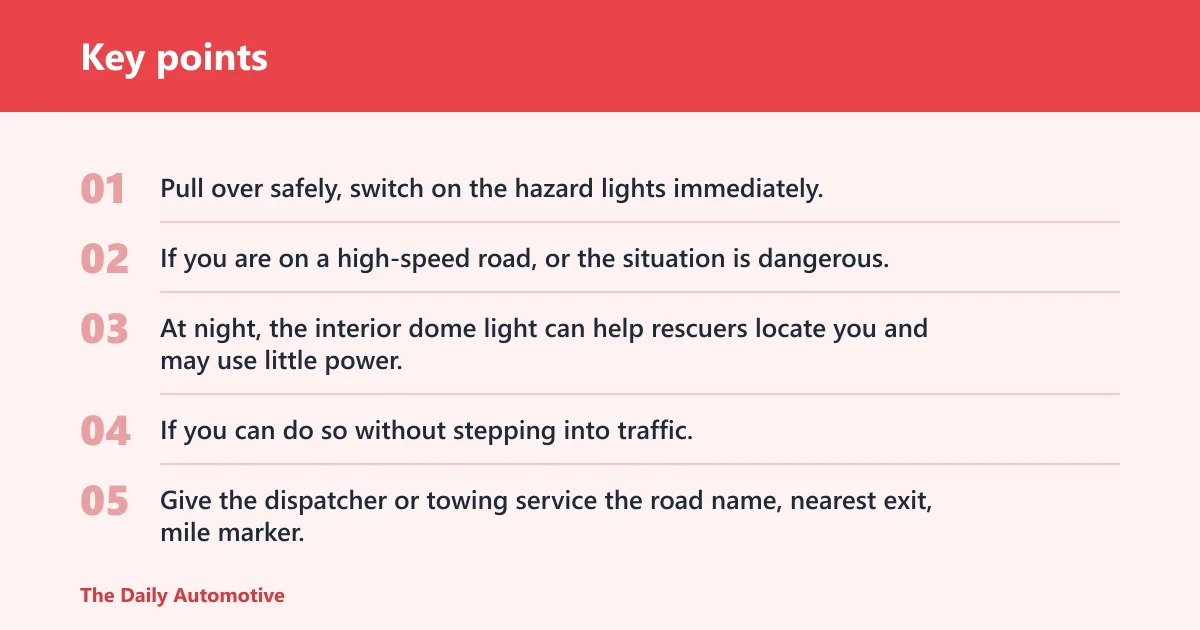
Pull over safely, switch on the hazard lights immediately, and make the vehicle easy for other drivers to spot. If you are on a high-speed road, or the situation is dangerous, stay in the vehicle and call roadside assistance or emergency services with your exact location. Do not stand in traffic lanes.
Make the car easier to see
Use hazard lights right after stopping. At night, the interior dome light can help rescuers locate you and may use little power, so it can stay on if it improves visibility. If you can do so without stepping into traffic, place reflective triangles or LED road flares behind the car.
Call with exact details
Give the dispatcher or towing service the road name, nearest exit, mile marker, direction of travel, and any landmark you can see. If the phone signal is weak, text when possible and keep the phone charged. A paper map of your region belongs in the kit for times when phones and service fail together.
Stay warm without the engine
Before you spend fuel, trap body heat with blankets and clothing. Put on a hat, gloves, scarf, dry socks, and any extra layers stored in the cabin, then use thermal blankets or a wool blanket per person. This works even if the battery is weak or the engine will not restart.
Cut heat loss inside the cabin
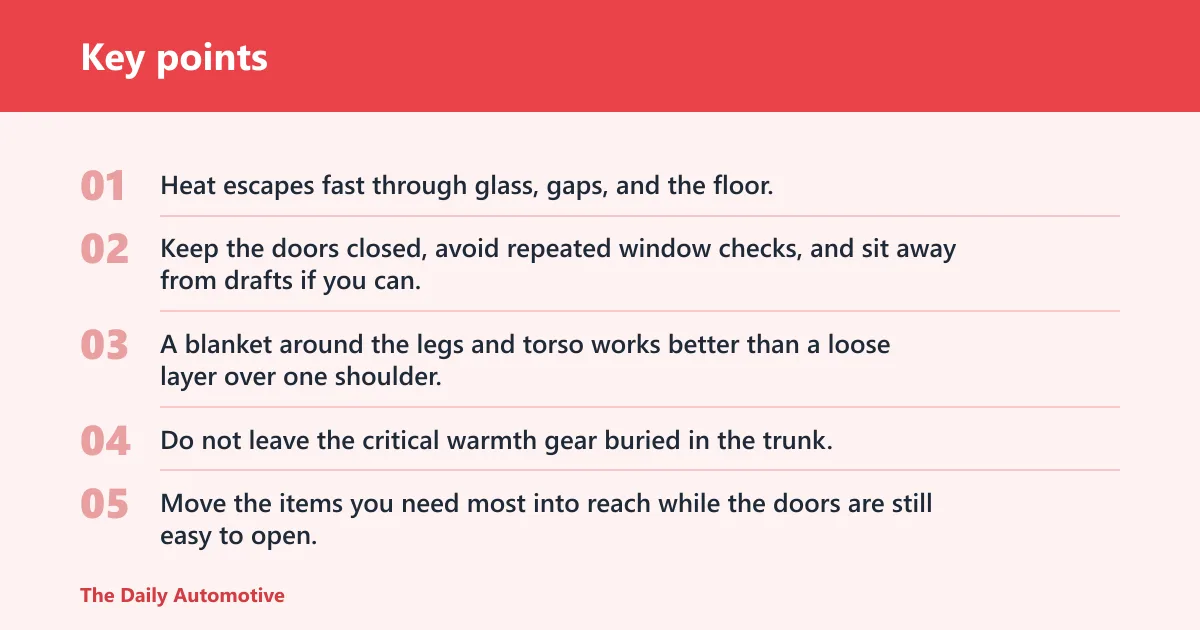
Heat escapes fast through glass, gaps, and the floor. Keep the doors closed, avoid repeated window checks, and sit away from drafts if you can. Cover exposed skin first. A blanket around the legs and torso works better than a loose layer over one shoulder.
Move the right items into the cabin now
Do not leave the critical warmth gear buried in the trunk. Move the items you need most into reach while the doors are still easy to open.
| Temperature band | Fuel left | Traffic exposure | Recommended action | Top three kit items to move into the cabin immediately |
|---|---|---|---|---|
| Above -10°C | More than half a tank | Quiet rural road | Stay put, layer up, and use the engine only in short intervals if the tailpipe is clear. | Wool blanket, hat and gloves, power bank |
| 0°C to -10°C | Quarter tank to half tank | Urban curbside | Use blankets first, call roadside assistance, and run the heater briefly only if you can keep the exhaust clear. | Thermal blanket, dry socks, headlamp |
| Below -10°C | Low fuel | Open shoulder or exposed roadside | Stay in the vehicle, signal for help, and conserve fuel. Run the engine only if the tailpipe is clear and visibility is poor enough to justify brief heat. | Wool blanket, water, LED road flares |
| Any temperature | Very low fuel or unknown | High-speed highway | Do not rely on the engine. Stay inside, keep hazards on, and call for help now. | Power bank, whistle, reflective triangles |
Winter breakdown
This table turns the problem into a quick choice. Read across by temperature, fuel, and exposure, then choose the safest action. Keep body heat in, keep exhaust gas out, and get seen fast.
What the table is trying to decide
The main split is simple. If conditions are mild and fuel is available, short engine use can help. If fuel is low, snow is piling up, or traffic is close, conserve fuel and keep the cabin sealed. If the vehicle is on a highway or in severe cold, staying inside is usually safer than walking.
Can you run the engine?
Yes, but only in short, controlled intervals and only when the tailpipe is clear. Brief engine use can help retain warmth, especially when the temperature is dropping and the cabin is losing heat quickly. The answer changes if fuel is low, snow is deep, or the car is exposed to drifting snow.
How much engine time is reasonable?
To run the engine and heater for 10 minutes every hour. That is a short, controlled pattern, not continuous idling. Use that approach only when you can check the tailpipe, and stop if exhaust may be blocked or snow starts collecting around the rear of the vehicle.
Why fuel level changes the answer
Fuel is not comfort fuel. It is survival fuel. If the tank is low, use blankets, layers, and body heat first. A common first-timer mistake is to start the heater every few minutes with no plan, then discover the tank is nearly empty when the temperature drops further.
Suppose a sedan is stuck on a plowed shoulder at -8°C with half a tank left. Short heater bursts may be reasonable after the tailpipe is checked. Now change one variable: the same car is in a snowdrift with the exhaust buried. The answer changes immediately. Stay off the engine until the snow is cleared.
Avoid carbon monoxide poisoning
Carbon monoxide poisoning is the risk that makes winter idling dangerous. Exhaust can enter the cabin when the tailpipe is buried, blocked, or sending fumes back under the vehicle. The danger increases when the car is idling in snow, so fresh-air precautions matter every time you restart the engine.
Check the tailpipe before idling
Keep the tailpipe clear of snow, ice, and packed slush. If snow blocks the pipe, exhaust flow can stop or back up toward the cabin. That is especially dangerous when the car is buried in drifting snow. Clear the area behind the vehicle before running the engine for warmth.
Watch for drift and buildup
Snow can creep back around the rear bumper after you think the car is clear. Recheck the tailpipe each time you restart the engine, especially during active snowfall or wind. If you smell exhaust or feel sleepy, dizzy, or headachy, shut the engine off and call for help.
Should you stay in the car or walk for help in a winter breakdown?
Stay with the vehicle in severe cold, on highways, or when visibility is poor. Roadside assistance is usually safer than walking in snow, wind, or traffic. Walking for help only makes sense in limited cases, such as a safe urban setting with nearby buildings and no immediate traffic risk.
When staying put is the safer choice
If you are on a high-speed highway, stay inside with the seatbelt on until it is safe to exit. The vehicle is easier for rescuers to find than a person on foot, and it gives you shelter from wind chill. This is especially true during blizzard conditions or extreme sub-zero cold.
When a short self-rescue attempt may make sense
If you are on a city street, traffic is light, and help is close by, a short walk to a nearby business or residence may be reasonable. Leave only if the path is visible and safer than waiting in the car. Do not wander off in a blizzard or try to cross busy roads on foot.
Signal for help
Use anything that makes the car easier to spot from a distance. Reflective triangles, LED road flares, a bright cloth or flag, and hazard lights are all useful. At night, keep the dome light on if it helps rescuers see you, and use a whistle if you need to attract attention.
What to do with the lights
Hazard lights should go on immediately after stopping, and they should stay on while you are visible from traffic. If your headlights can be seen without confusing other drivers, use them in a way that helps rescuers spot the vehicle. Keep the phone charged and accessible so you can answer when help calls back.
What belongs in the kit
A winter car emergency kit should solve three problems: staying warm, getting unstuck, and being found. That means a wool blanket per person, thermal blankets, traction help, a way to signal, a headlamp, a power bank, water, food, and items that stay usable in freezing temperatures.
- Move the wool blanket, thermal blanket, and dry clothing into the cabin.
- Put on hat, gloves, scarf, and dry socks right away.
- Turn on hazard lights and keep the car visible.
- Clear the tailpipe before any engine use.
- Call roadside assistance with your exact location.
- Use reflective triangles, LED road flares, or a bright cloth if it is safe to place them.
- Ration fuel and battery power until help arrives.
What should I keep in a winter car emergency kit?
Keep the kit focused on warmth, traction, and signaling rather than convenience items. The most useful supplies are a wool blanket per person, thermal blankets, hat, gloves, scarf, extra socks, water, food, traction help, a headlamp, a power bank, and a way to signal. Store them where they can be reached quickly.
Kit items that matter most
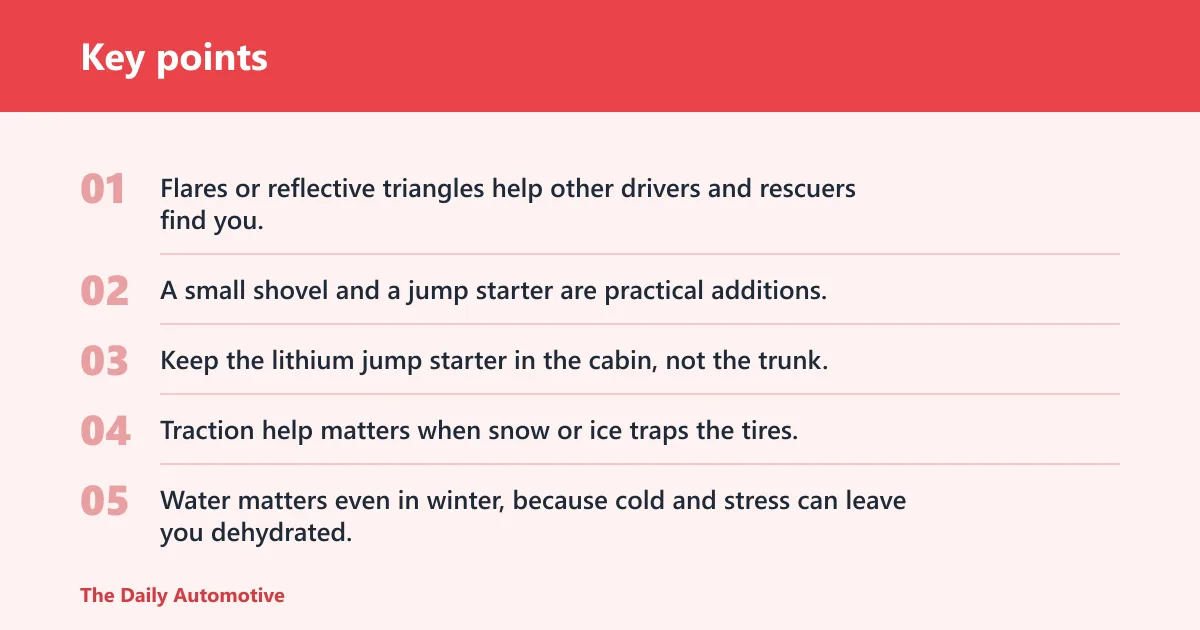
Flares or reflective triangles help other drivers and rescuers find you. A whistle is useful when visibility is poor. A small shovel and a jump starter are practical additions, and a realistic kit for most drivers is about a medium duffel plus a shovel and a small jump starter. Keep the lithium jump starter in the cabin, not the trunk.
Items that solve common failures
Traction help matters when snow or ice traps the tires. Water matters even in winter, because cold and stress can leave you dehydrated. A sleeping bag rated below your area’s low belongs in a larger kit plan for longer waits. Chemical hand and toe warmers are recommended in four or more pairs.
Picture a driver stuck on a rural road after dusk. The car is not moving, the phone battery is dropping, and snow is starting to drift around the tires. The fastest useful move is not to dig through the trunk at arm’s length in the dark. It is to bring the headlamp, blanket, power bank, and signaling gear into the cabin now.
Frequently asked questions
What should I do first if my car breaks down in winter?
Pull over as safely as possible, turn on the hazard lights, and stay visible. Then assess whether the road, weather, and fuel level make it safer to stay in the car. If you are on a highway or in extreme cold, call roadside assistance or emergency services with your exact location.
How do I stay warm in my car without killing the battery?
Use blankets, extra layers, and dry clothing before relying on the heater. A wool blanket per person and thermal blankets help retain body heat without using power. Keep the cabin closed, cover exposed skin, and use the headlamp instead of draining the battery with bright interior lighting.
How long can I safely run the engine to stay warm?
Running the engine and heater for 10 minutes every hour, not continuously. That only makes sense when the tailpipe is clear and fuel is adequate. If snow is piling up, or fuel is low, conserve what you have and rely on body heat and blankets instead.
How do I avoid carbon monoxide poisoning in a stranded car?
Keep the tailpipe clear of snow and do not idle blindly in drifting snow. Exhaust can back up into the cabin if the pipe is buried or blocked. If you feel sleepy, dizzy, or sick, shut the engine off, get fresh air if it is safe, and call for help right away.
Products related to this article
Sponsored / affiliate links. As an Amazon Associate I earn from qualifying purchases. I may earn additional commission from eligible campaigns.