Best Snow Chains for Car Tires: Top Picks for Winter Traction
Snow chains give a car’s tires extra bite on packed snow and ice, and for many mountain passes they’re the difference between driving through and getting turned around at a checkpoint.
Below we cover three chain options that fit different vehicles and budgets — a classic self-tightening diamond chain for trucks and SUVs, a lighter cable-style chain for passenger cars, and a clamp-on “tiger claw” set built for very deep snow. We also walk through how installation actually works and what the law expects from you once the chains are on, since both of those trip up first-time buyers more than picking the product itself.
Our Top Pick for Most Vehicles
TOP PICK FOR TRUCKS & SUVS
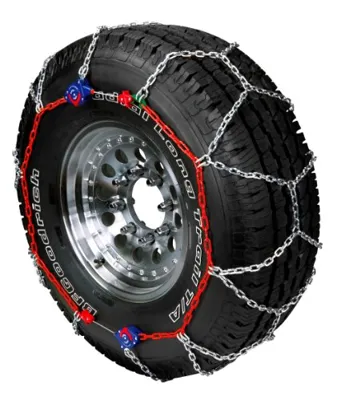 |
SCC Peerless 0232105 Auto-Trac Tire Chain – $81.98 Self-tightening ratchets mean you drape it over the tire and drive a few feet — no jacking the car up or crawling underneath in the snow.
|
SCC Peerless Auto-Trac Light Truck/SUV Tire Traction Chain
If you drive a light truck or SUV and want something you can put on without kneeling in slush, the SCC Peerless Auto-Trac is built around that exact problem. It uses a diamond-pattern chain with a ratchet on the inside edge — you loop it over the tire, hook the ratchet, and drive forward a few feet so it self-centers and tightens on its own.
Pros
- Self-tightening ratchet means no crawling under the car to adjust tension.
- Diamond pattern gives strong bite in deep or rutted snow, not just on ice.
- Heavy-gauge steel construction holds up over multiple seasons.
Cons
- At 13.9 lbs per set, it’s the heaviest option here to carry and store.
- Sized to specific tire ranges, so double-check your tire size before ordering.
The tradeoff for that weight is durability — this is a “buy once” chain rather than a lightweight emergency-only set, and it’s a reasonable pick if you regularly drive unplowed roads rather than keeping chains in the trunk for a once-a-year storm.
Check the current price on Amazon →
Security Chain Company SC1032 Radial Chain Cable Traction Tire Chain
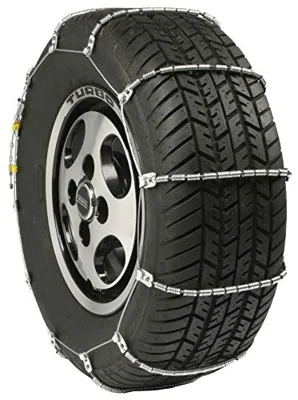
This is a cable-style traction device rather than a true link chain — steel cables run across the tire face instead of heavy chain links. That trade-off matters: it’s lighter and easier to store, at the cost of being less aggressive in very deep, unplowed snow.
Pros
- At 5.6 lbs per set, it’s far easier to carry, store, and handle than a diamond chain.
- Low profile rides smoother and quieter on plowed roads once fitted.
- A solid fit for sedans and smaller crossovers where clearance is tight.
Cons
- Less aggressive traction than a true link chain in deep or unplowed snow.
- Not intended for regular use on dry pavement or non-winter terrain.
We’d point this one toward drivers who mostly need chains for occasional mountain-pass chain-control requirements or an emergency kit, rather than someone regularly driving unmaintained backroads all winter.
Check the current price on Amazon →
Snow Chains for Car, SUV & Pickup Trucks (Tiger Claw Design)
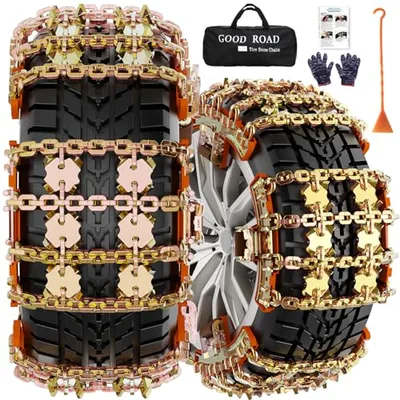
This is the clamp-on style you’ve likely seen sold as an “easy fit” or “beginner” chain — manganese-steel plates with reinforced grip teeth clamp directly onto the tread, so there’s no draping a full chain around the wheel.
Pros
- Reinforced grip teeth are aimed at breaking through packed ice, not just loose snow.
- 7.5-inch widened plates give more tire coverage than a thin cable chain.
- Manganese-steel alloy construction is rated for sustained extreme-cold use.
Cons
- Finish and hardware color can vary slightly from the product photos.
- Clamp-style sets like this generally need a periodic re-tighten check after the first mile, same as any chain.
It’s a reasonable middle-ground pick if you want something more aggressive than a cable chain but don’t want the weight of a full diamond-pattern set.
Check the current price on Amazon →
Are Snow Chains Legal — and Required — in Your State?
Chain rules genuinely differ by state, so treat anything you read here as a starting point, not a substitute for checking your own state DOT or DMV page before a trip. A few patterns hold in most places, though:
- Chains typically only need to go on your drive wheels — the axle that actually powers the car — not all four tires. If you’re not sure which wheels that is on your car, it depends on how your drivetrain is laid out, so check your owner’s manual if you’re unsure.
- Most manufacturers and states cap chain use at around 25–30 mph. Above that speed the extra centrifugal load can snap links and throw them into the wheel well or bodywork.
- Mountain states use posted “chain control” levels rather than a blanket rule — California, for example, signs specific passes as requiring chains, snow tires, or 4WD depending on conditions that day, and the requirement can flip on and off within hours.
- A handful of states restrict chains seasonally rather than banning them outright — for example, some states only permit studded tires or chains on paved roads during a defined winter window, to limit road wear the rest of the year.
The short version: keep a set in the car if you’re driving anywhere that gets real winter weather, but don’t assume the rules from one state (or one mountain pass) apply everywhere else.
How to Put Snow Chains on Your Tires
The exact steps vary slightly by chain style, but the general process is the same across diamond, cable, and clamp-on designs:
- Pull over somewhere flat and out of traffic before you start — never attempt this on an active roadway shoulder if you can avoid it.
- Drape or clamp the chain over the tire following the product’s own diagram; most self-tightening designs go on with the vehicle stationary.
- Connect the inner and outer hooks or ratchets, working around the tire evenly.
- Drive forward slowly for a few feet, then stop and re-check tension — this is the step that actually seats and centers most chain designs.
- Re-tighten if needed, then keep speed under the manufacturer’s posted limit for the rest of the drive.
It’s worth practicing this once in your own driveway before you actually need it in a storm — the first install is always slower than the ones after it.
Frequently Asked Questions
What Are Snow Wheel Chains For Cars?
They’re a traction device that fits around a tire — either a true link chain, a cable, or clamp-on plates — to give the tread extra grip on snow and ice. They don’t replace winter tires, but they add bite in conditions where a regular tire would spin or slide.
How Do Tire Traction Chains Work?
The chain, cable, or plates sit between the tire and the road surface, breaking through the thin layer of snow or ice that a smooth tread would otherwise slide across. Most designs use a ratchet or clamp system so the fit tightens as you drive, rather than needing constant manual adjustment.
Are Tire Chains Universal For All Vehicles?
No — fit depends on your tire’s width and diameter, so a set sized for a compact sedan won’t fit a full-size truck tire. Check the manufacturer’s size chart against your tire’s sidewall numbers before buying, and confirm there’s enough clearance in your wheel well for the chain to spin freely.
How To Install Snow Tire Chains Properly?
Lay the chain over the tire per the manufacturer’s diagram, connect the hooks or ratchets evenly around the tread, then drive forward a short distance and re-tighten. Practicing the install in your driveway before winter makes it much faster to do for real on the side of a cold road.
Do Snow Chains Damage Car Tires?
A properly fitted, correctly tensioned chain shouldn’t harm your tire. Most wear comes from a loose fit rattling against the tread, or from driving on chains at highway speed on dry pavement once the snow clears — so check tension after the first mile and take chains off as soon as the road is clear.
Conclusion
All three of these chains solve the same core problem in slightly different ways. The SCC Peerless Auto-Trac is the easiest to fit alone and the toughest of the three, making it our top pick for trucks and SUVs. The Security Chain Company SC1032 cable chain is the lightest and easiest to store, which suits sedans and drivers who just need something for occasional chain-control zones. The tiger-claw clamp-on set lands in between — more aggressive than a cable chain, lighter than a full diamond chain.
Whichever you pick, confirm it fits your tire size, check your state’s rules before you drive into chain-control territory, and keep your speed under the posted limit once the chains are on. That combination — correct fit, correct legal use, correct speed — matters more to your safety than which brand you buy.
Products related to this article
Sponsored / affiliate links. As an Amazon Associate I earn from qualifying purchases. I may earn additional commission from eligible campaigns.