How to Fix Rust on a Car: Surface, Scale & Deep Rust Repair Guide
Yes, rust on a car can be fixed — but the right approach depends entirely on how deep it’s gone. Surface rust (just paint damage) is a straightforward DIY repair costing $20–$50 in materials. Scale rust (pitting into the metal) takes more effort but is still DIY-able. Penetrating rust (holes through metal) requires professional welding or panel replacement. This guide walks through all three stages with step-by-step instructions, cost tables, and the best products for each.
Sand the rust down to bare metal (80-grit → 180-grit), apply a rust converter, prime with a self-etching primer, and repaint with color-matched paint. For surface rust only, the whole repair costs $20–$50 in materials. Scale rust adds body filler to the process. Penetrating rust (holes) needs a body shop — not a DIY fix.
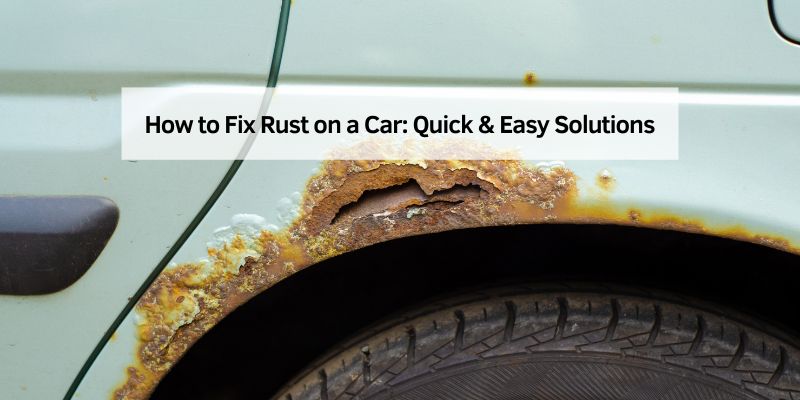
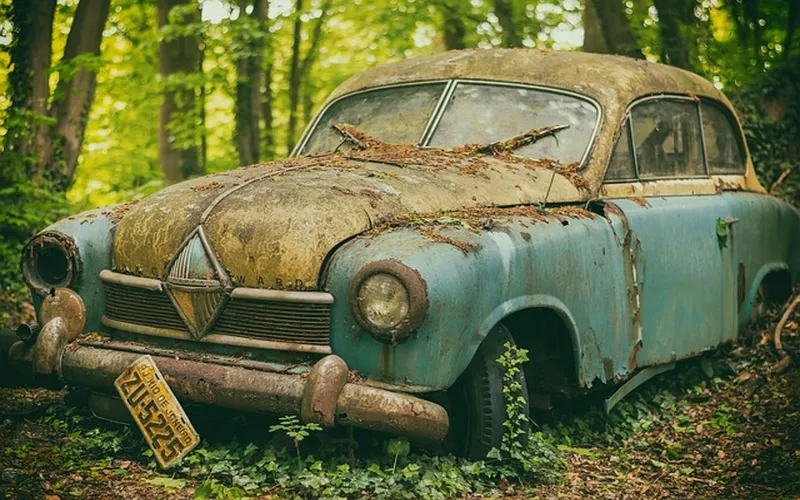
What Type of Rust Do You Have? (Diagnose First)
Rust Repair Kit Essentials
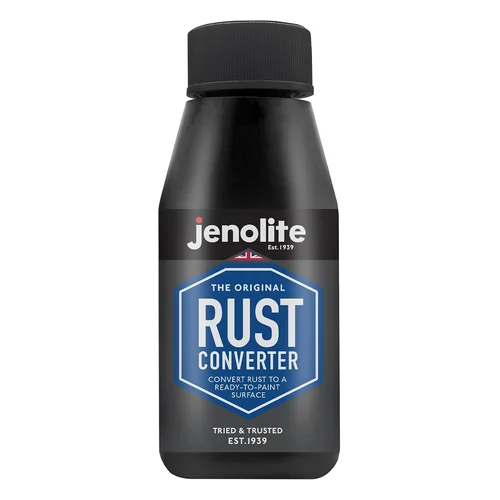
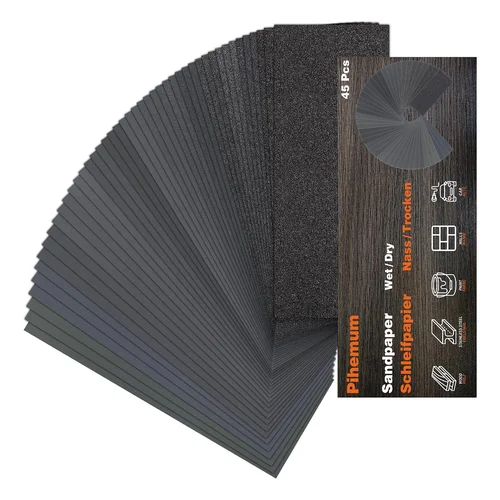
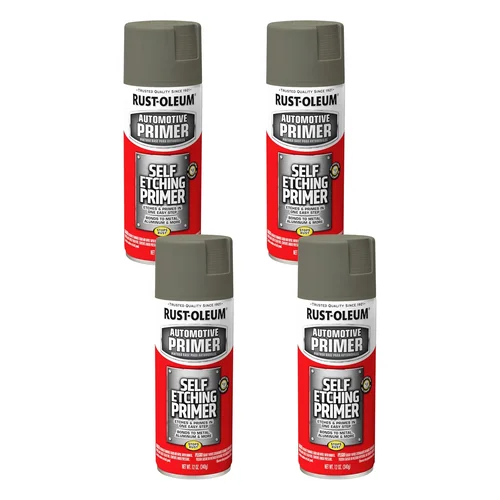
![Mineral White Metallic Tricoat A96 for BMW Touch Up Paint Kit[2K Clear Coat Included],Exact Color Match Touch Up Paint f](https://cdn.thedailyautomotive.com/2025/05/automotive-touch-up-paint-clear-coat-kit.webp)
Before buying anything or sanding anything, identify which stage of rust you’re dealing with. The repair process — and cost — is completely different for each.
| Rust Stage | What It Looks Like | Repair Method | DIY? | Cost |
|---|---|---|---|---|
| Surface Rust | Small orange spots, paint may be bubbling slightly | Sand → rust converter → prime → paint | Yes | $20–$50 materials |
| Scale Rust | Paint bubbling/flaking, rough pitted metal underneath | Wire brush + power sand → body filler → prime → paint | Yes (harder) | $50–$150 materials |
| Penetrating Rust | Actual holes in the metal, soft/crumbly panel | Cut out + weld new sheet metal or replace panel | No — body shop | $400–$3,500+ |
| Frame Rust | Structural rust on chassis/subframe | Professional structural repair or total loss assessment | No | $1,500–$5,000+ |
How Much Does It Cost to Fix Rust on a Car?
| Repair Type | DIY Cost | Professional Shop Cost | Notes |
|---|---|---|---|
| Surface rust spot (coin-sized) | $20–$50 | $200–$400 | Most common; fully DIY-able |
| Scale rust (palm-sized area) | $50–$150 | $300–$700 | Needs body filler + paint match |
| Penetrating rust (small hole) | Not recommended | $400–$1,200 | Requires welding equipment |
| Full panel replacement | Not DIY | $800–$3,500 | Labor-intensive; 70–80% is labor cost |
| Frame/structural rust | Not DIY | $1,500–$5,000+ | May total the vehicle |
How to Fix Surface Rust on a Car (Step-by-Step)
This process works for surface and light scale rust. Estimated time: 2–4 hours. Required materials: 80-grit and 180-grit sandpaper, rust converter, self-etching primer, color-matched paint, clear coat, masking tape.
Step 1: Clean the Rusty Area
Wash the area with soap and water, then wipe it with a wax-and-grease remover (or isopropyl alcohol). Dry completely — any moisture trapped under primer will cause the rust to return. Mask off the surrounding paint and trim with tape.
Step 2: Sand Down to Bare Metal
Start with 80-grit sandpaper to remove all rust, bubbling paint, and flaking material. Sand until you see clean, shiny metal — no brown or orange remaining. Then switch to 180-grit to feather the edges of the surrounding paint and smooth out the scratches left by the coarse grit. Wipe off all dust with a tack cloth.
Step 3: Apply Rust Converter
Apply a rust converter (like Rust-Oleum Rust Reformer) to any remaining rust you couldn’t fully sand away. The converter chemically transforms iron oxide into a stable black primer-like coating. Let it dry fully — typically 24 hours — before proceeding. Do not skip this step on scale rust; it neutralizes what sanding leaves behind.
Step 4: Apply Body Filler (Scale Rust Only)
If the metal is pitted or uneven after sanding, mix a small amount of two-part body filler (like Bondo) per the instructions and apply it with a plastic spreader. Feather the edges as you go. Let it cure (15–30 minutes), then sand smooth with 180-grit, followed by 220-grit. Wipe clean.
Step 5: Prime the Bare Metal
Apply a self-etching primer specifically designed for bare metal — regular primer over bare metal will rust through. Shake well, hold 10–12 inches away, and spray thin coats. Apply 2–3 coats, allowing each to dry per the can instructions. Let the final coat cure before painting (usually 1 hour).
Step 6: Apply Color-Matched Paint
Find your car’s paint code on the door jamb sticker (look for “Color:” or “Paint:”). Order a color-matched spray can online or from a dealer. Apply thin coats, overlapping slightly, holding 10–12 inches from the surface. Allow each coat to flash dry (5–10 minutes) before the next. Typically 3–4 coats for good coverage.
Step 7: Clear Coat and Blend
Apply 2–3 coats of automotive clear coat over the painted area. Once fully cured (24–48 hours), use 2000-grit wet sandpaper to blend the repair into the surrounding paint, then polish with a rubbing compound to restore gloss. The repair should be nearly invisible on a solid-color car; metallic/pearl finishes are harder to match perfectly.
Sealant for Long-Term Protection
Once the repair is complete and cured, apply a paint sealant or wax to the repaired area and surrounding panels. Ceramic paint sealants offer the longest protection (1–2 years per application) and form a hard barrier against moisture and road salt. Carnauba wax is easier to apply and provides a warm gloss, but needs reapplication every 2–3 months. Either option dramatically reduces the chance of rust returning to the repaired area.
Preventive Measures: Stop Rust Before It Starts
The cheapest rust repair is the one you never need. The highest-risk areas are wheel wells, door bottoms, trunk edges, and the undercarriage — anywhere water can collect and sit. Rinse your car after driving on salted winter roads, repair paint chips and scratches within weeks (not months), and apply an undercoating spray to the undercarriage if you live in a rust-belt state or coastal area. Annual undercarriage inspections will catch new rust spots at the surface stage before they escalate.
Frequently Asked Questions
Can car rust be repaired?
Yes, surface and scale rust are fully repairable — DIY for surface rust, and DIY or professional for scale rust. Penetrating rust (holes through the metal) requires professional welding. Frame rust may total the vehicle if it compromises structural integrity.
How expensive is it to fix rust on a car?
Surface rust DIY repair costs $20–$50 in materials. Professional surface rust repair runs $200–$650. Scale rust costs $50–$150 DIY or $300–$700 at a shop. Penetrating rust requiring panel welding or replacement runs $400–$3,500+ at a professional body shop.
How do body shops repair rust?
Body shops cut out the rusted metal, weld in new sheet metal patches or replace the entire panel, then apply filler, primer, and a color-matched paint blend. For surface rust, they sand, prime, and paint. Labor typically accounts for 70–80% of the total bill.
What is the best product to put on rust on a car?
For active rust that can’t be fully sanded away, a rust converter (such as Rust-Oleum Rust Reformer) is the best product — it chemically neutralizes iron oxide into a stable, paintable surface. For protection after repair, a self-etching primer over bare metal followed by color-matched paint and clear coat is the correct sequence.
Is it worth fixing rust on a car?
Surface and scale rust are always worth fixing to prevent escalation — a $40 DIY repair today can prevent a $1,500 panel replacement in two years. Penetrating rust worth fixing depends on the vehicle’s value versus repair cost. If rust repair exceeds 50% of the car’s market value, most mechanics and insurers treat it as uneconomical. Get a professional estimate before committing to major rust repairs on older, high-mileage vehicles. For more on stopping rust from spreading, see our guide on how to stop rust on a car from spreading.
Products related to this article
Sponsored / affiliate links. As an Amazon Associate I earn from qualifying purchases. I may earn additional commission from eligible campaigns.