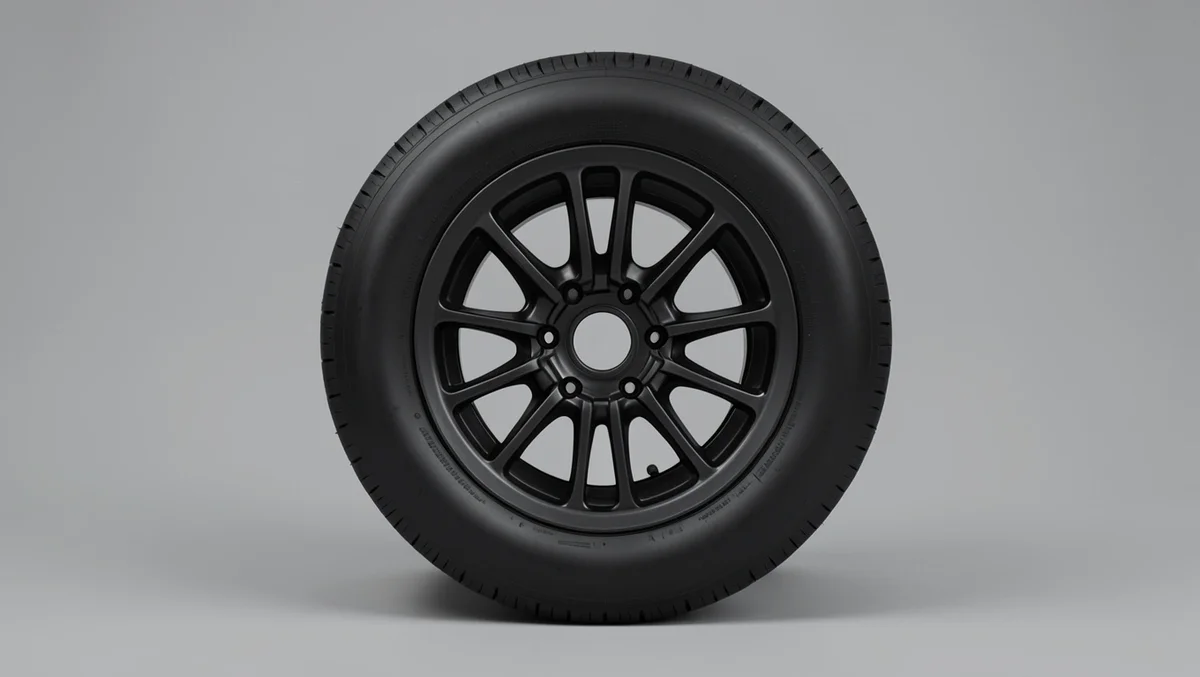
Solid Rubber Tires for Cars: Are They Legal or Practical?
No — solid rubber tires are not legal or practical for standard passenger cars on public roads. They are not sold as a road tire replacement anywhere in the U.S. because they overheat and can break apart at highway speeds, ride extremely harshly, and offer poor wet-weather grip. Solid rubber tires are built for low-speed equipment like forklifts, skid steers, and lawn machines instead.
It is an easy mix-up. “Solid rubber” sounds like the obvious fix for a flat tire — no air, nothing to puncture. But the reason every car on the road still runs air-filled tires is not tradition, it is physics. Below is what solid tires are actually good for, what the newer airless “tweel”-style tires currently offer instead, and one genuinely useful solid-rubber product that does belong in your trunk.
Why Cars Do Not Use Solid Rubber Tires
A rolling tire flexes where it touches the road, and that flexing generates heat through a process called hysteresis. In a normal pneumatic tire, the air pocket inside helps carry that heat away from the rubber. A solid tire has no air pocket, so the entire mass of rubber absorbs the heat with nowhere for it to go. At sustained highway speeds — 65 to 75 mph — internal temperatures in a solid tire can climb well past 100°C (212°F), which is enough to soften, deform, or even disintegrate the rubber.
Heat is not the only problem. A solid tire also cannot cushion road impacts the way an air cushion can, so the ride is noticeably harsher on every seam and pothole. The extra rubber mass adds significant unsprung weight, which hurts handling and fuel economy. And because a solid tire cannot flex to squeeze water out from under the tread the way a pneumatic tire does, wet-road grip is much worse — a real safety concern at any speed above a walking pace.
Where Solid Rubber Tires Are Actually Used
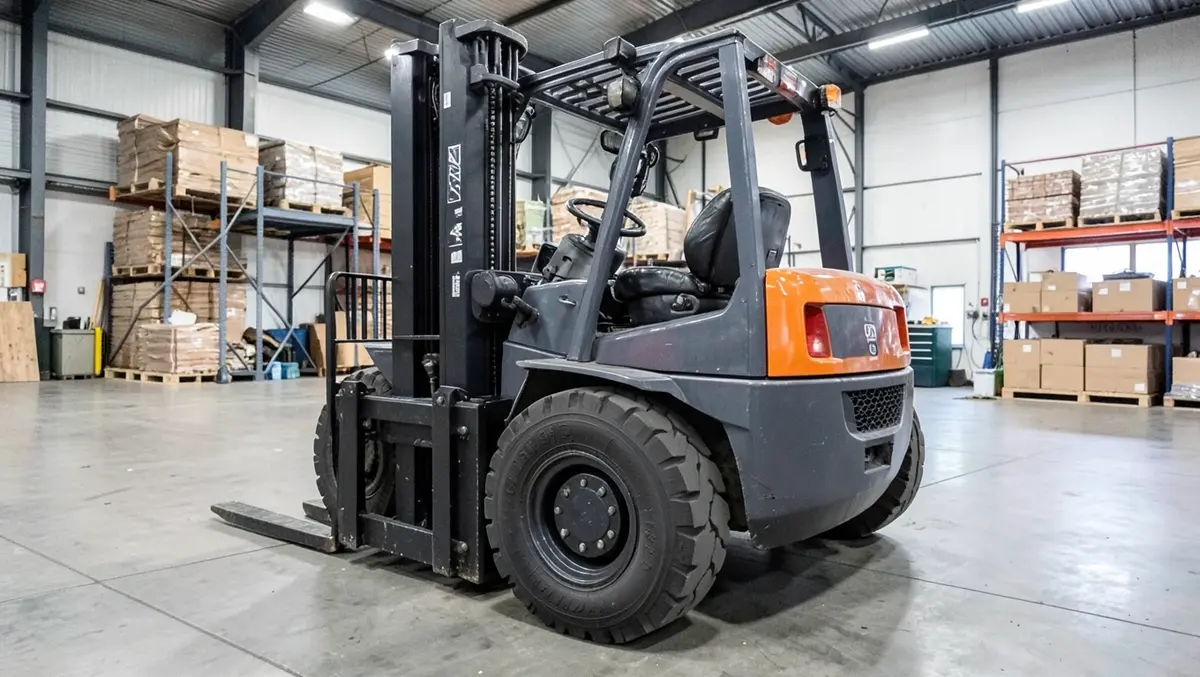
Solid rubber tires are common — just not on cars. They show up on equipment that moves slowly, carries heavy loads indoors or over short distances, and where a puncture would be a bigger problem than a stiff ride.
| Equipment | Why Solid Tires Work Here |
|---|---|
| Forklifts & warehouse equipment | Low speed, indoor concrete floors, puncture resistance matters more than ride comfort |
| Skid steers & construction equipment | Constant contact with debris, nails, and sharp scrap that would flat a normal tire |
| Lawn mowers & zero-turn mowers | Very low speed, small tire size keeps heat buildup manageable |
| Golf carts & some low-speed vehicles | Short trips at low speed, minimal heat generated |
| Some trailers & wheelbarrows | Rarely driven far or fast, puncture-proof is more valuable than comfort |
What About Airless Tires for Passenger Cars?
The technology that is actually trying to bring “no air, no flats” to regular cars is not solid rubber — it is airless, or non-pneumatic, tires that use a flexible spoke structure instead of solid rubber or air pressure. The best-known example is the Michelin Uptis, developed with General Motors. Michelin and GM originally talked about real-world testing ahead of a possible 2024 debut on a GM EV, but that timeline slipped. As of 2026, Uptis has not launched as a retail product for passenger cars — it is running real-world pilot programs instead, fitted to DHL Express delivery vans in Singapore and to La Poste postal vehicles in France.
The holdup is not just engineering. There is currently no international safety standard written specifically for airless tires, and there are still open questions about their long-term cost and usable lifespan compared with a normal tire. Some industry analysts do not expect airless tires to be widely available for everyday passenger cars until around 2030.
Bridgestone has its own version, called the Air Free Concept, which uses a resin spoke structure instead of Michelin’s design. Bridgestone lists it as an “exploratory business” in its 2024–2026 mid-term plan, and the company itself expects airless tires to reach low-speed, controlled-environment applications — think golf carts, wheeled warehouse carts, and mowers — well before they reach everyday passenger cars.
Bottom line: if someone is trying to sell you a “solid” or “airless” tire as a drop-in replacement for your car’s current tires today, be skeptical. The real technology exists, but it is still in pilot testing on commercial fleets, not on dealer lots.
Are Solid Tires Legal to Put on a Car?
For a standard passenger vehicle driven on public roads, no — tires have to meet federal vehicle safety standards written around pneumatic, air-filled tires, and no solid tire is certified or sold for that purpose. Solid tires are a recognized category mostly in state vehicle codes that cover commercial equipment, farm trailers, and other low-speed machinery, not the family car in your driveway. If you genuinely want a flat-proof ride today, the closest legal, road-ready option for a normal car is a run-flat tire, which still uses air but has reinforced sidewalls that can support the car for a short distance after a puncture — not a solid tire.
A Genuine Solid-Rubber Product That Does Belong on Your Car: Wheel Chocks
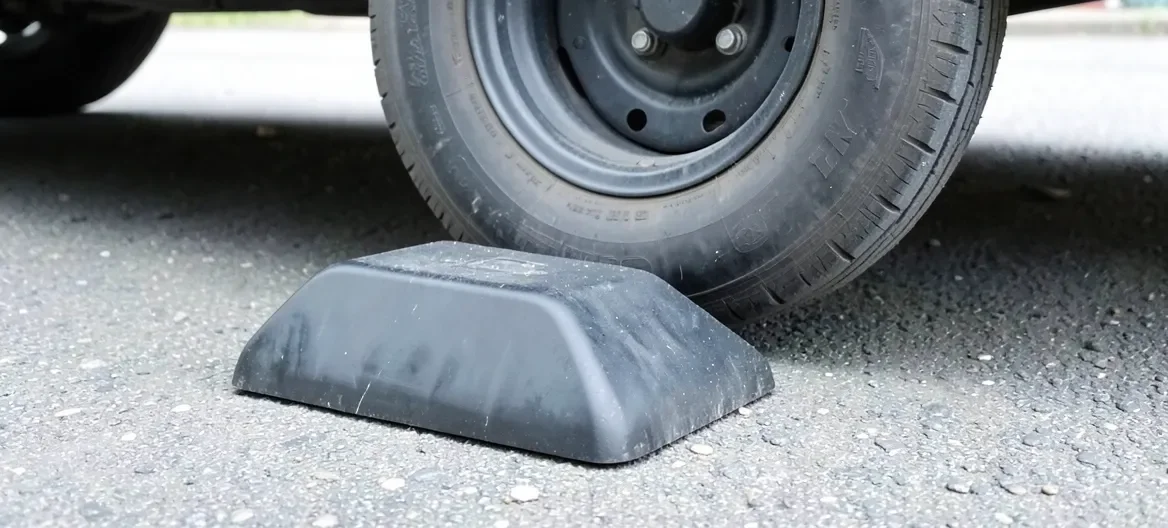
Here is where the two ideas genuinely connect. While solid rubber does not belong inside your car’s tires, it is exactly what you want under them when the car is not moving. A wheel chock is a wedge-shaped block placed snugly against a tire to stop the vehicle from rolling — while it is parked on a slope, while you are changing a tire, or while you are working underneath it. Good ones are made from solid, heavy-duty rubber rather than hollow plastic, so they will not crack, crush, or shoot out from under a wheel the way a cheap plastic chock can.
SOLID RUBBER, MADE FOR YOUR CAR
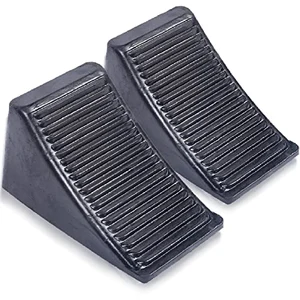 |
Fasmov 2-Pack Solid Rubber Heavy Duty Wheel Chock – $16.99 Not a tire — a genuine solid-rubber safety accessory for parking on a slope, changing a tire, or working under your car.
|
A few basics for using them safely: always use chocks in pairs, and place them on the wheel or wheels diagonally opposite whichever end of the car you are lifting. If you are lifting the front right corner to change a tire, chock the rear left wheel. Pick a chock sized to match your tire diameter so it sits flush against the tread instead of rocking, and always set the parking brake first — chocks are a backup to the brake, not a replacement for it.
Frequently Asked Questions
Are Solid Rubber Tires Legal For Cars?
No. Standard passenger cars must run tires that meet federal safety standards written for pneumatic, air-filled tires. Solid tires are not certified or sold for that use; they show up mainly in state vehicle codes covering commercial and low-speed equipment, not everyday cars.
Why Do Not Passenger Cars Use Solid Rubber Tires?
Solid rubber tires have no air pocket to carry heat away, so at highway speeds the rubber can overheat, soften, and even fall apart. They also ride much harsher, weigh more, and grip wet roads worse than a normal pneumatic tire.
Can You Buy An Airless Tire For A Regular Car Yet?
Not at retail, as of 2026. Michelin’s Uptis and Bridgestone’s Air Free Concept are both still in pilot and prototype stages, running on commercial fleets like delivery vans rather than being sold for personal passenger cars.
What Is The Michelin Uptis Tire?
Uptis is Michelin’s airless (non-pneumatic) tire, developed with General Motors. It uses a flexible spoke structure instead of air pressure. It is currently being tested in real-world pilot programs, including DHL delivery vans in Singapore and La Poste vehicles in France, rather than sold to the public.
Where Are Solid Rubber Tires Used Today?
Mostly on equipment that moves slowly and needs puncture resistance more than a smooth ride: forklifts, skid steers and construction equipment, lawn mowers, golf carts, and some trailers.
Are Wheel Chocks The Same Thing As Solid Rubber Tires?
No. A wheel chock is a separate accessory, not a tire. It is a solid rubber wedge placed against a tire to stop the car from rolling while parked or while you work on it — it does not replace or attach to the tire itself.
Conclusion
Solid rubber tires are real, useful, and durable — just not for the vehicle in your driveway. On a car, the lack of an air cushion means dangerous heat buildup and a harsh, low-grip ride at any real speed, which is why solid tires stay on forklifts, mowers, and similar low-speed equipment instead. The technology chasing a genuine “no flats” future for passenger cars is airless, spoke-based tires like the Michelin Uptis and Bridgestone Air Free Concept, and as of 2026 those are still in pilot testing on commercial fleets, not for sale to individual drivers. The one place solid rubber genuinely earns a spot in your trunk today is as a wheel chock — cheap insurance against your car rolling when you least want it to.
Products related to this article
Sponsored / affiliate links. As an Amazon Associate I earn from qualifying purchases. I may earn additional commission from eligible campaigns.