Steel Car Ramps: Weight Ratings, Sizes & Buying Guide
Solid steel car ramps are the heaviest-duty way to raise a vehicle for an oil change or brake job at home, typically rated from about 6,500 lbs up to 8,000 lbs combined per pair, well above what most aluminum or plastic ramps handle.
The tradeoff is weight and price: a steel ramp set is heavier to carry and store than aluminum or plastic, and it costs more up front. Below is how to size a steel ramp to your vehicle, how steel actually compares to aluminum and plastic once you own one, and a real, currently in-stock pick if you just want the short answer.
How to Choose the Right Steel Car Ramp
Solid Steel, In Stock
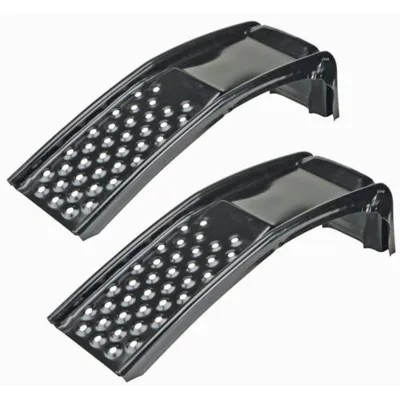 |
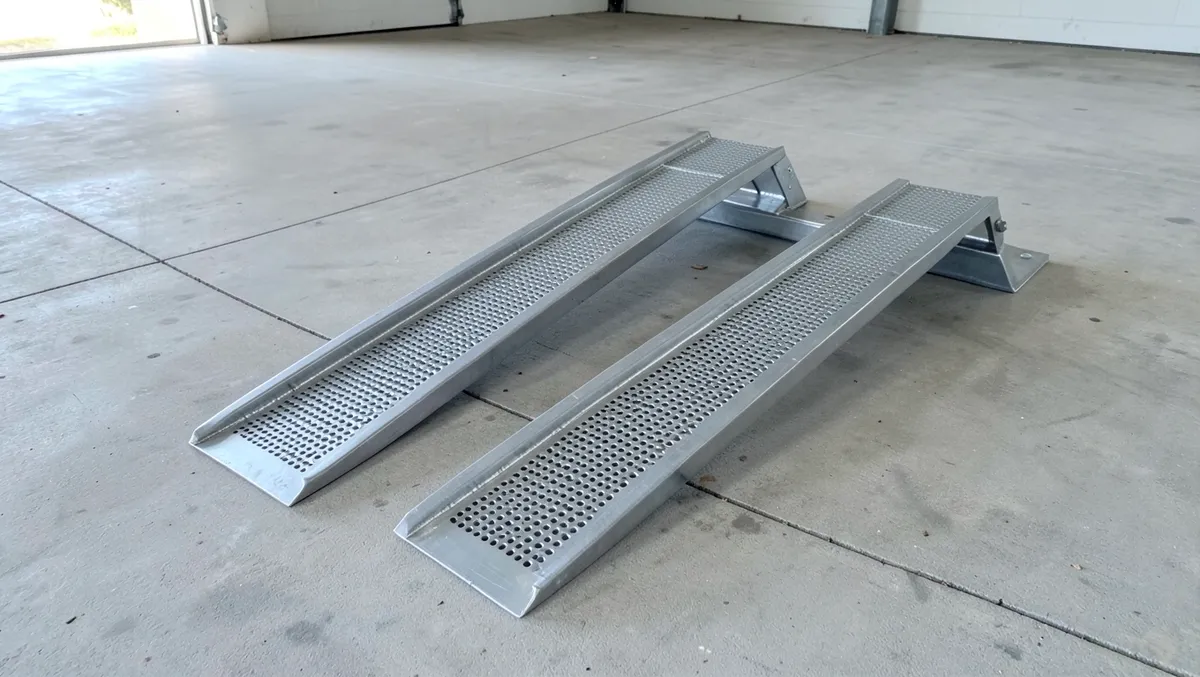
Solid Steel 3 Ton 6,500 LBS Auto Ramp Set – $107.95 A genuinely all-steel pair rated for 6,500 lbs combined, sized for cars and light trucks rather than full-size pickups or SUVs.
|
Three numbers decide whether a ramp actually works for your car, and none of them is “how heavy-duty it looks.”
- Weight rating. Ramp capacity is almost always listed as a combined figure for the pair, not per ramp, and it’s meant to cover one end of the vehicle (one axle), not the whole car’s curb weight. Check your vehicle’s actual front or rear axle weight (in the owner’s manual or on the driver’s-door jamb sticker) against the ramp’s stated rating, and never load a ramp pair past what the printed spec allows.
- Approach angle and ground clearance. A steeper, shorter ramp is easier to store but scrapes the front bumper or splitter on low cars. If your car sits low, look specifically for ramps marketed as “low-profile” with a shallower approach angle, not just a “car ramp” in general.
- Lift height and size. More lift height under the car means more working room, but it also means a longer, heavier ramp to store. Measure your garage space before buying an 8-inch-lift set if storage is tight.
One naming quirk worth knowing: several steel ramps are marketed with a “ton” class name (like “3 Ton”) that doesn’t line up exactly with the printed pound rating on the same listing. Amazon’s own spec sheet for the ramp above states 6,500 lbs combined, not the 6,000 lbs a literal “3 tons” would suggest. Go by the printed lb figure on the current listing and in the included manual, not the marketing name, when you’re deciding what your vehicle can safely use.
Steel vs. Aluminum vs. Plastic Car Ramps
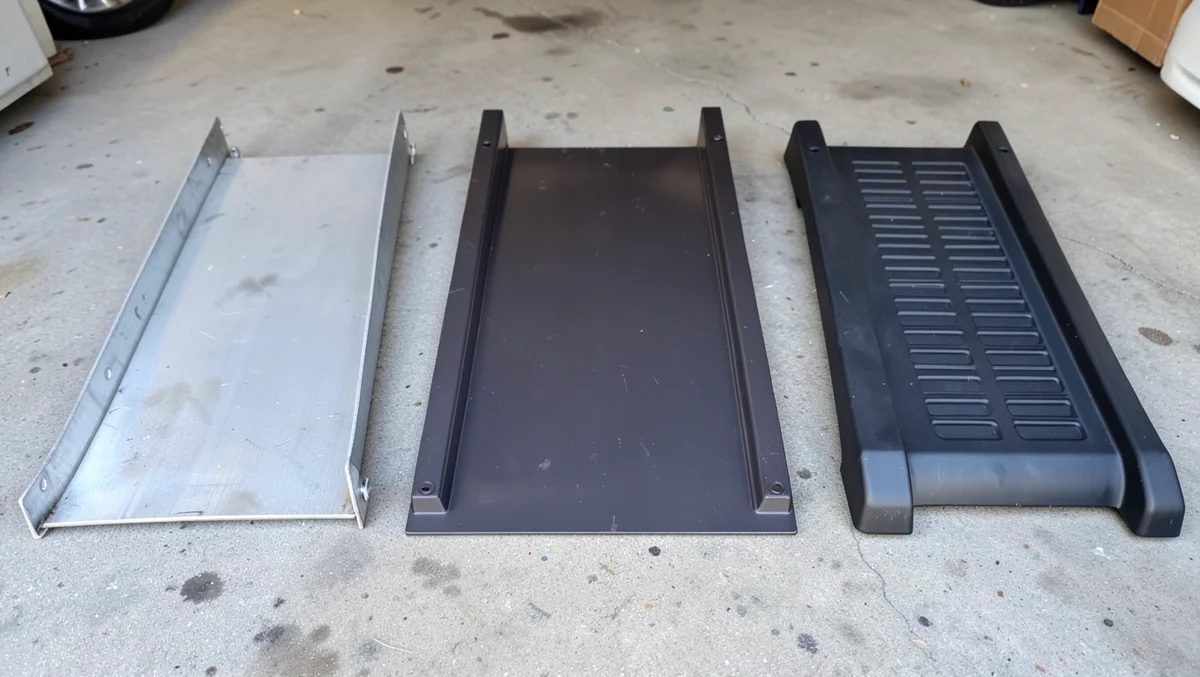
Steel isn’t automatically the “best” ramp material for every garage — it’s the right call when weight capacity and long-term durability matter more than how much the ramp weighs in your hands.
| Material | Typical weight capacity | Weight of the ramp itself | Best for |
|---|---|---|---|
| Steel | Highest, commonly 6,500–8,000 lbs combined | Heaviest, often 30–40 lbs per ramp | Trucks, SUVs, and frequent heavy-vehicle work |
| Aluminum | Moderate to high, but less than a comparable steel set | Lighter than steel, similar bulk | Drivers who want steel-like durability with less weight to carry |
| Plastic (high-impact polymer) | Often 10,000+ lbs per pair on lighter-duty designs | Lightest, often 15–20 lbs per ramp | Routine oil changes on cars and smaller SUVs, easiest to store |
Rust is the real long-term downside of steel. A steel ramp stored in a damp garage or left outside will eventually show surface rust on the tread, even with a painted or powder-coated finish, once that coating chips. Aluminum and plastic don’t have that problem at all, which is why some buyers pick a lighter-duty aluminum or plastic ramp specifically to avoid rust maintenance, even though steel wins on raw weight capacity.
A Lighter, Plastic Alternative
If you don’t need steel’s full capacity and would rather carry something lighter, the Black Widow Car Service Ramps for Oil Change (8,000 lb GAWR, 6.25″ of lift) are a genuinely different option worth comparing rather than a steel ramp in disguise — they’re molded high-impact plastic, not metal, and each ramp weighs about 20 lbs.
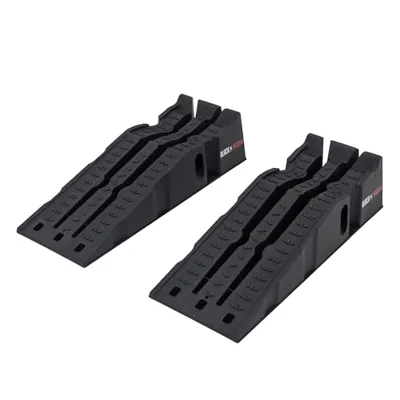
“GAWR” stands for gross axle weight rating — the maximum weight one axle of the vehicle is allowed to carry, which is the number that actually matters for a ramp pair, not the vehicle’s total curb weight. A pair rated 8,000 lb GAWR is rated to safely support one loaded axle up to that figure, split across the two ramps.
For a full-size pickup or SUV that needs more combined capacity than either of the sets above, the Garvee 8-inch-lift solid steel car ramps are rated for 8,000 lbs combined at a lower price than most steel sets in that capacity class, though as with any ramp, confirm the current listed rating and read the included instructions before you rely on it.
Frequently Asked Questions
What Are The Benefits Of Steel Car Ramps?
Steel ramps carry the highest weight ratings of any car ramp material, which is why they’re the usual choice for trucks, SUVs, and heavier sedans. A solid steel tread also holds up to repeated use better than plastic, which can crack or wear at the surface over years of driving on and off it.
How Do I Choose The Right Car Ramp?
Start with your vehicle’s front or rear axle weight, not its total curb weight, and make sure the ramp pair’s combined rating clears that number with room to spare. Then check the approach angle against your car’s ground clearance, and measure your storage space against the ramp’s length before you buy.
Are Plastic Car Ramps Reliable?
Yes, for the vehicles they’re rated for. Many plastic ramp sets carry a 10,000-lb combined rating, which covers most cars and smaller SUVs. They should still be used only on a flat, level, dry surface, since plastic treads can be more prone to slipping if the surface gets wet or oily.
How Do Steel Ramps Compare To Plastic Ramps?
Steel wins on maximum weight capacity and long-term durability under heavy, repeated use. Plastic wins on weight, price, and rust-free storage. For a daily-driven sedan getting routine oil changes, plastic is usually enough; for a truck, SUV, or a ramp that will sit outside, steel’s higher rating is the safer margin.
What Maintenance Do Steel Car Ramps Need?
Check the tread and welds for cracks or rust before every use, and wipe the ramps down if they’ve been sitting outside or in a damp garage. If you see surface rust starting on a painted or powder-coated ramp, a wire brush and a coat of rust-inhibiting paint on the affected spot will stop it from spreading.
How Much Weight Can A Car Ramp Hold?
It depends entirely on the specific model — common steel sets are rated from about 6,500 to 8,000 lbs combined per pair, while lighter-duty plastic sets can be rated as high as 10,000 lbs. That number always applies to the pair supporting one axle, not the vehicle’s total weight, so check your vehicle’s actual axle weight against the ramp’s printed rating rather than assuming any ramp will work.
Conclusion
Steel car ramps make sense once you actually need their higher weight rating — heavier sedans, trucks, and SUVs, or anyone who wants a ramp that will outlast years of garage use. Match the combined rating to your vehicle’s axle weight, check the approach angle against your car’s ground clearance, and you’ll get a set that’s safe to drive onto and easy to trust every time you need it.
Loading a car onto a trailer instead of a garage floor? See our guide to car ramps for a trailer for the length and deck-height math that applies there. And if an oil change specifically is the only reason you need ramps, our guide to metal car ramps for oil changes covers the clearance you need to reach the drain plug and filter.
Products related to this article
Sponsored / affiliate links. As an Amazon Associate I earn from qualifying purchases. I may earn additional commission from eligible campaigns.