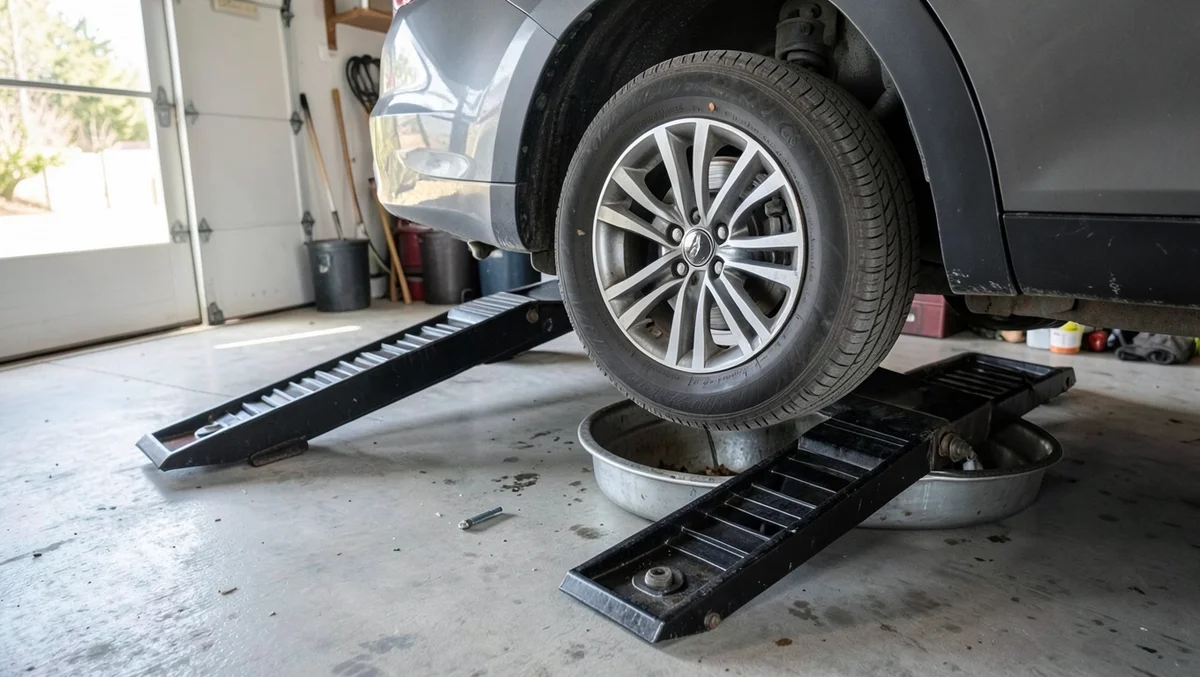
Metal Car Ramps for Oil Changes: Weight Ratings and Safety Guide
For an oil change specifically, metal car ramps need two things a generic ramp spec sheet won’t tell you: enough lift height to slide a drain pan under the oil pan, and a weight rating that covers your actual curb weight per axle, not just the vehicle’s total GVW. Steel and hard poly ramps handle both better than low-profile plastic ramps, which is why they’re the standard pick for a home garage oil change.
This guide covers three currently in-stock ramp sets sized for oil changes, the weight-rating math that actually matters, and the wheel-chock step that most drivers skip — the one thing that turns a stable ramp setup into an unstable one if it’s left out.
Why Ramp Height and Drain Pan Clearance Matter for Oil Changes
Oil changes only need the front (or rear, depending on your drivetrain) wheels raised a few inches — you’re not doing a full undercarriage job, you’re sliding a drain pan under the oil pan and reaching the filter. That means lift height and ground clearance under the raised end matter more than they do for other repairs. A ramp that lifts 6–8 inches usually gives enough room for a standard drain pan on most sedans and crossovers; low-clearance sports cars and lowered vehicles may still scrape the ramp’s approach angle even with a “low profile” design, so check your vehicle’s front overhang and approach angle against the ramp’s listing before buying.
Weight rating is the other number worth reading carefully. Ramps are usually rated two ways: a combined GVW (gross vehicle weight) figure for the pair, and a per-ramp capacity. A pair rated for 8,000 lbs combined does not mean each ramp independently holds 8,000 lbs — check the per-ramp number against roughly half your vehicle’s curb weight (more if most of that weight sits over the axle you’re raising, which is usually true for front-wheel-drive cars).
Best Overall Steel Pick, In Stock
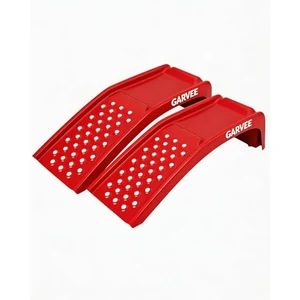 |
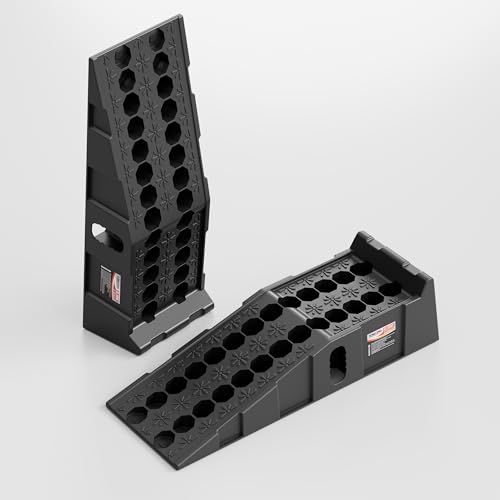
Garvee 8-Inch Solid Steel Car Ramp Set – $79.00 An 8,000-lb combined-rated steel pair with an 8-inch lift, giving enough drain-pan clearance for most sedans and crossovers.
|
Garvee 8-Inch Solid Steel Car Ramp Set
This is the steel pick above, and it’s worth a closer look on its own since it replaces a very similar, long-recommended steel ramp that’s no longer sold. It’s rated for 8,000 lbs combined (2,000 lbs per ramp), lifts 8 inches, and measures 34.7″ long by 11″ wide, with traction holes punched into the incline surface.
Pros
- Solid steel construction with a powder coat finish for corrosion resistance.
- 8-inch lift height gives real clearance for a drain pan and filter access on most vehicles.
- 2,000 lbs per-ramp rating, not just a combined figure, so it’s easier to check against your vehicle’s actual axle weight.
- Punched traction surface along the full incline.
Cons
- Steel adds noticeable weight per ramp compared to poly or aluminum options.
- An 11″ width is tight for wider performance tires — measure your tire’s contact width before buying.
To buy this product, click here.
Ironton 12,000-lb. GVW Poly Car Ramp Set
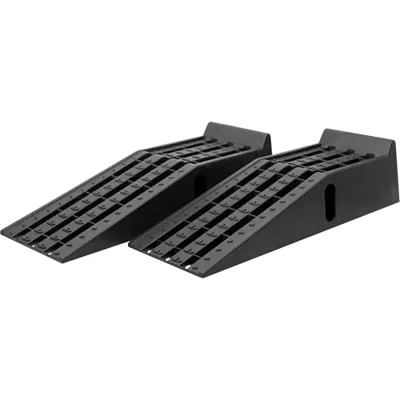
The Ironton set trades steel’s weight for durable poly construction, rated for a higher 12,000-lb GVW combined rating while weighing about 20.6 lbs per ramp — light enough to move and store with one hand.
Pros
- 12,000-lb GVW rating, covering a wider range of vehicles including light trucks.
- Poly material resists rust and corrosion, unlike steel left in a damp garage or driveway.
- About 20.6 lbs per ramp — noticeably lighter to carry and store than steel.
- Non-skid surface for traction while driving up.
Cons
- 8.5″ lift height is lower than the Garvee steel set, so drain-pan clearance is tighter on some vehicles.
- 12″ width may not fit very wide performance tires.
To buy this product, click here.
Black Widow Car Service Ramps for Oil Changes
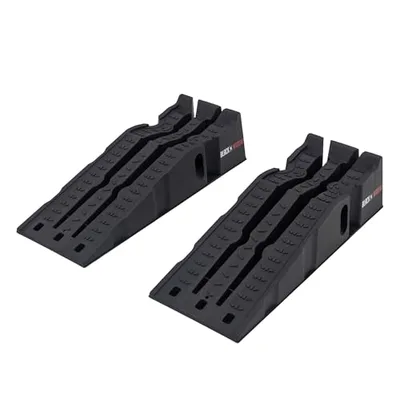
Black Widow’s service ramps are purpose-built for exactly this job: the listing rates the pair at 8,000 lbs per axle (16,000 lb GVW combined), with each individual ramp holding 4,000 lbs, and a 6.25″ lift with a 17° approach angle designed specifically to clear the front bumper on lower vehicles.
Pros
- 8,000 lb per axle / 4,000 lb per ramp, covering cars, trucks, vans, and SUVs.
- 17° approach angle engineered to reduce scraping on lower front bumpers.
- Fits tires up to 30″ in diameter.
- About 20 lbs per ramp with built-in carry handles.
Cons
- Fit and clearance can vary by vehicle model — check the listing’s compatibility notes for your specific make and model before buying.
To buy this product, click here.
How to Use Metal Ramps Safely for an Oil Change
Ramps are safe for the reach-under-the-car work an oil change needs, but only if you follow the same basic rules every time:
- Use a level, hard, dry surface. Gravel, dirt, or a sloped driveway lets the ramps shift or lets the car roll off center.
- Chock the wheels that stay on the ground. If you’re driving the front wheels up, put wheel chocks behind the rear wheels before you drive up — this is the step most home mechanics skip, and it’s what stops the car from rolling backward off the ramps once it’s parked.
- Drive up slowly and straight, keeping the tires centered on the ramp, then engage the parking brake once the car is resting on the ramps.
- Check the per-ramp weight rating against your actual curb weight on that axle — not just the combined pair rating on the box.
- Never rely on ramps alone for work that requires you to be fully underneath the car for an extended period. Ramps are stable for reaching under the front of the car to drain oil and swap a filter, but they don’t offer the same fail-safe support as a jack plus rated jack stands. For anything beyond a quick reach-under job, use jack stands instead — see our guide on how to jack up a car safely for the full jack-stand process.
If you’re comparing ramp materials by weight rating and size rather than picking a specific oil-change set, our separate steel car ramps buying guide covers how steel compares to aluminum and plastic ramps in more depth. For the full step-by-step on getting a car safely elevated at home — ramps, jacks, or jack stands — see how to lift a car for an oil change safely at home.
Frequently Asked Questions
How Much Weight Can Steel Car Ramps Support?
Solid steel ramp sets like the Garvee pair above are commonly rated up to 8,000 lbs combined (2,000 lbs per ramp), which covers most sedans, crossovers, and light trucks. Always check the per-ramp rating against your vehicle’s actual axle weight, since a combined pair rating isn’t the same as what one ramp alone can hold.
Are Ironton Ramps Suitable for Heavy Vehicles?
Yes. The Ironton poly ramp set has a 12,000-lb GVW combined rating, which makes it suitable for larger vehicles including many light trucks and SUVs. The poly construction is also resistant to rust, which matters for ramps that spend most of their life sitting in a garage or driveway.
What Is the Lift Height of Black Widow Ramps?
Black Widow’s car service ramps lift the vehicle 6.25 inches, with a 17° approach angle designed to reduce scraping on lower front bumpers. The pair is rated for 8,000 lbs per axle (16,000 lb GVW combined), or 4,000 lbs per individual ramp.
Do I Need Wheel Chocks With Car Ramps?
Yes, always. Wheel chocks go behind the wheels that stay on the ground — for example, behind the rear wheels if you’re driving the front wheels up. Ramps alone don’t stop a car from rolling backward off them once it’s parked, so chocks (or a solid parking brake plus chocks) are a required safety step, not an optional one.
Can I Work Fully Underneath a Car Supported Only by Ramps?
Ramps are designed for reaching under the front of a raised vehicle briefly — draining oil, swapping a filter — not for extended work with your whole body underneath the car. For anything beyond a quick reach-under task, use a floor jack and rated jack stands instead, which are designed to support the vehicle’s full weight for as long as you need to be under it.
Do Metal Car Ramps Provide Enough Clearance for a Drain Pan?
Most steel and poly ramps sized for oil changes lift the vehicle 6 to 8 inches, which is enough clearance for a standard drain pan and filter wrench on most sedans, crossovers, and trucks. Low-clearance or lowered vehicles should double-check the ramp’s approach angle against their front overhang before buying, since even a ramp with good lift height can still cause the bumper to scrape on the way up.
Conclusion
Metal ramps make DIY oil changes safer and easier at home, as long as you match the ramp to your vehicle’s actual weight and clearance needs. The Garvee 8-inch steel set offers the highest per-ramp rating and the most drain-pan clearance; the Ironton poly set trades a little lift height for a higher combined GVW rating and lighter storage; and the Black Widow set is purpose-built around a low approach angle for vehicles that sit closer to the ground.
Whichever set you choose, the two steps that matter most are the same every time: chock the wheels that stay on the ground, and never treat ramps as a substitute for jack stands on anything beyond a quick reach-under job. Get those right, and any of the three ramps above will make your next oil change faster and safer.
Products related to this article
Sponsored / affiliate links. As an Amazon Associate I earn from qualifying purchases. I may earn additional commission from eligible campaigns.