
What Age Do You Not Need a Car Seat? State Laws & NHTSA Test
Most states let a child stop using a car seat at age 8 or 4 feet 9 inches, whichever comes first — but this is not a national rule: Florida allows it at age 5, Louisiana requires age 9. Moving a child to a belt too early raises crash injury risk. This guide covers the state age chart, the NHTSA 5-step seat belt test, and when a booster still beats a belt after your state’s law allows it.
Quick Answer
Most states drop the car seat/booster requirement at age 8 or 4’9″ tall, whichever comes first — but the exact cutoff ranges from age 5 (Florida, South Dakota) to age 9–10 (Louisiana, Hawaii). Beyond the legal minimum, NHTSA and pediatricians recommend keeping a child in a booster until they pass the 5-step seat belt fit test, which is often closer to age 10–12.

Car Seat and Booster Seat Age Requirements by State
There is no single federal car seat age law — each state sets its own minimum, and the gap between the strictest and most lenient states spans a full five years. The table below shows how widely the requirement actually varies, using confirmed examples from official state law trackers.
| State (example) | Booster/Car Seat Required Until | How the Cutoff Works |
|---|---|---|
| Florida | Age 5 | Age only — one of the most lenient laws in the country |
| South Dakota | Age 5 | Age only |
| Texas | Age 8 or 4’9″ | Whichever comes first (Transportation Code §545.412) |
| California | Age 8 or 4’9″ | Whichever comes first |
| Oregon & Washington | 4’9″ tall | Height only, regardless of the child’s age |
| Louisiana | Age 9 | Age only — the strictest age cutoff in the U.S. |
| Hawaii | Age 10 (or 7 if 4’9″+) | Combined age/height test |
📊 State child-passenger-safety laws vary by up to five years — Florida and South Dakota set the legal minimum at age 5, while Louisiana requires a booster or car seat until age 9. Source: Governors Highway Safety Association, Child Passenger Safety Laws, 2026
This table covers common examples, not all 50 states — always confirm your own state’s current statute, since these laws are amended periodically. Many states, like Texas and California, use the “age 8 or 4’9″, whichever comes first” standard, but treat that as the exception you should verify locally rather than assume applies everywhere.
NHTSA’s Safety Recommendation vs. Your State’s Legal Minimum
A state’s car seat law is the legal floor, not the safety ceiling. It’s the minimum a parent must follow to avoid a ticket — it is not the age at which a booster stops being useful. The National Highway Traffic Safety Administration and the American Academy of Pediatrics both recommend keeping a child in a booster seat until the adult seat belt fits them correctly on its own, which is typically between ages 8 and 12, regardless of what your state’s law technically permits at a younger age.
In practice, this means a 6-year-old in Florida can legally ride with just a seat belt the moment they turn 5 or 6 — but if that child is only 3’8″ tall, the shoulder belt will almost certainly cross their neck instead of their collarbone, and the lap belt will sit across their stomach instead of their hips. That’s the exact injury pattern boosters exist to prevent. The law doesn’t check for this; only a physical fit test does.
The NHTSA 5-Step Seat Belt Fit Test
Instead of relying on age or height alone, run this five-step test with your child sitting in the vehicle’s actual back seat, using the vehicle’s own seat belt — not a booster. If all five checks pass, the child is ready to ride without a booster. If even one fails, keep using the booster.
- Feet flat on the floor: The child’s knees should bend comfortably at the edge of the seat, with both feet resting flat on the vehicle floor — not dangling.
- Bottom all the way back: The child’s hips and back should be fully against the seat, not perched forward to reach the edge.
- Lap belt low on the hips: The lap belt must lie low across the upper thighs and hip bones, never across the soft stomach.
- Shoulder belt on the collarbone: The shoulder belt should cross the middle of the shoulder and chest — never the neck or face, and never tucked under the arm or behind the back.
- Can hold the position for the whole ride: The child needs to be able to sit this way for the entire trip without slouching or repositioning, even when tired.
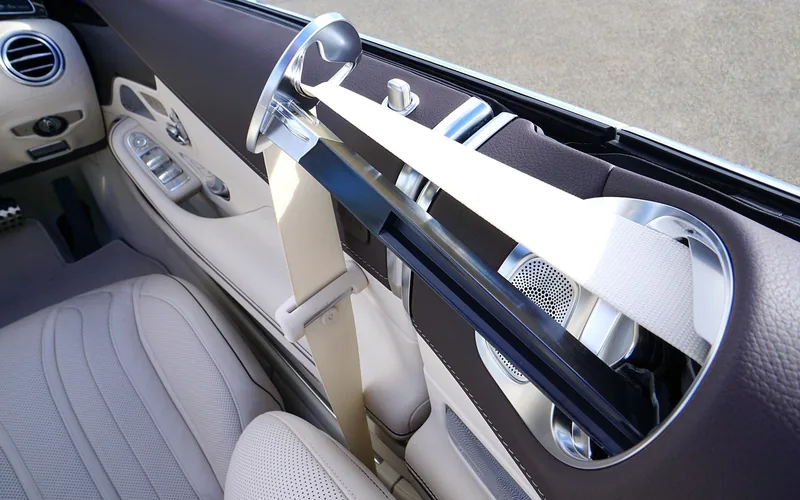
“Age and height cutoffs on their own don’t guarantee a seat belt actually fits — the 5-step test is what determines whether a child is really ready to ride without a booster, and many kids don’t pass all five points until well past their state’s legal minimum.”
Booster Seat Transition: Highback to Backless to Seat Belt Only
Most children move through three stages before riding with just a seat belt. A highback booster comes first for younger kids, since it adds head and side-impact protection and works in cars without built-in headrests in the back seat. Once a child outgrows the highback model’s height limit — typically once their ears are level with the top of the seat — they can move to a backless booster, which exists only to raise the child so the belt lands correctly. The final stage is the seat belt alone, once the child passes all five points of the fit test above.
Best Booster Seat Pick
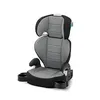
Graco TurboBooster 2.0 Highback Booster Car Seat
An adjustable highback booster designed for the stage right after a harnessed car seat, before a child is ready for a backless model.
- Best for: kids just starting the booster stage who still need head and side support
- Why we picked it: LATCH connectors keep it stable in the vehicle even when unoccupied, and the headrest adjusts as the child grows
- Main drawback: bulkier than a backless booster, so it’s less convenient to move between cars
Compare more booster seat options
 Option 1 Evenflo GoTime LX Booster Car Seat
|
 Option 2 Chicco KidFit ClearTex Plus 2-in-1 Booster
|
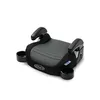 Option 3 Graco TurboBooster 2.0 Backless Booster
|
As an Amazon Associate we earn from qualifying purchases.
Common Mistakes That Make the Transition Unsafe
- Going by law instead of fit. A state’s minimum age is a legal floor, not proof the seat belt fits — always run the 5-step test before dropping the booster, even if the law says you can.
- Switching early because the child dislikes the booster. Comfort and peer pressure aren’t safety criteria; a booster that fits correctly is still safer than a belt that doesn’t, regardless of how the child feels about it.
- Tucking the shoulder belt under the arm or behind the back. This defeats the belt’s design and dramatically increases injury risk in a crash — if a child does this out of habit, they still need a booster.
- Assuming height alone is enough. A child can hit 4’9″ and still fail the lap-belt or posture checks — always confirm all five points of the test, not just the height number.
- Not rechecking after moving to a new vehicle. Seat belt geometry differs between cars; a fit that works in the family sedan may not work the same way in a pickup truck or SUV.
Frequently Asked Questions
What age can a child stop using a booster seat?
Most states set the legal minimum at age 8 or 4 feet 9 inches tall, whichever comes first, but this varies significantly by state — Florida allows it as young as age 5, while Louisiana requires age 9 and Hawaii age 10. Beyond the legal minimum, NHTSA and the American Academy of Pediatrics recommend keeping a child in a booster until they pass the 5-step seat belt fit test, which most kids don’t achieve until somewhere between ages 10 and 12.
Is 4 feet 9 inches or age 8 the real cutoff for a car seat?
Neither number alone is the real cutoff — most state laws use whichever comes first (age 8 or 4’9″), and that’s a legal minimum, not a safety guarantee. A 9-year-old who is only 4 feet 3 inches tall still won’t fit a seat belt safely and should stay in a booster regardless of what the law technically allows at that age. Height and torso proportions, not age, determine whether the belt sits correctly.
Can a child ride without a booster before age 8 if they’re tall enough?
Yes, in most states — once a child reaches 4 feet 9 inches tall, the law no longer requires a booster even if they’re younger than 8, since most state statutes use “whichever comes first.” A small number of states, including Oregon and Washington, base their requirement on height alone rather than age, so a tall 6-year-old could legally qualify there too.
Which states have the strictest car seat and booster laws?
Louisiana and Hawaii currently have the strictest requirements, mandating booster or car seat use until age 9 and age 10 respectively (Hawaii allows an exception at age 7 if the child is already 4’9″ or taller). Florida and South Dakota have the most lenient laws, allowing children to move to a seat belt alone at age 5. Always check your specific state’s current statute, since these laws are amended periodically.
What if the seat belt still doesn’t fit right at 4’9″?
If any part of the 5-step test fails — the lap belt rides up onto the stomach, the shoulder belt crosses the neck, or the child can’t hold proper posture for the whole ride — the child should stay in a booster regardless of height or age. Body proportions vary a lot between kids, so some children genuinely need a booster into their early teens.
Do all states legally require booster seats until age 8?
No. While many states use an “age 8 or 4’9″, whichever comes first” standard, the actual legal requirement ranges from age 5 in Florida and South Dakota to age 9 in Louisiana and age 10 in Hawaii — a five-year spread across the country. Because there’s no single national rule, parents should confirm their own state’s current law rather than assume the age-8 standard applies everywhere.
For related transitions, see when to move a child from a rear-facing seat to forward-facing earlier on, and check how many years a car seat stays safe to use before it expires.
Bottom Line
There is no single age at which every child in America stops needing a car seat — your state’s law sets a legal floor that ranges from age 5 to age 10 depending on where you live, and it’s only a starting point. The real test is whether the vehicle’s seat belt fits your child correctly on its own: low across the hips, snug across the collarbone, with feet flat on the floor for the whole ride. Check your state’s current statute, then run the 5-step test before making the switch.
Products related to this article
Sponsored / affiliate links. As an Amazon Associate I earn from qualifying purchases. I may earn additional commission from eligible campaigns.
 Seat Belt Covers for Kids, 2 in 1 Car Seat Strap Covers & Auto Seatbelt Pillow for Kids nap, Car Travel Pillow & Strap Pads Cushion for headrest, Neck/Shoulder Support, fit Child, Adult, Grey;
 PartsTo Adjustable Kids Travel Car Seat Headrest Pillow with Lean Support Cushion Sleeping Travel Neck Safeguard Cushion Suitable for Kids Children Teenagers and Adults