What Are Original Rocket League Cars: Essential Guide
Original Rocket League cars are the first 10 vehicles players could choose from when the game launched. These iconic cars, also known as “stock” or “default” cars, each have a unique hitbox (how the car interacts with the ball) and base stats. They form the foundation of gameplay and understanding their characteristics is key for any player.
Ever started playing a new game and felt a bit lost with all the options? Rocket League can feel that way, especially when you see so many different cars zooming around. But did you know that the very first cars you get to use are special? These aren’t just any cars; they’re the starting lineup, the ones that built the foundation of this awesome game. Understanding these original cars is like learning your ABCs for Rocket League. It’s super helpful, and I’m here to break it all down for you in a way that’s easy to get a handle on. We’ll look at what makes them tick and why they’re still important today. Let’s get started!
The Groundbreaking Original Rocket League Cars: Your First Set of Wheels
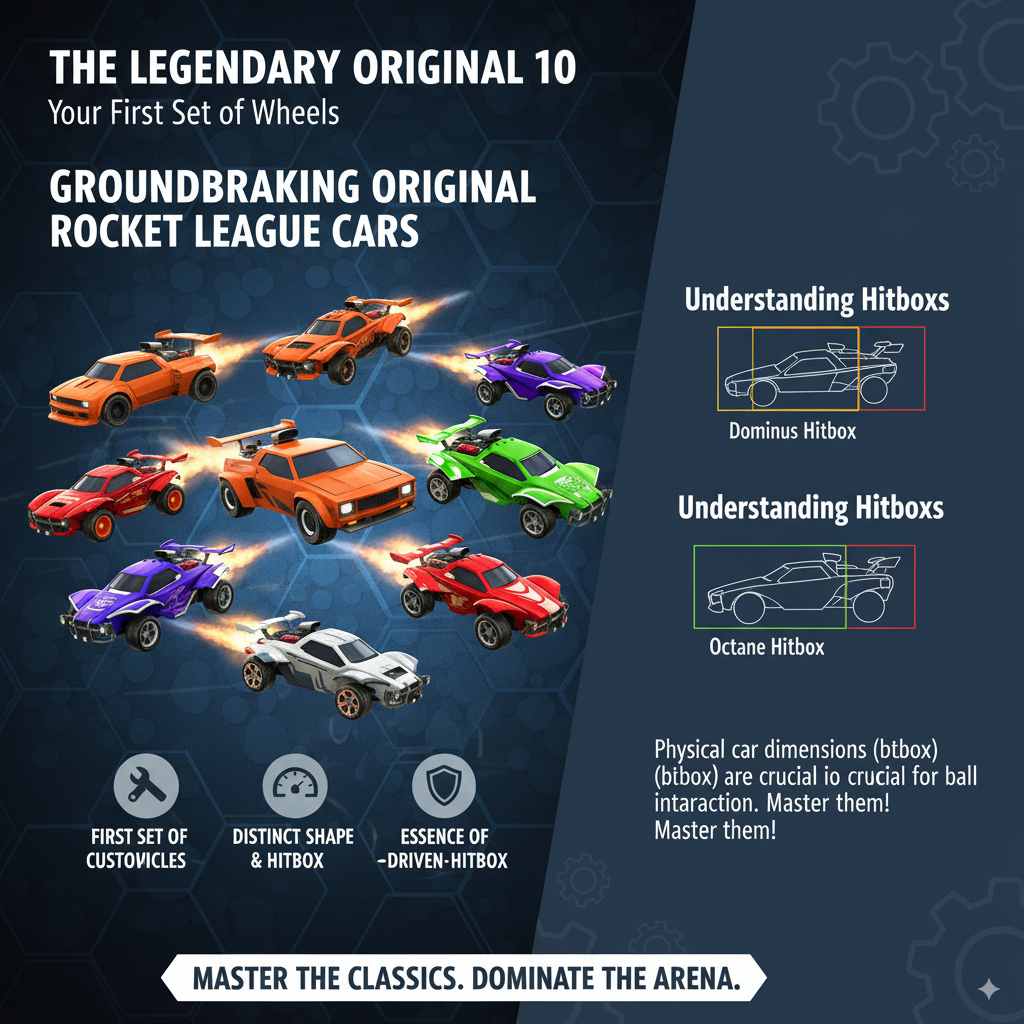
When Rocket League first hit the scene in 2015, it came with a core set of vehicles that would become legendary. These cars are often referred to as the “Original 10” or “Stock Cars.” They were the first set of customizable vehicles that players could choose from, and each one has a distinct shape and underlying hitbox. Don’t let their simple appearance fool you; these cars have been the chariots of countless goals and epic saves. They are the very essence of Rocket League’s physics-driven gameplay, and mastering them can teach you a lot about the game’s mechanics.
Understanding these cars is more than just picking a favorite. In Rocket League, the actual physical dimensions of a car, known as its “hitbox,” play a massive role in how it interacts with the ball. While the game officially categorizes cars into different hitbox types, the original 10 are spread across a few of these categories. This means that even though they might look different, some of them handle very similarly under the hood. Let’s take a closer look at each of these foundational vehicles.
Meet the Original 10: A Closer Look at Each Car
The original lineup features 10 distinct cars, each with its own aesthetic and, more importantly for gameplay, its own hitbox profile. It’s fascinating how Psyonix (the game’s developer) managed to create variety within a limited initial set. These cars form the basis for many other car models that have been introduced over the years, often featuring similar hitbox shapes with different cosmetic designs.
Octane
The Octane is, without a doubt, the most popular car in Rocket League. Its balanced hitbox and versatile handling make it a favorite among both beginners and seasoned professionals. It’s known for being great at aerial plays and ground dribbles alike. Its hitbox is classified as a “Hybrid” hitbox, which offers a good blend of height and length.
Dominus
The Dominus is another incredibly popular choice, especially among players who prefer a longer, flatter car. It excels at powerful shots and fast aerials due to its “Plank” hitbox. Many players find its wider profile makes it easier to control the ball on the ground and for powerful clears off the wall.
Fennec
While not technically one of the very first 10 from the original launch, the Fennec quickly became an evolution of the Dominus’s design philosophy and is often grouped with the foundational cars in terms of its impact. It shares the “Hybrid” hitbox with the Octane but has a slightly different body shape, which some players prefer for its perceived control and visibility. Its more compact, boxy design is a crowd-pleaser.
Takumi
The Takumi offers a unique feel with its “Standard” hitbox. This hitbox is sort of a middle ground, not as long as the Dominus, nor as tall as some others. It’s a solid all-around car that many players find comfortable for learning the ropes and developing fundamental skills. Its distinctive design gives it a recognizable presence on the field.
Breakout
The Breakout is characterized by its low profile and long, flat design, fitting into the “Plank” hitbox category just like the Dominus. This makes it excellent for powerful flicks and fast ground play. Players who enjoy a car that feels glued to the ground might find the Breakout particularly satisfying to drive.
Gizmo
The Gizmo is a bit of an unconventional-looking car, but don’t let that fool you. It uses the “Standard” hitbox, meaning it shares its core dimensions with cars like the Takumi. It’s a reliable choice for players looking for a balanced feel without committing to the more aggressive profiles of the Octane or Dominus.
Hotshot
The Hotshot is known for its distinctive, almost aerodynamic shape. It also utilizes the “Standard” hitbox, making it functionally very similar to the Takumi and Gizmo in terms of how it interacts with the ball. Many players find its visual design appealing and its handling predictable.
Merc
The Merc is the archetypal “van” of Rocket League. It boasts a very tall and wide hitbox, falling under the “Large” hitbox category. While not as popular for high-level competitive play due to its size, it can be surprisingly effective for defense and for players who like a larger presence on the field.
Paladin
The Paladin has a knightly, imposing design. It falls into the “Hybrid” hitbox category, meaning its ball-handling characteristics are similar to the Octane and Fennec. This makes it a capable car for a wide variety of plays, from aerial maneuvers to ground control.
Road Hog
The Road Hog is a bit of a brutish-looking car, often favored by players who like a larger feel without going to the extremes of the Merc. It uses the “Large” hitbox, similar to the Merc, but with a different visual aesthetic. Its generous hitbox can be forgiving for new players getting used to ball control.
Understanding Hitboxes: The Secret Sauce of Car Performance
In Rocket League, the concept of “hitboxes” is crucial. It’s not just about how a car looks; it’s about its invisible collision area with the ball and other cars. Psyonix has officially categorized car hitboxes into five types, and the original cars are spread across three of these:
- Octane: Hybrid (Octane, Fennec, Paladin)
- Dominus: Plank (Dominus, Breakout)
- Takumi: Standard (Takumi, Gizmo, Hotshot)
- Dire Wolf: Standard (This is a newer car that uses the Standard hitbox, but the original cars fall into the Standard category as listed above.)
- Batmobile: Plank (This is a specific licensed car that uses the Plank hitbox.)
- Banshee: Standard
- Merc: Large (Merc, Road Hog)
- Aftershock: Hybrid
The official Rocket League support page explains that while there are five main hitbox types, many cars within those types have very slight variations that can lead to subtle differences in feel. However, for beginners, understanding these main categories is the most important step. Knowing which category a car falls into can help you find other cars that have a similar feel and playstyle, making it easier to transition or experiment.
For instance, if you feel comfortable with the Octane’s handling, you might also enjoy the Fennec or Paladin because they share the Hybrid hitbox. Similarly, if you like the wider, flatter feel of the Dominus, you might also find the Breakout to your liking. The Merc and Road Hog, both in the Large hitbox category, offer a bigger presence for players who prefer that. Getting a feel for these different hitbox types will significantly improve your understanding of why certain players perform specific maneuvers with specific cars.
Why Original Cars Still Matter Today
You might be wondering, “With hundreds of cars available, why should I care about these old ones?” The answer is simple: they are the foundation of everything. Many of the most popular and competitively viable cars are either original models or variations of them. Understanding the Octane, Dominus, or even the Merc gives you insight into why pro players choose certain cars and how they execute advanced mechanics. They provide a pure, unadulterated Rocket League experience.
Moreover, the original cars are freely available to all players from the start. This means you don’t need to spend in-game currency or unlock them to use them. They are your gateway into learning the core mechanics of the game. Even if you eventually unlock a fancy new car, returning to an original car can help you refine your skills and understand the game’s physics on a fundamental level. They are a constant reminder of the simple, physics-based fun that makes Rocket League so unique.
Pros of Using Original Cars
- Accessibility: Available to all players immediately, no cost required.
- Foundation: Excellent for learning core game mechanics due to their balanced properties.
- Versatility: Many original cars, like the Octane, are used by professional players due to their all-around performance.
- Muscle Memory: Sticking to one or a few original cars helps build consistent muscle memory, which is key for advanced play.
- Cost-Effective: No need to spend in-game credits or real money to acquire them.
Cons of Using Original Cars
- Limited Customization: While you can apply decals and paint, they naturally have fewer unique body styles compared to premium or licensed cars.
- “Stock” Feel: For some players, they might eventually feel less exciting than rarer or more exotic car models.
- Niche Performance: While versatile, some specialized cars might offer slight advantages in very specific playstyles (e.g., extreme flick shots with a long car).
Getting Started: Which Original Car Should You Use?
As a beginner, the best advice I can give is to try them all! Since they’re free and readily available, spend some time in training modes or casual matches with each one. Pay attention to how each car feels when you boost, turn, jump, and hit the ball. Does it feel agile? Does it feel stable? Does the ball seem to bounce off in a predictable way?
For most new players, the Octane is the go-to recommendation. Its balanced Hybrid hitbox makes it incredibly forgiving and versatile. You can learn aerials, dribbles, and powerful clears all with the same car. Once you start understanding your preferences, you might gravitate towards the longer, flatter feel of the Dominus or Breakout, or perhaps the taller, wider experience of the Merc.
Here’s a quick breakdown to help you decide which to test first:
| Car Name | Hitbox Category | General Feel |
|---|---|---|
| Octane | Hybrid | Balanced, versatile, good for aerials and dribbles. |
| Dominus | Plank | Long, flat, great for fast shots and ground control. |
| Takumi | Standard | Medium height and length, good all-arounder. |
| Breakout | Plank | Very flat and long, excels at flicks and ground play. |
| Gizmo | Standard | Similar to Takumi, a comfortable middle ground. |
| Hotshot | Standard | Aesthetically unique, shares Standard hitbox properties. |
| Merc | Large | Tall and wide, offers a big presence, good for defense. |
| Road Hog | Large | A larger car similar to Merc but with a different look, forgiving. |
| Paladin | Hybrid | Shares Hybrid hitbox with Octane, good for flexibility. |
| Fennec | Hybrid | (While often considered with originals due to popularity) Shares Hybrid hitbox, popular compact feel. |
Don’t feel pressured to pick the “best” car. The “best” car is the one you feel most comfortable and confident with. Rocket League also has a handy tutorial system that can introduce you to basic controls and car movements.
Customization: Making Your Original Car Your Own
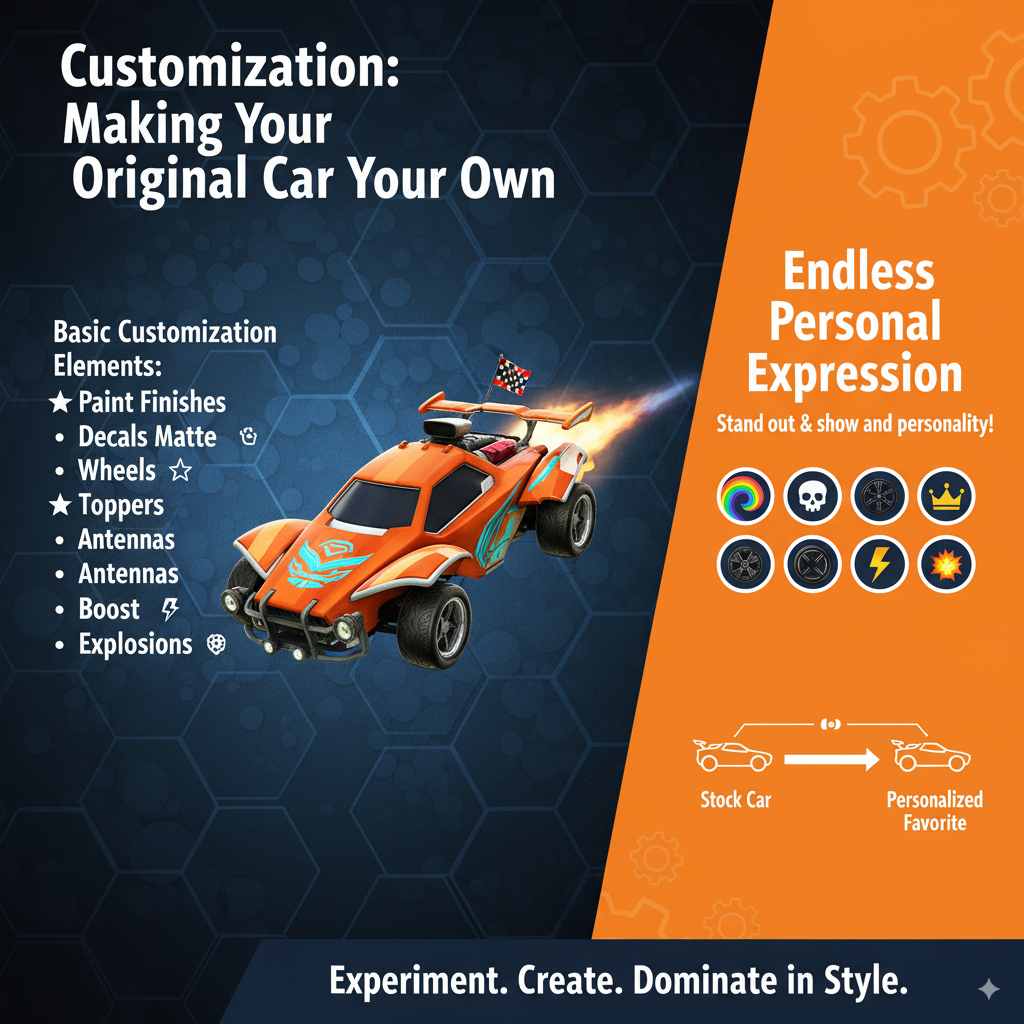
Once you’ve picked a favorite among the original cars, it’s time to make it yours! Rocket League’s customization options are a huge part of the fun. You can change the paint color, add decals, equip different wheels, use various toppers, and even change your boost trail and antenna. While these cosmetic changes don’t affect your car’s performance or hitbox, they allow for incredible personal expression.
Here are some basic customization elements:
- Paint Finishes: Affects how the paint shines and reflects light.
- Decals: Patterns or designs that go on the car’s body.
- Wheels: The tires and rims of your car.
- Toppers: Items that sit on top of your car.
- Antennas: Flags or objects that attach to the back of your car.
- Boost: The trail that appears when you use boost.
- Goal Explosions: What happens when you score a goal.
Experimenting with different combinations can be just as engaging as playing matches. It’s a great way to stand out on the field and show off your personality. Plus, seeing your personalized favorite car fly across the arena is incredibly satisfying!
Frequently Asked Questions About Original Rocket League Cars
What are the original 10 cars in Rocket League?
The original 10 cars are the Octane, Dominus, Takumi, Breakout, Gizmo, Hotshot, Merc, Paladin, Road Hog, and Aftershock. The Fennec is also often discussed alongside these due to its similar hitbox and popularity, though it was added slightly later.
Are the original cars better than newer cars?
No, newer cars aren’t inherently “better.” They mostly share hitboxes with the original cars but have different visual designs. The performance of a car in Rocket League is determined by its hitbox, not its age or appearance.
Which original car is the best for beginners?
The Octane is widely considered the best original car for beginners. Its balanced Hybrid hitbox provides a versatile and forgiving feel, making it suitable for learning all aspects of the game.
Do original cars have any special abilities?
No, all cars in Rocket League, including the original ones, have the same base abilities. They all have the same boost, jump, and double-jump mechanics. The only differences lie in their hitboxes and turning radius, which are determined by their shape and size.
Can I get more cars if I don’t like the original ones?
Yes, absolutely! Rocket League features a vast inventory of cars. You can unlock more cars through playing the game (earning drops), trading with other players, or purchasing them from the Item Shop or Rocket Pass using in-game Rocket League Credits.
How do I know which hitbox my favorite car uses?
You can often find detailed lists and charts online that show which hitbox each car uses. Many fansites and Rocket League communities maintain these resources. The official Rocket League support page also provides some guidance on hitbox categories.
Is it worth spending money on new cars if I already have the originals?
That’s a personal choice! If you find an original car that you love and perform well with, there’s no need to spend money. However, if a new car has a hitbox you prefer, or you simply want the unique look of a premium or licensed vehicle, it can be worth it for the enjoyment it brings. Many great players use original cars, so performance isn’t tied to spending.
Conclusion: Your Rocket League Journey Starts with These Classics
Embarking on your Rocket League adventure with the original cars is a fantastic way to get a solid grasp of the game’s core mechanics. These vehicles—the Octane, Dominus, Takumi, and their companions—are more than just starting points; they are testaments to timeless game design. Their unique hitboxes and predictable handling provide an excellent foundation for developing your skills, whether you’re aiming for your first aerial or mastering complex ground dribbles. Remember, the car is just a tool; your skill, practice, and understanding of the game’s physics are what truly make you a champion.