How to Sell a Car Online: Step-by-Step 2026 Guide
To sell a car online, pick your path first: an instant-offer platform like Carvana or CarMax for speed, or a private-sale listing on Facebook Marketplace, Cars.com, or Autotrader for the highest price.
The gap between those two paths is real money. A private-party sale typically nets 10 to 20 percent more than an instant cash offer or a dealer trade-in, because you are cutting out the reseller’s margin. That can mean an extra $1,500 to $3,000 on a $15,000 car – but it also means more of your own time spent prepping, photographing, listing, and meeting strangers safely.
This guide walks through both routes step by step: getting the car ready, pricing it with real data instead of guesswork, choosing the right platform for 2026, writing a listing that actually converts, and closing the sale safely with the right paperwork.
Instant Offer vs. Private Sale: How to Choose in 2026
Before you prep a single photo, decide which lane you are in. Instant-offer platforms buy your car directly and pay you fast, but the offer is built around their resale margin, so it will almost always land below what a private buyer would pay. Private-sale platforms connect you to real buyers and typically pay more, but you carry the negotiating, screening, and paperwork.
| Platform | Type | Typical Payout | Speed | Seller Fee |
|---|---|---|---|---|
| Carvana | Instant offer | Below private-sale value | Firm offer in minutes, holds 7 days, free pickup | None |
| CarMax | Instant offer | Below private-sale value | Online or in-store appraisal, offer valid 7 days at any of 250+ locations | None |
| Facebook Marketplace | Private sale | Highest typical payout | Days to weeks, depends on local demand | Free to list |
| Cars.com | Private sale | Highest typical payout | Days to weeks | Free to list |
| CarGurus | Private sale | Highest typical payout | Days to weeks | Free to list, $99 only when the car sells |
| Autotrader | Private sale | Highest typical payout | Days to weeks | $9–$49 upfront listing fee, plus a 0.99% (min $99) fee when sold |
| eBay Motors | Private sale / auction | High, but buyer pool is nationwide (shipping likely) | Days to weeks | Listing plus final value fees |
A note on Vroom: older guides still list Vroom as a top-paying instant-offer site. That is no longer accurate. Vroom shut down its online car-buying business in January 2024 and stopped purchasing vehicles from consumers – it no longer makes offers at all. If a site claims to be running Vroom’s old buying program, treat it as a red flag.
A practical middle path: get a free instant offer from Carvana and CarMax first, even if you plan to sell privately. Those two numbers become your walk-away floor price – if a private buyer will not beat them, you can always fall back on the instant offer with zero extra effort.
CHECK FOR ISSUES BEFORE YOU LIST
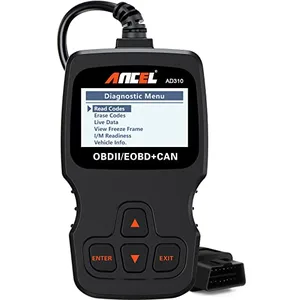 |
ANCEL AD310 OBD II Scanner – $29.99 A buyer’s first move is often to plug in a code reader – a stray check-engine light with no explanation kills trust fast. Clear or explain codes yourself before you list, and mention the clean scan in your description.
|
Step 1: Get Your Car Ready to Sell
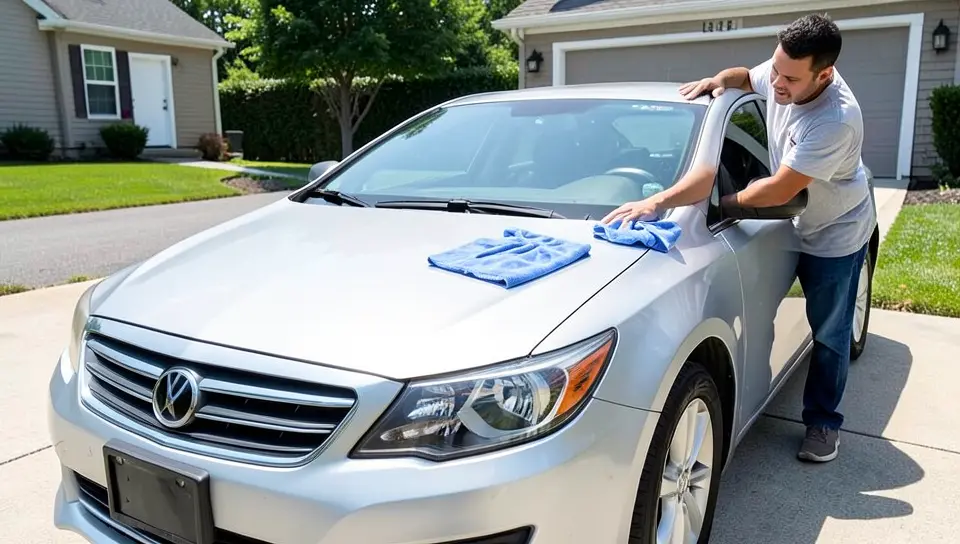
A car that looks cared for sells faster and closer to your asking price. Start with a full interior and exterior detail – wash and dry the exterior, vacuum the seats and trunk, wipe down the dashboard and door panels, and clean the windows inside and out. Pull every personal item out of the glovebox, console, and trunk. If the paint has swirl marks or the headlights are hazy, a $20–$40 polish kit can visibly improve photos.
Next, gather your paperwork into one folder before you list anything:
- The vehicle title (or payoff information if you still owe money on it)
- Current registration
- Maintenance and service records, especially anything recent
- The owner’s manual, if you still have it
- A blank bill of sale template
- A smog or emissions certificate, if your state requires one at sale
If you still owe money on the car, do not skip this step – call your lender for a payoff quote before you list. Selling a financed car is completely normal, but the buyer’s payment usually needs to route through the lender to release the lien before the title can transfer. If that applies to you, see our full walkthrough on how to sell a car with a loan still on it before you go further.
Step 2: Price It Using Real Data, Not Guesswork
Pull up pricing tools like Kelley Blue Book or Edmunds and enter your exact year, make, model, trim, mileage, and condition. Then cross-check that number against real, active listings for the same make and model in your area on whichever platform you plan to sell on – asking prices and actual sale prices are not the same thing, so look at how long similar listings have been sitting.
Be honest with yourself about condition. Walk around the car and note every scratch, dent, worn tire, and interior stain. Small, cheap fixes (a headlight bulb, a cracked wiper blade, a stained floor mat) are usually worth doing before you shoot photos. Bigger cosmetic issues rarely pay for themselves – disclose them instead and price around them.
Price a little above your true floor to leave room for negotiation, since almost every private buyer will make a lower offer. But do not chase the market up – an overpriced listing just sits, and stale listings get skipped even after you drop the price.
Step 3: Choose Your Platform and List the Car
Match the platform to what you want out of the sale:
- Want speed and zero hassle: Carvana or CarMax. Enter your VIN and details online, get a firm offer, and schedule pickup or an in-store visit – often within a day or two.
- Want the highest price and do not mind the extra work: Facebook Marketplace and Cars.com are both free and reach large local audiences.
- Want a wider audience and are comfortable with a small fee: CarGurus (free to list, $99 when it sells) or Autotrader ($9–$49 upfront plus a fee at sale) tend to attract more serious, ready-to-buy shoppers.
- Have a less common or collector vehicle: eBay Motors can reach buyers nationwide who are specifically searching for that model, though you will likely need to arrange shipping.
Nothing stops you from listing on two or three free platforms at once (Facebook Marketplace plus Cars.com, for example) to widen your buyer pool without paying anything extra.
Step 4: Write a Listing and Take Photos That Actually Sell the Car
Your description should read like you are talking to a real buyer, not stuffing in keywords. Lead with the year, make, model, trim, and mileage, then cover what a buyer actually wants to know: recent maintenance (new tires, brakes, a recent oil change), notable features (leather seats, a sunroof, CarPlay), and any damage or mechanical issues, stated plainly. Buyers trust listings that disclose flaws far more than ones that only say “excellent condition.”
For photos, aim for at least 12 to 15 shots taken in daylight, not a dim garage:
- All four exterior corners, plus straight-on front and rear shots
- Both sides, full length
- The full interior from the driver and passenger doors, plus the back seat
- A close-up of the odometer showing current mileage
- The engine bay
- Close-ups of any existing damage – do not hide it, it builds trust and cuts down on wasted messages from buyers who back out in person
Step 5: Handle Buyer Communication and Screen for Scams
Respond quickly and clearly – fast, complete answers signal a legitimate, serious seller and keep buyers from moving on to the next listing. If you do not know an answer, say so rather than guessing.
Online car sales also attract scammers, and the patterns are fairly consistent. Watch for these warning signs:
- A buyer who agrees to your price instantly without ever seeing the car in person
- An offer to pay by cashier’s check, money order, or wire transfer for more than your asking price, asking you to refund the difference
- Pressure to ship the car before payment clears, especially to an unfamiliar third-party address
- Any request for your bank login, Social Security number, or other personal financial details – a legitimate buyer never needs these to buy a car
Never share your home address up front. Arrange to meet in a public, well-lit place instead – many local police stations now have a designated “safe exchange zone” parking spot with security cameras specifically for online marketplace transactions.
Step 6: Arrange the Test Drive Safely
Set specific windows for test drives rather than leaving it open-ended, and keep a simple calendar so you do not double-book. Meet at the same public, well-lit location you used for the initial meetup, and bring a friend or family member if you can.
Ask to see the buyer’s driver’s license before handing over the keys, and snap a photo of it with your phone (with their knowledge) – this is standard practice and most legitimate buyers expect it. Ride along on the test drive rather than letting them take the car alone.
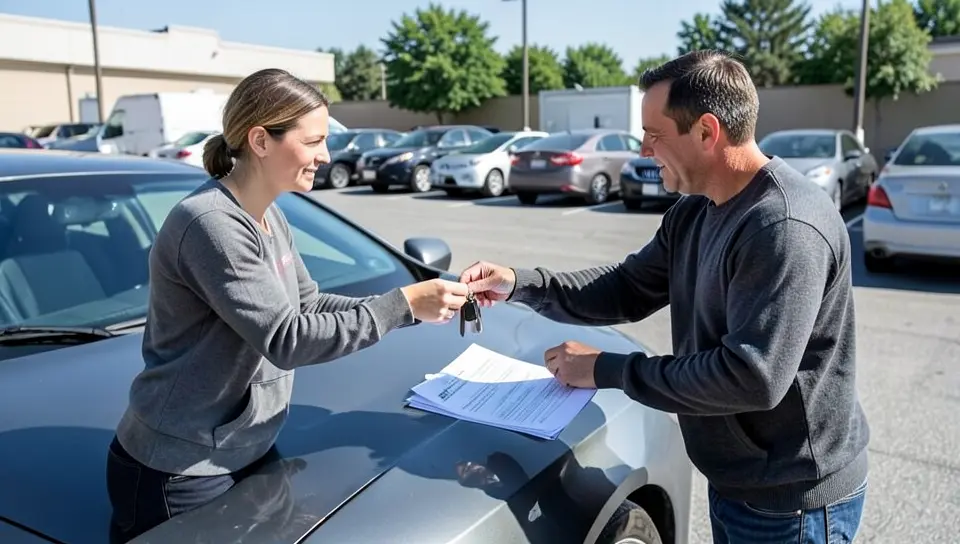
Step 7: Close the Sale and Transfer the Title
Once you have agreed on a final price, confirm the payment method and get it settled before you hand over the keys and title. Cash works for smaller amounts, but for anything sizable, a cashier’s check verified in person at the issuing bank branch, or an in-person bank transfer you can confirm on your own banking app, is safer than trusting a check on its face.
Then complete the paperwork:
- Sign the title over to the buyer, following your state’s exact instructions (some require notarization)
- Fill out and sign a bill of sale listing the sale price, date, odometer reading, and both parties’ names and addresses
- Remove your license plates, unless your state requires them to stay with the vehicle
- Notify your state’s DMV of the sale, either online or by mail, to remove the car from your name and limit your liability
- Cancel or transfer your auto insurance policy on that vehicle
Keep copies of everything – the signed title, the bill of sale, and any DMV confirmation – for your own records after the sale closes.
Frequently Asked Questions
What Is the Best Site to Sell a Car Online?
There is no single best site – it depends on what you are optimizing for. If speed matters most, Carvana or CarMax will give you a firm offer and pick up the car within days. If getting the highest price matters most, a free private-sale listing on Facebook Marketplace or Cars.com will almost always out-earn an instant offer, typically by 10 to 20 percent, at the cost of more of your own time and effort.
Is Vroom Still Buying Cars in 2026?
No. Vroom shut down its online car-buying and selling business in January 2024 and no longer makes cash offers or purchases vehicles from consumers. If you see an older article recommending Vroom as a place to get an instant offer, that information is out of date.
What Should You Avoid When Selling a Car Online?
Avoid sharing your home address with a buyer before meeting them – use a public, well-lit meeting spot instead. Never accept a check for more than your asking price with a request to refund the difference, and never agree to ship a car before payment fully clears. Do not skip disclosing known issues, and do not set a price so far above market value that your listing sits ignored for weeks.
Which Service Pays the Most for a Used Car?
Among instant-offer services, CarMax and Carvana are the two most widely used, and it is worth getting a quote from both since they can differ by hundreds of dollars for the same car. But a private-party sale on Facebook Marketplace, Cars.com, or a similar platform will typically beat any instant offer, since you are getting paid what the car is actually worth to a real buyer instead of a reseller’s wholesale price.
Do I Need a Bill of Sale to Sell My Car Online?
Yes, even if your state does not legally require one, a bill of sale protects both you and the buyer. It documents the sale price, date, odometer reading, and both parties’ information, which matters if a dispute or DMV question comes up later. Many states also have their own official bill-of-sale form available through the DMV website.
Is It Safe to Accept a Cashiers Check From an Online Buyer?
Only if you verify it in person at the issuing bank branch before you hand over the car and title – a cashier’s check can still be forged, and a bank will not catch a fake one for a few business days, by which point the buyer and your car are both gone. For large amounts, an in-person bank transfer you can confirm immediately on your own banking app is generally safer.
Conclusion
Selling a car online comes down to a straightforward tradeoff: an instant offer from Carvana or CarMax gets you paid fast with almost no effort, while a private-party listing on Facebook Marketplace, Cars.com, CarGurus, or Autotrader takes more work but typically earns you 10 to 20 percent more.
Whichever route you choose, the fundamentals do not change: clean the car and gather your paperwork first, price it using real comps instead of guesswork, write an honest listing with real daylight photos, and meet buyers in public with a bill of sale in hand. Follow those steps and you will close the sale quickly, safely, and for a fair price.
Products related to this article
Sponsored / affiliate links. As an Amazon Associate I earn from qualifying purchases. I may earn additional commission from eligible campaigns.