How Much Does a Flying Car Cost? Maker-Stated Prices (2026)
How much does a flying car cost? On the maker pages read for this article on 2026-10-14, stated prices start at $148,000 for the single-seat Jetson ONE (full price, excluding taxes and fees, estimated delivery 2028) and reach “from $770,000” for a Samson Switchblade Limited Edition and €499,000 for a PAL-V Liberty Pioneer Edition. Most are expected, estimated or pre-order figures, so a price here is not the same as a certified car you can drive off a lot.
Each figure below is quoted as the company’s own page states it, with the currency, the word the page uses (“expected”, “estimated”, “full price”) and the date it was read. Prices and delivery dates change often, so treat this as a reference to check against the maker, not as financial advice.
Flying Car Prices at a Glance
The table lists only vehicles whose price page I could read in full. It is not a ranking, because the currencies and price types differ.
Best Background Read Pick
 |
Invented Twice: From Sir George Cayley to the Electric Air Taxi
|
As an Amazon Associate we earn from qualifying purchases. Spec-based pick from the listing, not a hands-on test.
| Vehicle | Type | Price as the page states it | Status as the page states it | Source page (read 2026-10-14) |
|---|---|---|---|---|
| Jetson ONE | Single-seat personal electric aerial vehicle | $148,000 full price, excluding taxes and other fees; $8,000 non-refundable downpayment due today | Estimated delivery 2028; page says 2026 and 2027 production is sold out | jetson.com/order |
| Samson Switchblade (VFR / IFR kits) | Three-wheel street-legal flying sports car, Experimental category | Estimated price from $200,000 (VFR) and $235,000 (IFR) | Reservations; page says the FAA does not certify this category | samsonsky.com/models |
| Alef flying car | Electric vertical-takeoff flying car | $299,999 expected price; $150 general queue or $1500 priority queue pre-order | Page says Alef is designing and developing it; configuration later as production nears | alef.aero/preorder |
| PAL-V Liberty Sport Edition | Two-seat gyroplane that drives on roads | €299,000 expected EU price, excluding taxes and works | Contact sales; no delivery date on the page | pal-v.com/en/liberty |
| PAL-V Liberty Pioneer Edition | Same platform, full option, limited to 90 vehicles | €499,000 expected EU price, excluding taxes and works | Contact sales; 90 vehicles for European and North American countries | pal-v.com/en/liberty |
| Samson Special and Limited Editions | Higher trims of the Switchblade | Special: estimated from $330,000. Limited: from $770,000 | Reservations | samsonsky.com/models |
Not in the table because I could not read their price pages in this session: Klein Vision AirCar, ASKA A5, Doroni, LIFT Hexa, Xpeng AeroHT, and the Joby and Archer air taxis. If you have seen a price for one of them elsewhere, check the maker’s own site before relying on it.
Jetson ONE: $148,000 Full Price, With an $8,000 Downpayment
Jetson’s order page lists a full price of $148,000, excluding taxes and other fees, and a non-refundable downpayment of $8,000 due at order, with the remaining $140,000 payable when the aircraft is ready for delivery at the factory. The page gives an estimated delivery of 2028 and says the entire 2026 and 2027 production is sold out. That makes it the lowest stated price in this article, but it is also the least car-like vehicle in it.
On Jetson’s own spec page the ONE is a single-seat aircraft with eight electric motors, an empty mass of 55 kg (121 lb), a maximum pilot weight of 95 kg (210 lb), approximate flight time of 20 minutes and a software-limited top speed of 102 km/h (63 mph). The pages I read describe it as an aerial vehicle and say nothing about driving it on roads. Jetson also states that no pilot’s license is required in the United States; that is the company’s statement, and the Part 103 section below shows the actual rule text it would have to fit within.
PAL-V Liberty: €299,000 and €499,000 Expected EU Prices
PAL-V’s Liberty page shows two editions. The Sport Edition carries “€299,000 Expected EU price, excl. taxes and works.” The Pioneer Edition, described as “full option” and limited to 90 vehicles for European and North American countries, shows €499,000 with the same wording. Both buttons say “Contact sales”, and the page names no delivery date. Older articles quote different dollar ranges for this vehicle, so the maker’s current page is the one to check.
The Liberty is the one vehicle here that is designed for both modes. PAL-V lists two seats, a road top speed of 160 km/h, a flight top speed of 180 km/h, a flight range of 400 to 500 km and about 5 minutes to convert from drive to fly mode. It calls the Liberty a gyroplane, defined on its page as a rotorcraft that uses an unpowered rotor in free autorotation to develop lift, powered by two Rotax 912 iS engines.
Samson Switchblade: Estimated From $200,000 for the Kit
Samson Sky’s models page uses the word “Estimated” on every price. The VFR kit is listed at an estimated $200,000 USD and the IFR kit at an estimated $235,000 USD. The Special Edition is estimated from $330,000 and the Limited Edition is “from $770,000”. Three future models (Snowbird, Aurora, Trek) are marked “Price: TBD”.
The wording “kit” matters. Samson states that the Switchblade is classified as an Experimental category aircraft, that the FAA requires the owner to build 51 percent of it, and that the Samson Builder Assist Program, valued at $20,000, is included at no extra charge. The same page says plainly that the FAA does not provide certification for this category of aircraft. Samson’s home page shows update posts through August 30, 2026, including a May 20, 2026 post about hiring staff and talking to contractors for the first production facility.
Alef: $299,999 Expected Price and a $150 or $1500 Pre-Order
Alef’s pre-order page says “$299,999 expected price” and offers two ways in: a $150 general queue and a $1500 priority queue. Those are queue payments, not the price of the vehicle. The page adds that you will be able to complete your configuration as production nears, and that Alef’s first cars are planned as a “specially constructed vehicle” (SPCNS). It also says a hydrogen option may be offered at a higher price, without giving a figure.
Alef’s home page describes the company as designing and developing the first real flying car, with an “Invest Now” button next to the pre-order link. Nothing on the pages I read states a delivery date, so the expected price should be read as a plan rather than a quote.
Certified or Not? What the FAA Pages Say
The FAA’s FAA special airworthiness certificate page (last updated April 1, 2026) lists the categories of special airworthiness certificate. An experimental certificate is issued for an aircraft that does not have a type certificate, for purposes the page lists, including research and development, exhibition, market surveys and operating amateur-built or kit-built aircraft. That is a different thing from the type-certified aircraft most people picture when they hear “certified”.
The FAA’s own historical chronology for 2022 to April 2024 records that on June 12, 2023 the FAA issued a special airworthiness certificate to a flying car model from Alef Aeronautics, “allowing the aircraft to fly in limited locations for exhibition, research, and development.” It describes a certificate for limited flying, not approval to sell cars to the public. Samson’s statement that the FAA does not certify the Experimental category fits the same picture.
Do You Need a Pilot License to Fly One?
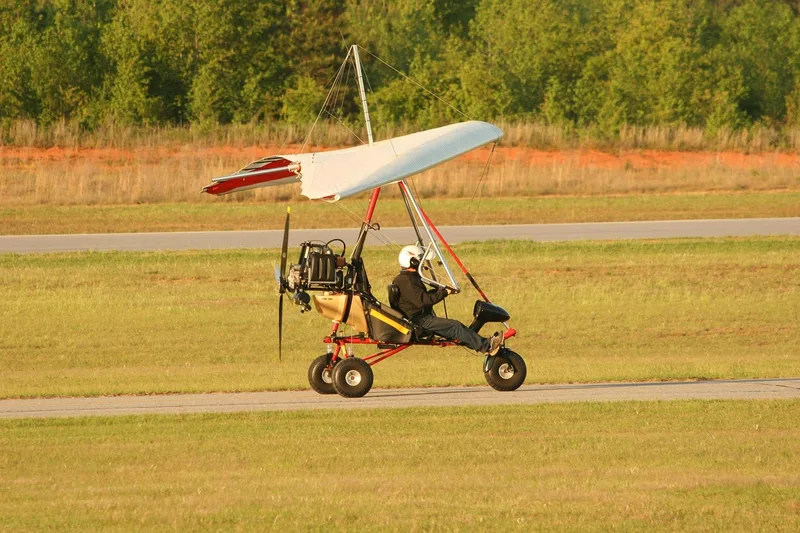
Samson says a private pilot license is needed in the air, while Jetson states none is required in the US for the ONE. The rule behind the “no license” claim is 14 CFR Part 103. Section 103.1 defines an ultralight vehicle as one used for manned operation by a single occupant, for recreation or sport only, with no airworthiness certificate, and if powered, an empty weight under 254 pounds, fuel capacity of 5 U.S. gallons or less, no more than 55 knots calibrated airspeed at full power in level flight and a power-off stall speed of 24 knots or less. Section 103.7 then says operators of such vehicles do not need airman or medical certificates. Section 103.11 limits flying to sunrise to sunset, and section 103.15 bars flying over any congested area of a city, town or settlement. A vehicle that does not meet all of 103.1 is outside that exemption.
For a wider safety comparison, see our pages on whether are planes safer than cars and whether flying a plane is harder than driving a car.
What a Price Does Not Include: A Checklist
A headline price is only the first line of the total. Using only what the pages above state, check each item before comparing two vehicles.
- Taxes and fees: Jetson’s $148,000 excludes taxes and other fees, and PAL-V’s figures exclude taxes and works.
- Deposit versus total: Jetson’s $8,000 downpayment is non-refundable and the remaining $140,000 is due at delivery. Alef’s $150 and $1500 are queue payments against a $299,999 expected price.
- Estimated or expected: Samson says “Estimated”, Alef says “expected” and PAL-V says “Expected EU price”. None of these is a final quote.
- Options: Samson lists options for a whole-vehicle parachute, a landing height audible call-out and autopilot without prices on the page I read. Alef says a hydrogen option may cost more.
- Your share of the build: Samson’s Experimental category requires the owner to build 51 percent, with the Builder Assist Program included in the kit price.
- Licenses and training: a private pilot license for Samson in the air, per Samson. Samson also includes a maintenance course at no extra cost.
- Not stated anywhere I read: insurance, hangar or storage, fuel or charging, maintenance, registration and flight training hours. No figures for these are given here because no page I read states them.
Flying Car Price Myths, Checked Against the Pages
| Common belief | What the pages say |
|---|---|
| A flying car is a certified vehicle you buy like a car | Samson says the FAA does not certify its Experimental category. Alef lists a pre-order with an expected price. Jetson lists orders for 2028 delivery. |
| The deposit is the price | Jetson: $8,000 downpayment against $148,000. Alef: $150 or $1500 queue payment against $299,999 expected. |
| Alef’s 2023 FAA certificate means it can sell to the public | The FAA chronology describes limited flying for exhibition, research and development. |
| No pilot license is ever needed | Samson says a private pilot license. Jetson says none in the US for the ONE. Part 103 exempts only vehicles that fit 103.1. |
Frequently Asked Questions
How Much Does a Flying Car Cost?
Stated prices run from $148,000 (Jetson ONE) to “from $770,000” (Samson Limited Edition), mostly estimated or expected figures.
What Is the Cheapest Flying Car?
The Jetson ONE at $148,000, a single-seat aerial vehicle with estimated delivery in 2028. The lowest two-seat figure I read is the Samson VFR kit at an estimated $200,000.
Can You Buy a Flying Car Today?
It depends on the maker. Jetson says it is delivering and taking 2028 orders, Samson takes reservations, Alef has pre-orders and PAL-V says to contact sales.
Are Flying Cars Legal in the US?
There is no single answer. Samson says its Switchblade is Experimental category and not FAA certified, and ultralights that meet 14 CFR 103.1 follow Part 103. Ask the maker and the FAA. This is not legal advice.
Do You Need a Pilot License to Fly a Flying Car?
Samson says a private pilot license in the air. Jetson states none is required in the US for the ONE. Part 103 exempts only vehicles that fit its definition.
Conclusion
So, how much does a flying car cost? On the pages read on 2026-10-14, anywhere from a stated $148,000 for a single-seat Jetson ONE to “from $770,000” for a Samson Limited Edition, with many prices only estimated or expected and some excluding taxes. Before you rely on any number, open the maker’s page, note the date and the words around the price, and ask what is certified, what is delivered and what is still a plan.
Unverified and not read: I could not read the price pages for Klein Vision, ASKA, Doroni, LIFT, Xpeng AeroHT, Joby or Archer, so no price for them appears here. This page is flagged for human review because the prices are time-sensitive.
Products related to this article
Sponsored / affiliate links. As an Amazon Associate I earn from qualifying purchases. I may earn additional commission from eligible campaigns.

![[2026 New] 36-Pack Fuse Kit Car Fuses Assortment Kit Tall/Standard and Low Profile Box Shaped Automotive Fuses for Pickup Cars, Trucks, RVs, and SUVs(20A/30A/40A/50A/60A/80A, 3pcs Each) by GRABOTE](https://m.media-amazon.com/images/I/51L1wDS7vrL._SL500_.jpg)