What Do Struts Do on a Car? How They Work and What They Control
A strut does two jobs at once: it dampens the bouncing motion of the coil spring after your car hits a bump, and it acts as a structural mounting point that holds the wheel assembly to the body of the car. That second job is what makes a strut different from a plain shock absorber — a strut carries the car’s weight and helps position the wheel, while a shock absorber only controls bounce. Struts are the reason your car settles quickly after a pothole instead of bouncing for several seconds, and why the front wheels stay pointed the right way when you steer.
Quick Answer
Struts control ride and handling by damping spring oscillation (like a shock absorber) while also serving as a load-bearing structural part of the suspension that positions the wheel and supports the car’s weight. This dual role is what lets a MacPherson strut assembly do the work of a separate shock, spring mount, and steering pivot all in one compact unit.
The Two Jobs of a Strut: Damping and Structural Support
FOR DIY STRUT WORK
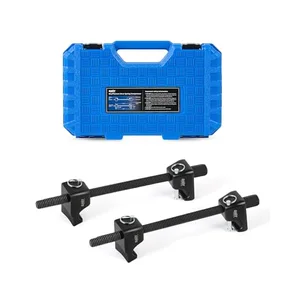 |
OMT MacPherson Strut Spring Compressor Tool Set – $29.99 Because a strut’s coil spring is under heavy tension, you need a compressor tool like this one to safely hold the spring compressed while you swap the strut cartridge — this fits most MacPherson-style struts, not a specific make or model.
|
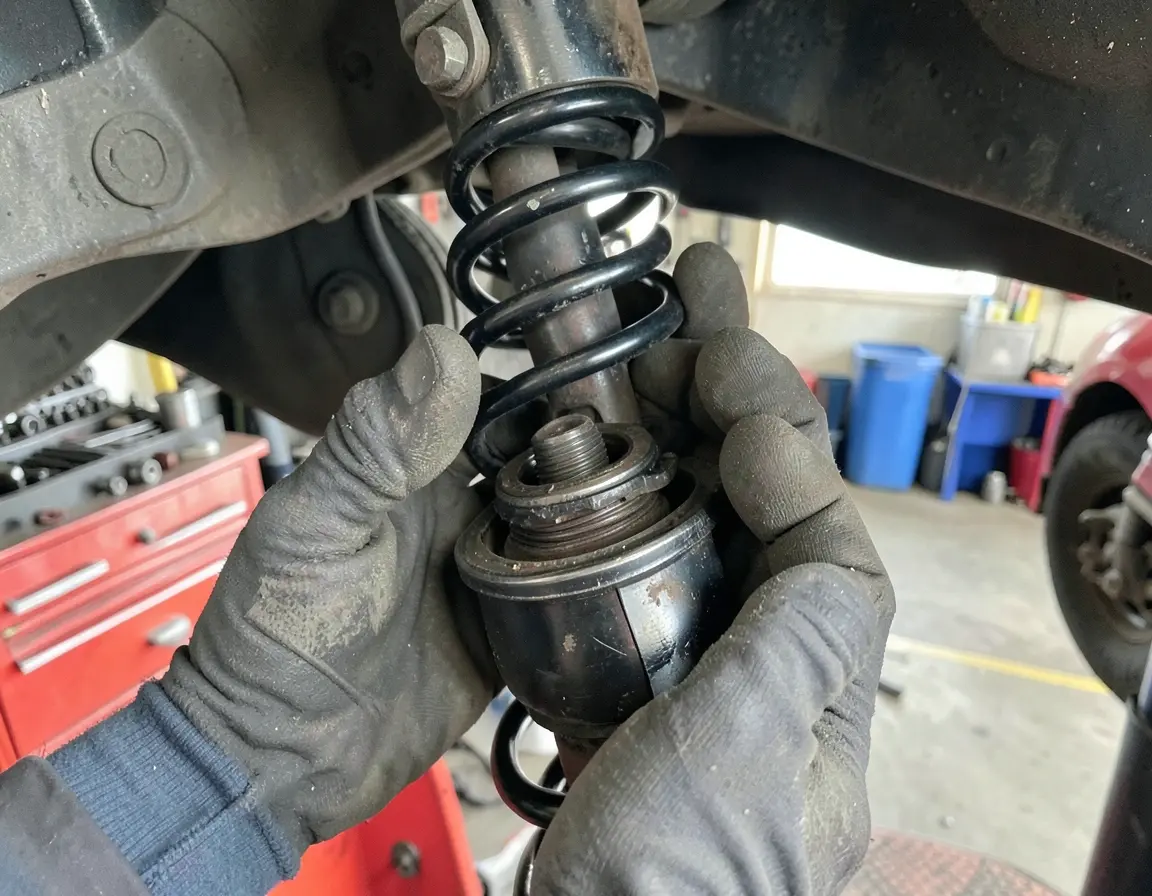
Every strut on your car is built around a piston that moves inside a sealed, oil- or gas-filled cylinder. When a wheel hits a bump, the piston is forced through that fluid, and the fluid resists the motion — this is what dampens (slows down) the spring’s natural bounce. Without that damping, the coil spring alone would keep the car bouncing up and down for several seconds after every bump. The strut’s job is to absorb that energy and turn it into heat, so the spring compresses once and settles back to normal almost immediately.
The second job is structural. A plain shock absorber just bolts on at both ends and does nothing but dampen. A strut is built into the suspension itself: the coil spring sits directly around the strut body, and the top of the strut bolts to the car’s frame through a bearing (called a strut mount) that lets the whole assembly pivot when you turn the steering wheel. Because the strut is carrying real structural load — the corner weight of the car, plus the steering geometry — it has to be far more rigid than a standalone shock absorber.
How the MacPherson Strut Assembly Works
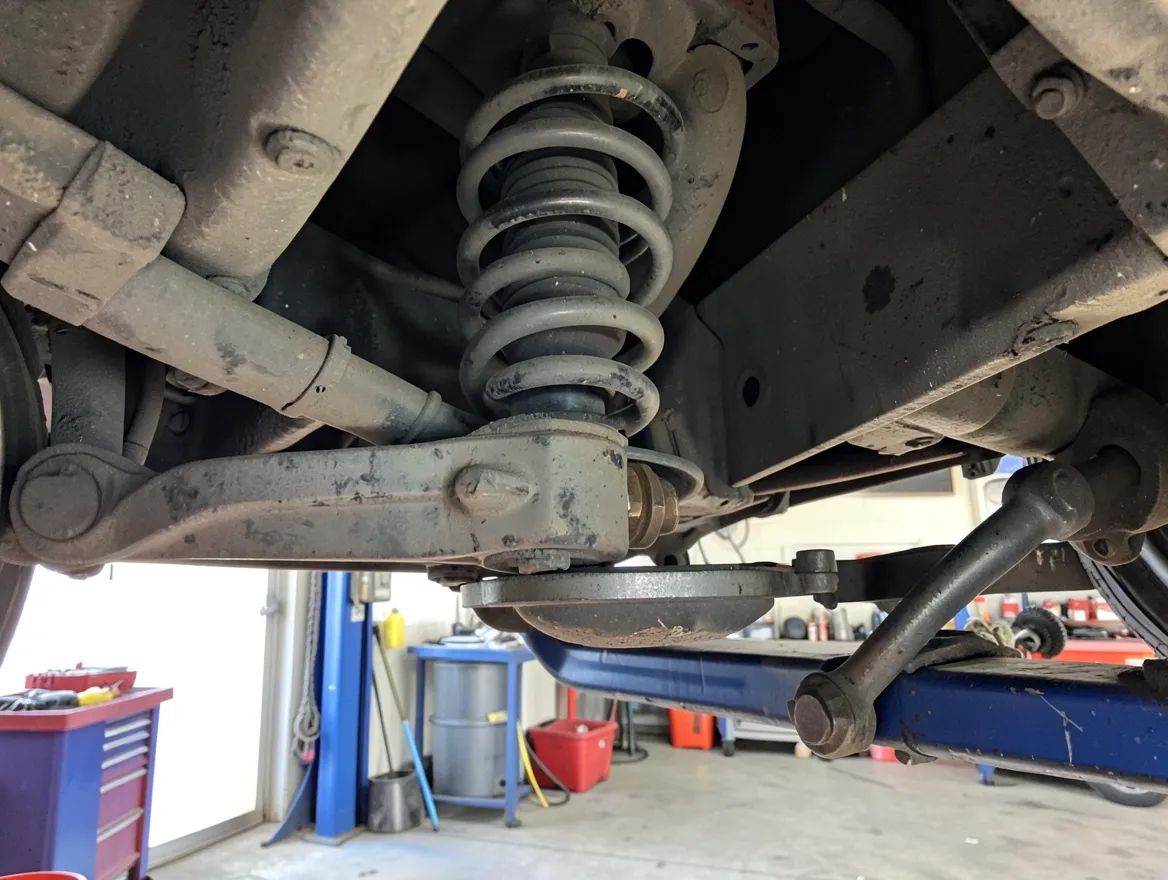
Most cars — especially front-wheel-drive sedans, hatchbacks, and compact SUVs — use a design called a MacPherson strut, named after the engineer who patented it in the 1940s. It is the most common front-suspension layout on the road today because it packs the damping, spring, and steering pivot into one compact unit that takes up minimal engine-bay space.
- Piston rod and cylinder: the piston moves up and down inside the oil/gas-filled cylinder, controlling both compression (spring pushing in) and rebound (spring pushing back out) at different rates.
- Coil spring: wraps around the strut body and actually carries the car’s weight; the strut controls how fast that spring is allowed to move.
- Strut mount and bearing: the top plate that bolts to the body and lets the entire strut rotate when the front wheels turn — this is why a worn strut mount can cause a clunk or stiff steering feel, not just a bouncy ride.
- Lower mount/steering knuckle connection: ties the bottom of the strut directly to the wheel hub, which is why the strut also sets the wheel’s camber angle.
Because the strut is doing structural duty as well as damping, replacing one always means replacing the coil spring and mount as an assembly (or compressing the old spring onto a new strut cartridge) — not just swapping a cylinder the way you would with a rear shock absorber.
What Struts Actually Control in Vehicle Dynamics
Beyond just smoothing out bumps, healthy struts control several things drivers notice without necessarily connecting them back to the suspension:
- Body roll in corners: struts resist the car leaning outward in a turn by controlling how quickly weight transfers from one side to the other. Worn struts let the body roll further and recover slower, which is why an aging car feels “floaty” through curves.
- Nose-dive under braking: when you brake hard, weight shifts forward onto the front struts. Good struts resist that dive and keep the car level; worn ones let the nose dip noticeably, which also shortens how long the front tires stay in full contact with the road.
- Tire contact and wear: struts keep the tire pressed evenly against the road surface through bumps and turns. When a strut can no longer control the tire’s bounce, the tire loses momentary contact and then slaps back down unevenly, which shows up as cupped or scalloped tread wear over time.
- Steering precision: because the strut mount is also the steering pivot on a MacPherson design, a worn strut or mount can introduce play or vibration into the steering wheel that has nothing to do with the alignment itself.
Struts vs. Shock Absorbers: Why the Distinction Matters
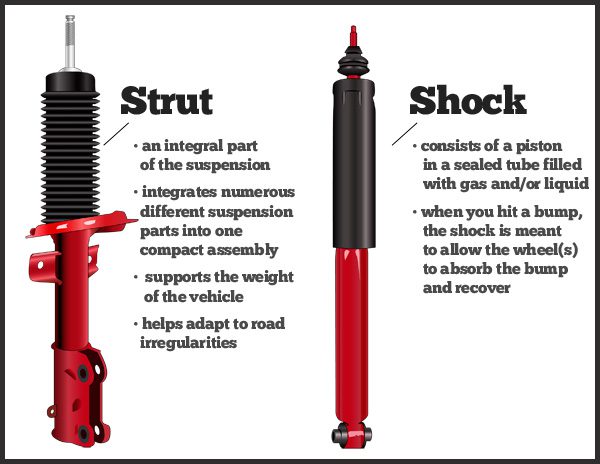
People use “struts” and “shocks” interchangeably, but the function is different in one key way: every strut contains shock-absorber-style damping, but a shock absorber never does the structural job a strut does. That is why struts and shocks fail in slightly different ways — a worn shock mostly just lets the car bounce more, while a worn strut can also change how the wheel is positioned, since it is part of the mounting structure itself. For the full breakdown of strut types, typical lifespan, and what a replacement costs by vehicle size, see our companion guide on what a strut car actually is.
Signs a Strut Is No Longer Doing Its Job
Since a strut has two jobs, it can fail in two different ways — the damping side wears out gradually (the fluid loses viscosity and the piston seals leak), or the structural side wears out (the mount bearing seizes or the spring perch cracks). Watch for these signs:
- The car keeps bouncing more than once or twice after a bump instead of settling immediately (damping failure).
- A clunk or knocking sound over bumps, especially when turning at the same time (mount or bearing failure).
- Cupped, scalloped, or uneven tire wear even after a recent alignment.
- The front end dives noticeably during hard braking, or the car leans more than it used to in turns.
- Visible oily residue on the strut body — a sign the internal seal is leaking fluid and has likely lost most of its damping ability.
A car that shakes or dives under braking is one of the more common ways a failing strut first gets noticed, since the strut is what keeps the front end level during a hard stop. Driving on a strut that has lost its structural integrity is a genuine safety issue, not just a comfort one — it directly affects braking distance and how predictably the car handles in an emergency maneuver, so it is not something to put off once you notice the symptoms above.
Frequently Asked Questions
What is the main function of a strut on a car?
A strut has two functions: it dampens the coil spring’s bounce like a shock absorber, and it acts as a structural mounting point that holds the wheel assembly in place and lets it pivot for steering. That combination is what makes a strut different from a plain shock absorber.
How is a strut different from a shock absorber?
A shock absorber only dampens motion; it carries no structural load and can be replaced on its own. A strut does everything a shock absorber does, plus it supports the car’s weight and positions the wheel, which is why it is built into the suspension structure rather than just bolted between two points.
Do struts affect braking and cornering, or just ride comfort?
Both. Struts control how much the front end dives when you brake hard and how much the body rolls in a turn, in addition to smoothing out bumps. Worn struts let the tire momentarily lose even contact with the road during braking and cornering, which can increase stopping distance and reduce grip, not just make the ride bouncier.
What happens when a strut goes bad?
A failing strut causes excessive bouncing after bumps, uneven or cupped tire wear, nose-diving under braking, and sometimes a clunking noise if the strut mount bearing is also worn. Because the strut is structural, a bad one can also introduce steering play that has nothing to do with the wheel alignment.
Can I drive with a bad strut?
You can, but it is not recommended for long. A strut that has lost its damping or structural integrity increases stopping distance, reduces tire grip in corners, and can accelerate wear on tires and other suspension parts. If you notice the signs above, have the strut inspected and replaced promptly rather than waiting.
Conclusion
Struts do more than just smooth out potholes — they dampen the spring’s bounce, carry the car’s weight at that corner, and set the pivot point the wheel steers around. That dual role is exactly why a worn strut shows up in so many different symptoms, from a bouncy ride to uneven tire wear to a car that dives under braking. Keeping an eye on those signs, and having a mechanic inspect your struts if anything feels off, keeps both the comfort and the safety side of this component working the way it is designed to.
Products related to this article
Sponsored / affiliate links. As an Amazon Associate I earn from qualifying purchases. I may earn additional commission from eligible campaigns.