What Does Freon Smell Like Car: Essential Safety
Does your car’s AC smell weird? You might be wondering, “What does Freon smell like in a car?” Freon itself is odorless and colorless. The smell you detect is likely from a leak in your AC system, potentially carrying other substances. It’s essential to address this promptly for safety and comfort.
Have you ever stepped into your car and noticed a strange, sometimes sweet or chemical odor, especially when the air conditioning is on? It can be a bit puzzling and even concerning. Many people immediately think of “Freon,” and understandably so. But here’s the thing: pure Freon, officially known as refrigerant, doesn’t actually have a smell. So, if you’re smelling something, it’s usually a sign that something else is going on with your car’s AC system. Don’t worry, though!
As your friendly auto guide, I’m here to break down exactly what these smells mean, why they happen, and what you absolutely need to do about it. We’ll cover the safety aspects, identify potential causes, and guide you through the simple steps to get your car smelling fresh and your AC working perfectly again. Let’s get your car back to the comfortable haven it should be!
Understanding Refrigerant and AC Smells
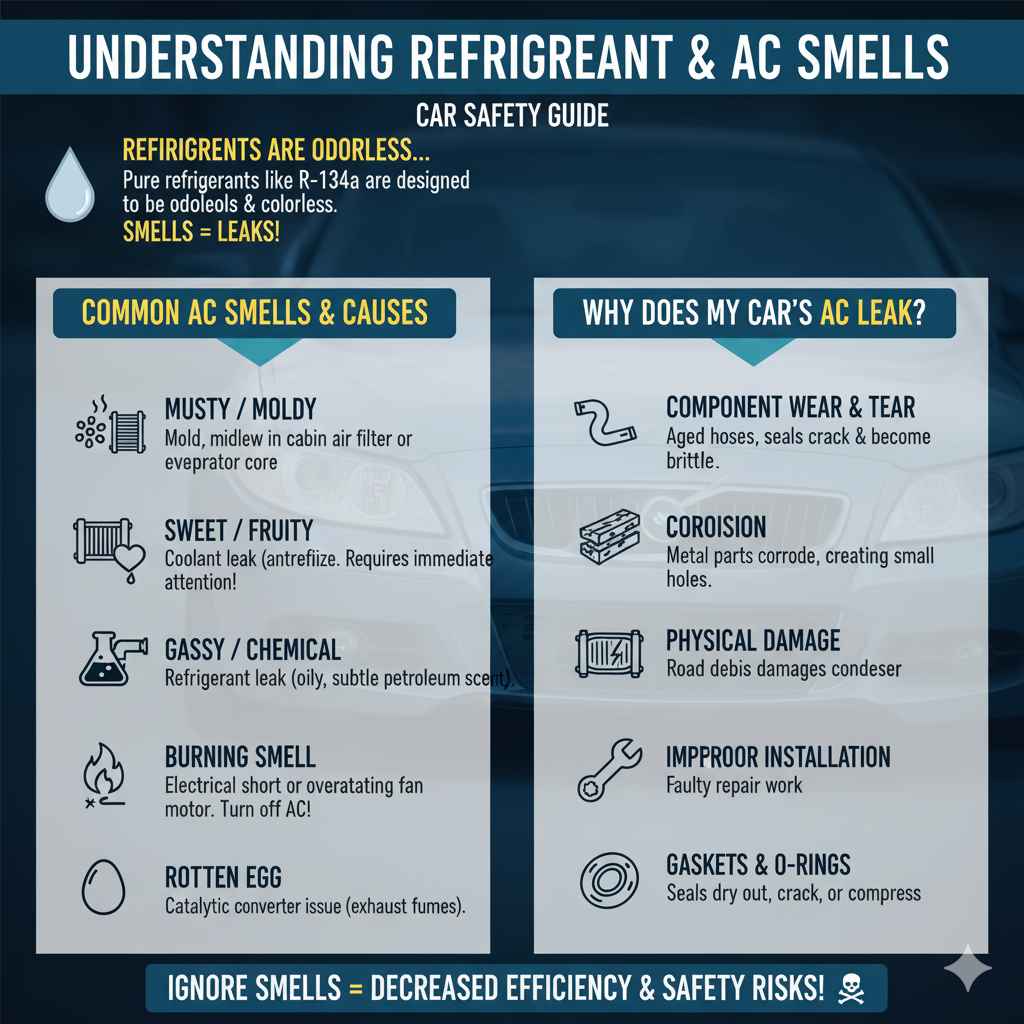
It’s a common misconception that Freon itself has a distinct smell. Refrigerants like R-134a (the most common type in cars today) or older types like R-12 are designed to be odorless and colorless. This is for a good reason; they need to remain pure to effectively cool your car’s cabin. So, when you detect a smell, it’s usually an indication of a leak within your air conditioning system.
These leaks can allow other substances to escape or mix with the refrigerant. It’s these accompanying elements, or byproducts of the leak, that create the odors you might notice. Ignoring these smells can lead to a malfunctioning AC system, decreased cooling efficiency, and potential safety concerns. Let’s dive into what those smells might actually be telling you.
Common AC Smells and Their Potential Causes
The scent you experience can offer clues about where the problem lies in your car’s AC system. Here are some of the most common smells and what they could mean:
- Musty or Moldy Smell: This is perhaps the most frequent complaint. This odor is usually due to mold, mildew, or bacteria accumulating in the air cabin filter or the evaporator core. When you turn on the AC, this moisture-laden environment can release these unpleasant smells into your car.
- Sweet or Fruity Smell: A sweet smell can be a bit more concerning. It often indicates a coolant leak. Coolant contains chemicals that can have a sweet aroma. If your system is leaking coolant and it’s mixing with the air that’s circulated, you’ll smell it. This is a leak that needs immediate attention.
- Gassy or Chemical Smell: This could point to a refrigerant leak. While the refrigerant itself is odorless, impurities or the oil that lubricates the AC system can sometimes produce a faint chemical or gassy odor if they escape. Think of it like a very subtle petroleum-like scent.
- Burning Smell: A burning smell, especially if it’s accompanied by smoke, is a serious sign. It could indicate an electrical short in the AC system’s components or a fan motor overheating. This requires immediate professional inspection.
- Rotten Egg Smell: This can be a sign of a problem with the car’s catalytic converter, which is part of the exhaust system. While not directly related to the AC, if the smell is strongest when the AC is on fresh air mode, it might be drawing exhaust fumes into the cabin.
Why Does My Car’s AC Leak?
AC systems in cars are complex, involving many parts that work together under pressure. Like any mechanical system, they can develop leaks over time. Several factors can contribute to this:
- Component Wear and Tear: Rubber hoses and seals can degrade with age, heat, and exposure to various elements, leading to cracks or brittleness.
- Corrosion: Metal components, especially in humid environments or if exposed to road salt, can corrode, creating small holes where refrigerant can escape.
- Physical Damage: Debris on the road can strike and damage AC components like the condenser, which is located at the front of the vehicle.
- Improper Installation: If components were not installed correctly after a previous repair, it can lead to premature leaks.
- Gaskets and O-rings: These small but crucial parts seal connections within the system. Over time, they can dry out, crack, or compress, losing their sealing ability.
Essential Safety Precautions When Smelling AC Odors
When you notice an unusual smell from your car’s AC, especially if it’s sweet, gassy, or burning, it’s crucial to take immediate safety measures. Refrigerant leaks aren’t just about an inconvenience; they can pose health and environmental risks.
Health Risks Associated with Refrigerant Leaks
While modern refrigerants are generally less toxic than the older Freon (CFCs) they replaced, they are still chemicals. Breathing in high concentrations of refrigerant vapor can cause:
- Dizziness
- Headaches
- Nausea
- Skin irritation
- Eye irritation
- In very severe cases, cardiac issues or even suffocation if the concentration displaces oxygen in an enclosed space.
It’s especially important to be cautious if you or your passengers experience any of these symptoms when the AC is running. If you suspect a significant leak or are feeling unwell, turn off the AC and ventilate the car by opening the windows.
Environmental Concerns
Older refrigerants like R-12 (CFCs) were known to deplete the ozone layer. While R-134a and newer refrigerants (HFOs) like R-1234yf have much lower Global Warming Potential (GWP), they are still greenhouse gases. Releasing them into the atmosphere contributes to climate change. For this reason, AC systems are sealed, and refrigerant should only be handled by certified professionals who can recover and recycle it properly. You can learn more about the environmental impact of refrigerants from sources like the U.S. Environmental Protection Agency (EPA).
Immediate Steps to Take
If you smell something unusual from your car’s AC:
- Ventilate: Turn off the AC immediately and open your car windows. Airing out the cabin is the first and most important step.
- Address Mild Smells: If the smell is musty or moldy, it might be a sign of a clogged cabin air filter or moisture buildup. Replacing the cabin air filter is often an easy DIY fix that can resolve this.
- Investigate Sweet/Gassy Smells: If you smell something sweet or gassy, it’s a strong indicator of a refrigerant or coolant leak. Do not attempt to top off the refrigerant yourself. This is a job for a professional.
- Burning Smells: VERY IMPORTANT: If you smell burning, especially if you see smoke, stop driving your car as soon as it is safe to do so. Turn off the engine and call for roadside assistance or a tow truck. This is a fire hazard.
DIY Checks for AC Smells
Before you rush to a mechanic, there are a few simple checks you can perform yourself to narrow down the possibilities, especially for less alarming smells like mustiness.
Checking the Cabin Air Filter
The cabin air filter is a common culprit for musty or stale odors. It’s designed to clean the air entering your car’s cabin but can become clogged with dust, pollen, leaves, and other debris over time. A dirty filter can harbor mold and mildew.
Location: The cabin air filter is usually located behind the glove compartment or under the dashboard on the passenger side. Consult your car’s owner’s manual for the exact location and replacement procedure.
Tools You Might Need:
- Owner’s Manual
- Screwdriver (if needed to remove panels)
- New Cabin Air Filter
- Gloves (optional)
- Dust Mask (recommended)
How to Check/Replace:
- Locate the cabin air filter housing.
- Remove the old filter. Note the direction of airflow indicated by arrows on the old filter.
- Inspect the old filter. If it’s visibly dirty, clogged, or smells bad, it needs to be replaced.
- Install the new filter, ensuring the airflow arrows point in the correct direction.
- Reassemble any panels you removed.
Replacing a cabin air filter is often a straightforward process that can significantly improve air quality in your car. You can find affordable replacement filters from many auto parts stores.
Inspecting Visible AC Components
While you can’t typically see the core AC components without specialized equipment, you can do a visual inspection of the parts that are accessible:
- Condenser: Located at the front of your car, usually in front of the radiator. Check for any obvious damage from debris or signs of leaks (oily residue).
- Visible Hoses and Lines: Look for any cracked, brittle, or obviously leaking hoses connected to the AC system.
If you see any oily residue around AC line connections or fittings, it could indicate a refrigerant oil leak, which often accompanies a refrigerant leak.
When to Call a Professional
While DIY checks can help with some issues, many AC smells and problems require professional expertise. Refrigerant handling is regulated, and specialized tools are needed to diagnose and repair leaks effectively. Here’s when you should definitely seek professional help:
Signs You Need a Mechanic Immediately
- Persistent Sweet or Chemical Odors: These strongly suggest refrigerant or coolant leaks, which require specialized equipment to locate and repair.
- Burning Smells or Smoke: This is a serious safety hazard indicating potential electrical problems or overheating.
- AC Not Cooling Properly: If your AC system is losing its cooling power, it’s likely due to a refrigerant leak or another internal issue requiring professional diagnosis.
- Hissing Sounds: These can sometimes indicate a refrigerant leak.
What a Professional AC Service Entails
When you take your car to a qualified mechanic for AC issues, they will typically:
- Leak Detection: Use specialized electronic leak detectors or UV dye to pinpoint the source of any refrigerant leaks.
- System Evacuation: Safely recover any remaining refrigerant using specialized equipment to prevent environmental release.
- Component Inspection & Repair/Replacement: Identify and replace any faulty parts like hoses, seals, O-rings, the compressor, condenser, or evaporator.
- System Flush: In some cases, they may flush the system to remove contaminants.
- Evacuation and Recharge: Evacuate the system to remove air and moisture, then recharge it with the correct amount and type of refrigerant and oil, according to manufacturer specifications.
- Performance Testing: Test the system’s cooling performance and check for any remaining leaks.
The cost of AC service can vary depending on the complexity of the repair. Factors influencing the cost include the type of refrigerant used (R-134a is generally less expensive than R-1234yf), the specific parts that need replacing, and the labor involved. It’s always a good idea to get an estimate before authorizing repairs.
Maintaining Your Car’s AC System
Preventative maintenance is key to avoiding AC problems and unpleasant smells. A little bit of regular attention can save you a lot of headaches and expense down the road.
Regular Maintenance Tips
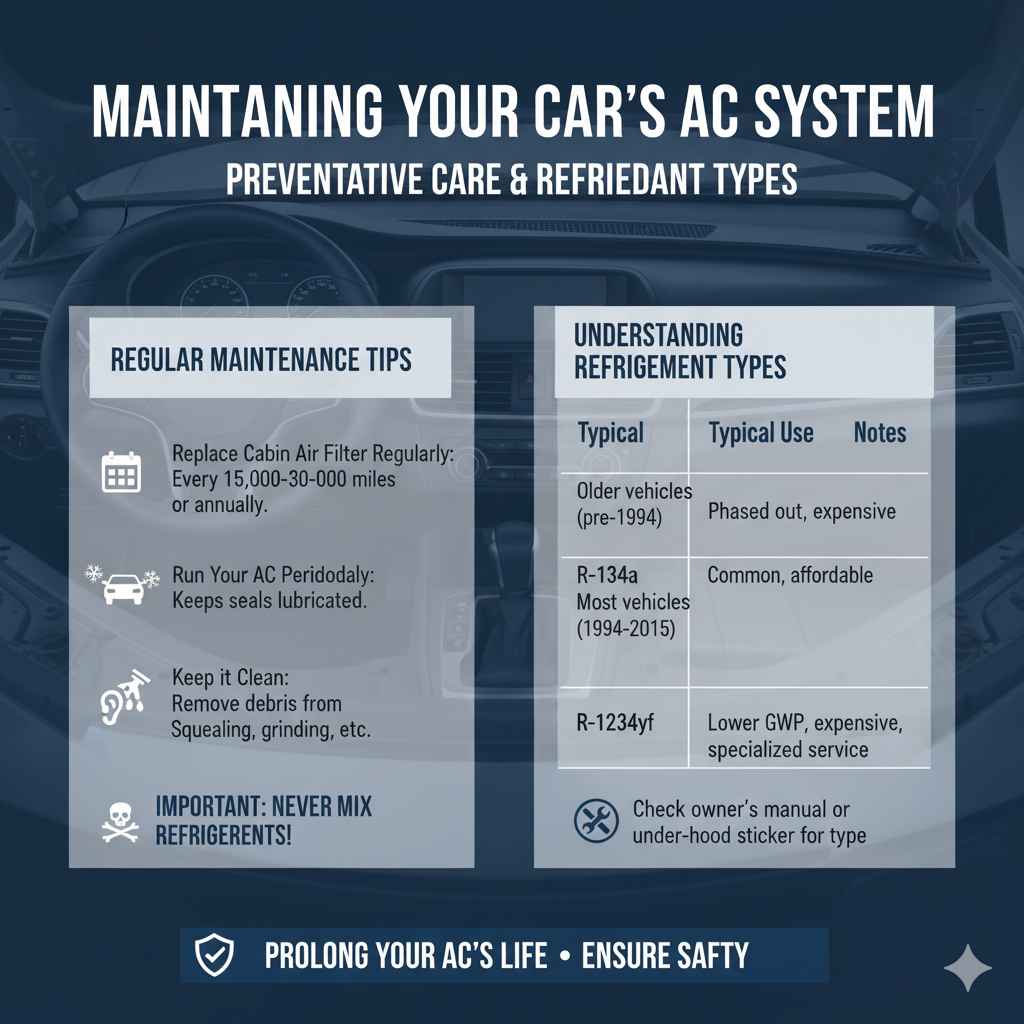
- Replace Cabin Air Filter Regularly: As we’ve discussed, this is one of the easiest and most effective ways to prevent musty odors. Check your owner’s manual for recommended replacement intervals, typically every 15,000 to 30,000 miles or once a year.
- Run Your AC Periodically: Even in cooler months, run your AC for a few minutes every couple of weeks. This keeps the seals lubricated and prevents them from drying out and cracking, which are common causes of leaks.
- Keep it Clean: Regularly clean the exterior of your car, paying attention to the area around the condenser. Remove leaves and debris that can restrict airflow and lead to overheating.
- Listen for Strange Noises: Any squealing, grinding, or unusual sounds coming from the AC when it’s running could indicate a failing compressor or other component.
Understanding Refrigerant Types
It’s important to know what type of refrigerant is in your car’s AC system, as using the wrong type during a recharge can damage the system. The most common refrigerants are:
| Refrigerant Type | Typical Use | Notes |
|---|---|---|
| R-12 (Freon) | Older vehicles (pre-1994) | Largely phased out due to ozone depletion; expensive and difficult to obtain legally. |
| R-134a | Most vehicles (1994-2015) | Common, widely available, and relatively affordable. |
| R-1234yf | Newer vehicles (approximately 2015 onwards) | Lower Global Warming Potential; more expensive than R-134a; requires specialized equipment and certified technicians. |
Your car’s owner’s manual or a sticker under the hood will usually indicate the correct refrigerant type. Never mix refrigerants.
Frequently Asked Questions About Car AC Smells
Q1: If I smell something like rotten eggs, is it definitely my AC?
A1: Not necessarily. A rotten egg smell is often related to your car’s exhaust system, specifically the catalytic converter. However, if you also notice a sweet or chemical smell from your AC, or if the smell seems to be drawn into the cabin more when your AC is on fresh air mode, it’s worth getting both systems checked.
Q2: Can I just buy a can of Freon and add it myself?
A2: It’s strongly advised against for several reasons. Firstly, the refrigerant itself is odorless. If you smell something, it’s a leak. Secondly, adding refrigerant without knowing the exact amount needed can overcharge and damage your AC system. Thirdly, incorrectly handling refrigerants can be harmful to your health and the environment. Lastly, if you have a leak, simply adding more refrigerant is a temporary fix; the leak will continue to deplete the system, and you’ll be releasing harmful substances. Always use a certified professional for AC recharges.
Q3: My car smells musty only when I first turn on the AC. What’s going on?
A3: This is a classic symptom of mold, mildew, or bacteria buildup in your AC system, particularly in the evaporator core and ductwork where moisture tends to accumulate. Replacing your cabin air filter is a good first step, but sometimes a professional AC cleaning service is needed to sanitize the system.
Q4: Is coolant (antifreeze) dangerous to breathe in my car?
A4: Yes, inhaling coolant vapors can be harmful. Coolant has a sweet smell, and if you detect this from your AC, it indicates a leak. Prolonged exposure can cause respiratory irritation, headaches, and nausea. It’s also highly toxic if ingested. If you suspect a coolant leak, get it checked by a mechanic immediately.
Q5: How often should my car’s AC system be serviced?
A5: There’s no strict universal schedule, but most manufacturers recommend a professional AC inspection every 1-2 years. This typically includes checking refrigerant levels, looking for leaks, and ensuring the system is operating efficiently. In conjunction with this, follow your owner’s manual for cabin air filter replacement, usually every 15,000-30,000 miles or once a year.
Q6: Can a clogged drain tube cause AC smells?
A6: Absolutely. Your car’s AC system produces condensation, which normally drains out underneath the vehicle through a small tube. If this tube becomes clogged with debris, the water backs up into the AC system, creating a breeding ground for mold and mildew, leading to those unpleasant musty smells.
Conclusion
When your car’s air conditioning system produces an unusual smell, it’s your vehicle’s way of telling you something needs attention. While pure Freon is odorless, the scents you detect are often indicators of leaks, moisture buildup, or even more serious issues like electrical problems. Understanding these smells – from the mild mustiness of a dirty cabin air filter to the more concerning sweet aroma of a coolant leak or a burning smell – is the first step towards a solution.