What Does NA Mean in Cars? Naturally Aspirated Explained
NA stands for “naturally aspirated” — an engine that draws air using only atmospheric pressure, with no turbocharger or supercharger forcing extra air in. A naturally aspirated engine like the Porsche 911 GT3’s 502-hp flat-six responds instantly to the throttle but produces less power per liter than a turbocharged engine. This guide covers how NA engines work, how they compare to turbocharged engines, and which cars still use them in 2026.
Quick Answer
In cars, “NA” almost always means naturally aspirated — an engine with no turbocharger or supercharger, relying only on atmospheric pressure and piston vacuum to pull air in. It gives instant throttle response with no turbo lag but produces less power per liter of displacement. On an OBD2 scanner, “NA” instead means “Not Applicable” — a parameter that doesn’t apply to that vehicle.
What Does NA Mean in an Engine? (Naturally Aspirated, Defined)
Naturally aspirated (NA) is an engine design that draws air into its cylinders using only atmospheric pressure and the vacuum created by each descending piston — no turbocharger or supercharger compresses extra air into the intake. This is the opposite of “forced induction,” the umbrella term for turbocharged and supercharged engines that mechanically pack more air (and therefore more fuel and power) into the same cylinder volume.
Because an NA engine only gets as much air as atmospheric pressure naturally provides, its power output is a direct function of displacement and rpm — there’s no compressor stage to add extra boost. That’s why NA engines respond to the throttle the instant you press it, with no lag while a turbo spools up or a supercharger (blower) builds boost.
| Feature | Naturally Aspirated (NA) | Turbocharged / Supercharged |
|---|---|---|
| Power delivery | Instant, linear, no lag | Builds as boost spools up (turbo lag on turbos) |
| Power per liter | Lower — limited by atmospheric pressure | Higher — same displacement makes more power |
| Mechanical complexity | Simpler — fewer parts to fail | More complex — turbo/supercharger, intercooler, wastegate |
| Typical maintenance cost | Generally lower | Generally higher over time |
| High-altitude performance | Loses power as air thins | Compensates for thinner air by boosting harder |
Naturally Aspirated vs. Turbocharged: Which Is Actually Better?
Neither is “better” outright — the right choice depends on what you value. NA engines win on throttle response, simplicity, and long-term reliability; turbocharged engines win on power-per-liter and can post better official fuel-economy numbers, since a smaller turbo engine only builds boost (and burns more fuel) when you actually ask for power.
Does Altitude Affect a Naturally Aspirated Engine?
Yes — significantly. Because an NA engine depends entirely on atmospheric pressure to fill its cylinders, it loses measurable power as elevation increases and the air gets thinner (roughly 3% power loss per 1,000 feet of elevation is a commonly cited rule of thumb). A turbocharged engine largely compensates for this: the turbo simply spins harder to compress the thinner air back up to its target boost pressure, which is why turbocharged engines hold their power far more consistently at altitude than NA engines do.
Why Do Some Racers and Drifters Prefer Naturally Aspirated Engines?
Predictability. In drifting and some spec racing classes, a driver needs to know exactly how much power will arrive the instant the throttle moves — an NA engine delivers power in a smooth, linear curve tied directly to rpm, with none of the sudden surge that comes when a turbo finishes spooling mid-corner. That predictability is worth more than outright horsepower in a discipline built around controlled oversteer, which is part of why classes like Formula Drift’s Pro-spec still see plenty of built NA engines despite turbocharged builds now dominating on raw power.
Pros and Cons of Naturally Aspirated Engines
Naturally aspirated engines have fewer moving parts than turbocharged engines — there’s no turbo, wastegate, intercooler, or associated plumbing to fail. That translates into real advantages, but also real limitations compared to forced induction.
Advantages of NA Engines
- Instant throttle response — power arrives the moment you press the pedal, with zero turbo lag.
- Simpler design — fewer components means fewer things that can break, which usually means lower long-term repair costs.
- Linear, predictable power delivery — power builds smoothly with rpm instead of surging once boost arrives.
- Often runs cooler — no turbo housing generating extra exhaust-side heat under load.
Disadvantages of NA Engines
- Lower power per liter of displacement — to match a turbocharged engine’s output, an NA engine typically needs significantly more displacement (and weight).
- Loses power at altitude — thinner air directly reduces output, with no compressor to compensate.
- Often lower real-world fuel efficiency at speed — a big NA engine burns fuel to move its own displacement even when you’re not asking for much power, whereas a small turbo engine sips fuel until boost is needed.
- Shrinking availability — tightening emissions rules are pushing many automakers toward turbocharging or electrification instead.
Best Cold Air Intake Pick
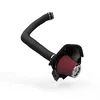
K&N Cold Air Intake System (63-1564)
A high-flow air filter and intake tube that lets an NA engine draw in more (and cooler) air — one of the few genuine, direct-bolt ways to claw back some of the power an NA engine gives up compared to a turbo.
- Best for: owners of a naturally aspirated Chrysler/Dodge V6 wanting a direct-fit power and sound upgrade
- Why we picked it: reputable brand, reusable filter, no cutting or drilling required
- Main drawback: gains on a stock NA engine are modest — a few horsepower, not a turbo-like jump
Compare more cold air intake options
 Option 1 MOOSUN 4″ Intake + Heat Shield (GM V8 trucks)
|
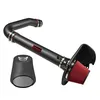 Option 2 EVIL ENERGY Intake (300/Challenger/Charger 3.6L)
|
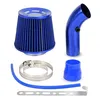 Option 3 BARTOO 3″ Universal Intake Kit
|
As an Amazon Associate we earn from qualifying purchases.
Naturally Aspirated Engines Still in Production (2026)
Naturally aspirated engines have been around since the earliest gasoline cars of the early 1900s, and for most of automotive history they were the default — turbocharging was reserved mostly for racing and diesel trucks. That’s flipped in the last two decades: most mainstream engines today are turbocharged to meet fuel-economy and emissions targets while still making adequate power from a smaller engine displacement. NA engines haven’t disappeared, though — they’re just concentrated in a smaller lineup of performance cars and a handful of mainstream V6s.

| Car / Engine | Displacement | Power Output |
|---|---|---|
| Porsche 911 GT3 (992) | 4.0L Flat-6 | 502 hp |
| Chevrolet Corvette Z06 (LT6) | 5.5L Flat-Plane V8 | 670 hp |
| Ford Mustang GT (Coyote) | 5.0L V8 | 480–486 hp (500 hp on Dark Horse) |
| Toyota GR86 | 2.4L Flat-4 | 228 hp |
| Honda S2000 (F20C, historic) | 2.0L Inline-4 | 240 hp |
📊 The Chevrolet Corvette Z06’s 5.5L LT6 flat-plane-crank V8 makes 670 hp naturally aspirated — Chevrolet describes it as the most powerful naturally aspirated production V8 engine ever built. Source: Chevrolet, Corvette Z06 official specs
Why Are Naturally Aspirated Engines Disappearing?
Tightening emissions regulations are the main driver, not a loss of enthusiasm for how NA engines drive. Even performance-focused automakers that built their identity on naturally aspirated engines are being pushed toward turbocharging or electrification to meet upcoming standards like Euro 7. Some enthusiasts also convert an NA engine to forced induction with an aftermarket setup — see our guide on turbocharging a carbureted engine for what that conversion actually involves.
“I don’t think we can handle Euro 7 without electrification or without turbos.”
That single quote sums up the pressure every remaining NA performance engine is under: it isn’t that naturally aspirated engines got worse or less desirable — it’s that new emissions rules are getting harder to meet without a turbo or electric assistance in the mix.
Frequently Asked Questions
What does NA mean in car talk?
NA in car talk stands for “naturally aspirated.” This refers to engines that don’t use forced induction, like turbochargers or superchargers. Instead, they rely on atmospheric pressure for air intake. NA engines often provide a more linear power delivery and are simpler in design.
What does NA mean on a car scanner?
NA on a car scanner (OBD2 diagnostic tool) stands for “Not Applicable.” It indicates that a specific parameter or function does not apply to the vehicle being scanned, often because that feature or sensor isn’t fitted to that model. Always check your scanner’s manual if a reading you expect shows NA instead.
What does NA mean in the car community?
In the car community, “NA” stands for “naturally aspirated.” This refers to engines that draw air without a turbocharger or supercharger. NA engines typically offer a linear power delivery and a more engaging driving experience, appealing to enthusiasts who appreciate their simplicity and responsiveness.
What does NA mean in drag racing?
NA in drag racing stands for “naturally aspirated,” describing a class or engine that relies solely on atmospheric pressure for air intake, without the aid of turbochargers or superchargers. NA classes exist specifically because forced-induction cars post very different performance numbers, so racers compete against others using the same style of induction.
Is a naturally aspirated engine better than a turbo engine?
Neither is universally better — it depends on your priority. Choose naturally aspirated for instant, predictable throttle response and generally simpler long-term maintenance. Choose turbocharged for more power from the same or smaller displacement, and often better real-world fuel economy in light, everyday driving.
Why do race cars and drift cars still use naturally aspirated engines?
Predictability. An NA engine’s power builds in a smooth, linear curve tied directly to rpm, with no surge once a turbo finishes spooling. In disciplines like drifting, where a driver needs to know exactly how much power will arrive the instant they move the throttle, that predictability often matters more than outright horsepower.
NA still means one thing above all in automotive contexts: naturally aspirated — an engine that breathes on atmospheric pressure alone. It trades outright power-per-liter for instant, predictable throttle response and a simpler design, which is why it survives today mainly in performance cars like the Porsche 911 GT3 and Corvette Z06, even as tightening emissions rules push most mainstream engines toward turbocharging.
Products related to this article
Sponsored / affiliate links. As an Amazon Associate I earn from qualifying purchases. I may earn additional commission from eligible campaigns.