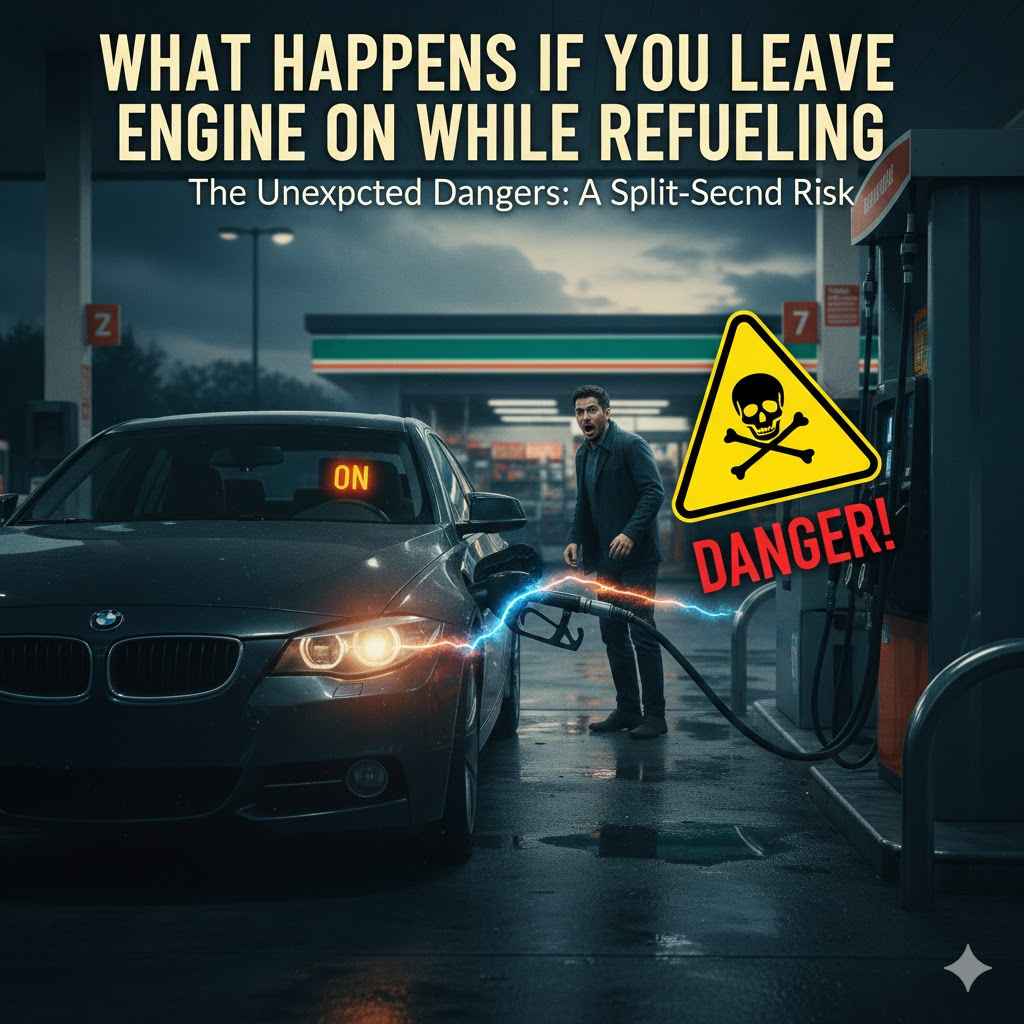
What Happens If You Leave Engine On While Refueling
It’s easy to forget or be unsure about turning off your car’s engine at the gas station. Many people wonder, “What Happens If You Leave Engine On While Refueling?” This is a common question, especially for those new to driving or refueling. It might seem like a small thing, but it’s important to know the facts.
We’ll break it down simply, step by step, so you can feel confident. Let’s explore what’s happening and why it matters.
Safety Risks of Leaving Your Engine On While Refueling
This section looks at the dangers connected to keeping your car’s engine running when you’re filling up with gas. It’s a topic many drivers might overlook, but understanding the risks is key to staying safe. We’ll cover the main reasons why this practice is strongly discouraged by safety experts and what could potentially go wrong.
Learning about these dangers helps everyone at the gas station stay protected.
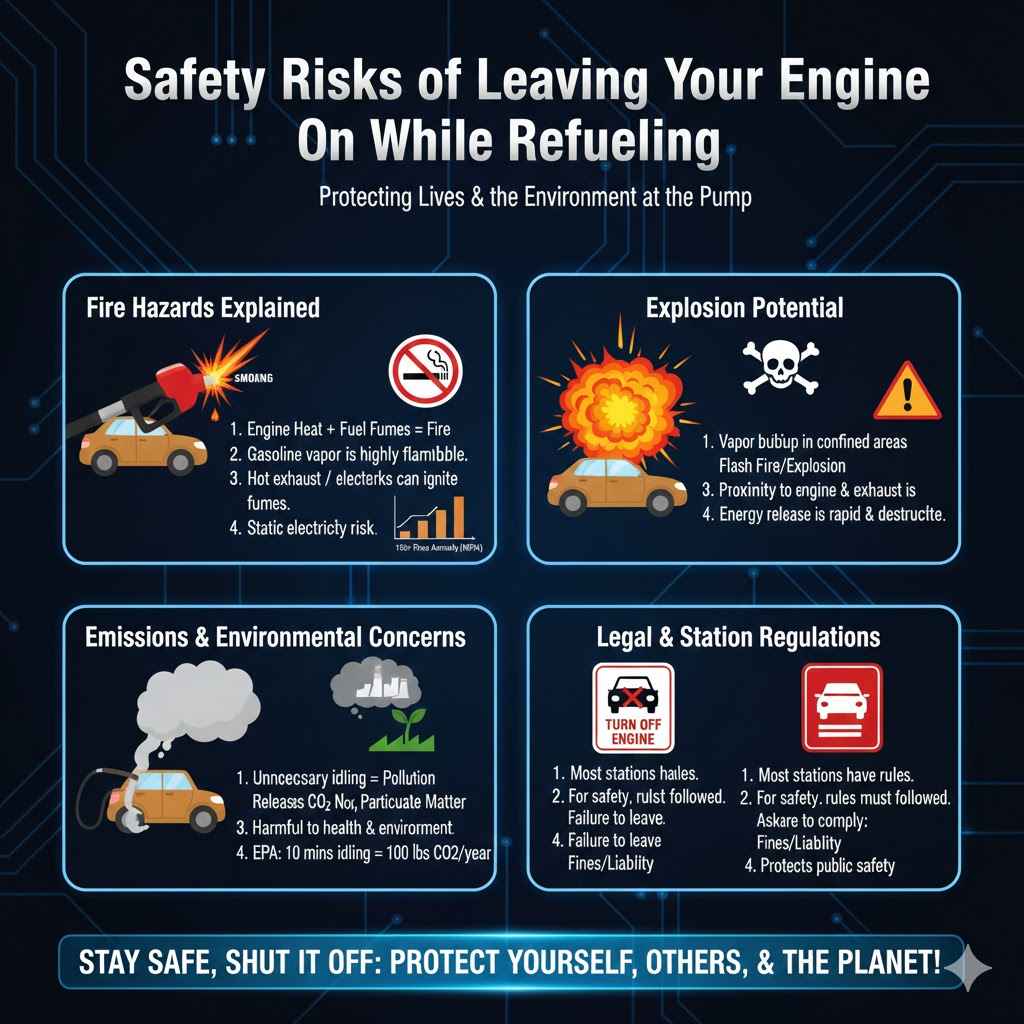
Fire Hazards Explained
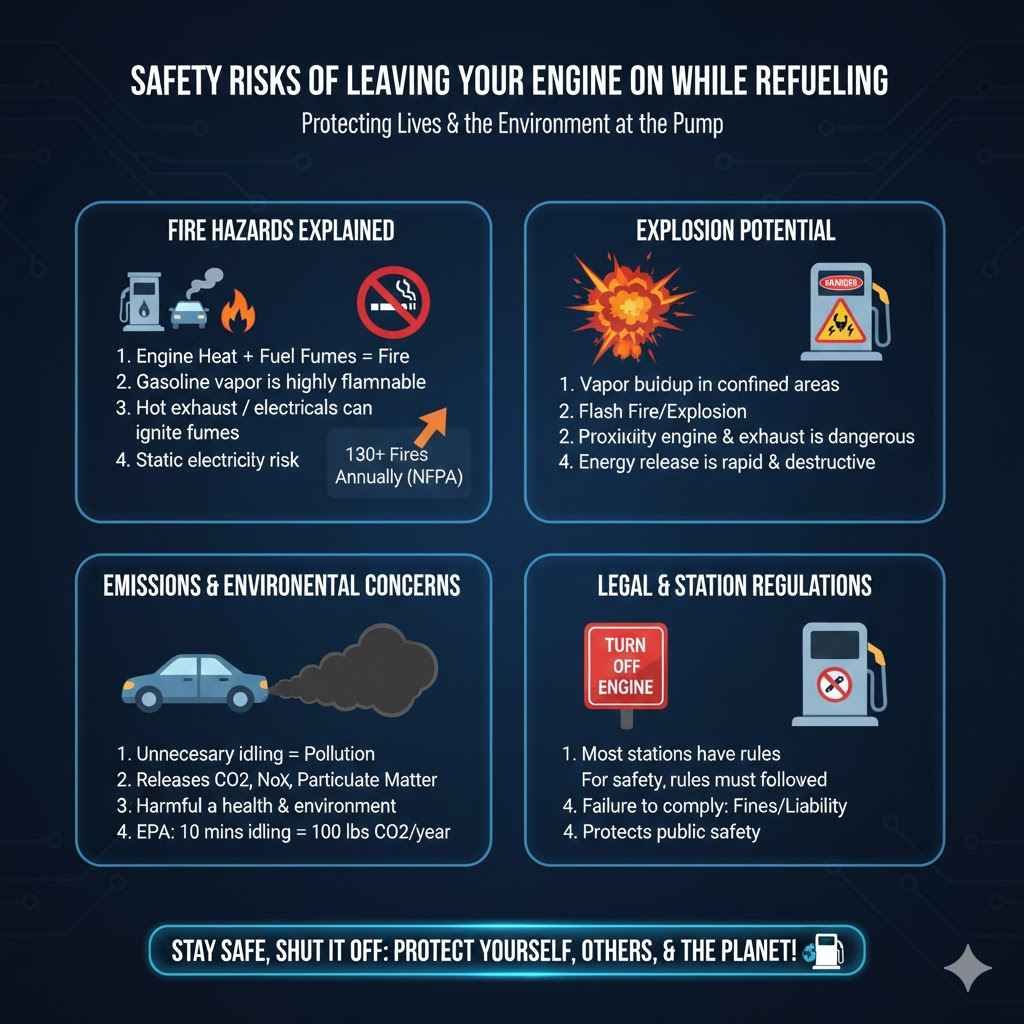
The biggest concern when refueling with the engine on is the increased risk of fire. Car engines produce heat, and sometimes they can spark. Gasoline fumes are highly flammable.
If a spark from your engine ignites these fumes, it can cause a serious fire very quickly. This is why gas stations have signs telling you to turn off your engine.
Gasoline is made of tiny droplets that can easily become vapor. These vapors are heavier than air and can spread along the ground. If your car’s exhaust system is hot or if there’s an electrical spark from the engine, these fumes can ignite.
The vapors can travel from the pump area to your car’s engine. Even a small spark can be enough to start a fire.
Modern cars have many safety features, but they don’t make it entirely safe to leave the engine running. The exhaust pipes can get very hot, reaching temperatures of several hundred degrees Fahrenheit. This heat is more than enough to ignite gasoline fumes.
Static electricity can also build up on your body or the car and cause a spark.
For instance, in 2019, a study by the National Fire Protection Association (NFPA) found that gasoline vapor ignition was the cause of an estimated 130 fires annually at gas stations in the United States. While the exact circumstances of each fire vary, the presence of a running engine is often a contributing factor that increases the likelihood of ignition.
Explosion Potential
Beyond just a fire, there’s also a risk of a larger explosion. Gasoline vapors can build up in areas where they are released during refueling. If this build-up reaches a certain concentration and an ignition source is present, a flash fire or even a more significant explosion can occur.
A running engine provides a constant source of potential sparks and heat.
Think about how quickly a fire can spread. If vapors are trapped under the car or near the fueling point, a small spark can ignite a large amount of fuel. This is different from a simple fire that might be contained.
An explosion releases energy much faster and can be far more destructive.
The vapors are especially concentrated right where the fuel is entering the tank. This area is also close to where the engine is running and the exhaust system is located. This proximity creates a dangerous situation where ignition is more likely.
Emissions and Environmental Concerns
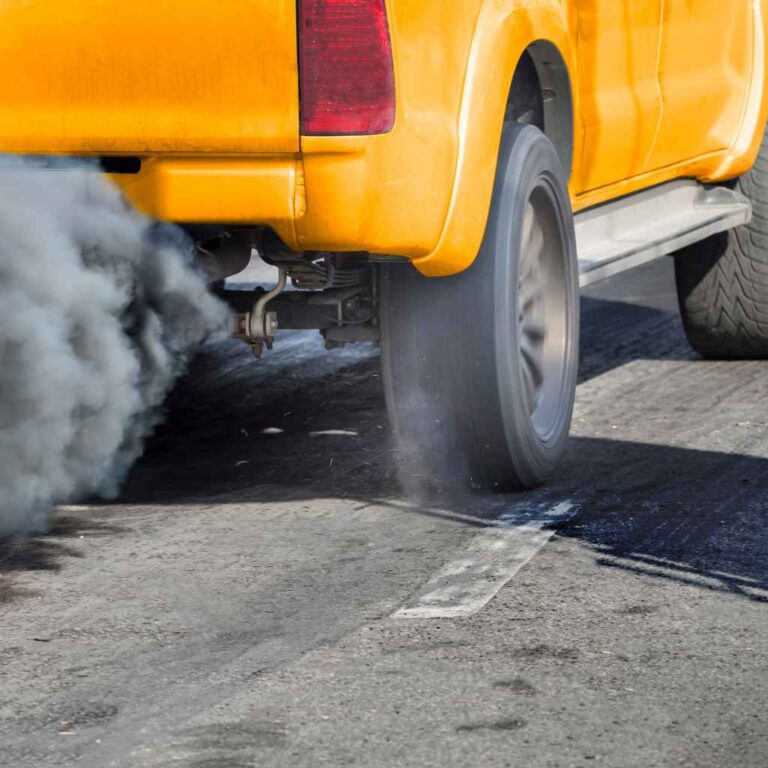
Leaving your engine on also means your car is burning fuel unnecessarily. This releases harmful emissions into the air. These emissions contribute to air pollution and climate change.
Even a few minutes of idling adds to the problem. While not as immediate a danger as fire, it’s a significant environmental concern.
Cars produce carbon dioxide (CO2), a greenhouse gas, when they burn fuel. They also release other pollutants like nitrogen oxides (NOx) and particulate matter. These can harm human health and the environment.
Reducing unnecessary idling helps to keep the air cleaner for everyone.
The Environmental Protection Agency (EPA) estimates that vehicle emissions are a major source of air pollution in many areas. Idling a car for just 10 minutes a day can release as much as 100 pounds of CO2 into the atmosphere each year. This might seem small per car, but when you multiply it by millions of cars, the impact is substantial.
Legal and Station Regulations
Most gas stations have rules or regulations posted that require you to turn off your engine while refueling. These rules are there for safety reasons, and they are enforced. If you don’t follow them, you might be asked to leave or could even be liable if an incident occurs.
These regulations are not just suggestions; they are there to protect the public. Gas station owners have a responsibility to ensure a safe environment for their customers. This includes enforcing safety practices like shutting down engines.
Failure to comply can have consequences. While it might not always lead to a fine on the spot, repeated violations or incidents could result in being banned from the station. In some places, there might even be local ordinances that carry penalties.
How to Refuel Safely and Correctly
Now that we understand why it’s important to turn off the engine, let’s look at the best way to refuel your car. This part focuses on simple, clear steps that anyone can follow. We want to make the process of getting gas as safe and easy as possible for you and everyone around you.
Step-by-Step Refueling Process
When you pull up to the gas pump, the first and most important step is to turn off your engine. After you turn off the engine, open your fuel door and gas cap. Then, select the correct fuel grade for your vehicle.
Once you’re ready, insert the nozzle firmly into your car’s fuel tank opening.
Follow the instructions on the pump screen. Usually, you’ll need to lift the handle or press a button to start the flow of fuel. Hold the nozzle steady until your tank is full.
Many pumps will click off automatically when the tank is full, preventing overfilling. Once done, remove the nozzle, replace your gas cap securely, and close the fuel door.
After you’re finished, return the nozzle to the pump. Make sure you’ve paid, either at the pump or inside the station. Then, you can safely start your engine and drive away.
Remember to be aware of other cars and pedestrians around you as you leave the station.
The Importance of Turning Off Your Engine
Turning off your engine is the single most crucial step for safety. It removes the primary source of ignition – sparks and heat – from the immediate vicinity of the highly flammable gasoline fumes. This action dramatically reduces the risk of a fire or explosion.
It’s a simple habit that makes a significant difference.
Many people believe that modern cars are so advanced that these risks are minimal. However, the fundamental properties of gasoline and its vapors have not changed. They remain extremely flammable, and ignition sources are always a concern in a refueling environment.
This action also respects the safety guidelines of the gas station. By turning off your engine, you are showing that you understand and follow the rules designed to protect everyone. It’s a small gesture that contributes to a safer community environment.
What About Static Electricity?
Static electricity is another potential ignition source at the gas station. You can build up static charge by getting in and out of your car or by walking around. Before you even touch the fuel nozzle, it’s a good idea to touch a metal part of your car away from the fuel filler.
This helps to discharge any static electricity you might be carrying.
This simple act of touching a metal surface can prevent a static spark. Static sparks can be hot enough to ignite gasoline vapors, just like a spark from an engine. It’s a good practice to do this after you get out of your car and before you start fueling.
Some experts recommend touching your car door or fender after you’ve closed the door and before you touch the pump. This ensures any static charge built up from the seat fabric or your clothing is released. It’s a quick step that adds an extra layer of safety.
Filling Up Safely with Different Vehicle Types
The basic safety rules apply to all vehicles, whether it’s a small car, an SUV, a truck, or even a motorcycle. The principle of removing ignition sources remains the same. For electric vehicles (EVs), the situation is different as they don’t have a combustion engine.
However, if you are refueling a hybrid vehicle that has an internal combustion engine, the same rules apply as for conventional gasoline cars.
For trucks, especially large ones, the volume of fuel being handled is much greater, making safety even more critical. Always follow the established procedures. If you’re unsure about a specific type of vehicle, it’s always best to err on the side of caution and follow the safest practices.
When refueling recreational vehicles like RVs or campers, remember that they often have larger fuel tanks and might be parked for longer periods. Ensuring the engine is off and eliminating ignition sources is paramount. The fuel vapor release can be more significant due to the larger tanks and the way they are designed.
Common Myths and Misconceptions About Refueling
There are many ideas about refueling that aren’t quite right. This section clears up some of these common myths. We want you to have the correct information so you can refuel with confidence and safety.
Let’s look at what’s true and what’s not when it comes to filling your tank.
Myth 1 The Engine Is Fine On
Some people think that modern car engines are designed so that leaving them on won’t cause any harm. They believe the engine’s systems are smart enough to prevent any issues. This is a dangerous misconception.
While cars are advanced, the laws of physics regarding flammable vapors and ignition sources still apply.
Car engines generate heat, especially from the exhaust system. They also have electrical components that can spark. These are all potential ignition sources.
Even a small spark can ignite gasoline fumes, leading to a fire. The risk is real, regardless of how new or advanced the car is.
The technology in cars focuses on performance and efficiency, not on making it safe to refuel with the engine running. There’s no built-in feature that makes an engine safe to operate near highly flammable fuel vapors. The risk of ignition remains significant.
Myth 2 Static Electricity Isn’t A Big Deal
Another myth is that static electricity is a minor concern or doesn’t happen often enough to worry about. However, static electricity is a common phenomenon, especially in dry weather. It can build up easily from friction, such as when you slide out of your car seat.
A static spark might seem small, but it can be hot enough to ignite gasoline fumes. The energy in a static discharge, while often not felt as a shock by a person, can be sufficient to ignite flammable vapors. This is why touching a metal surface before fueling is such an important safety step.
The danger is amplified because gasoline vapors are invisible and can spread. You might not see the vapors, but they can be present and ready to ignite if a spark occurs. Ignoring static electricity is a gamble with potentially severe consequences.
Myth 3 It Only Takes A Second To Ignite
Some people might think that if something were going to happen, it would happen instantly, and if it doesn’t, then it’s safe. The truth is, ignition can happen very quickly. Gasoline vapors are highly volatile and can be ignited by a spark or heat source almost immediately upon contact.
The rapid nature of ignition means there’s no real window of “safe” time to have the engine running. The moment vapors are present and an ignition source is near, the risk of fire or explosion is active. This is why it’s critical to eliminate ignition sources before any fueling begins.
The speed at which a fire can spread from ignited fuel vapors is astonishing. A small flash fire can quickly escalate into a much larger inferno, especially in an open area like a gas station. This underscores the need for immediate prevention rather than relying on quick reactions.
Myth 4 Gas Station Signs Are Just Suggestions
Finally, some drivers might see the “Turn Off Engine” signs at gas stations as mere suggestions rather than strict safety rules. This is a dangerous assumption. These signs are placed there based on extensive safety research and regulations to prevent accidents.
These signs represent established safety protocols. They are not optional guidelines. Gas station owners are legally and ethically obligated to promote safety, and these signs are a primary way they do so.
Ignoring them can have serious consequences, both for the driver and for others at the station.
Adhering to these signs is a sign of responsible driving. It shows respect for the safety of yourself, other customers, and the station employees. It’s a simple rule that significantly contributes to preventing accidents.
What Happens If You Leave Engine On While Refueling Statistics
Understanding the real-world impact of refueling mistakes can be eye-opening. Statistics help us see the frequency and severity of incidents related to improper fueling practices. This section looks at data that highlights why it’s so important to follow safety guidelines.
Incident Data and Fire Causes
According to the U.S. Fire Administration (USFA), fuel-related fires at gas stations, though not extremely common, can be severe. Investigations into these incidents often point to human error as a primary cause.
One significant factor identified is the presence of ignition sources, which can include running engines and static electricity.
While specific statistics for “engine on while refueling” fires are hard to isolate perfectly, reports often mention contributing factors. These include not turning off the engine, smoking, or static discharge. The USFA has noted that refueling fires can lead to serious injuries and significant property damage.
A study by the U.S. Consumer Product Safety Commission (CPSC) found that static electricity was a contributing factor in a notable percentage of gasoline vapor ignitions. While the engine running is a separate but equally dangerous ignition source, the presence of static electricity means that even without a running engine, dangers exist if other precautions are ignored.
Economic Impact of Refueling Fires
The economic cost of fires caused by improper refueling practices can be substantial. This includes damage to gas station equipment, loss of business, and potential legal liabilities for those involved. Medical expenses for injured individuals can also be very high.
The cost of repairing damaged pumps, underground storage tanks, and the station structure itself can run into hundreds of thousands of dollars. Insurance claims associated with these incidents can also lead to higher premiums for businesses and consumers alike.
Consider a single major incident; the cost of containment, cleanup, and repairs can far outweigh the cost of gasoline saved by not turning off an engine. Furthermore, the downtime for a gas station can result in significant lost revenue for the business owner.
Safety Recommendations and Trends
Safety organizations consistently recommend turning off engines and eliminating static electricity as the most effective ways to prevent refueling fires. Public awareness campaigns aim to educate drivers about these risks. The trend is towards reinforcing these basic safety measures as the cornerstone of preventing incidents.
Data analysis from various fire departments and safety agencies shows a consistent pattern: incidents are more likely to occur when basic safety rules are disregarded. This reinforces the importance of adherence to simple, well-established procedures.
There is a continuous effort by industry bodies and government agencies to improve safety standards at fueling stations. However, the human element remains the most critical factor. Education and consistent practice of safety protocols are key to reducing the incidence of these fires.
Frequently Asked Questions
Question: Can I leave my car accessories on while refueling
Answer: It is best to turn off your engine completely. While some accessories might seem less risky, the engine itself is the primary concern due to heat and potential sparks. For maximum safety, turn everything off.
Question: What if I accidentally spill some gas
Answer: If you spill a little gas, don’t panic. Try to clean it up with paper towels if possible. The main concern is the vapors.
Ensure there are no ignition sources nearby until the spilled gas has evaporated.
Question: Are hybrid cars different when refueling
Answer: Yes, if your hybrid car is running on its electric motor, it won’t produce exhaust heat or sparks. However, if the gasoline engine kicks in, or if you’re refueling a conventional gasoline vehicle, you must turn the engine off.
Question: How long should I wait after stopping the engine before refueling
Answer: You don’t need to wait a specific amount of time. The most important thing is to turn the engine off before you start fueling. This immediately removes the primary ignition source.
Question: What is the biggest danger when refueling
Answer: The biggest danger is igniting the highly flammable gasoline vapors. This can happen from sparks produced by a running engine, static electricity, or open flames, leading to a fire or explosion.
Conclusion
Turning off your engine is the most critical step for safety when refueling. It eliminates the risk of sparks and heat igniting flammable gasoline fumes. Following simple steps like shutting down the engine, avoiding static discharge, and respecting station signs keeps you and others safe.