How Many Car Payments Can You Miss Before Repossession?
There is no single legal number. Most auto loan contracts technically allow a lender to declare default — and start the repossession process — after just one missed payment. In practice, most lenders wait until you are 60 to 90 days late (roughly two to three missed payments) before sending a tow truck, because repossession is expensive and a last resort for them too.
That gap between what a lender can legally do and what most lenders actually do matters, because in most states a lender does not need a court order to take your car — and roughly 20 states require them to send you a formal notice first, while the rest do not. A repossession can also leave you owing money on a car you no longer have, through what is called a deficiency balance, and it can knock 50 to 150 points off your credit score.
This guide breaks down the real timeline lenders follow, what your specific state requires before they can act, what a repossession costs you financially, and the concrete steps that stop it before it happens.
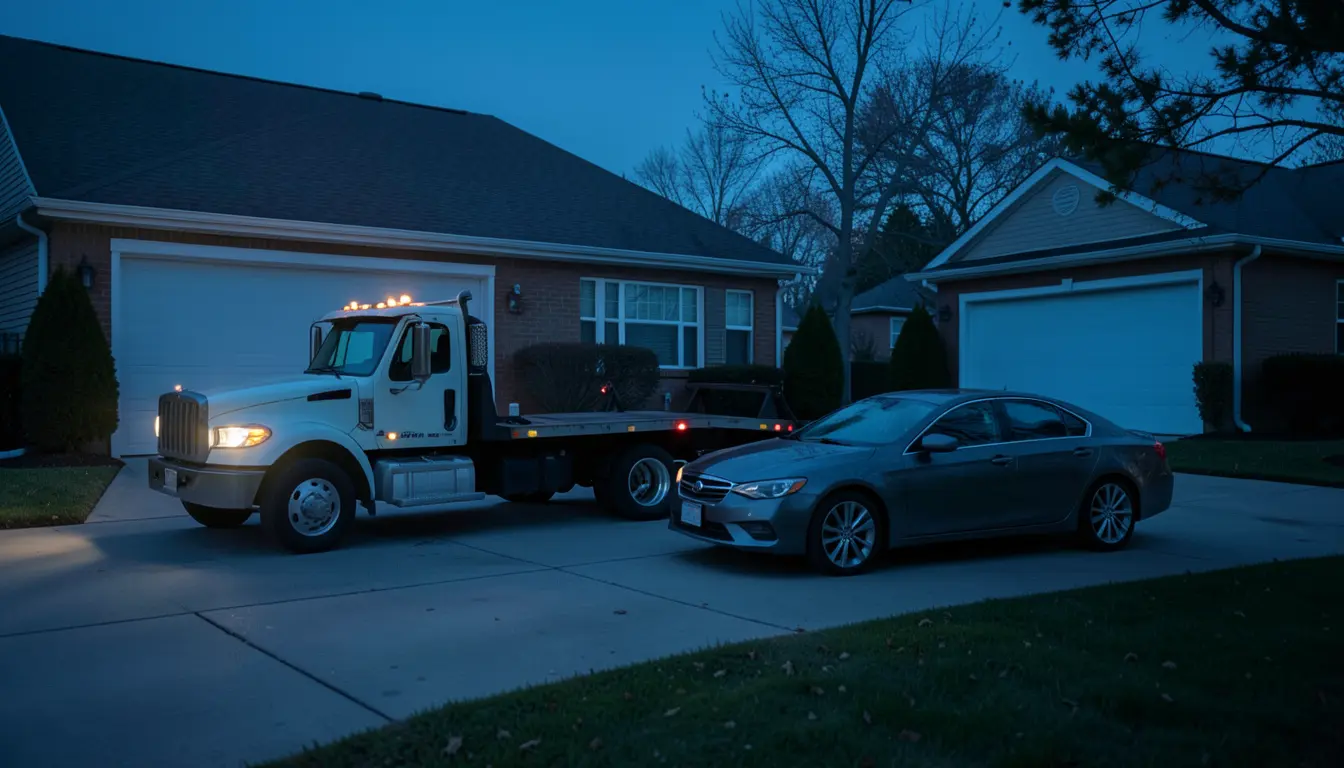
How Many Payments Can You Actually Miss?
Your loan contract sets the real rule, not a nationwide law. Almost every auto loan agreement defines “default” as missing a single payment, which technically gives the lender the legal right to repossess starting the day after that payment was due. Few lenders move that fast, because repossessing, storing, and reselling a car costs them money and they would rather get paid. But the contract language means you should never assume you have a guaranteed grace period just because it is common practice.
| Missed Payments | What Typically Happens |
|---|---|
| 1 payment (1-30 days late) | Late fee charged; automated calls, texts, or letters. Legally in default, but repossession this early is rare. |
| 2 payments (30-60 days late) | More persistent collection calls; the account is usually flagged as delinquent and may be reported to credit bureaus. |
| 2-3 payments (60-90 days late) | Most lenders begin the repossession process in this window if you have not made contact or a payment arrangement. |
| 3+ payments (90+ days late) | Repossession is very likely if no arrangement is in place. A right-to-cure notice, if your state requires one, is typically sent before this point. |
Lender type changes this timeline more than most borrowers expect. Large subprime and buy-here-pay-here lenders, who take on higher-risk borrowers, often move fast because they have less financial cushion to absorb a bad loan. Credit unions, community banks, and captive finance arms of major automakers are more likely to work out a temporary payment plan, especially if you contact them before you miss a payment rather than after.
KEEP YOUR PAPERWORK ORGANIZED
 |
Sooez Accordion File Organizer, 13-Pocket – $7.99 This guide repeatedly comes back to one thing: you need your loan agreement and every notice a lender sends you, in order, if you want to prove they skipped a required step or broke a right-to-cure deadline.
|
Self-Help Repossession: Why Most Lenders Do Not Need a Court Order
Under Article 9 of the Uniform Commercial Code (UCC), the law that governs secured loans in every U.S. state, a lender can use “self-help repossession” once you are in default. That means a repo agent can come take the car from your driveway, a parking lot, or a public street without a court hearing and without advance notice in most states, as long as they do not “breach the peace” while doing it.
Breach of the peace is not clearly defined in the law itself, and courts interpret it differently from state to state, but it generally means the repo agent cannot:
- Break into a locked garage, gated yard, or closed carport to get the car
- Use physical force or threats against you or anyone present
- Continue trying to take the car after you clearly and directly object at the scene
- Damage property (a fence, gate, or another car) to reach the vehicle
If a repo agent breaches the peace, the repossession itself can become legally invalid, which can expose the lender to a lawsuit and, in some states, statutory penalties on top of it. This is one reason lenders almost always hire licensed, insured recovery companies rather than doing it themselves.

Does Your State Require a Right-to-Cure Notice?
Roughly 20 states give borrowers a legal “right to cure” a default before a lender can repossess. If your state has this protection, the lender must send you a written notice after a missed payment that spells out exactly how much you owe and gives you a set window, usually 15 to 30 days, to pay it and stop the repossession. In states without this requirement, a lender can legally repossess with no advance warning at all, the moment you are technically in default under your contract.
| State (examples) | Right-to-Cure Requirement |
|---|---|
| Massachusetts | Yes – lender must give 21 days to bring the loan current before repossessing |
| Wisconsin | Yes – notice generally required after 10 days late, then a further 15-day wait before repossession |
| West Virginia | Yes – a cure period is required by state law |
| Michigan | No general pre-repossession notice required; reinstatement may still be available under your specific contract |
| California | No right-to-cure for standard auto loans (the protection applies to manufactured homes, not cars) |
This table covers a handful of examples, not all 50 states. Because the specific day counts and rules vary, and because state laws are amended over time, verify your own state’s current requirement with your state attorney general’s consumer protection office or a local consumer law attorney before assuming you either have, or do not have, a cure period.
What a Repossession Actually Costs You
Losing the car is rarely the end of the financial damage. A repossession triggers several costs and consequences that stack on top of each other.
| Cost or Consequence | What It Means |
|---|---|
| Credit score drop | Typically 50 to 150 points depending on your starting credit, and the repossession and any late payments that led to it stay on your credit report for up to 7 years |
| Repossession and towing fees | Charged to your account by the lender for recovering the vehicle |
| Storage fees | Charged daily while the car sits at a storage lot before resale |
| Deficiency balance | If the car sells at auction for less than you owe, you can be billed for the difference, plus repossession and sale costs |
The deficiency balance is the part most people underestimate. Cars sold at a repossession auction typically bring in well below retail value, so if you owed $10,000 on the loan and the car sells for $7,000, you can still be on the hook for the remaining $3,000, plus fees, even after you no longer have the car. Most states require the lender to sell the car in a “commercially reasonable” way and to notify you of the sale in advance; if they skip either step, you may have grounds to challenge the deficiency balance.
How to Stop a Repossession Before It Happens
You have more leverage before a repo truck shows up than after. These are the options worth trying, roughly in order of how much they preserve your credit and your car.
- Call your lender as soon as you know you will be late – before the due date, not after. Lenders are far more willing to work with borrowers who reach out proactively than with ones they have to chase down.
- Ask about a payment deferment – many lenders can push one or two payments to the back of the loan, temporarily lowering or pausing what you owe each month.
- Ask about a loan modification – the lender may agree to lower your interest rate or extend the loan term to reduce your monthly payment going forward.
- Refinance the loan – if your credit still qualifies, a new loan with a lower rate or longer term through a different bank or credit union can lower your payment enough to catch up.
- Sell the car yourself – a private sale generally nets more money than a repossession auction, and using the proceeds to pay off the loan avoids the credit damage of a repo entirely. Tell your lender about the plan first, since they hold the title until the loan is paid off.
- Consider a voluntary repossession – if none of the above is realistic, returning the car to the lender yourself avoids the repossession and towing fees (though not necessarily the deficiency balance) and looks slightly better on your credit report than an involuntary repo.
If a Repossession Already Happened: Redemption vs. Reinstatement
Once the car has been towed, you may still have two separate paths to get it back, and they are easy to confuse.
- Redemption means paying off the entire remaining loan balance, plus repossession and storage fees, in one lump sum. Most states give you a right to redeem the car this way, but only for a limited window before the lender sells it, often just a few weeks.
- Reinstatement means paying only the missed payments and fees to bring the loan current again, then resuming your original payment schedule. This is generally cheaper than redemption, but not every state or every loan contract guarantees a reinstatement right, so check your contract and state law.
Once the lender sells the car, usually at auction, both options end permanently. If you want the car back, speed matters more than almost anything else in this process.

Frequently Asked Questions
How many car payments can you miss before repossession?
Technically, just one, since most loan contracts define a single missed payment as default. In practice, most lenders wait until you are 60 to 90 days late, or have missed two to three consecutive payments, before actually repossessing the car. The exact number depends entirely on your lender’s policy and your loan agreement, not on a nationwide law.
Can a lender repossess your car without going to court?
Yes, in most states. Under the Uniform Commercial Code, lenders can use “self-help repossession” once you default, meaning they can send an agent to take the car without a court hearing or a judge’s order, as long as it does not involve a breach of the peace, such as breaking into a locked garage or using force.
Does my state require a warning before repossession?
It depends on the state. Roughly 20 states have a “right to cure” law that requires a written notice giving you a set number of days, often 15 to 30, to pay what you owe before the lender can repossess. The rest of the states have no such general requirement for auto loans. Check with your state attorney general’s office or a local consumer law attorney to confirm your state’s specific rule.
Will a repossession hurt my credit score?
Yes. A repossession, along with the late payments that led up to it, can drop your credit score by roughly 50 to 150 points depending on how high it was to start, and it stays on your credit report for up to seven years. This can make it harder and more expensive to qualify for future loans, credit cards, and sometimes even rental housing.
Do I still owe money after my car is repossessed?
Often, yes. If the lender resells the car for less than what you owed on the loan, you can be billed for the “deficiency balance,” the gap between the sale price and your remaining loan amount, plus repossession, storage, and sale-related fees. If the lender does not properly notify you of the sale or does not sell the car in a commercially reasonable way, you may be able to challenge that balance.
Can I get my car back after it has been repossessed?
Sometimes, if you act fast. Most states give you a right of “redemption,” paying the full remaining loan balance plus fees, and some contracts or state laws also allow “reinstatement,” paying just the missed payments and fees to resume the original loan. Both options generally end the moment the lender sells the vehicle, which can happen within a few weeks, so contact the lender immediately.
Conclusion
There is no fixed, nationwide number of missed car payments that triggers repossession. Your contract technically allows it after one missed payment, most lenders wait for two to three (60 to 90 days), and your specific state law determines whether you get a formal warning first. The single most effective thing you can do is contact your lender before you miss a payment, not after, since deferments, modifications, and refinancing are almost always easier to arrange while your account is still current. If a repossession has already happened, act quickly: redemption and reinstatement rights disappear once the lender resells the car.
Products related to this article
Sponsored / affiliate links. As an Amazon Associate I earn from qualifying purchases. I may earn additional commission from eligible campaigns.