What Is a Dimmer Switch in a Car: The Ultimate Simple Guide
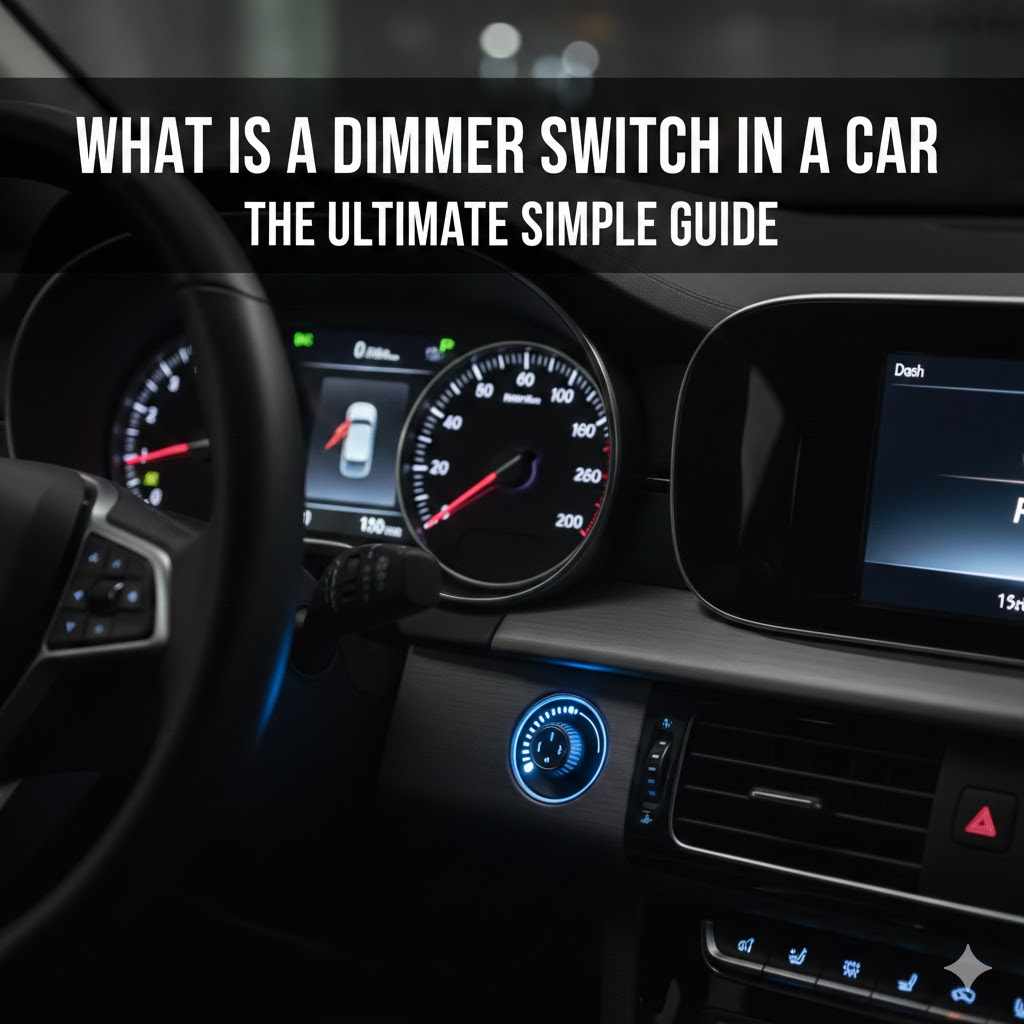
A dimmer switch in a car is a control that lets you adjust the brightness of your dashboard lights and instrument panel. On many cars, it’s also the switch on the steering column that you use to toggle your headlights between low beams and high beams for safe night driving.
Ever felt like your dashboard lights were too bright or too dim at night? Or maybe you’ve struggled to switch on your high beams? That little control you’re looking for is the dimmer switch. It’s a small part, but it plays a big role in your comfort and safety while driving. Don’t worry if it seems confusing. In this guide, I’ll walk you through everything you need to know, step by step. Let’s make your driving experience a little bit easier.
What Is a Dimmer Switch in a Car? The Full Breakdown
Welcome! I’m Md Meraj, and my goal is to make car care simple and stress-free. Today, we’re talking about a small but mighty part: the dimmer switch. You probably use it every time you drive at night without even thinking about it. But when it stops working correctly, it can be a real headache. Let’s demystify this component together.
At its core, the dimmer switch does exactly what its name suggests: it dims things. But in most modern vehicles, it actually has two very important jobs. Understanding both will help you diagnose problems and feel more confident behind the wheel.
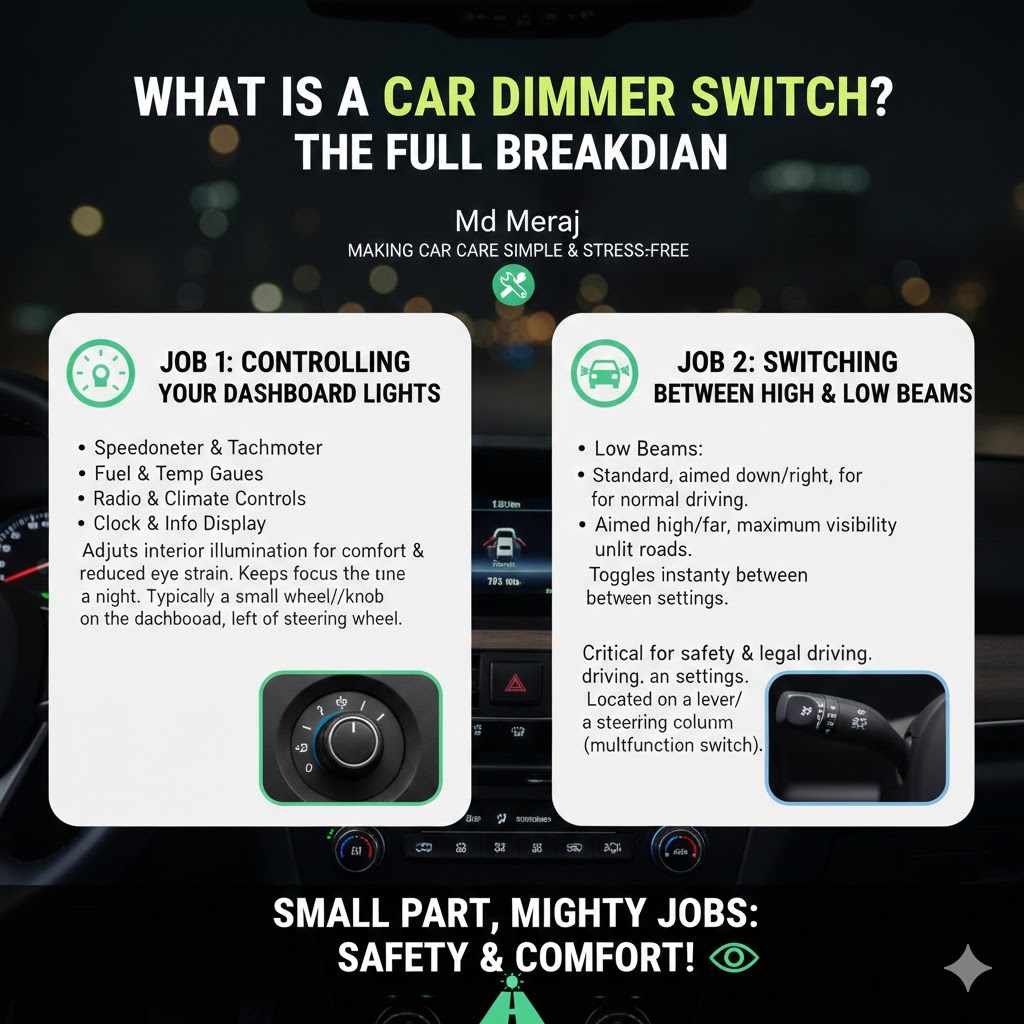
Job 1: Controlling Your Dashboard Lights
The most common function of a dimmer switch is to control the interior illumination of your car. This includes:
- The speedometer and tachometer gauges.
- The fuel and temperature gauges.
- The lights behind your radio and climate controls.
- The clock and information display.
This feature is all about comfort and reducing eye strain. On a dark country road with no streetlights, a bright dashboard can be distracting and hurt your night vision. By turning down the brightness, you can keep your focus on the road ahead. Conversely, in a well-lit city, you might need to turn the brightness up to see your gauges clearly. This control is usually a small wheel or knob located on the dashboard, often to the left of the steering wheel.
Job 2: Switching Between High and Low Beams
The other critical role of the dimmer switch is managing your headlights. This part of the switch is almost always located on a lever or stalk extending from your steering column (the same one you likely use for your turn signals). This is often called the “headlight dimmer switch” or “multifunction switch.”
Its job is simple but essential for safety:
- Low Beams: Your standard headlights for normal driving conditions. They are aimed down and to the right to illuminate the road without blinding oncoming drivers.
- High Beams: Also known as “full beams” or “brights,” these lights are aimed higher and further down the road. They are perfect for driving on empty, unlit roads where you need maximum visibility.
Flicking this switch back and forth allows you to instantly toggle between these two settings. A working high-beam switch is not just a convenience; it’s a legal and safety requirement for night driving.
Where Is the Dimmer Switch Located?
Finding the dimmer switch is easy once you know what you’re looking for. Since it serves two different purposes, it often comes in two different forms. Your car will have one or both of these controls.
The Dashboard Dimmer Control
This controls the brightness of your instrument panel. Look for it in one of these spots:
- On the Dashboard: Usually to the left of the steering column, near the air vent or headlight controls.
- As Part of the Headlight Knob: Some cars combine the headlight switch and dimmer. You might turn the knob to turn on the lights, then twist it further to adjust dash brightness.
- On the Steering Column Stalk: Less common, but some vehicles have a rotating collar on the turn signal stalk for dash brightness.
It typically looks like a small, vertically-mounted wheel that you can roll up or down, or a small knob you can twist.
The Headlight Dimmer Switch (Multifunction Switch)
This controls your high and low beams. It’s almost universally located on a lever attached to the steering column.
- Location: Typically the left-hand stalk. The same lever often controls your turn signals.
- Operation: You usually push the lever away from you to turn the high beams on and pull it back toward you to turn them off (or flash them).
Here is a simple table to help you identify them:
| Switch Type | Common Location | Primary Function | Appearance |
|---|---|---|---|
| Dashboard Dimmer | On the dashboard, left of the steering wheel | Adjusts brightness of gauges and interior lights | Small wheel, knob, or button |
| Headlight Dimmer | Lever/stalk on the steering column | Switches between high and low beam headlights | Long lever (often shared with turn signals) |
Common Signs of a Failing Dimmer Switch
Like any part of your car, the dimmer switch can wear out over time. The electrical contacts inside can get dirty or break, leading to some frustrating and potentially dangerous problems. If you notice any of these symptoms, your dimmer switch might be the culprit.
- Flickering Dashboard Lights: If your dash lights flicker or randomly change brightness while you drive, it’s a classic sign that the dashboard dimmer switch is failing. The internal connection is likely unstable.
- Dashboard Lights Don’t Work at All: If your gauges are completely dark at night but the car runs fine, the switch may have failed completely in the “off” position. Before assuming it’s the switch, check if you accidentally rolled the dimmer wheel all the way down.
- Dashboard Lights are Stuck on Full Brightness: The opposite problem. If you can’t dim your interior lights at all, the switch is likely broken in the “on” position. This can be very distracting during night driving.
- High Beams Won’t Turn On: You push the lever, but nothing happens. Your low beams work, but the high beams won’t engage. This points directly to a problem with the headlight dimmer switch on the steering column.
- High Beams Won’t Turn Off: This is a dangerous situation. If your high beams are stuck on, you will be blinding other drivers, which can cause accidents. This is a problem that needs to be fixed immediately.
- Headlights Turn Off When Using the Switch: If your headlights cut out completely when you try to switch between high and low beams, there is a serious electrical fault in the switch. Stop driving the car at night until this is fixed.
- Burning Smell or Smoke: In rare cases, a failing switch can overheat and produce a burning plastic smell or even smoke from the steering column or dashboard. If you see or smell this, pull over safely and disconnect your car’s battery if possible. Do not drive the vehicle.
Why You Shouldn’t Ignore a Bad Dimmer Switch
It might seem like a minor inconvenience, but a faulty dimmer switch can create real safety hazards. Here’s why you should address the issue promptly.
- Reduced Visibility: If your high beams don’t work, your ability to see far down dark roads is severely limited. This makes it harder to spot wildlife, pedestrians, or obstacles in time to react.
- Blinding Other Drivers: High beams that are stuck on pose a significant danger to oncoming traffic. Blinding another driver can easily cause them to swerve or lose control of their vehicle.
- Legal Trouble: Driving with non-functional or improperly used headlights is a traffic violation. You could receive a ticket and a fine. According to the National Highway Traffic Safety Administration (NHTSA), safe driving at night depends heavily on proper vehicle lighting.
- Inability to See Your Speed: If your dashboard lights are out, you can’t easily check your speed, fuel level, or see important warning lights. This is not only inconvenient but also unsafe.
- Potential for a Bigger Problem: A faulty switch can sometimes indicate a deeper electrical issue. Ignoring it could lead to more complex and expensive repairs down the line.
How to Replace a Dimmer Switch: A Step-by-Step Guide for Beginners
Feeling brave? Replacing a dimmer switch can be a very manageable DIY project for a beginner, especially the dashboard-mounted type. The steering column switch is a bit more involved but still doable with patience. This can save you a good amount of money on labor costs.
Important Safety First: Always disconnect the negative terminal of your car’s battery before starting any electrical work. This prevents short circuits and protects you and your car’s sensitive electronics. If you are ever unsure, it’s always best to consult a professional mechanic.
Tools You’ll Need:
- Screwdriver set (both Phillips and flathead)
- Socket and ratchet set
- Plastic trim removal tool kit (highly recommended to avoid scratching your dashboard)
- Your new replacement dimmer switch (make sure it’s the correct one for your car’s make, model, and year)
Part 1: Replacing a Dashboard-Mounted Dimmer Switch
This is generally the easier of the two jobs.
- Disconnect the Battery: Open the hood and use a wrench to loosen the nut on the negative (-) battery terminal. Wiggle the cable off the post and tuck it aside so it can’t accidentally touch the terminal again.
- Access the Switch: The switch is usually housed in a plastic trim panel. Look for screws holding the panel in place. They might be hidden under small covers. Use your trim removal tool to gently pry the panel away from the dashboard. Be patient and work slowly to avoid breaking any plastic clips.
- Remove the Old Switch: Once the panel is loose, you’ll see the back of the dimmer switch. It will have an electrical connector plugged into it. Press the small tab on the connector and pull it straight off. The switch itself might be held in by clips or a couple of small screws. Remove them and pull the old switch out.
- Install the New Switch: Push the new switch into the slot until it clicks into place or secure it with its screws. Reconnect the electrical connector, making sure it clicks securely.
- Test Before Reassembling: Reconnect your battery’s negative terminal. Turn on your headlights and test the new dimmer switch. Roll the wheel up and down to make sure the dash lights respond correctly.
- Reassemble the Dashboard: Once you’ve confirmed it works, disconnect the battery again for safety. Carefully press the trim panel back into place, ensuring all the clips line up. Reinstall any screws you removed. Finally, reconnect the battery for good.
Part 2: Replacing a Steering Column-Mounted Headlight Dimmer Switch
This process is more involved because you have to remove the plastic covers around the steering column.
- Disconnect the Battery: Same as before, always disconnect the negative terminal first.
- Remove the Steering Column Covers: Look for screws on the underside of the plastic housing (the “clamshell”) behind your steering wheel. There are usually two or three. Once the screws are out, you can gently pry the top and bottom halves of the cover apart. You may need to adjust the steering wheel’s tilt to get enough clearance.
- Locate the Switch: With the covers off, you will see the multifunction switch assembly clamped onto the steering column. It will have one or more large wiring harnesses plugged into it.
- Remove the Old Switch: Carefully unplug the electrical connectors. Again, there will be small tabs you need to press to release them. The switch itself is usually held in place by two or three screws. Remove them, and the entire lever assembly should come free.
- Install the New Switch: Position the new switch and fasten it with the screws. Don’t overtighten them. Plug the wiring harnesses back in. You should hear and feel a solid click.
- Test the New Switch: Reconnect the battery temporarily. Test everything the switch controls: high beams, low beams, and turn signals. Make sure everything functions as it should.
- Reassemble Everything: Disconnect the battery one last time. Snap the steering column covers back together and reinstall the screws. Reconnect the battery, and you’re all done!
How Much Does It Cost to Replace a Dimmer Switch?
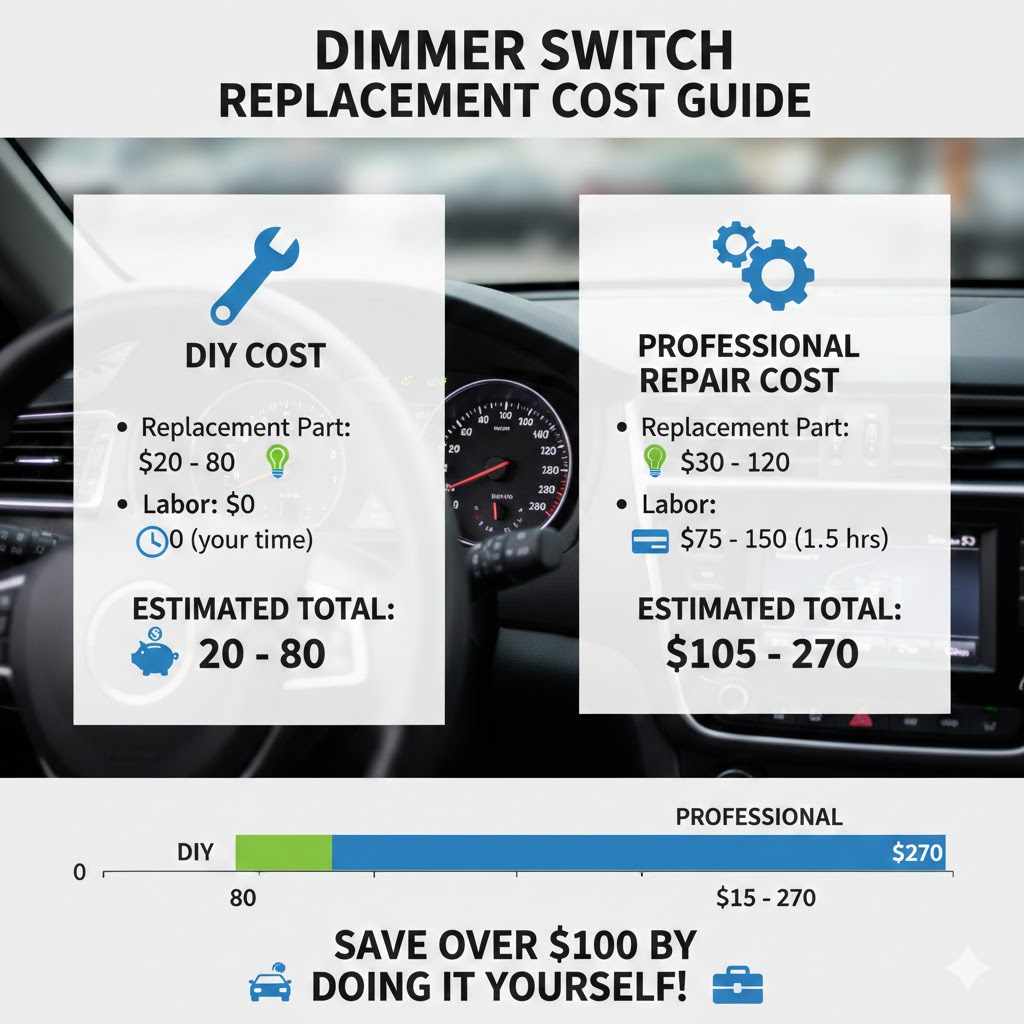
The cost can vary quite a bit depending on your vehicle and whether you do the work yourself. Here’s a general idea of what to expect.
| Cost Factor | DIY Cost | Professional Repair Cost |
|---|---|---|
| Replacement Part | $20 – $80 | $30 – $120 (mechanics may charge more for parts) |
| Labor | $0 (your time) | $75 – $150 (typically 1-1.5 hours of labor) |
| Estimated Total | $20 – $80 | $105 – $270 |
As you can see, doing it yourself can save you over $100. For a simple part replacement, that’s a significant saving!
Frequently Asked Questions (FAQ)
1. What exactly does the dimmer switch control in a car?
It typically controls two things: the brightness of your instrument panel lights (like the speedometer and radio display) and the switching of your headlights between low beams and high beams.
2. Can I drive with a broken dimmer switch?
It depends on the problem. If you just can’t adjust your dash brightness, it’s an annoyance but usually safe. However, if your high beams are stuck on, won’t turn on, or your headlights cut out when using the switch, it is a major safety hazard. You should get it fixed immediately before driving at night.
3. Why are my dashboard lights flickering?
Flickering dash lights are the most common symptom of a failing dashboard dimmer switch. The electrical contacts inside the switch wear out over time, causing an inconsistent connection and making the lights flicker.
4. Is the headlight dimmer switch the same as the instrument panel dimmer?
In most cars, they are two separate physical switches, even though people sometimes use the term “dimmer switch” for both. The instrument panel dimmer is usually a knob or wheel on the dash, while the headlight dimmer is the lever on your steering column.
5. How do I know for sure if my dimmer switch is bad?
The best way is to observe the symptoms. If your dash lights flicker or your high beams don’t work, but all the bulbs and fuses are good, the switch is the most likely culprit. A mechanic can also test the switch with a multimeter to confirm it’s faulty.
6. Is it hard to replace a car’s dimmer switch?
It’s considered a beginner-to-intermediate DIY repair. A dashboard-mounted switch is quite easy and usually takes less than an hour. A steering column switch is a bit more complex because you have to remove covers, but it’s still very achievable with basic tools and patience.
7. What is a rheostat in a car?
A rheostat is the technical name for the type of variable resistor used in older dashboard dimmer switches. Think of it as a dial that physically changes the amount of electricity flowing to the lights, making them brighter or dimmer. Modern cars often use electronic controls instead, but the principle is the same.
Conclusion: Taking Control of Your Car’s Lighting
The dimmer switch might be a small component, but it plays a huge role in your driving safety and comfort. From ensuring you can see the road clearly on a dark night to preventing distracting glare from your dashboard, this little switch does a lot of work.
Now you know what it is, where to find it, how to spot the signs of failure, and even how to replace it yourself. Facing a car problem like a faulty switch can feel intimidating, but breaking it down step-by-step makes it manageable. By tackling small repairs like this, you not only save money but also build confidence and a better understanding of your vehicle.
So next time your dash lights flicker or your high beams act up, don’t panic. You’ve got the knowledge to diagnose the problem and decide whether to fix it yourself or talk to a mechanic with confidence. Happy and safe driving!